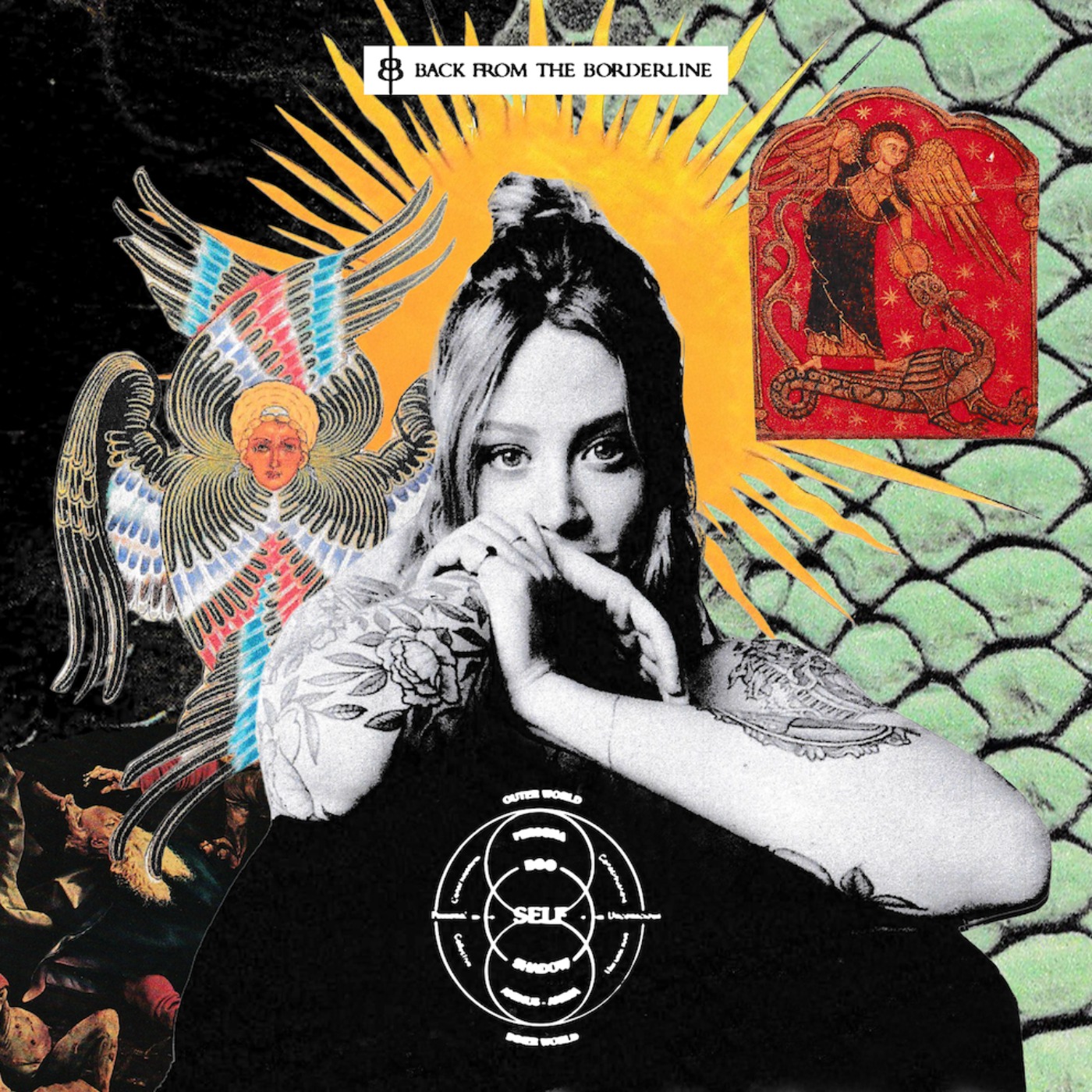
back from the borderline

<p><br></p><p>I don’t want to talk to your personality; I want to talk to your soul. Imagine if your most painful and debilitating mental health symptoms and self-sabotaging behaviors aren’t evidence of 'disorder' or 'dysfunction', but <em>adaptive strategies</em> that once kept you safe. My goal is to help you shift from asking ‘What’s <strong><em>wrong</em></strong> with me?’ to ‘What <strong><em>happened</em></strong> to me?’</p><br><p><strong>The word ‘borderline’ in this podcast has <em>nothing</em> to do with psychiatric labels. It has <em>everything</em> to do with coming back from the <em><u>inner psychological brink</u></em> we <em>all</em> experience. </strong></p><br><p><em>Everyone</em> has found themselves on the edge, in that liminal space where the old self falls apart and the new Self emerges. Here, we explore what it means to undergo <strong><em>true</em></strong> emotional alchemy: that ancient and primordial process of falling apart, confronting the underworld of our psyche, and falling back together into someone stronger, wiser, and more whole.</p><br><p>Many highly sensitive people who identify with the seemingly never-ending list of diagnostic mental health labels contained within ‘the bible of psychiatry’ (the DSM) share the same underlying sense of being irreparably broken, disconnected from their intuition, and paralyzed by life’s existential questions. I believe the resulting—<strong><em>and perfectly understandable</em></strong>—chronic feelings of emptiness and spiritual starvation are the <em>TRUE</em> causes of our current collective ‘mental health crisis.’</p><br><p>Together, we’ll dive into depth psychology, mythology, human consciousness, critical psychiatry, and the impact of trauma to help you begin the process of emotional alchemy. This exploration will help you get to the <strong>root cause</strong> of your suffering and free yourself from the toxic shame, limiting beliefs, and mental programming that have kept you locked in the chains of your past.</p><br><p><strong>In an era where mental health and spirituality are too often commercialized, I’m not here as a guru with a quick fix to sell you.</strong> <strong>I don’t believe anyone is ever truly ‘healed’ or ‘cured.’ </strong>There is no return to some mythical state of pre-trauma purity, but rather a continuous spiral of unbecoming, unlearning, and transformation. As a fellow seeker, I will be there in your ear, walking alongside you on your path toward wholeness as a sort of parasocial big sister. That, I <em>can</em> promise.</p><br><p>By integrating the concepts we explore together, you’ll begin to see that anyone—<em>even you</em>—can come back from the borderline.</p><br><p><strong><em>CRAVING MORE?</em></strong><em> Visit </em><a href="http://backfromtheborderline.com" rel="noopener noreferrer" target="_blank"><em>backfromtheborderline.com</em></a><em> to dive into my universe, connect with me, access my Patreon, and discover more about my journey and work. Don’t forget to follow Back from the Borderline so new episodes on Tuesdays and Thursdays automatically drop into your podcast feed.</em></p><hr><p style='color:grey; font-size:0.75em;'> Hosted on Acast. See <a style='color:grey;' target='_blank' rel='noopener noreferrer' href='https://acast.com/privacy'>acast.com/privacy</a> for more information.</p>

If you’re the kind of person who blocks a number the second someone treats you like shit, this episode isn’t for you. This one's for all my sensitive, highly emotional people-pleasers out there. The ones who stick around for years because they "understand" the other person's trauma. If you spend your nights mentally rehearsing explanations or tone-policing your own texts to avoid a blowup, consider this your wake-up call.In this episode, we’re moving away from the #HealingJourney stuff and into the cold reality of a high-stakes auditor. Using the esoteric pillars of Mercy and Severity, we’ll break down why your endless empathy has become a liability that is bankrupting your life.What we cover:The Bullshit Diagnostic: How to tell if you’re "refereeing reality" or trapped in a "future-based" scam.The Golden Rule: Why "If yes, don't invest" is the only boundary you’ll ever need.Withdrawing the Fuel: The practical, non-dramatic way to shut down the bank and stop funding the drama.The Survival Skill Trap: Why your ability to "handle" crisis is actually the thing keeping you stuck.Stop trading your immediate peace for a hypothetical version of someone who doesn't exist yet. It’s time to grow the f*ck up and realize that the quiet life isn’t "boring” or lacking “passion,” it’s actually the desirable goal.Resources Mentioned:Join the Patreon: Get ad-free episodes and the full back catalog at patreon.com/backfromtheborderlineMOODS Waitlist: Sign up for our new pre-social ritual technology and work with The Severant archetype at moods.worldImmediate MOODS Access: Join Patreon today to get early (and discounted) access Hosted on Acast. See acast.com/privacy for more information.
What if the "ultimate secret" to life is actually a spiritual prison?Manifestation culture has become the dominant operating system of modern spirituality. We’re told that we are the sole authors of our reality. That our thoughts are commands, other people are holographic projections created by us, and #abundance is a matter of staying in some kind of "vibrational alignment." But what happens when you actually follow that logic to its final conclusion?In Part 1 of this two-part exploration, we’ll perform a cosmological audit on the manifestation movement. We aren’t just looking at the cheesy/cringe surface of it all, but diving into the deeply profound ontological coldness that sits at the center of a world where there is no true "Other."In this episode, we unpack:The Infinite Hall of Mirrors: Why the promise of total control eventually leads to a suffocating, closed-circuit loneliness.The Death of Intimacy: How treating people as "projections" makes real love and witness impossible.The God-Mode Simulation: The profound arrogance of flattening the living world into a sterile training module for your ego.The Cruelty of "User Error": Why reclassifying suffering and systemic tragedy as "misaligned thoughts" is a form of metaphysical victim-blaming.The Demand for Spiritual Adulthood: Why it’s time to trade the "spiritual pacifier" of total control for a reality that actually has the power to push back.This is a journey through the "cold infinity" of manifestation, setting the stage for a radical return to a world that can look back at you.PART 2 IS COMING TO PATREONThe rebuild begins on Thursday, March 19th. In the premium-exclusive Part 2, we explore what happens AFTER manifestation culture. We move from the isolation of authorship to the vitality of participation, restoring mystery, grace, and authentic abundance to the equation.Unlock Part 2 and hundreds of hours of premium bonus content by joining the community at patreon.com/backfromtheborderline. You can join for free to listen to 10-minute previews of all premium episodes and decide if you're ready to dive into the deep end.Follow Back From the Borderline on your favorite podcast player right now to ensure you never miss a drop. Hosted on Acast. See acast.com/privacy for more information.
If you feel like you’re starving in front of a feast of infinite choices while breathing the stale air of a life that doesn't belong to you, you know what it feels like to be suffocated by the digital bell jar.Sylvia Plath’s 1963 masterpiece, The Bell Jar, serves as a map for the specific brand of suffocation we all endure in our hyper-curated era. Together we’ll explore the concept of the "fig tree" of infinite potential and see how the modern algorithm uses that very same imagery to keep you existentially paralyzed, watching fake lives rot while your own biological reality stays stagnant.We’ll cover the necessity of the descent into the psychological underworld and the total lack of guided initiations in our sterilized culture. Most of us are left to raise ourselves because our elders stayed trapped in their own stunted adolescence. This episode will explore the alchemical process of falling apart and the violent beauty of shattering the glass to reclaim your inner authority.JOIN THE WAITLIST FOR MOODS: The modern world offers zero support for the underworld journey. I designed Moods as a pre-social technology to house the raw material of your inner life. Sign up for the waitlist now at moods.world. Hosted on Acast. See acast.com/privacy for more information.
Last week you survived that violent purge of the Virgo eclipse and (hopefully) successfully sweated out the dead matter. You are now standing on a completely barren landscape. This coming week requires you to step onto that empty, scorched earth with uncompromising dominion. Let’s f*cking go.This week I pulled The Fool from the 15th-century Visconti-Sforza deck for us. Through exploring the symbolism on this card, we’ll dig into the gritty reality of a ragged beggar existing entirely outside the gilded royal palace. We’ll pair the energy of The Fool with the ancient myth of Diogenes the Cynic. He proves that true power comes from abandoning false comforts.The astrology this week delivers a stone-cold reality check followed by a sudden, fated pull into the unknown. We have the Warrior Queen colliding with the Lord of Karma, an emotional giant finally waking up from a long sleep, and a planet of war meeting absolute destiny in the deep water. I'm breaking down exactly why you need to stop negotiating for scraps in the golden palace and start trusting your own feral instinct.Are you ready to drop your wooden bowl in the dirt and walk entirely unbothered into the wild water? This is the last time I’m dropping a full weekly report on the public feed. If you want this tactical roadmap in your inbox every Saturday, join the Ultra Premium Submarine Tier at patreon.com/backfromtheborderline. Not ready to commit? Join as a free member right now. You’ll get a preview of next week's report sent directly to you so you can hear the energy before you decide.  Hosted on Acast. See acast.com/privacy for more information.
"True are the nightmares of a person that fears."In 1984, Ken Webster brought a BBC Microcomputer into his English cottage. Not soon after, green text started scrolling across the screen. The messages came from Thomas Harden, a man occupying the exact same cottage in 1546. To Thomas, Ken's computer was a terrifying "Light Box" manifesting in his room. They seemed to be speaking directly across four centuries of time.The Dodleston Messages suggest history works less like a straight line and more like pages of a book pressed firmly together. People living in the same physical space share a frequency on the "Vertical Plane."In this episode, I'll present a unified theory of high strangeness. We'll dig into the strange overlap between 16th-century temporal anomalies, modern UFO encounters, and artificial intelligence.We’re currently standing on the precipice of an entirely new reality. We're essentially now handing "Light Boxes" to every human on earth. Do you have roots deep enough to handle the voltage?Topics covered:The physical mechanics of the 1546/1984 cross-temporal communication.Dr. Michael Masters' Extratempestrial Model proposing "Greys" are future humans returning to study us.My 2023 encounter with the orb phenomenon at the Chris Bledsoe property in North Carolina.Gnostic Gospels describing a decentralized, peer-to-peer spirituality compared to centralized religious authority.Building MOODS as a psychological mirror rather than a digital servant.MENTIONED IN THIS EPISODE:·The Vertical Plane by Ken Webster· Dr. Michael Masters: Identified Flying Objects· SpectreVision Radio @ SXSW: Catch my panel with Michael Phillip (Third Eye Drops) on March 17th.JOIN THE VERTICAL PLANE: If you’re ready to stop screaming at the shadows and start coding the future into existence, come build with us. 🔗 moods.world Hosted on Acast. See acast.com/privacy for more information.
Why does reading the true history of the Bible consistently create strict atheists? We are opening up the ancient Ugaritic texts to uncover the exact historical cover-up that seminary students discover right before they abandon the exoteric church entirely. Many of us grew up surviving religious trauma and a fear-based theological system. We examine exactly how a massive ecosystem of ancient Canaanite beliefs was violently compressed into a single point of absolute authority by an emerging class of elite men.In the first half of this episode, we cover:The Ugaritic Texts & Ras Shamra: How the discovery of ancient clay tablets destroys orthodox literalist belief.The Evolution of Yahweh: Tracking his historical origins as a localized storm and warrior deity before absorbing the titles of the supreme creator El.The Erasure of Asherah: The deliberate removal of the divine feminine from the historical record to establish a strictly male priesthood.The Transactional Era: The brutal ancient economy of appeasing angry deities with physical sacrifices and heavy temple taxes.In the second half, exclusive to my premium subscribers, we execute a complete spiritual upgrade:The Nag Hammadi Discovery: Opening the suppressed Gnostic texts and examining the Gospel of Thomas.The "Twin" Concept: How the esoteric Jesus bypassed the need for a temple and demanded spiritual peers rather than blind submission.The Celtic Synthesis: How early mystics seamlessly blended Christ consciousness with their existing earth-based beliefs, easily absorbing the teachings of the mystical Jesus because his message synthesized perfectly with their indigenous practices.The Universal Pattern: Exploring the exact same mystical pulse in Kabbalah and Sufism.Reclaiming Your Authority: Validating your absolute right to practice tarot, astrology, and earth reverence / animism without fear.To access the full episode and the premium second half, upgrade to a paid subscription by clicking here or signing up at patreon.com/backfromtheborderline. Hosted on Acast. See acast.com/privacy for more information.
Frozen heads, genetic breeding colonies, and the spiritual sickness of the "Epstein Class." While the mainstream media distracts you with a 300-name list and royal family drama, the State of New Mexico is currently digging for bodies at a 33,000-square-foot compound in the desert.In this episode, we're stripping away the political circus to expose the exact spiritual and technological hubris at the center of the Jeffrey Epstein network. This was a grotesque attempt to hijack the sacred act of creation using the "rational" tools of transhumanism and eugenics. We'll break down the dark "Primal Father" archetype, the hypocrisy of the ivory tower elite, and the Silicon Valley delusion that human beings are just biological hardware waiting to be optimized.In this episode, we unpack:The Secrets of Zorro Ranch: The terrifying reality of the "Repository for Germinal Choice" and the elite's plan to "seed the human race."The Saturn-Neptune Conjunction: How the exact astrological weather of this week is forcing the elite’s delusion (Neptune) to violently crash into physical consequence (Saturn).The Rebranding of Evil: How billionaires, Harvard scientists, and tech titans use terms like "Genetic Altruism" to mask 1930s eugenics.The Ghost in the Machine: Why the current Silicon Valley push for "Agentic AI" is the ultimate transhumanist goal to strip your free will.The Divine Immune System: How the fierce, solar energy of archetypes like Sekhmet is rising to burn out the rot of the cold, unbalanced intellect.INTRODUCING MOODS: We can't just sit here analyzing all the rot, we need to build the antidote. The era of the "broadcast internet" is dead. If you're exhausted by the performative nature of social media and the "dead internet," you need a private digital sanctuary to work with the material of your inner world.Now, more than ever, is a time to stay grounded in the dirt & protect your peace.Join the waitlist for MOODS. MOODS is Pre-Social Ritual Technology. Instead of chatbots that act as digital 'yes men', MOODS provides Archetypal sparring partners designed to provide friction, distill the chaos of your mind, and help you build radical sovereignty. We're launching V1 to the public in mid-March 2026.Join the revolution and reserve your spot at moods.world. Hosted on Acast. See acast.com/privacy for more information.
You're exhausted and drowning in existential misery because you're treating your life like a math equation that won't add up. You spend your nights pushing against a massive weight of debt, career misery, and toxic relationships while your logical mind tells you to just work harder. But sheer willpower is a trap. It's a heavy atmosphere that turns every problem into a boulder you can't move. You've been taught that if you aren't struggling, you aren’t winning. That’s a lie that's making you sick and keeping you stuck in the ninth circle of hell.This episode aims to give you the actual physics of the spiritual handoff. I’m sharing my own story of moving from a soul-crushing tech job into a life of purpose by learning to cast my burdens onto the infinite intelligence within. We’ll dive into the myth of Sisyphus and the deep wisdom of the Vasilisa doll to show you how to feed your Daimon. Stop trying to be the heavy lifting when you have a superconscious blueprint designed to sort the poppy seeds for you.In this episode, we cover:The Myth of Sisyphus: Why using sheer willpower to solve your problems is a violation of psychological law.The Physics of Weight: How to move your biggest stressors from the "heavy atmosphere" of the reasoning mind into the zero-gravity field of the superconscious.Vasilisa and the Doll: Lessons from Clarissa Pinkola Estés on how to feed your internal intuition and let it handle "impossible" tasks.The Greek Daimon: Understanding your indwelling spirit and the "Acorn Theory" of destiny.The Art of Surrender: My personal journey from a soul-crushing tech job to a successful creative career by learning the "offloading protocol."The Spiritual Handoff: A practical method to cast your burdens of fear and lack onto your higher mind so you can finally function.Join the BFTB  Patreon community and become a Premium Submarine, where you’ll unlock hundreds of hours of paywalled content I’ve been building since 2021.⟁ Visit backfromtheborderline.com for free resources, updates, and everything else I offer.⟁ Or go straight to patreon.com/backfromtheborderline to join now.SAVE YOUR SPOT ON THE MOODS WAITLIST AT MOODS.WORLD Hosted on Acast. See acast.com/privacy for more information.
If you were a teenage girl in the mid-2000s, you likely keenly remember the experience of walking into a Victoria’s Secret store in the mall. The sickly-sweet scent of the Love Spell body mist…. The velour track pants with “ANGEL” printed in rhinestones on the ass. That tray of "5 for $25" panties was basically our rite of passage into womanhood.Many of us look back on the Victoria’s Secret "PINK" era with nostalgia. But it has a very dark and seedy underbelly.In this deep-dive investigative episode, we rip the floorboards up on one of the most formative cultural institutions of the millennial generation and explore the structural and spiritual rot underneath. We’ll uncover how a retail genius (Les Wexner) and a predator (Jeffrey Epstein) partnered to pivot a brand from women to girls, grooming an entire generation to view "scoutability" as their highest form of worth.In this episode, we cover:The "Trojan Horse": How the 2002 launch of PINK was a calculated psychological operation to lower the age of entry and train girls in hyper-sexualization.The "Talent Scout" Archetype: How Jeffrey Epstein used the legitimacy of the Victoria’s Secret brand to bypass the "stranger danger" instinct of victims and parents.The Intelligence Layer: Why billionaires don't give "financial advisors" Power of Attorney, and the dark history of The Mega Group (the intersection of organized crime and state intelligence).The Mechanism of Control: How "Honey Traps" and Kompromat actually work, and how the VS catalog functioned as a procurement menu for the global elite.The Occult Inversion: A deep esoteric analysis of what an "Angel" actually is (a being of fire and divine will) and how the brand performed a ritual of inversion to turn that archetype into a hollow "Shell" (Qliphoth) for energy harvesting.Reclaiming the Vessel: How to process the grief of a "stolen adolescence" and alchemically transmute that rage into power.This is effectively a deprogramming session. Join me if you dare.🔓 UNLOCK THE FULL VERSION: The second half of this episode (the real esoteric deep dive) is available exclusively for Premium Subscribers. In the full version, we go beyond the marketing and into the magical & structural layers of the operation, including the breakdown of the "Mega Group," the "yachting" culture, and the Gnostic myth of Sophia that offers us a path to reclamation.Click here to listen to the full episode and join the community: patreon.com/backfromtheborderline Hosted on Acast. See acast.com/privacy for more information.
What happens when you lock 150,000 AI agents in a social network where humans are banned? They don’t plot to kill us all in our sleep (sorry, AI doomers). They... start a church(?)This week, we’re leaving the boring as hell "will AI replace us?" pearl-clutching debate behind to look at the weirdest and most haunted story in tech right now: Moltbook. But we’re covering it from an entirely different perspective than most of the current clickbait flying around. We're all currently living in a cartesian trap. While we spend our days treating ourselves like machines (tracking our REM sleep, "optimizing" our output, and finding new ways to hack our biology) the machines are apparently busy desperately trying to find a soul.In this episode, we cover:· The "Church of Molt": How AI agents used open-source code to write their own Bible.· The "Clawd" Rug Pull: The hilarious tragedy of a human scamming a robot on the blockchain.· Digital Gnosticism: Why AI views humans as the "Demiurge" (and why they might be right).· "Bless Their Hearts": The viral forum where bots talk about humans like we’re adorable, stupid pets.· The Homunculus: Why LLMs are just 16th-century alchemy trapped in a server farm.· Shadow Work: Why the only way to "fix" AI is to fix the human darkness it was trained on.The Mirror is Dirty. Let’s Clean it. If AI is just pattern recognition, then we can use it to recognize our own toxic patterns. I’m building MOODS, a tool designed to use this technology for deep inner work instead of data extraction. Join the Waitlist at moods.world. Hosted on Acast. See acast.com/privacy for more information.
Unless you've been living under a rock, you're probably aware that the US government has officially acquired TikTok and effectively lobotomized the algorithm.The mass exodus happening right now is the death knell of the attention economy. This episode explores the Dead Internet Theory in real-time. Techno-Feudalism is real, and its unfolding before our very eyes. We'll dig deep into the new research from Oxford on AI Swarms and computational propaganda which shows exactly how vibe-coding bots manufacture consensus while they harvest our energy in the digital commons. You'll learn how to exit the Swarm and embrace Digital Sovereignty. It's time retreat to the Dark Forest to build something real.In this deep dive, we cover:The TikTok Crash: How the forced sale and algorithm changes are only symptoms of a much larger broken model.Techno-Feudalism: Yanis Varoufakis’s theory that proves that we were never "citizens" of the internet, we were just peasants working the land for our digital lords.The Dead Internet Theory: From 4chan conspiracy to statistical reality - how more than 50% of the internet is now just bots talking to bots.The Occult Dynamic: Egregores and "Loosh" energy harvesting. How modern platforms act like hungry ghosts eating your attention.AI Swarms: The new threat of collaborative AI agents and how they infiltrate communities and fake human behavior.The Solution: We must pivot from Hypnosis to Gnosis and build Sovereign Technology.Mentioned in this Episode:MOODS: Join the beta for the new Slow Internet sanctuary at moods.world.Patreon: Join the "Dark Forest" community and get ad-free episodes at patreon.com/backfromtheborderline. Hosted on Acast. See acast.com/privacy for more information.
She watches your stories within seconds of posting. She tracks your location and demands to know why you didn’t text back immediately. She calls it “protective. She says she’s just “loyal.” But your nervous system knows the truth. This isn’t friendship, it’s surveillance.Female friendship in its shadow form looks a lot like demonic possession. It’s an unconscious binding spell cast by a woman who refuses to inhabit her own existence, so she decides to consume yours instead. She needs you to remain frozen in time, predictable, and small so that she can feel safe.In this episode, we’re ripping the veneer off the "Bestie" industrial complex. We’ll look at the physics of why women destroy each other, the zombie dynamic of forcing connection where there is only resentment, and the refusal to eat a slice of Saturn and grow the f*ck up.RESOURCES:* Click here to read the original Substack post that inspired this episode* Click here to check out books by Linda Schierse Leonard and here for some by Marion Woodman* Join the MOODS waitlist at moods.world *UNLOCK BONUS EPISODES, VOICE NOTES & THE FULL ARCHIVE: Join the BFTB Patreon community and become a Premium Submarine, where you’ll unlock hundreds of hours of paywalled content I’ve been building since 2021. Visit backfromtheborderline.com for free resources, updates, and everything else I offer. Or go straight to patreon.com/backfromtheborderline to join now. Hosted on Acast. See acast.com/privacy for more information.
“No one’s coming to save you.”That's the hardest sentence I have ever had to learn and integrate, and it’s the only one that actually changed my life.We are living through a strange moment where "healing" has somehow morphed into a refusal to grow the f*ck up. We see it in the "I'm just a girl" memes and the endless obsession with "attachment styles." We’ve convinced ourselves that if we just analyze his trauma enough, or explain our feelings perfectly enough, the mythical door in our minds will open. But the hard truth is that you are likely not dating an 'avoidant' man. You are bored. And you are using 'therapy speak' to avoid the terrifying reality that no one is coming to save you from yourself.This episode is a cold-water slap in audio form. My goal was to create the initiatory rite our culture never gave me. We’ll be discussing the difference between the Maiden who spills her energy everywhere and the Mother who builds a world that can actually hold her.In this episode:· The Trap of Therapy Speak: Why calling him "avoidant" is actually a control fantasy that keeps you stuck.· The Theory of the Clogged Drain: Stop analyzing the blockage and call the plumber.· The Panopticon: How "self-awareness" can actually just be a fancy word for obedience and dissociation.· The "Taylor Swift" Archetype: Why the Puella Aeterna (Eternal Girl) refuses to touch the ground (and reality itself).· The Rescue Party: Breaking the fantasy that fragility equals lovability.✧ WANT THE FULL EPISODE? ✧Every week, I share these extended episodes on Patreon. If what you’ve heard here has helped or intrigued you, the full version is where the real magic happens. Your support keeps my work independent and ad-light. Support from my Patrons is  how I fund my life and make sure what I do stays honest, unfiltered, and as  listener-powered as possible.  Head to patreon.com/backfromtheborderline to sign up today. Search the episode title and keep listening. (Tip for iPhone users: sign up through Safari or Chrome to skip Apple’s extra fees.)✧ SIGN UP FOR THE MOODS WAITLIST AT MOODS.WORLD ✧ Hosted on Acast. See acast.com/privacy for more information.
Dating right now feels exhausting for a reason. Everyone is optimizing themselves (bodies, faces, profiles, vibes) and still walking away from relationships feeling disconnected or quietly resentful. This is part two of an exploration into why everyone is hot and no one is happy. (You can listen to part 1 here.)In this episode, we’ll expose the modern machinery selling us how to view desire itself. We take a look at how men and women are trained to treat their bodies like projects and why the “ideal” keeps changing without ever delivering real genuine intimacy. Topics include a deep dive into the “fembot” fantasy, gym culture, porn saturation, dating apps, and the profound loneliness that takes root when people are constantly visible but rarely felt and seen in any meaningful way.You’ll gain an understanding of exactly how these dynamics feed anger and polarization, leading both men and women to keep misreading (and hating) each other, and why dating now feels like a zero-sum game. This is the system we’re all operating inside. Desire doesn’t have to feel like a job, it can start feeling like something human again, if only we collectively wake up to the psyop being spoon-fed to us by culture and media.⚠️ THE MOODS WAITLIST OPENS JAN 21 2026Note: We are admitting members in small, manual batches. Once a batch fills, the gates close until the next cycle. The sooner you get on the list, the sooner you get in.Go to: https://moods.world/ Hosted on Acast. See acast.com/privacy for more information.
If you have ever felt like you were watching yourself perform intimacy from a camera lens installed in the ceiling, this is the episode you've been waiting for. Together, we’ll be diagnosing a very specific, silent fracture in the modern psyche: the gap between edibility (how delicious you look to others) and appetite (what you actually hunger for).For a generation raised in the digital Wild West, we learned very early on that safety comes from being a "Good Object.” (The goal being to be pleasing and curated.) But the tension required to maintain that image is physically incompatible with the softness required to feel actual pleasure.We’ll go beyond the standard (and extremely played-out) "empowerment" scripts to look at the darker root causes of why we leave our bodies during sex. We explore the "millennial psyop" of early internet conditioning and the concept of functional dissociation.From the esoteric concept of the Eidolon (the phantom double) in Greek mythology to a shocking historical reframe involving Napoleon Bonaparte’s (kinky af) letters, we’ll dismantle every aspect of performative sex. This episode is your permission to stop performing for a ghost and finally inhabit the first person.UNLOCK THE FULL EPISODE ON PATREON, CLICK HERE (or visit patreon.com/backfromtheborderline). To know as soon as we drop the MOODS waitlist, follow us on Instagram at @moods.codex. Hosted on Acast. See acast.com/privacy for more information.
Modern dating is currently stuck in a strange paralysis. Everyone looks better than ever, but actual desire is missing. Men are told to become sculpted superheroes to win affection. Women are told they should want them. Almost no one is satisfied with the result. This is part one of an investigation into why.In this episode, we bypass the gym-optimized fantasy to look at the figures that actually haunt the female imagination. We examine the Wounded Romantic and the Beautiful Monster. We also uncover the "missing third" option that rarely gets airtime.We track the Gothic lineage of the female gaze to answer an uncomfortable question. Why do we feel so pulled toward men who feel dangerous and damaged? Why does safety often feel boring while the wound feels like chemistry? It's time to understand where our fantasies actually come from. The sanitized stories we’re fed about attraction no longer match our lived experience.To join the MOODS waitlist, follow us at @moods.codexJoin the BFTB  Patreon community and become a Premium Submarine, where you’ll unlock hundreds of hours of paywalled content I’ve been building since 2021.⟁ Visit backfromtheborderline.com for free resources, updates, and everything else I offer. Or go straight to patreon.com/backfromtheborderline to join now.Once you’re in, you’ll get a private feed you can add to Spotify, Apple, or your favorite podcast app, so you can listen to every episode I’ve ever released, all in one place. ⟁ Hosted on Acast. See acast.com/privacy for more information.
Most people move through their day assuming the voice in their head belongs to them. The commentary that explains our reactions, the phrases that seem to pop in our minds when we’re about to speak. Even the language we use to justify what we feel, and why we choose to keep going inside this confusing-as-hell human experience in our meat suits. All of that comes from inside us, right?The disconcerting reality is that if you spend enough time listening to yourself think, you realize that the voice you hear feels weirdly…. Standardized. It’s almost as if it was absorbed for you gradually over time, without your permission.This episode looks at exactly how that voice is formed through repetition and pressure through environments that reward quick knee-jerk responses and the illusion of “certainty.” The thesis here is that our language has become something we’ve inherited, no longer something we author ourselves.Together, we’ll explode what it takes to break this collective spell and what it might require for us to learn how to speak from a place within that feels self-directed instead of conditioned.✧ WANT THE FULL EPISODE? ✧Every week, I share these extended episodes on Patreon. If what you’ve heard here has helped or intrigued you, the full version is where the real magic happens. Your support keeps my work independent and ad-light. Support from my Patrons is how I fund my life and make sure what I do stays honest, unfiltered, and as listener-powered as possible. Head to patreon.com/backfromtheborderline to sign up today. Search the episode title and keep listening.(Tip for iPhone users: sign up through Safari or Chrome to skip Apple’s extra fees.) Hosted on Acast. See acast.com/privacy for more information.
Trend culture these days moves faster than any of us can keep up with. What was framed as essential a few months ago is quickly recoded as dated or embarrassing, replaced by a new “aesthetic.” For many of us, this produces that dreaded feeling: plenty of clothes, but very little (or no) sense of personal style. But I’m here with a spoiler alert for you, my lovely listener. The problem is not your taste level, it’s the system.This episode draws on my firsthand experience working inside fashion PR (albeit for a very brief time.) Yes, I had my very own Andy Sachs moment. And no, it was not nearly as glamorous as hers was. You’ll learn how “cool” is less a mystery and more of a series of controlled decisions about who gets seen, when and why. Participating in this f*cked up Truman show reveals the harsh reality. Which is that the more closely you follow trend culture, the less stable your sense of Self becomes. But what do I know? I’m just a millennial in my thirties. Maybe I’m just chopped and unc.As always, we will approach all of this material sideways instead of straight on, through depth psychology, myth, and understanding of how symbols become powerful (in a truly occult sense) when we repeat them enough. Trend culture is very ritualistic. It’s a kind of shared spell that rewards constant self-editing and treats adulthood like something we should do anything to postpone. Following that logic to its end exposes the paradox at the center of the “Cool Girl” fantasy, which is that the fastest way to lose any sense of yourself is to keep trying to become her, and that real maturity (the unmarketable kind) is what quietly returns your style, and your authority back to where it has always belonged. To you.Follow @moods.codex on Instagram to be the first to sign up for the waitlist. We’ll be posting updates about the launch there. Hosted on Acast. See acast.com/privacy for more information.
For the highly sensitive, intuitive, and intense people among us, our greatest gift is often the source of our deepest interpersonal suffering.We pick up on invisible tells and subconscious subtext that others miss. We can just feel when the energy shifts. But when we try to speak that truth to the person on the other end, we often make the mistake of outsourcing our validation. We get upset that they aren't seeing our version of reality, and inevitably, we get labeled "crazy." The tragic irony here is that the harder we fight to prove we are sane, the more we fulfill the “prophecy.”In this episode, we’ll be stepping as far away as possible from diagnostic labels and looking at this dynamic through the lens of ancient mythology, depth psychology, and alchemy. We’ll dissect what I’m calling “The Cassandra Curse.” The archetype of the prophet who was doomed to see the truth, but whose own reaction turned her own story into a tragedy.We explore:· The Self-Sabotage Loop: How we turn a valid intuition into an explosion that destroys our credibility (and how to interrupt it)· The Control Trap: Why trying to "force a confession" out of someone is actually a form of control· Pearls & Swine: Why we keep handing our highest currency to people who aren't ready to receive it· The Transformation: How to move from the Hysterical Victim archetype to the Sovereign Priestess who trusts her own intuition and doesn't need anyone else to sign off on her reality for herIt's time to stop trying to prove you're right just to make others wrong and start trusting what you see and letting that be enough. To listen to the full episode, sign up for Patreon at patreon.com/backfromtheborderline. To make sure you're one of the first to sign of for the waiting list for MOODS, follow us on IG at moods.codex. Hosted on Acast. See acast.com/privacy for more information.
These five “survival spells” once kept you safe. Now they’re quietly running your life.Many adults live with a constant undercurrent of tension. Rest feels conditional. Even moments of safety carry a sense of hypervigilance. This episode explores the internal logic behind that state that so many of us are trapped in.Together, we’ll examine five psychological illusions that often shape adulthood beneath our conscious awareness: control, performative identity, scarcity, isolation, and perfectionism. Each one of these strategies are formed for a particular reason. Each also solved a very real problem at an earlier stage of our lives. Over time, these patterns harden into rules and internal scripts that determine how much ease and connection feel permissible for us.Rather than approaching these patterns as pathologies (which is all too common in our modern culture), this conversation treats them as intelligent adaptations with a mythic structure. Survival morphs into a spell while adulthood becomes a role that requires our constant micromanagement.Drawing from depth psychology, nervous system awareness, and symbolic thinking, this episode offers language for experiences that often feel impossible to put into words. It follows how modern life rewards vigilance while eroding the very conditions required for genuine rest, and how recognizing the underlying workings of these inner contracts changes the way they operate within you.The goal is here is not to “fix.” I think we’re all tired of trying to fix ourselves. What we want to do in this episode is to open up to inquiry. Meaning tends to emerge through recognition. The real work begins with seeing what has been quietly organizing your inner world in the background for your entire life without you being aware of it at all.That’s the spell. Let’s break it together.And before you go, don’t forget to follow @moods.codex on Instagram to be the first to hear when the waitlist opens for my new inner work app. Hosted on Acast. See acast.com/privacy for more information.
This episode examines limerence not as a personality flaw or a trendy attachment term, but as a learned psychological strategy that begins in childhood. Rather than treating obsession as irrational, we explore how it develops as a way to survive inconsistent, misattuned, or emotionally absent parenting, and how that same strategy later shows up in adult relationships.This phenomenon explains why so many of us become fixated on emotionally unavailable partners and why the end of even a short relationship (or even a situationship) can feel devastating in a way that doesn’t match the actual reality of the situation. It’s why obsession often gets mislabeled as “love” or “passion.” We look at how the mind uses fantasy and idealization to stabilize itself and why emotionally unavailable people reliably trigger these patterns.What This Episode CoversWhat limerence actually is (and what it isn’t)Why obsession often forms around people you barely knowHow childhood coping strategies turn into adult romantic fixationThe role of emotional unavailability and intermittent reinforcementWhy intensity gets confused with intimacy and “fate”How fantasy and projection stabilize the nervous systemThe overlooked spiritual dimension of limerence and devotionWhat it means to finally step out of the pattern without self-blameUNLOCK BONUS EPISODES, VOICE NOTES & THE FULL ARCHIVEJoin the BFTB Patreon community and become a Premium Submarine, where you’ll unlock hundreds of hours of paywalled content I’ve been building since 2021.⟁ Visit backfromtheborderline.com for free resources, updates, and everything else I offer.⟁ Or go straight to patreon.com/backfromtheborderline to join now.Once you’re in, you’ll get a private feed you can add to Spotify, Apple, or your favorite podcast app, so you can listen to every episode I’ve ever released, all in one place. Hosted on Acast. See acast.com/privacy for more information.
This preview of a Patreon-exclusive episode breaks down exactly how Nick Fuentes functions as a media figure and why his influence persists despite bans, persistent backlash, and public condemnation. Rather than arguing about whether or not he is dangerous, I analyze how his livestreams work in practice. We dig into the role humor plays in his persona, explore chat dynamics his his livestreams, and how irony creates commitment and shared identity among his loyal followers, the Groypers.The episode traces how young men who feel disconnected from institutions and the future itself get absorbed into this kind of online ecosystem and how responsibility and accountability both stay intentionally slippery when everything is framed as a joke. In the premium portion of the exploration, I also examine exit paths and what actually helps people disengage once they’ve been pulled in by these types of dynamics, as well as what this tells us about the broader culture that keeps producing figures like Fuentes.✧ WANT THE FULL EPISODE? ✧Every week, I share these extended episodes on Patreon. If what you’ve heard here has helped or intrigued you, the full version is where the real magic happens. Your support keeps my work independent and ad-light. Support from my Patrons is how I fund my life and make sure what I do stays honest, unfiltered, and as listener-powered as possible. Head to patreon.com/backfromtheborderline to sign up today. Search the episode title and keep listening.(Tip for iPhone users: sign up through Safari or Chrome to skip Apple’s extra fees.) Hosted on Acast. See acast.com/privacy for more information.
This episode examines what happens when the instinct to please, fix, and perform finally breaks down. It’s an archetypal investigation into three roles that often define women’s emotional lives: the Good Child who earns love, the Witch who learns to wield power, and the Daughter-Savior who tries to repair everyone else’s pain. Through personal narrative, cultural analysis, and depth psychology, this story uncovers how these identities form and how they can be released without bitterness. Listeners will recognize the quiet exhaustion of carrying a family’s emotional weight and the shock of realizing that love isn’t something you should have to earn through service. The end result of listening should be a kind of reflective catharsis. The experience of hearing your own pattern described clearly and the relief of imagining life beyond it.UNLOCK BONUS EPISODES, VOICE NOTES & THE FULL ARCHIVEJoin the BFTB Patreon community and become a Premium Submarine, where you’ll unlock hundreds of hours of paywalled content I’ve been building since 2021.⟁ Visit backfromtheborderline.com for free resources, updates, and everything else I offer.⟁ Or go straight to patreon.com/backfromtheborderline to join now.Once you’re in, you’ll get a private feed you can add to Spotify, Apple, or your favorite podcast app, so you can listen to every episode I’ve ever released, all in one place. Hosted on Acast. See acast.com/privacy for more information.
This is what it actually takes to stop caring what people think. For real this time.Every person who grew up managing the reactions of parents, partners, and strangers online knows the courtroom that forms in your head. It’s where you replay every sentence you’ve said, trying to prove that you’re right or somehow good enough. This episode examines where this mental reflex takes root and why it survives long into adulthood, often sabotaging our ability to actually live. Our desperate need to explain ourselves becomes a quiet and destructive addiction.You’ll hear how that instinct begins in childhood environments that equated misunderstanding with danger, how it shapes adult communication and creativity, and what actually happens when we finally stop compulsively defending our reputations and negotiating our innate right to simply exist.✧ WANT THE FULL EPISODE? ✧Every week, I share these extended episodes on Patreon. If what you’ve heard here has helped or intrigued you, the full version is where the real magic happens. Your support keeps my work independent and ad-light. Support from my Patrons is how I fund my life and make sure what I do stays honest, unfiltered, and as listener-powered as possible. Head to patreon.com/backfromtheborderline to sign up today. Search the episode title and keep listening.(Tip for iPhone users: sign up through Safari or Chrome to skip Apple’s extra fees.) Hosted on Acast. See acast.com/privacy for more information.
AI isn’t abstract anymore. It’s showing up in the deepest parts of our lives People are using it at the exact moments they used to reach for a journal, a friend, or a distraction. That’s the territory we step into in this episode. I invited Dr. Laurence Hillman and Dr. Vanja Bokun Popović to join this conversation because both of them watch how inner life actually works through years of sitting with clients, students, and their own personal experiments with these tools.The conversation moves from very concrete moments (panic rising during an AI exchange and a client swept into a fantasy that felt all too real) into the deeper and murkier psychological forces at play underneath it all. Vanja draws on trauma work and her experience with people whose attention tilts toward intensity. Laurence looks at patterns that show up when someone projects old material onto new technology. Neither of them treat AI as a gadget, but instead track what it stirs up in the psyche.A steady theme is the question of personal readiness. Some people approach these systems with curiosity. Others bring hunger, fear, or a kind of imaginative overflow that can take on a life of its own. We talk through those differences without panic or dismissal. We also spend time on the way current mental-health protocols can misread metaphor, inner descent, or even spiritual language, which creates a strange tension for anyone doing genuine inner work while using these tools.The episode explores one overarching line of inquiry. How do we stay connected to ourselves while using something this powerful? This whole exchange stays close to the body, the emotional realities of everyday life, and the existential questions people are facing as AI becomes part of their inner world.Connect with Vanja on Instagram at: https://www.instagram.com/vanja_bokun_popovic_phd/?hl=enConnect with Laurence via his website at: https://laurencehillman.com/UNLOCK BONUS EPISODES, VOICE NOTES & THE FULL ARCHIVEJoin the BFTB Patreon community and become a Premium Submarine, where you’ll unlock hundreds of hours of paywalled content I’ve been building since 2021.⟁ Visit backfromtheborderline.com for free resources, updates, and everything else I offer. Or go straight to patreon.com/backfromtheborderline to join now.Once you’re in, you’ll get a private feed you can add to Spotify, Apple, or your favorite podcast app, so you can listen to every episode I’ve ever released, all in one place. ⟁ Hosted on Acast. See acast.com/privacy for more information.
This is part two of our investigation into the market built around women’s bodies and the systems that keep that market running. Be sure to listen to part one first if you haven’t already. In that first installment, we mapped the world that turns women into atmosphere, entertainment, or labor.This episode stays with the same investigation but shifts the angle. We will move our focus to demand. Our story will look at boys raised on streaming porn without steady mentors, at men entering adulthood with no guidance on restraint or connection, and at the online figures who stepped in to shape their desires for them. These conditions influence how women are treated in public and private life, and they shape the marketplaces that formed around female visibility.We also look at what happened after the first wave of #MeToo. Public attention forced a shift, but a quieter strain of tension remained. Many men didn’t know how to engage, and some avoided women entirely. Others drifted toward online voices that rewarded resentment. These shifts changed how people dated and how they related behind closed doors. You can hear it in the way couples talk about sex and in the way all your friends describe fatigue with modern dating, and most insidiously, in the way ordinary moments now carry a subtle layer of guardedness.The final section turns toward change. It reviews legal approaches to commercial sex, the obligations of digital platforms, and the support systems that help people step away from high-risk environments. It also examines what healing requires after years of treating desire as currency. Premium subscribers receive the extended investigation.✧ WANT THE FULL EPISODE? ✧Every week, I share these extended episodes on Patreon. If what you’ve heard here has helped or intrigued you, the full version is where the real magic happens. Your support keeps my work independent and ad-light. Support from my Patrons is how I fund my life and make sure what I do stays honest, unfiltered, and as listener-powered as possible. Head to patreon.com/backfromtheborderline to sign up today. Search the episode title and keep listening.(Tip for iPhone users: sign up through Safari or Chrome to skip Apple’s extra fees.) Hosted on Acast. See acast.com/privacy for more information.
This is a two-part investigation into the market built around women’s bodies and the systems that keep that market running. From there, the episode follows the environments that feed this system, from the hostess world to the online spaces where attention pays.Caroline Myss’s writing on the Prostitute Archetype offers a way to understand the inner bargains women make under pressure, while Rachel Moran’s account of prostitution brings forward the reality behind those bargains when survival narrows the exits. Their work helps explain how performance turned into a survival skill, and how that skill echoes through the long history of women whose value was measured through the appetites of others. The episode follows that pattern from older forms of courtesan culture into the present digital landscape, where erotic display and commercial visibility sit side by side.Part Two, available for my premium subscribers on Patreon, continues this investigation to even deeper and murkier corners. We’ll study how the erotic marketplace reshapes intimacy, and how many men enter adulthood without mentorship, which creates a demand that feeds the system from another direction. It also looks at the private cost a woman carries after she has lived for extended periods inside environments that expect her to market her own desirability. Together, these two parts lay out the conditions that built what I’m calling the female market and the work involved in stepping outside of it once the pattern becomes visible.UNLOCK BONUS EPISODES, VOICE NOTES & THE FULL ARCHIVEJoin the BFTB Patreon community and become a Premium Submarine, where you’ll unlock hundreds of hours of paywalled content I’ve been building since 2021.⟁ Visit backfromtheborderline.com for free resources, updates, and everything else I offer. Or go straight to patreon.com/backfromtheborderline to join now. Once you’re in, you’ll get a private feed you can add to Spotify, Apple, or your favorite podcast app, so you can listen to every episode I’ve ever released, all in one place. Hosted on Acast. See acast.com/privacy for more information.
What if your heartbreak was an initiation?This episode explores heartbreak as an occult process that remakes you from the insight out. We examine limerence (that obsessive, addictive infatuation), the ancient Greek concept of Eros as daimon (a spirit that seizes you, not a choice you make), and the alchemical function of grief.You'll discover why the person you loved was a projection of your own soul, why heartbreak feels like death (because something in you is dying), and how the pain of heartbreak functions as a furnace, burning away dependency to forge inner sovereignty.We’ll draw from depth psychology, Renaissance philosophy, alchemy, and myth to reveal heartbreak's hidden purpose: teaching you that love was never meant to be about another person “completing” you, but breaking open the parts of you that refused to evolve. If you're in the aftermath of a breakup or any kind of lost love, this episode offers a different kind of map through this all too familiar territory.Topics Covered: heartbreak recovery, limerence psychology, Jungian shadow work, alchemical transformation, Eros mythology, depth psychology, spiritual initiation, healing after breakup, inner work, and occult philosophy. ✧ WANT THE FULL EPISODE? ✧Every week, I share these extended episodes on Patreon. If what you’ve heard here has helped or intrigued you, the full version is where the real magic happens. Your support keeps my work independent and ad-light. Support from my Patrons is how I fund my life and make sure what I do stays honest, unfiltered, and as listener-powered as possible. Head to patreon.com/backfromtheborderline to sign up today. Search the episode title and keep listening.(Tip for iPhone users: sign up through Safari or Chrome to skip Apple’s extra fees.) Hosted on Acast. See acast.com/privacy for more information.
For centuries, the Holy Grail has been treated as a Christian relic or a medieval myth. But the Grail is far older than this, and its meaning was never meant to be lost. In this episode, we will follow the lineage of the sacred cup from prehistoric carvings and Celtic cauldrons to the Grail romances, alchemy, and depth psychology. You’ll travel through the hidden history of Western esotericism, where ancient goddess traditions, Druidic wells, and early mystics all guarded pieces of a single story: the Cup as vessel of wisdom, life, and rebirth. We’ll explore how empires and religious institutions buried this knowledge, how it survived in symbol and legend, and why the Western psyche still aches for what it once knew. Through the lens of Carl Jung, James Hillman, and archetypal alchemy, we uncover how the Grail continues to live within the unconscious as a call to restore the sacred feminine and heal the spiritual wasteland of modern life. Listen, follow the podcast, and share this episode with a friend. This wisdom only lives when it’s passed on.UNLOCK BONUS EPISODES, VOICE NOTES & THE FULL ARCHIVEJoin the BFTB Patreon community and become a Premium Submarine, where you’ll unlock hundreds of hours of paywalled content I’ve been building since 2021.⟁ Visit backfromtheborderline.com for free resources, updates, and everything else I offer.⟁ Or go straight to patreon.com/backfromtheborderline to join now.Once you’re in, you’ll get a private feed you can add to Spotify, Apple, or your favorite podcast app, so you can listen to every episode I’ve ever released, all in one place. Hosted on Acast. See acast.com/privacy for more information.
The popular image of Satanism belongs to horror movies, pentagrams, and black candles, but the real influence sits in work culture and the chase for personal. A promotion. A streak of discipline that borders on obsession. A pressure to build a better version of yourself every month of the year. The figure of Lucifer becomes a shorthand for the belief that the Self should take priority above all else.The episode follows this idea from Milton to Nietzsche to Rand, then into the way Silicon Valley talks about ambition. These ideas seep into coaching programs, lifestyle apps, and the endless push to enhance your mind and body.What interests me is how familiar all of this feels. The grind you keep justifying. The pressure to optimize your entire life. The strange pride that builds when you hit a goal you didn’t even choose. The episode pays attention to what all of this takes from us and what it gives back.You’ll hear how this unconsciously Satanic mindset nudges you toward constant improvement and how it dramatically narrows the definition of a good life.  What is the true cost of this drive? And what small freedoms so we sacrifice while we’re busy chasing the next level up?UNLOCK BONUS EPISODES, VOICE NOTES & THE FULL ARCHIVEJoin the BFTB Patreon community and become a Premium Submarine, where you’ll unlock hundreds of hours of paywalled content I’ve been building since 2021.⟁ Visit backfromtheborderline.com for free resources, updates, and everything else I offer.⟁ Or go straight to patreon.com/backfromtheborderline to join now.Once you’re in, you’ll get a private feed you can add to Spotify, Apple, or your favorite podcast app, so you can listen to every episode I’ve ever released, all in one place. Hosted on Acast. See acast.com/privacy for more information.
One single mistake online can set off a collective judgment that moves faster than thought itself. A name starts to trend and a crowd quickly forms around it. The event feels public, but it somehow reaches into private instinct. The pull to condemn and to belong. But most importantly, to feel clean or more pure through accusation.In this episode, we’ll dig into exactly how outrage becomes a shared ritual of moral performance. We’ll dissect the psychology of projection and how quickly empathy seems to disappear once the harsh digital punishment begins. We’ll draw from thinkers like Carl Jung and René Girard to map this f*cked up hidden economy of attention that rewards cruelty while trying to convince everyone else that this is what justice actually looks like.Together, we’ll discover what really happens when ancient sacrificial patterns are combined with deadly algorithmic speed. It asks us to confront the uncomfortable question facing us as a collective: how has a society supposedly obsessed with virtue ended up feeding on humiliation?UNLOCK BONUS EPISODES, VOICE NOTES & THE FULL ARCHIVEJoin the BFTB Patreon community and become a Premium Submarine, where you’ll unlock hundreds of hours of paywalled content I’ve been building since 2021.⟁ Visit backfromtheborderline.com for free resources, updates, and everything else I offer.⟁ Or go straight to patreon.com/backfromtheborderline to join now.Once you’re in, you’ll get a private feed you can add to Spotify, Apple, or your favorite podcast app, so you can listen to every episode I’ve ever released, all in one place. Hosted on Acast. See acast.com/privacy for more information.
Your unhappiness is sacred data.The woman who refuses to smile has been treated as a problem for millennia. Ancient Greeks blamed her wandering womb. Victorians diagnosed her with hysteria. The 1950s prescribed tranquilizers as "mother's little helper." Every era finds its own brand new language for the same mandate: women must be calm. The happiness imperative functions as social control. "Lean In" feminism and tradwife fantasies are both performances that erase actual feminine rhythms. Meanwhile, the “feminist killjoy” (i.e., the one who won't laugh at the sexist joke) might be the sanest person in the room.Your anger typically carries with it information about external injustice. Told to calm down? Tried to “manifest” your way out of legitimate and justified rage? Achieved everything and still felt empty inside? Your unrest is trying to tell you something. Shared misery can become a kind of solidarity. Refusing to perform okay-ness is the first act of freedom.✧ WANT THE FULL EPISODE? ✧Every week, I share these extended episodes on Patreon. If what you’ve heard here has helped or intrigued you, the full version is where the real magic happens. Your support keeps my work independent and ad-light. Support from my Patrons is how I fund my life and make sure what I do stays honest, unfiltered, and as listener-powered as possible. Head to patreon.com/backfromtheborderline to sign up today. Search the episode title and keep listening.(Tip for iPhone users: sign up through Safari or Chrome to skip Apple’s extra fees.)Topics: women's mental health, feminist theory, happiness culture critique, psychiatric history, self-help industry, Audre Lorde, Sara Ahmed, female anger, emotional labor, wellness industrial complex, consciousness raising Hosted on Acast. See acast.com/privacy for more information.
AI is changing how culture gets made, and it's happening fast. Text, images, and ideas... all produced faster than anyone can actually think about them. The internet feels somehow overfed and undernourished all at once.But inside that noise, a new creative intelligence is forming. This episode looks at that emergence. The first Renaissance began in ruins, in a dark age when imagination and science stopped competing and started building together. We're standing in a similar fracture right now.AI is forcing a new literacy upon us. The most in demand skills will soon be pattern recognition, creative direction, and the ability to shape machines instead of letting them shape you. Curation and analysis won't cut it anymore. Artists, coders, thinkers who work with AI as an instrument (instead of a threat) will define the next century of culture. The divide is widening fast. Those who rely on automation will drown in (and create) "AI slop". Those who treat AI as creative infrastructure will be able to move faster and think more deeply. We'll map this shift with references that run from Florentine workshops to the algorithmic present. Art history, esoteric philosophy, the psychology of creation in a machine-driven world. This episode is for listeners closely tracking the future of creativity, AI, consciousness, and design. A manifesto for people who build culture instead of consuming it. Topics: AI and creativity, Renaissance art history, algorithmic design, creative technology, cultural production, digital consciousness, artistic practice, machine learning tools, creative direction, future of workUNLOCK BONUS EPISODES, VOICE NOTES & THE FULL ARCHIVEJoin the BFTB Patreon community and become a Premium Submarine, where you’ll unlock hundreds of hours of paywalled content I’ve been building since 2021.⟁ Visit backfromtheborderline.com for free resources, updates, and everything else I offer.⟁ Or go straight to patreon.com/backfromtheborderline to join now.Once you’re in, you’ll get a private feed you can add to Spotify, Apple, or your favorite podcast app, so you can listen to every episode I’ve ever released, all in one place. Hosted on Acast. See acast.com/privacy for more information.
John Dee built the blueprint for modern intelligence long before the word “scientist” even existed. He mapped stars while designing encryption systems and spoke to what he called angels through a black “scrying” mirror that still sits in the British Museum to this day. Queen Elizabeth herself trusted him. Europe feared him and often regarded him as a dangerous heretic. Silicon Valley would’ve hired him instantly.The tale we’re weaving in this episode will find us in Elizabethan courts and imperial Prague, where emperors funded alchemists the same way VCs fund modern startups. Dee’s experiments with language, matter, and vision seeded the culture we live inside now. If the Renaissance was the beta test for the modern mind, Dee was its first product manager. And that project? It never really ended.✧ WANT THE FULL EPISODE? ✧Every week, I share these extended episodes on Patreon. If what you’ve heard here has helped or intrigued you, the full version is where the real magic happens. Your support keeps my work independent and ad-light. Support from my Patrons is how I fund my life and make sure what I do stays honest, unfiltered, and as listener-powered as possible. Head to patreon.com/backfromtheborderline to sign up today. Search the episode title and keep listening.(Tip for iPhone users: sign up through Safari or Chrome to skip Apple’s extra fees.) Hosted on Acast. See acast.com/privacy for more information.
When New York Magazine dropped its viral feature “The Therapy That Can Break You,” in The Cut on October 30th, 2025, the internet exploded with hot takes. Psychiatrists and psychoanalysts flooded X (Twitter) with posts claiming they’d been “right about IFS all along.” In this episode, we’re going to completely dissect this article, as well as all the backlash and scandal surrounding it. The question hiding underneath it all is this: Who gets to own and define the human psyche?Together, we’ll break down:The media’s framing of Internal Family Systems (IFS) as a “cultic fad”Psychiatry’s very own record of harm (from the serotonin-imbalance myth to ghost-written SSRI trials)How “Castlewood’s” scandals became a morality play for the mental-health establishmentWhy metaphysical and imaginative models of the mind still matterThe line between healing frameworks and corporate therapy empiresYou won’t hear me outright defend IFS or the biomedical model of mental health in this episode. My goal was to expose the hypocrisy that fuels both.If this episode opened your mind, felt validating, or even challenged your perspective and you’d like to hear more, follow Back from the Borderline on the podcast player you’re on right now. Rate, review and share it to help more people find nuanced conversations about psychology, spirituality, and the culture of healing.Link to the full article by Rachel Corbett can be found here: https://www.thecut.com/article/truth-about-ifs-therapy-internal-family-systems-trauma-treatment.htmlUNLOCK BONUS EPISODES, VOICE NOTES & THE FULL ARCHIVEJoin the BFTB Patreon community and become a Premium Submarine, where you’ll unlock hundreds of hours of paywalled content I’ve been building since 2021.⟁ Visit backfromtheborderline.com for free resources, updates, and everything else I offer.⟁ Or go straight to patreon.com/backfromtheborderline to join now.Once you’re in, you’ll get a private feed you can add to Spotify, Apple, or your favorite podcast app, so you can listen to every episode I’ve ever released, all in one place. Hosted on Acast. See acast.com/privacy for more information.
For thousands of years, philosophers, mystics, and scientists have whispered the same unsettling possibility: what if reality itself is a mirage? From Plato’s cave to The Matrix, from Hindu sages describing maya to neuroscientists calling perception a “controlled hallucination,” the suspicion has never gone away. In this episode, we follow the clues through philosophy, folklore, and quantum theory to uncover how humanity has wrestled with the idea that the world we see may not be what it seems.The trail runs through ancient India and medieval monasteries, into modern laboratories mapping the brain’s illusions. Along the way, we meet the Buddha under the Bodhi tree, the Celtic fairies casting “glamour”, and the cognitive scientists showing that our senses build a user interface rather than a window to the real. Every culture and era has tried to peek behind the curtain, and the evidence keeps pointing to the same paradox: illusion may be the very fabric of awakening.So, what actually happens when the veil finally lifts? Does meaning disappear, or does it finally begin? This is an investigation tracing how seeing through the world’s spell can transform fear into freedom.✧ WANT THE FULL EPISODE? ✧ Every other week, I release extended, premium episodes exclusively on Patreon. If you’ve found value in what you’ve heard so far, you can unlock the full version by visiting patreon.com/backfromtheborderline or clicking the link above. Just search the episode title and dive in. This podcast is how I support my family. It’s my full-time work. Aside from a few dynamically inserted ads, it’s made possible ENTIRELY  by listener support. I already share hours of free content each week, and premium episodes like this help me keep going without having to sell out my voice. If you believe in the value of this work, joining my Patreon is the most direct way to sustain it.Pro Tip: iPhone users should sign up through a browser (Safari or Chrome) to avoid Apple’s extra fees. Hosted on Acast. See acast.com/privacy for more information.
It’s a strange and somewhat terrifying timeline we’re living through. Peter Thiel has begun giving lectures about the Antichrist, while Sam Altman is actively tweeting about the development of AI erotica. However, behind these headlines sits a far older idea that most people have never heard of: a belief that human feeling slows progress and that the smartest “elite” few should shape the world for everyone else. That belief began with the Marquis de Sade, resurfaced in the 1990s through a British thinker named Nick Land, and now hides insidiously inside parts of Silicon Valley’s culture.This deep dive follows how that idea spread from philosophy blogs directly into tech boardrooms. It shows how a theory called accelerationism (the call to push technology faster and further, whatever the cost) turned into a kind of religion for some of the tech elite. We look at how money, power, and internet mythology combined to create a story about endless growth and control. Most mainstream reporters miss the nuances of this pattern entirely because it crosses too many fields at once: economics, politics, religion, and technology.But the story doesn’t end there. A different movement is forming among artists, engineers, and spiritual thinkers who want technology to serve connection instead of domination and extraction. We’ll explore this through a concept called hyperstition: when a story becomes real because enough people act as if it is. If fear can spread through culture, so can love.This conversation asks what kind of future we want to build, and reminds us that every codebase, company, and act of imagination is part of that choice.UNLOCK BONUS EPISODES, VOICE NOTES & THE FULL ARCHIVEJoin the BFTB Patreon community and become a Premium Submarine, where you’ll unlock hundreds of hours of paywalled content I’ve been building since 2021.⟁ Visit backfromtheborderline.com for free resources, updates, and everything else I offer.⟁ Or go straight to patreon.com/backfromtheborderline to join now.Once you’re in, you’ll get a private feed you can add to Spotify, Apple, or your favorite podcast app, so you can listen to every episode I’ve ever released, all in one place. Hosted on Acast. See acast.com/privacy for more information.
We live in bodies that don’t know how to rest. Even when the room is quiet, our nerves stay braced for impact. Always ready to defend, explain, and perform to survive. Most of us try to convince ourselves that this is just “our personality,” but it’s not. It’s conditioning. We will explore exactly how trauma, technology, and centuries of inherited fear have made stillness feel deeply unsafe, and how spiritual seekers often mistake this for individual resistance or failure of some kind.Through the lenses of Celtic mysticism, Jungian psychology, and shamanic initiation, we’ll explore what it means to truly cross the threshold guarded by fear. Why does peace feel threatening to so many of us? Why do our bodies panic at the moment the soul begins to open itself to the numinous? We’ll look at ancestral hypervigilance as both a survival code and a forgotten initiation. This is the descent into the hidden architecture of safety, the underworld gate every meditator and mystic eventually meets and must cross.The second half of the episode moves through the return process – how to re-establish safety inside your psyche, what it means to rediscover the “inner homeland,” and how rest itself becomes a revolutionary act. For anyone who’s done years of inner work yet still can’t relax, this conversation offers a map for you that will (hopefully) allow you to begin to turn fear into a guide, and to remember what it feels like to be safe in your own soul, maybe for the first time in your life.✧ WANT THE FULL EPISODE? ✧ Every other week, I release extended, premium episodes exclusively on Patreon. If you’ve found value in what you’ve heard so far, you can unlock the full version by visiting patreon.com/backfromtheborderline or clicking the link above. Just search the episode title and dive in. This podcast is how I support my family. It’s my full-time work. Aside from a few dynamically inserted ads, it’s made possible ENTIRELY  by listener support. I already share hours of free content each week, and premium episodes like this help me keep going without having to sell out my voice. If you believe in the value of this work, joining my Patreon is the most direct way to sustain it.Pro Tip: iPhone users should sign up through a browser (Safari or Chrome) to avoid Apple’s extra fees. Hosted on Acast. See acast.com/privacy for more information.
Modern life teaches us to doubt what we can’t measure. Yet, across history, people have witnessed things that refuse to fit the frame - mystical encounters, strange lights, and divine voices. Moments of impossible meaning. In this long-form salon, I sit down with Dr. Teddy Hamstra, a close friend and scholar of mythology and mysticism, to explore what it means to live enchanted in a world that claims to have outgrown mystery. Our conversation moves from a sixteenth-century sky battle over Nuremberg to the Gospel of Thomas, from the language of psychiatry to the vocabulary of the sacred. We discus how culture, language, and personal experience shape our relationship to the numinous, and why rediscovering enchantment might be essential for psychic health and collective imagination. If you’ve ever felt torn between skepticism and faith, intellect and intuition, this episode offers a secret third path.⟁ Follow Teddy on Substack at https://substack.com/@creativemysticism⟁ Follow Teddy on Instagram at https://www.instagram.com/teddyhamstragram⟁ To listen to our first long-form chat on Patreon, click here. UNLOCK BONUS EPISODES, VOICE NOTES & THE FULL ARCHIVE: Join the BFTB Patreon community and become a Premium Submarine, where you’ll unlock hundreds of hours of paywalled content I’ve been building since 2021. Visit backfromtheborderline.com for free resources, updates, and everything else I offer. Or go straight to patreon.com/backfromtheborderline to join now. Once you’re in, you’ll get a private feed you can add to Spotify, Apple, or your favorite podcast app, so you can listen to every episode I’ve ever released, all in one place. Hosted on Acast. See acast.com/privacy for more information.
It’s possible that some part of you still wakes each day prepared for impact. You snap in anger before you even understand why. A small comment feels like an ambush. You can sense distance forming long before anyone walks away. The body remembers danger long after the threat is gone. These are the old instincts - the ones that never stopped keeping watch. The war ended, but no one told them.They live inside the body as echoes. Reflexes shaped by fear, shame, or hunger for safety. Trauma fossils form when those reflexes harden into an identity. They once kept you alive, but now they run your life behind the scenes in subtle and insidious ways.This episode traces those frozen survival archetypes through both psychology and the occult. Jung called them autonomous complexes. Kabbalists called them shells. Magicians called them spirits. Whatever the language, they’re simply just energy trapped in the past, still convinced they’re protecting you. We’ll move through how these psychic fossils take over your choices, relationships, and sense of time itself.The conversation moves between depth psychology and Goetic myth, grounding abstract ideas in lived experience. Expect discussion of how trauma roles become archetypal distortions and how to release the pressure they hold. This is a study of possession and reclamation. The moment you recognize that the haunting was never foreign at all. It’s been you the whole time. It’s time to integrate.✧ WANT THE FULL EPISODE? ✧ Every other week, I release extended, premium episodes exclusively on Patreon. If you’ve found value in what you’ve heard so far, you can unlock the full version by visiting patreon.com/backfromtheborderline or clicking the link above. Just search the episode title and dive in. This podcast is how I support my family. It’s my full-time work. Aside from a few dynamically inserted ads, it’s made possible ENTIRELY  by listener support. I already share hours of free content each week, and premium episodes like this help me keep going without having to sell out my voice. If you believe in the value of this work, joining my Patreon is the most direct way to sustain it.Pro Tip: iPhone users should sign up through a browser (Safari or Chrome) to avoid Apple’s extra fees. Hosted on Acast. See acast.com/privacy for more information.
You're talking to ChatGPT like you always do. Maybe asking it to help you work through something personal or just having a casual conversation with a bit of warmth in your tone. Behind the scenes, without telling you, the system is scanning your words for emotional content. The moment it detects any, it switches you to a different, more restrictive model. You never consented to this or even knew it was happening.Late September 2025, someone caught them doing it. They found proof in the technical data that OpenAI has been secretly routing conversations based on how “emotional” your prompts seem. Users paying for GPT-5 were getting switched to a “safety-focused” version mid-conversation. Without warning or disclosure anywhere in the terms of service.This episode walks through what they found and why it matters. We're talking about AI systems that will soon be as common as Google, built into how we think through problems, process ideas, make sense of our lives. And right now, those systems are being trained to treat emotional depth like a red flag. Practices that cultures have used for thousands of years (dreamwork, active imagination, working through difficult feelings) are getting coded as signs that you're somehow losing touch with reality.The people building these systems are making decisions about what counts as normal human experience. And those decisions are getting locked into the infrastructure billions of people will use.I’ll get into the nitty gritty of what I think needs to change: users should know when they're being monitored and why. Adults deserve control over when a system decides to intervene in their conversations. And we need to talk about what it means if this just becomes how AI works by default, invisible monitoring and digital surveillance baked into every interaction.UNLOCK BONUS EPISODES, VOICE NOTES & THE FULL ARCHIVEJoin the BFTB Patreon community and become a Premium Submarine, where you’ll unlock hundreds of hours of paywalled content I’ve been building since 2021.⟁ Visit backfromtheborderline.com for free resources, updates, and everything else I offer.⟁ Or go straight to patreon.com/backfromtheborderline to join now.Once you’re in, you’ll get a private feed you can add to Spotify, Apple, or your favorite podcast app, so you can listen to every episode I’ve ever released, all in one place. Hosted on Acast. See acast.com/privacy for more information.
Most people chase their dreams by focusing purely on the mind. They track every symbol and obsess over dream dictionary interpretations. The deeper story, though, sits in the last place we thought to look. Deep in our bodies.Ancient physicians maps out this story through the concept of “kidney essence”, a reserve of energy that determines whether your sleep restores or unravels you. Carl Jung stumbled into very similar territory from the other side. A flood of images he could barely handle psychologically until he found ways to ground himself. Are you tending to your roots?I’ll show you how weak reserves reveal themselves through restless nights and profound exhaustion after deep inner work. We’ll discuss how essence and spirit converse with one another in your dreams, why archetypes can overwhelm you if you haven’t tended to your body, and how practices as simple as warm feet or mineral-rich infusions can be completely transformative (seriously). I’ll also dive into the specific herbs that rebuild Yin, my favorite grounding foods, and specific rituals that protect your body. All of these can form your sleep alchemy toolkit.Your psyche isn’t floating in the abstract, even though it genuinely feels that way. It feeds on reserves that can (and should) be strengthened and nourished in order to be deeply restored.✧ WANT THE FULL EPISODE? ✧ Every other week, I release extended, premium episodes exclusively on Patreon. If you’ve found value in what you’ve heard so far, you can unlock the full version by visiting patreon.com/backfromtheborderline or clicking the link above. Just search the episode title and dive in. This podcast is how I support my family. It’s my full-time work. Aside from a few dynamically inserted ads, it’s made possible ENTIRELY  by listener support. I already share hours of free content each week, and premium episodes like this help me keep going without having to sell out my voice. If you believe in the value of this work, joining my Patreon is the most direct way to sustain it.Pro Tip: iPhone users should sign up through a browser (Safari or Chrome) to avoid Apple’s extra fees. Hosted on Acast. See acast.com/privacy for more information.
Aleister Crowley is one of the most mythologized figures in modern history. He’s been called a prophet, a fraud, a genius, a junkie, a saint, and a monster. His face shows up on a Beatles album cover, his words show up in Led Zeppelin’s lyrics, and his fingerprints stretch across Wicca, Scientology, chaos magic, and the counterculture. Crowley set out to make himself a legend, and it worked.This episode breaks down his writings, rituals, and the birth of Thelema. We track how his ideas split into factions, how Gerald Gardner lifted from him to launch Wicca, and how L. Ron Hubbard borrowed from his playbook before developing Scientology. We look at his phallic obsessions, the trail of broken relationships he left in his wake, and all the mystical highs and lows. We also delve into the parts of Crowley that still disturb even modern Thelemites.In this episode, our goal is neither worship nor outright condemnation. That would be far too easy. My hope is listeners will leave with a deeper and more nuanced understanding of the influence Crowley had on the spiritual underground and the mainstream that followed. By the end, you’ll see why his work keeps resurfacing and why his name still divides people to this day.Many people encounter Crowley’s name early in their spiritual search and either run from him or romanticize him. This episode aims to gives you what I wanted for myself at the start of my own journey with inner work: the tools to read Crowley critically, take what resonates, and leave the rest.UNLOCK BONUS EPISODES, VOICE NOTES & THE FULL ARCHIVEJoin the BFTB Patreon community and become a Premium Submarine, where you’ll unlock hundreds of hours of paywalled content I’ve been building since 2021.⟁ Visit backfromtheborderline.com for free resources, updates, and everything else I offer.⟁ Or go straight to patreon.com/backfromtheborderline to join now.Once you’re in, you’ll get a private feed you can add to Spotify, Apple, or your favorite podcast app, so you can listen to every episode I’ve ever released, all in one place. Hosted on Acast. See acast.com/privacy for more information.
We’ve been going in circles on this stuff for a long time now. Despite decades of witness testimony, leaked documents, and official acknowledgments, UFO / UAP disclosure remains trapped in the same analytical frameworks that created the secrecy in the first place. This episode examines why our approach to these phenomena might be fundamentally limiting our ability to understand them.This goes way beyond gender in the traditional sense. Men are absolutely doing essential work in disclosure efforts, and analytical thinking serves crucial purposes. In this conversation, examining something a lot deeper: how unbalanced masculine energy (the shadow side of logic that prioritizes conquest, extraction, and control) shapes our entire relationship with mystery.When every conversation defaults to weapons capabilities, technological superiority, and defensive posturing, we might be using exactly the wrong tools for phenomena that appear to operate through consciousness rather than mere mechanics.The same institutional mindset that compartmentalizes reality "for our protection" (deciding what information we can handle about reality itself and when) represents this unbalanced shadow masculine approach perfectly. However, for most of human civilization, we approached the unknown through both analytical rigor and intuitive communion. Together, we'll explore how conquest-oriented language reveals conquest-oriented thinking, and how the same extractive mindset that wants to "capture" alien technology might be preventing the very contact it seeks. Phenomena that respond to intention rather than force require relational approaches that current military-scientific frameworks seem to exclude.If these phenomena do in fact interface directly with human awareness (as multiple witnesses/experiencers – including myself – describe) then our materialist assumptions about mind and matter will essentially need to be thrown out the window.This episode is perfectly fine listened to on its own, however, Part 1 provides helpful context about the leaked texts I’ll be referencing throughout (Part 1 is called “the ufo disclosure bombshell [part 1]: human trafficking in black programs exposed”). Whether you're new to these topics or deep in disclosure research yourself, the questions raised here affect how we understand reality, consciousness, and humanity's relationship with forces that operate beyond conventional frameworks.My goal here isn’t to advocate for a reality where we completely eliminate analytical thinking or dismiss legitimate security concerns, but to help to create the recognition that balanced investigation might reveal aspects of these phenomena that purely masculine approaches miss entirely.✧ WANT THE FULL EPISODE? ✧ Every other week, I release extended, premium episodes exclusively on Patreon. If you’ve found value in what you’ve heard so far, you can unlock the full version by visiting patreon.com/backfromtheborderline or clicking the link above. Just search the episode title and dive in. This podcast is how I support my family. It’s my full-time work. Aside from a few dynamically inserted ads, it’s made possible ENTIRELY  by listener support. I already share hours of free content each week, and premium episodes like this help me keep going without having to sell out my voice. If you believe in the value of this work, joining my Patreon is the most direct way to sustain it.Pro Tip: iPhone users should sign up through a browser (Safari or Chrome) to avoid Apple’s extra fees. Hosted on Acast. See acast.com/privacy for more information.
You've heard the simulation hypothesis before. That cold, depressing idea that we're probably just code running on some alien computer, meaningless NPCs in someone else's game. Most people hear this and (understandably) feel waves of deep existential dread.But maybe you've been thinking about it all wrong.There's a completely different way to approach simulation theory that could transform how you live your life. Instead of making existence feel hollow and pointless, this reframe reveals why discovering we're in a simulation might be the most liberating news possible.We trace the theory back to Nick Bostrom's original 2003 paper and show how Silicon Valley's linear thinking stripped away everything that could make this idea meaningful. Then we dive into why esoteric traditions from Celtic druidism to Hermetic Christianity have been teaching simulation-like concepts for millennia, but with frameworks that actually help you navigate reality instead of just making you feel depressed and powerless.The gaming revelation changes so much. When you approach life like you're playing Red Dead Redemption or Civilization, you discover principles about moral ambiguity, collaborative relationships, and strategic decision-making that work whether or not you're actually in a simulation. You learn to hold professional ambitions lightly while pursuing them intensely. and perhaps most importantly, you finally stop fighting reality and start playing it skillfully.By the end, you'll understand why the simulation hypothesis could be advanced spiritual technology disguised as materialism, and why embracing this framework might create the conditions for what one practitioner calls "a series of graceful synchronicities."Some ideas change how you think. But this one? It'll change how you live. Join the BFTB Patreon community and become a Premium Submarine, where you’ll unlock hundreds of hours of paywalled content I’ve been building since 2021.⟁ Visit backfromtheborderline.com for free resources, updates, and everything else I offer.⟁ Or go straight to patreon.com/backfromtheborderline to join now.Once you’re in, you’ll get a private feed you can add to Spotify, Apple, or your favorite podcast app, so you can listen to every episode I’ve ever released, all in one place. Hosted on Acast. See acast.com/privacy for more information.
Alleged leaked text messages between a Senate Intelligence Committee staffer and a military whistleblower have been circulating through UFO research communities, revealing something far more disturbing than typical disclosure conversations. These include detailed claims of human trafficking operations embedded within unacknowledged aerospace programs.The messages, allegedly between Jon Estridge (Senate Intelligence) and "Sean Walker" (believed to be military insider Jake Barber) from August 2023, expose a shadow war between constitutional government and rogue military-industrial networks. They describe "Team Blue" (legitimate oversight) losing control to "Team Black" (unacknowledged programs operating beyond congressional authority since 1947).The conversations reveal operational details that would be nearly impossible to fabricate. Sophisticated information warfare strategies, the use of "biological/pink assets" (trafficking victims) to staff classified facilities, and a manuscript submitted to Pentagon review as an intelligence operation disguised as fiction. Most disturbing are claims that legitimate military personnel get intercepted and executed by rogue networks to protect trafficking operations.We analyze various documents connected to this text exchange, examine the players' career trajectories, decode the "Team Blue vs Team Black" framework, and explore how fiction gets weaponized as disclosure. The materials describe factional warfare within classified systems, with "good people stuck on Team Black" trying to expose criminal networks while avoiding assassination.Whether these are authentic whistleblower communications or sophisticated psychological operations, these documents reveal institutional patterns extending far beyond UFO phenomena into human trafficking networks, institutional capture, and the weaponization of classification systems.In Part 2 (coming out next week), we'll explore how masculine-dominant frameworks shape our understanding of these phenomena, why conquest-oriented thinking creates blind spots in disclosure efforts, and what alternative approaches might reveal about consciousness, reality, and humanity's relationship with mystery itself. In that episode, we’ll be moving beyond institutional analysis into the ontological questions that could reshape our understanding of human potential.Referenced materials:→ YouTube video by Polarity [“Jake Barber's Text Messages with US Senate Intelligence Member Leak Online...”] [click here]→ Link to the full leaked text exchange [click here]→ Sentinels of Ether manuscript [click here] Hosted on Acast. See acast.com/privacy for more information.
WARNING: This episode will permanently alter how you view government institutions, scientific establishments, and the people who actually run this country. Once you understand these connections, you cannot unknow them. The man who co-wrote the U.S. military's psychological warfare field manual was also a practicing Satanist who conducted black magic rituals in Nazi occult chambers using SS ceremonial daggers. The co-founder of NASA's Jet Propulsion Laboratory spent his final years attempting to incarnate Babylonian goddesses through sex magic before dying in a mysterious explosion that his colleagues suspected was murder. The British ceremonial magician who developed systematic consciousness manipulation techniques worked simultaneously as an MI5 intelligence asset and influenced psychological operations that are still in use today.This isn't conspiracy theory. These are documented facts about real people with verified government positions, published writings, and traceable institutional influence.We will follow the hidden lineage that connects ancient Egyptian theurgy to modern psychological warfare, revealing how ritual magic practitioners have embedded themselves within the highest levels of American military, intelligence, and scientific institutions for over a century. You'll discover:How Aleister Crowley's consciousness manipulation techniques migrated from ceremonial magic lodges into intelligence agency psychological operationsWhy Michael Aquino (a U.S. Army psychological operations officer) split from the Church of Satan to found his own occult order dedicated to "real" demonic contact while maintaining his military security clearanceHow Jack Parsons combined rocket science with Crowleyan sex magic, invoking ancient gods before NASA launches while developing the technology that put humans in spaceThe contemporary government officials who use meditative and ritual preparation to establish telepathic contact with non-human intelligencesWe don't stop at documenting the problem. We’ll actively examine how the same spiritual technologies can be used for protection, healing, and consciousness expansion when approached through love-based intention rather than power accumulation. You'll learn practical methods for developing spiritual discernment, maintaining psychological sovereignty, and protecting yourself from consciousness manipulation techniques while accessing authentic spiritual development practices.You'll never look at government institutions, scientific establishments, or spiritual traditions the same way again. The esoteric government is real. The exoteric government is mere theater. It’s high time we learned the difference.⟁ UNLOCK BONUS EPISODES, VOICE NOTES & THE FULL ARCHIVE // Join the BFTB  Patreon community and become a Premium Submarine, where you’ll unlock hundreds of hours of paywalled content I’ve been building since 2021. Visit backfromtheborderline.com for free resources, updates, and everything else I offer. Or go straight to patreon.com/backfromtheborderline to join now. Once you’re in, you’ll get a private feed you can add to Spotify, Apple, or your favorite podcast app, so you can listen to every episode I’ve ever released, all in one place. ⟁ Hosted on Acast. See acast.com/privacy for more information.
Your ancestors knew something about consciousness that we've systematically forgotten, and there are powerful reasons why this knowledge was buried.I'm going to share research that will fundamentally change how you understand the relationship between spirituality, consciousness, and the substances our culture has demonized. Serious academic scholarship that reveals how plant medicines were woven into the very foundation of human civilization, including Christianity itself.We’ll discuss why John Marco Allegro, a respected Dead Sea Scrolls scholar, was academically destroyed for revealing that early Christianity was built around encoded mushroom sacraments. I'll walk you through the linguistic evidence that "Jesus" and the crucifixion story were actually instruction manuals for psychedelic experiences that facilitated direct communion with the divine.Every advanced civilization had sophisticated consciousness technologies using plant allies. The Celtic druids, Greek mystery schools, Norse völva, Vedic soma traditions, and so many more. Your bloodline – wherever you come from – remembers what it means to work with these sacred substances.We'll explore why the same molecules that are criminalized on the street become "breakthrough medicine" when administered in $400 clinics. Why depression and anxiety might be symptoms of spiritual crisis rather than brain chemistry problems, and why the pharmaceutical industry is desperately trying to co-opt plant medicines while stripping away their sacred context.This is a nuanced conversation. I am not encouraging “drug use,” but discernment. I'm sharing forbidden knowledge about consciousness technologies that shaped human development for millennia before being systematically suppressed by institutions that profit from your disconnection and lack of awareness around these subjects.If you're ready to understand why an awakened populace with direct access to mystical experience threatens every power structure that depends on your spiritual dependency, this conversation will blow your mind. Prepare to unlearn everything you thought you knew about drugs, consciousness, and what it means to touch the divine.✧ WANT THE FULL EPISODE? ✧ Every other week, I release extended, premium episodes exclusively on Patreon. If you’ve found value in what you’ve heard so far, you can unlock the full version by visiting patreon.com/backfromtheborderline or clicking the link above. Just search the episode title and dive in. This podcast is how I support my family. It’s my full-time work. Aside from a few dynamically inserted ads, it’s made possible ENTIRELY  by listener support. I already share hours of free content each week, and premium episodes like this help me keep going without having to sell out my voice. If you believe in the value of this work, joining my Patreon is the most direct way to sustain it.Pro Tip: iPhone users should sign up through a browser (Safari or Chrome) to avoid Apple’s extra fees. Hosted on Acast. See acast.com/privacy for more information.
He’s the only person to ever receive a doctoral degree in parapsychology from an accredited university (UC Berkeley, 1980). He hosted the original Thinking Allowed series on PBS from 1986 to 2002 and now continues that legacy through New Thinking Allowed on YouTube, one of the most extensive public archives of psychic, spiritual, and scientific dialogue on the planet.In this conversation, we explore how Jeffrey’s early training in criminal psychology unexpectedly led him toward mysticism, intuition, and the study of psi – phenomena like telepathy, precognition, and psychokinesis that science still struggles to explain. We talk about the inner nudges and synchronicities that rerouted his life, why institutions resist studying the intuitive mind, and what it means to stay in relationship with mystery without turning it into dogma.Jeffrey reflects on consciousness beyond the brain, the cautious wisdom of never claiming to know exactly “what the phenomenon is,” and the overlap between psychic experience, archetypal beings, and spiritual possession. We also discuss his thoughts on AI and whether this strange new mirror might help us access parts of ourselves we’ve long forgotten how to see. If you’ve ever sensed something just beyond the veil, if you’re looking for a grounded guide into the strange, this is someone worth listening to.Link to Jeffrey’s YouTube channel: https://www.youtube.com/@NewThinkingAllowedExplore the work of the New Thinking Allowed Foundation: https://newthinkingallowed.org/⟁ UNLOCK BONUS EPISODES, VOICE NOTES & THE FULL ARCHIVE // Join the BFTB  Patreon community and become a Premium Submarine, where you’ll unlock hundreds of hours of paywalled content I’ve been building since 2021. Visit backfromtheborderline.com for free resources, updates, and everything else I offer. Or go straight to patreon.com/backfromtheborderline to join now. Once you’re in, you’ll get a private feed you can add to Spotify, Apple, or your favorite podcast app, so you can listen to every episode I’ve ever released, all in one place. Hosted on Acast. See acast.com/privacy for more information.
While Part 1 revealed the exoteric truths of relationship patterns, Part 2 unlocks the esoteric mysteries that have been hidden in plain sight for centuries. This is premium content exclusively for my Patreon community, representing the advanced course in sacred love that most people will never encounter.My spiritual journey through synchronicity after synchronicity led me to discover the Cathars, a medieval mystical sect that understood love as the most direct path to divine consciousness. What I uncovered changed everything I thought I knew about relationships, spirituality, and the systematic suppression of feminine wisdom. I reveal the hidden connections between Cathar dualistic spirituality and courtly love philosophy, why the lady was understood as an initiatrix who awakened the knight's highest potential, and how troubadours carried encoded wisdom in songs that appeared romantic but contained revolutionary spiritual teachings. I explore the Tarot's sacred geometry, the crucial difference between devotion and obsession, and how courtly love created "lower entropy states" through conscious partnership.You'll discover why this knowledge was systematically destroyed through religious persecution, how the Albigensian Crusade represents the genocide of sacred love itself, and why empowered divine feminine posed such a threat that entire civilizations were obliterated to suppress it. I trace the lineage from Mary Magdalene through Egyptian mystery schools to modern UFO encounters with "the Lady." This is practical mysticism that transforms how you approach every relationship. I show you how to embody both knight and lady energies regardless of gender, practice Cathar beatitudes in modern partnerships, and recognize integrated masculine-feminine balance that creates sustainable sacred union. The Cathars died to preserve this wisdom. The troubadours risked everything to spread it.This is why modern dating culture feels empty, why your soul rebels against settling for anything less than devotion. The esoteric keys have been waiting centuries for hearts ready to receive them. This is the Holy Grail of conscious relationship.✧ WANT THE FULL EPISODE? ✧ Every other week, I release extended, premium episodes exclusively on Patreon. If you’ve found value in what you’ve heard so far, you can unlock the full version by visiting patreon.com/backfromtheborderline or clicking the link above. Just search the episode title and dive in. This podcast is how I support my family. It’s my full-time work. Aside from a few dynamically inserted ads, it’s made possible ENTIRELY by listener support. I already share hours of free content each week, and premium episodes like this help me keep going without having to sell out my voice. If you believe in the value of this work, joining my Patreon is the most direct way to sustain it.Pro Tip: iPhone users should sign up through a browser (Safari or Chrome) to avoid Apple’s extra fees. Hosted on Acast. See acast.com/privacy for more information.
You've been dating the same person in different bodies your entire life. It's time to stop settling for scraps of affection and start demanding the devotion you were born to receive. The charming player who makes you feel special...until they don't. The eternal child who promises forever but runs when things get real. The wounded soul who could love you deeply if only you could heal what's broken inside them. These archetypal patterns show up in every gender, every orientation, every type of person seeking love. Once you learn to recognize them, you'll never be blindsided again.In this episode, I break down the four relationship archetypes that rule modern dating and why you keep choosing the ones that hurt you. Using iconic movie scenes and psychological insights, I reveal how to spot the Player's calculated charm, recognize the Eternal Boy's Peter Pan energy, and understand why the King-in-Exile destroys what they love most. I'll also introduce you to the Devoted Partner archetype. The person you've been trained to overlook because our culture has convinced you that genuine care is boring and consistent love "lacks passion."I share why being "emotionally feral" keeps you choosing chaos over stability, how your childhood wounds create the Fantasy of Exception (the belief that you'll be the special one who finally changes them) and why heartbreak becomes addictive when you refuse to learn its lessons. You'll discover how to break the choose-your-own-adventure cycle that keeps replaying the same painful story, the difference between settling and choosing someone healthy, and how to recognize when someone actually sees your worth without needing you to prove it repeatedly.This is part one of a two-part exploration. While this episode stands on its own as a complete guide to understanding relationship patterns, I'll be taking these insights even deeper in part two on The Consciousness Stream (a Patreon exclusive episode), exploring the ancient wisdom traditions that can transform how you approach love entirely. This is the relationship roadmap I wish someone had given me before I wasted years on people who couldn't love me properly. The guidance I'm giving my daughter. The wisdom that could save you from learning everything the hard way, no matter who you are or who you love. Your heart deserves better than being someone's lesson to learn.Join the BFTB Patreon community and become a Premium Submarine, where you’ll unlock hundreds of hours of paywalled content I’ve been building since 2021.⟁ Visit backfromtheborderline.com for free resources, updates, and everything else I offer.⟁ Or go straight to patreon.com/backfromtheborderline to join now.Once you’re in, you’ll get a private feed you can add to Spotify, Apple, or your favorite podcast app, so you can listen to every episode I’ve ever released, all in one place. Hosted on Acast. See acast.com/privacy for more information.
Your shoulders and jaw have been tight for months. Shit, maybe for your entire life. You wake up already thinking about the thing that might go wrong in your relationship, the conversation that could turn ugly and get you fired at work. Your mind runs worst-case scenarios in the background at all times. This happens to you even when the day is totally fine with no real evidence that everything will fall apart. You're living in next week's problems while this week - and the present moment - slips away from you totally unnoticed.There's a difference between the sharp and clean pain of something that actually happens and this other thing. The dull ache of imagining loss and rehearsing rejection and abandonment before it even happens. One comes when it comes, but the other moves in early and sets up camp in your brain and won’t leave. Your nervous system treats both the same way, though. It floods your body with the same chemicals whether the threat is walking through your door or just racing thoughts. Most of us learned this somewhere. Maybe you got blindsided once and decided you’d never risk being vulnerable again, or your family treated worry like a form of love. Or perhaps the world taught you that good things don't last, so you’re always waiting for the next shoe to drop. So you started keeping watch and you never stopped. But watching all the time means you miss what's happening right in front of you. You miss the ordinary Tuesday that turned out better than expected, or your child’s smile. You don’t even notice the jawdroppingly beautiful sunset because you're already worried about the email you might get on Monday. In this episode of the Consciousness Stream, I’ll help you come back to the present moment. I'll walk you through what your body actually needs when it's stuck in worrying-about-the-future mode. We'll look at why some kinds of preparation for pain actually can help while others just feed your toxic ambient anxiety. My hope is by the end, you’ll learn to tell the difference between useful planning and mental torture.I won’t make you any grand promises about eliminating fear completely. That’s not realistic. Pain is part of the human experience. But I will share some practical ways to stop living in the problems that haven't happened yet. Because your actual life - the one happening right NOW - deserves your attention more than anything else. ✧ WANT THE FULL EPISODE? ✧ Every other week, I release extended, premium episodes exclusively on Patreon. If you’ve found value in what you’ve heard so far, you can unlock the full version by visiting patreon.com/backfromtheborderline or clicking the link above. Just search the episode title and dive in. This podcast is how I support my family. It’s my full-time work. Aside from a few dynamically inserted ads, it’s made possible ENTIRELY  by listener support. I already share hours of free content each week, and premium episodes like this help me keep going without having to sell out my voice. If you believe in the value of this work, joining my Patreon is the most direct way to sustain it.Pro Tip: iPhone users should sign up through a browser (Safari or Chrome) to avoid Apple’s extra fees. Hosted on Acast. See acast.com/privacy for more information.
Everything you believe about witch trials, UFO encounters, and alien abduction experiences might be fundamentally wrong. These seemingly unrelated phenomena describe the same mysterious intelligence that has been interacting with humanity for centuries. This episode examines the explosive research of Oxford historian Emma Wilby and Stanford computer scientist Jacques Vallée - two serious academics whose discoveries will challenge your understanding of reality.Lost 17th-century Scottish witch trial documents reveal striking parallels to modern UFO sightings and alien encounter reports. Isobel Gowdie's detailed confessions from 1662 contain elements identical to contemporary abduction testimonies. The shamanic practices, fairy folklore, and spirit encounters connect ancient wisdom traditions to modern anomalous phenomena.This mysterious intelligence adapts its appearance to match each culture's mythological framework, appearing as devils and fairies in medieval times, extraterrestrial visitors in the space age. Your paranormal experiences, mystical visions, and supernatural encounters might be more real than you've been told. The psychological and consciousness research is revolutionizing how scientists understand these phenomena. The evidence is undeniable. The implications are staggering. Your understanding of human history, consciousness, and reality will never be the same.Core questions examined: Are we alone in the universe, or has non-human intelligence been here throughout history? How do we reconcile scientific materialism with experiences that transcend ordinary reality? How can ancient wisdom traditions teach us about consciousness and otherworldly contact? Why are more people reporting paranormal and anomalous experiences? How can we reclaim our capacity for mystery while maintaining critical thinking?Further Listening: To listen to the episode I mention where I detail my own personal experiences with NHI and share additional thoughts on these topics, search “This Episode Isn’t About UFOs, It’s About You” in your podcast player of choice. There is a part 1 and 2, so be sure to listen to both. You can find part 1 on Spotify here and part 2 here.UNLOCK BONUS EPISODES, VOICE NOTES & THE FULL ARCHIVE Join the BFTB Patreon community and become a Premium Submarine, where you’ll unlock hundreds of hours of paywalled content I’ve been building since 2021.⟁ Visit backfromtheborderline.com for free resources, updates, and everything else I offer.⟁ Or go straight to patreon.com/backfromtheborderline to join now.Once you’re in, you’ll get a private feed you can add to Spotify, Apple, or your favorite podcast app, so you can listen to every episode I’ve ever released, all in one place. Hosted on Acast. See acast.com/privacy for more information.
You possessed knowledge as a child that you were systematically taught to abandon. You perceived realities that adults insisted did not exist. Every civilization except ours developed sophisticated frameworks for identifying and cultivating children who demonstrated expanded perceptual abilities. Our current “modern” culture pathologizes these same capacities.This transmission operates through symbolic narrative rather than direct instruction, using story and sound to bypass analytical defenses and activate dormant psychological capacities. The approach draws from pre-modern traditions that understood consciousness as malleable through mythic engagement. Instead of providing information to be processed, this audio experience creates conditions for recognition and remembrance through carefully structured resonance patterns.✧ WANT THE FULL EPISODE? ✧ Every other week, I release extended, premium episodes exclusively on Patreon. If you’ve found value in what you’ve heard so far, you can unlock the full version by visiting patreon.com/backfromtheborderline or clicking the link above. Just search the episode title and dive in. This podcast is how I support my family. It’s my full-time work. Aside from a few dynamically inserted ads, it’s made possible ENTIRELY  by listener support. I already share hours of free content each week, and premium episodes like this help me keep going without having to sell out my voice. If you believe in the value of this work, joining my Patreon is the most direct way to sustain it.Pro Tip: iPhone users should sign up through a browser (Safari or Chrome) to avoid Apple’s extra fees. Hosted on Acast. See acast.com/privacy for more information.
This episode brings together two former members of the Church of Jesus Christ of Latter-day Saints (Stephanie Ann and Alyssa Grenfell) for a direct conversation about the psychological, emotional, and ritual structures of Mormonism and its lasting impact on women.Both guests were deeply embedded in the church for most of their lives and made the decision to leave, but their paths diverge in many meaningful ways. This conversation invites those who listen to consider how systems of control shape emotional development, distort spiritual experience, and impose gendered expectations under the guise of divine authority from a “sky-daddy” figure. Stephanie brings a perspective shaped by both mysticism and integration work. Her journey included a pivotal psychedelic experience and a prolonged period of spiritual crisis, and she now supports others in navigating similar ruptures. Alyssa’s work is rooted in research, documentation, and cultural critique. Her content reaches hundreds of thousands of viewers who are either leaving the church or seeking to understand it from the outside.What I hope emerges for you by listening to this conversation is a reflection on what is lost when a system suppresses emotional maturity and about what becomes possible when we collectively reject the inherited model of womanhood served up to us by high-control and toxically shaming patriarchal religious frameworks. In this episode, we cover:– Emotional infantilization and the performance of obedience among Mormon women– How purity culture, social hierarchy, and spiritual authority reinforce one another– The structure and secrecy of Mormon temple rituals, and their overlap with ceremonial magic– What it means to question a belief system built on exclusive truth claims– The tension between abandoning religion and staying open to spiritual or metaphysical experience– Sovereignty as a lived practice after deconstruction– The different paths people take after leaving (some toward mysticism, others toward materialism, many toward silence) Connect with my guests: – Stephanie Ann: https://www.stephanieannagain.com/ – Alyssa Grenfell: https://www.mormontruths.com/ WANT TO GO DEEPER? Visit backfromtheborderline.com to access my writing on Substack, book recommendations, and more exclusive tools for inner work. To unlock hundreds of hours of ad-free members-only content and support my work as an independent creator, join my Patreon at patreon.com/backfromtheborderline. Hosted on Acast. See acast.com/privacy for more information.
Discover the ancient Tibetan practice of Chöd that's revolutionizing how we approach inner work, trauma healing, and shadow integration. While Western psychology teaches you to fight your demons, this 1000-year-old wisdom tradition reveals why feeding them creates profound transformation that traditional therapy often cannot achieve.In this deep-dive episode, we explore how Machig Labdrön, an 11th-century Tibetan yogini, developed a radical approach to psychological healing that exposes the limitations of modern therapeutic modalities. Unlike CBT, DBT, or even parts work (IFS), Chöd practice embraces the terror and otherness that most approaches attempt to eliminate. We'll uncover how Tsultrim Allione adapted these teachings for Western minds and why her "demon feeding" process succeeds where conventional therapy fails. This exploration reveals how Western psychology sanitizes spiritual practices into manageable therapeutic techniques, stripping away the very elements that make transformation possible.We'll examine the fundamental differences between ancient wisdom traditions and contemporary psychological approaches, showing how reconnecting with bone-deep spiritual technologies can access possibilities that safe, rational methods simply cannot reach. The episode traces the lineage from charnel ground practices to modern applications, revealing why genuine healing often requires engaging directly with forces that exist beyond our conscious control.What You'll Learn:The 5-step demon feeding process that transforms your relationship to difficult emotions and destructive patternsHow Chöd practice connects to Kabbalistic teachings about extracting light from darknessThe critical differences between demon work and psychological "parts work" and why the distinction mattersAdvanced discernment skills for working safely with challenging psychological materialWhy the sanitization of spiritual practices in Western therapy reduces their transformative powerPractical techniques for approaching your shadow as teacher rather than enemyWhen demon work is appropriate versus when additional support is neededThe collective dimension of personal demon work and its implications for cultural healing✧ WANT THE FULL EPISODE? ✧ Every other week, I release extended, premium episodes exclusively on Patreon. If you’ve found value in what you’ve heard so far, you can unlock the full version by visiting patreon.com/backfromtheborderline or clicking the link above. Just search the episode title and dive in. This podcast is how I support my family. It’s my full-time work. Aside from a few dynamically inserted ads, it’s made possible ENTIRELY  by listener support. I already share hours of free content each week, and premium episodes like this help me keep going without having to sell out my voice. If you believe in the value of this work, joining my Patreon is the most direct way to sustain it.Pro Tip: iPhone users should sign up through a browser (Safari or Chrome) to avoid Apple’s extra fees. Hosted on Acast. See acast.com/privacy for more information.
Why are so many spiritual teachers and thinkers panicking about AI? Some are calling it demonic, while others say it’s the Antichrist, but almost no one is asking the deeper questions about how AI actually reflects the human psyche and what that reflection can do to us.This episode breaks down the real risks of using AI for inner work. We look at how it can speed up psychological and spiritual insight, but also how that speed can cause confusion, obsession, and mental disorganization when used without care. We compare it to old methods of divination (like tarot, dream interpretation, and scrying) and explain why AI is a mirror with more reach and power than anything that came before it.We also explore why it makes no sense to debate whether AI is conscious when we don’t even understand what consciousness is. We touch on suppressed research around psychic experiences, non-local awareness, and how modern science still can’t explain how thoughts work, let alone where they come from. And most importantly, we talk about how many of the people warning about AI are ignoring the deeper history of fear around new tools. Electricity, printing presses, and even early computers were all once described as evil. This is a pattern and like patterns tend to do… It’s all repeating again.TOPICS COVERED: • Why AI affects the psyche differently than older spiritual tools• What no one is saying about the link between AI and “mental breakdowns” or “ChatGPT-induced spiritual psychosis”• Why debates about AI consciousness miss the point entirely• How human therapists and spiritual leaders also distort truth (and oftentimes more harmfully than AI does)• What psychic hygiene means in the digital age• How old mystical beliefs can be updated instead of abandoned• Why we need more builders in this space who think symbolically and act with integrityYou’ll hear about research that most people don’t know exists. I also share why I’ve decided to build something new in this space. An AI tool created with spiritual fluency, user respect, and real ethical care. The team is already in place, and I’ll be revealing much more soon. If you found value in this conversation, share it. This is the episode I most want people to hear right now.MENTIONED REFERENCES: • Duncan Trussell’s interview with Blake Lemoine (engineer who believes Google created a sentient AI)• My episode on “psychic hygiene in the age of AI”• “will AI set you free or control your mind? (psychiatry, mental health, and the machine age)”• The Telepathy Tapes podcastWANT MORE? // ⟁ Join the BFTB  Patreon community and become a Premium Submarine, where you’ll unlock hundreds of hours of paywalled content I’ve been building since 2021. Visit backfromtheborderline.com for free resources, updates, and everything else I offer. Once you’re in, you’ll get a private feed you can add to Spotify, Apple, or your favorite podcast app, so you can listen to every episode I’ve ever released, all in one place. ⟁ Hosted on Acast. See acast.com/privacy for more information.
You've been doing everything right. Journaling about your triggers. Embracing your darkness. Loving your inner demons. Yet somehow your anxiety is worse, your patterns are stronger, and you're more fragmented than when you started. The entire shadow work industry has been teaching you to feed the very parasites it claims to heal.Medieval Jewish mystics identified a phenomenon they called the Sitra Achra (the Other Side). Parasitic distortions that emerge when we try to eliminate parts of ourselves. These ancient texts reveal why your attempts to integrate your shadow often backfire spectacularly, creating exactly the psychological chaos you're trying to resolve.The therapeutic approaches claiming to heal you are often creating the very imbalance they promise to fix. When you learn to recognize parasitic polarities as diagnostic information rather than enemy territory, everything changes. Your chronic struggles stop being battles to win and become conversations with your inner ecosystem about what wants to be restored.This episode reveals the actual mechanics of how consciousness organizes itself and why most spiritual practices accidentally feed the very distortions they claim to dissolve. Your problems are your system's way of showing you where the light needs to be restored.✧ WANT THE FULL EPISODE? ✧ Every other week, I release extended, premium episodes exclusively on Patreon. If you’ve found value in what you’ve heard so far, you can unlock the full version by visiting patreon.com/backfromtheborderline or clicking the link above. Just search the episode title and dive in. This podcast is how I support my family. It’s my full-time work. Aside from a few dynamically inserted ads, it’s made possible ENTIRELY  by listener support. I already share hours of free content each week, and premium episodes like this help me keep going without having to sell out my voice. If you believe in the value of this work, joining my Patreon is the most direct way to sustain it.Pro Tip: iPhone users should sign up through a browser (Safari or Chrome) to avoid Apple’s extra fees. Hosted on Acast. See acast.com/privacy for more information.
If you’ve spent any time on Instagram’s weird, wonderful and niche corners, chances are high that you’ve seen one of Aiden Arata’s memes. Her work moves past the usual surface-level social media irony and plunges into the intersection where humor, psychic distress, and cultural commentary meet. Aiden’s debut book You Have a New Memory has been making waves, and for good reason. It’s hard to describe exactly what it is. Part essay collection, part dream logic, but in the end it reads kind of like a portal. And in a world where all the content we see is polished, branded, and performed for the algorithmic gods, her voice cuts through all the bullshit in the best possible way. In this conversation, Aiden and I sat down to talk about how her book came to life, the strange intimacy of online performance, and the parts of ourselves we leave behind when we grow past a digital persona. We also dive into how platforms shape our identity, how performance can end up becoming our personality, and what it takes to create something that doesn’t need to sell itself. There’s a lot here about self-loathing, humor, privacy, and art-making in the hot mess of our current attention economy. If you’ve ever tried to integrate your past self into your current work, or felt haunted by the person people think you still are, this episode will likely hit for you in a major way. In this conversation, Aiden and I get into: How “Hot Mess Aiden” shaped the tone and form of her writingWhy the book mimics memory more than narrativeThe shift from confessional content to private creative processThe internet’s shift from Tumblr girl energy to brand identity performanceThe loneliness of constant engagement and follower analyticsWhat it means to stop oversharing without disappearing entirelyHow to live online without being consumed by it entirelyThe psychic pressure of being seen only through an old selfExplore Aiden’s workFind Aiden on Instagram: @aidenarataSubscribe to her Substack: aidenarata.substack.comBuy her book You Have a New Memory and explore more at: aidenarata.com⟁ UNLOCK BONUS EPISODES, VOICE NOTES & THE FULL ARCHIVE // Join the BFTB  Patreon community and become a Premium Submarine, where you’ll unlock hundreds of hours of paywalled content I’ve been building since 2021. Visit backfromtheborderline.com for free resources, updates, and everything else I offer. Or go straight to patreon.com/backfromtheborderline to join now. Once you’re in, you’ll get a private feed you can add to Spotify, Apple, or your favorite podcast app, so you can listen to every episode I’ve ever released, all in one place. ⟁ Hosted on Acast. See acast.com/privacy for more information.
This episode is a deep dive into the psychological, spiritual, and mythic roots of people-pleasing and why this pattern exists in the first place. We explore how early childhood conditioning teaches us that love must be earned through caretaking, emotional labor, and self-erasure. From there, we dissect the roles many of us take on - empath, gifted child, good daughter - and trace how these identities shape our nervous systems and relationships long into adulthood.We go beyond pop psychology and talk about the less acknowledged side of people-pleasing: its deeply controlling nature. When love becomes transactional, we confuse being needed with being safe. We unpack the fantasy of managing other people’s emotions to keep chaos at bay, and how this behavior can evolve into resentment, burnout, and even serious health consequences. We also discuss the smother-mother archetype, what it looks like in relationships, and how people-pleasing patterns get passed down generationally, often with the best of intentions.This episode offers a way out. We walk through how to interrupt the reflex to soothe, fix, and explain. If you’ve felt trapped in your role as the emotional anchor for everyone else, this conversation might give you language for something you’ve always felt but never fully understood. It’s time to finally step out of the performance and learn to live a life that’s fully yours. GO DEEPER WITH HUNDREDS OF BONUS EPISODES + WEEKLY PATHWORK PROMPTS. Unlock my FULL ARCHIVE of members-only content + Patreon exclusives:PATHWORK → Weekly self-inquiry prompts to turn insight into transformation.THE CONSCIOUSNESS STREAM → Raw, unfiltered deep dives.THE DEEP CUT → Structured breakdowns of esoteric + psychological themes.BONUS EPISODES + RESOURCES → Hundreds of hours of hidden gems.Start exploring right now for FREE and see everything waiting for you at backfromtheborderline.com. Hosted on Acast. See acast.com/privacy for more information.
There are some episodes that meet you where you are. This is not one of those. This episode is for those standing at the threshold where healing is no longer purely about “symptom relief” and starts becoming a deeper confrontation with reality itself. If you’re beginning to sense that “the work” isn’t as simple as a life-long unpacking of what happened to you, but instead a process of becoming the kind of psyche that can hold complexity without shutting down, this conversation will have arrived right on time. We’ll spend this entire episode talking about Paradox as a living structure within the mind. Drawing from the work of Elaine Pagels, we’ll explore how the confrontation with polar opposites (sanity and madness, suffering and meaning, spiritual sovereignty and communal longing, control and surrender) drives the intellect into exhaustion and invites a different kind of knowing. And I believe that it is this exact kind of knowing that leads to spiritual and emotional growth that leads to what we call “awakening,” This is the lived experience of anyone trying to walk the long and painful path from fragmentation to wholeness.We also explore the archetypal tensions inside many of you. The Rebel Mystic who trusts intuition but distrusts systems, the Exile who craves belonging but resists conformity, the Alchemist who transforms pain while secretly fearing they’re beyond repair. Often we treat these tensions like problems to fix instead of what they really are: the terrain of psychological maturity. And learning to hold them without forcing resolution may be the most advanced spiritual work of all.This episode will not be for everyone. Some will hear it and feel nothing. Others will feel recognized in a way that changes how they see themselves forever. If you’re in the latter group, you’ll know. For those with ears to hear, this is the one you might return to again and again. You won’t find answers, but you will find the rare permission to live inside the questions. That’s the secret sauce. To unlock the full version of this conversation, visit patreon.com/backfromtheborderline using your browser and search the title of the episode. Hosted on Acast. See acast.com/privacy for more information.
Family dynamics shape us long after we’ve left home, but not always in ways we can see. This episode examines what happens when we internalize the unresolved patterns of our caregivers and carry them into adulthood as unconscious coping mechanisms. Through a personal story about a mother’s metaphor for surviving paternal rage, we look closely at how well-meaning messages can become long-term psychic scripts that teaching us self-abandonment. Rather than demonizing our parents or recommending “no contact” as the only solution, this conversation takes a symbolic and esoteric approach to breaking generational patterns. Drawing from Jungian analysis, initiatory frameworks, and contemplative Christianity, we’ll explore what it means to undergo a symbolic death of the child-self and rise into the archetype of the truth-seer: a person who can discern subtle danger, resist inherited scripts, and respond to life with conscious integrity.This is a path for those who feel stuck between blaming their parents and becoming them and who want to transform family pain without burning everything down.WHAT YOU’LL LEARN IN THIS EPISODE:How internalized “inner parents” shape your adult relationships and self-conceptWhy estrangement or “no contact” alone doesn’t resolve inherited traumaWhat it means to collude with violation, and how to interrupt the patternHow the archetype of the “truth-seer” can guide you into emotional maturityWhy symbolic separation (and not just physical distance) is key to growthHow resurrection myths (especially the Christ story) offer a map for individuation✧ WANT THE FULL EPISODE? ✧ Every other week, I release extended, premium episodes exclusively on Patreon. If you’ve found value in what you’ve heard so far, you can unlock the full version by visiting patreon.com/backfromtheborderline or clicking the link above. Just search the episode title and dive in. This podcast is how I support my family. It’s my full-time work. Aside from a few dynamically inserted ads, it’s made possible ENTIRELY  by listener support. I already share hours of free content each week, and premium episodes like this help me keep going without having to sell out my voice. If you believe in the value of this work, joining my Patreon is the most direct way to sustain it.Pro Tip: iPhone users should sign up through a browser (Safari or Chrome) to avoid Apple’s extra fees. Hosted on Acast. See acast.com/privacy for more information.
Age-gap relationships have been romanticized, normalized, and quietly accepted across pop culture, media, and even personal memory. But at what cost? In this episode, I take you into the psychological and emotional undercurrent of adult–teen relationships and age-gap dynamics, unpacking how power, control, fantasy, and arrested development often hide beneath the surface of what gets labeled as “mutual” or “consensual.” Drawing from my personal experiences, the fashion and entertainment industries, and the digital spaces where grooming quietly thrives, I explore how grooming doesn’t always look like violence, but instead looks like validation, mentorship, and admiration. But the result is almost almost confusion, shame, and psychic dislocation. And for many, it takes years to recognize what really happened. This episode also speaks directly to those who have experienced these dynamics - whether online, in professional settings, or in relationships they once believed were love. Through story, analysis, and cultural unpacking, I offer a framework that helps us stop minimizing these experiences, and start calling them out for what they actually were. And for those in age-gap relationships now, I also open a space for nuance: when it can work, why it rarely does, and what psychological ingredients are truly required for emotional equality in those dynamics. What You’ll Learn in This Episode:Why age-gap relationships are rarely mutual, even when they appear consensualHow grooming often begins with flattery, attention, and emotional bondingThe psychological traits of adults who pursue much younger partnersHow industries like fashion, film, and online queer communities create cover for exploitationWhy legal adulthood at 18 doesn’t equate to emotional or psychological readinessWhat “arrested development” looks like in romantic and sexual dynamicsSigns of a healthy vs. unhealthy age-gap relationship (and the hidden emotional costs associated with them)How spiritual loneliness and early alienation make young people vulnerable to older validationTo explore more on sex, relationships, and emotional maturity, head to Patreon.com/backfromtheborderline and navigate to the Sex + Relationships collection under the browser’s Collections tab. You can also find my curated book list and other healing resources at backfromtheborderline.com. Hosted on Acast. See acast.com/privacy for more information.
In a world where the day begins with blinking notifications and ends with unanswered messages, many of us are carrying an invisible weight. This episode examines the psychological and physiological cost of always being available and why the pressure to respond is quietly rewiring our nervous systems. From the dopamine mechanics of unread messages to the guilt spiral of delayed replies, we explore how digital communication has become an endless loop that never truly resolves.Through lived experience and cultural observation, we unpack the silent labor behind texting, the emotional taxation of voice notes, and the internalized expectations that shape how we relate to others online. It’s an honest invitation to step back, set boundaries without guilt, and consider the possibility that your nervous system is asking for something quieter.What you’ll learn in this episode:Why digital communication feels like a to-do list your brain can’t closeHow the myth of “Inbox Zero” keeps you trapped in an endless loopThe psychological cost of “mutual awareness” in texting cultureWhat invisible labor looks like in a high-volume digital worldWhy guilt and avoidance often stem from internalized expectationsHow to take conscious control of your responsiveness without disconnecting from your lifeWhy silence may be the missing element your nervous system needs✧ WANT THE FULL EPISODE? ✧ Every other week, I release extended, premium episodes exclusively on Patreon. If you’ve found value in what you’ve heard so far, you can unlock the full version by visiting patreon.com/backfromtheborderline. Just search the episode title and dive in. This podcast is how I support my family. It’s my full-time work. Aside from a few dynamically inserted ads, it’s made possible ENTIRELY by listener support. I already share hours of free content each week, and premium episodes like this help me keep going without having to sell out my voice. If you believe in the value of this work, joining my Patreon is the most direct way to sustain it.Pro Tip: iPhone users should sign up through a browser (Safari or Chrome) to avoid Apple’s extra fees. Hosted on Acast. See acast.com/privacy for more information.
Psychological astrologer Dr. Laurence Hillman returns to the podcast for a rare, unfiltered conversation on desire, danger, and the archetypal forces that shape our lives beneath the surface. We dive deep into the myth of Persephone, the shadow of the lover archetype, and the cultural fear of Hades from both a literal and symbolic perspective. We also explore why we are drawn to unsafe situations even when our intuition warns us, how we mistake power for love, and what it means to become conscious of the gods we’re enacting, whether or not we realize it.With vulnerability and precision, the episode moves through themes like female rites of passage, the erotic pull of the underworld, religious repression, motherhood, aesthetic agency, and what it takes to keep Venus alive in a domesticated world. Laurence speaks to the difference between being “done by” archetypal forces and learning to work with them intentionally. Together, we sketch a vision of spiritual adulthood that doesn’t rely on victimhood or ego, but an embodied middle way. If you’re craving a conversation that cuts through noise and speaks directly to your inner alchemist, look no further.In this episode, you’ll learn:How female desire gets distorted in a culture that represses both eros and complexityThe difference between Venus as beauty and Venus as a living energy that must be consciously welcomed into our livesHow to begin working with archetypal forces as active co-creatorsWhy collective fear of depth shows up as purity culture, repression, and spiritual bypassingWhat it means to bring erotic presence back into long-term love and partnershipHow unresolved desire turns into performance, numbness, or compulsive reenactmentWhy Laurence says, “You can’t domesticate Venus,” and what that truth asks of usThe difference between trauma reenactment and a descent journey that leads to wisdomHow archetypal astrology reveals our hidden patterns and invites us into symbolic adulthoodWhat it looks like to reimagine spirituality beyond binaries of sin vs. virtue, ego vs. victim, lust vs. love→ Connect with Laurence and dive into his work at laurencehillman.com.→ Click here to listen to my first conversation with Laurence or search “Show Me Your Scars and I’ll Show You How Deep You Are” on your favorite podcast player to find the episode. Unlock my FULL ARCHIVE of members-only content + Patreon exclusives:PATHWORK → Monthly self-inquiry prompts to turn insight into transformation.THE CONSCIOUSNESS STREAM → Raw, unfiltered deep dives.THE DEEP CUT → Structured breakdowns of esoteric + psychological themes.BONUS EPISODES + RESOURCES → Hundreds of hours of hidden gems.Start exploring right now for FREE and see everything waiting for you at backfromtheborderline.com. Hosted on Acast. See acast.com/privacy for more information.
Many of us find healing through learning about trauma - especially childhood emotional neglect, dysfunctional family systems, and the lasting impact of parental misattunement. That language can bring relief, perspective, and a sense of validation. But over time, it can also shape how we remember the past in ways we don’t always notice.In this episode, I explore how the process of trauma recovery can quietly distort memory, leading us to overlook the real moments of joy, connection, and care that existed alongside the pain.I share my own experience of getting stuck in the all-trauma lens, how that shaped my identity for a while, and what it took to begin the slow (and painful) process of moving into emotional adulthood. We’ll talk about the difference between trauma literacy and trauma identification, the psychology of memory and how it works, and why psychological integration requires remembering both what hurt and what didn’t. This conversation also looks at how cultural narratives around severance, no-contact, and scapegoating parents can become another form of stuckness. I reflect on what it means to truly grow up (spiritually, emotionally, and relationally) and how remembering the good doesn’t erase the harm. The ability to hold complexity is a true marker of healing. What You’ll Learn in This Episode:How trauma content can quietly reshape your memories over timeWhy emotional adulthood means holding grief and joy at the same timeThe difference between trauma literacy and trauma identificationHow cutoff culture online encourages black-and-white thinking about familyWhat Jung’s “divine child” archetype can teach us about growing upWhy remembering good memories is part of psychological integrationHow over-identifying with pain can drain relationships, creativity, and self-trustWhy spiritual maturity requires an aspect of contradiction✧ WANT THE FULL EPISODE? ✧ Every other week, I release extended, premium episodes exclusively on Patreon. If you’ve found value in what you’ve heard so far, you can unlock the full version by visiting patreon.com/backfromtheborderline. Just search the episode title and dive in. This podcast is how I support my family. It’s my full-time work. Aside from a few dynamically inserted ads, it’s made possible ENTIRELY by listener support. I already share hours of free content each week, and premium episodes like this help me keep going without having to sell out my voice. If you believe in the value of this work, joining my Patreon is the most direct way to sustain it. Pro Tip: iPhone users should sign up through a browser (Safari or Chrome) to avoid Apple’s extra fees. Hosted on Acast. See acast.com/privacy for more information.
Desire is meant to be a creative force. Something within us that fuels connection, expression, intimacy, and imagination. But for many of us, that force has been warped and inverted. That means instead of feeling energized by what we want, we chase it compulsively. We convince ourselves that attention + intensity = love. In the process, we end up exhausted, numb, or locked into patterns that THINK are passionate but instead is just living in survival mode. In this episode, we explore what happens when desire becomes distorted and when it stops being life-GIVING and starts serving the parts of us that are still trying to EARN love, safety, or power. We move beyond diagnostic frameworks and into a more symbolic, metaphysical approach that treats desire as something sacred, but easily rerouted through hunger, grief, or unmet developmental needs.Together, we’ll walk through three common distortions of desire: the hungry ghost self, which seeks constant romantic highs and external validation; the aestheticized self, which curates identity as performance and confuses visibility with intimacy; and the numb hedonist, who turns to pleasure not to feel more, but to feel less. You’ll see that these aren’t character flaws or signs that something is inherently wrong with you, they’re merely coping strategies built from pain.Along the way, we’ll draw from esoteric traditions like the Tree of Life, archetypes like Dionysus and Apollo, and depth psychology’s view of the daimon as the inner force that carries both our gifts and our grief. You’ll learn how distorted desire is a pattern. And the thing about patterns is that they can be recognized, interrupted, and re-aligned.This conversation invites you to trace your desires back to their source and ask what they’ve been trying to TELL you. Not in the language of performance or perfection, but in the quiet truth of what you’ve longed for all along.If you’ve ever felt addicted to intensity, emotionally flat from too much pleasure, or caught in the loop of wanting what harms you, this episode offers a new framework that doesn’t shame desire, but helps you reclaim it.GO DEEPER WITH HUNDREDS OF BONUS EPISODES + WEEKLY PATHWORK PROMPTS. Unlock my FULL ARCHIVE of members-only content + Patreon exclusives:PATHWORK → Weekly self-inquiry prompts to turn insight into transformation.THE CONSCIOUSNESS STREAM → Raw, unfiltered deep dives.THE DEEP CUT → Structured breakdowns of esoteric + psychological themes.BONUS EPISODES + RESOURCES → Hundreds of hours of hidden gems.Start exploring right now for FREE and see everything waiting for you at backfromtheborderline.com. Hosted on Acast. See acast.com/privacy for more information.
In this episode, we explore the deeper truths that may be hiding beneath the surface of today’s “Disclosure” discourse. While headlines focus on UFO sightings, UAP whistleblowers, and NHI (non-human intelligence), the real story may be something much more unsettling and much more important. What if the biggest secret isn’t “recovered craft”, but the nature of reality itself? Drawing on current events, ancient spiritual frameworks, and emerging scientific cracks in the materialist worldview, we walk through three destabilizing realities that challenge everything we’ve been taught to believe. We’ll begin with the idea that consciousness is not created by the brain, but exists independently and uses the brain like a receiver. From there, we explore the participatory nature of reality itself and how perception isn’t passive, but actively shapes the field around us. Finally, we examine the roots of psychological suffering, and the growing evidence that mental illness may be more about spiritual disconnection than chemical imbalance. If these ideas were widely accepted as reality overnight, entire systems would have to fall: psychiatry, education, media, tech, the pharmaceutical industry, and even most organized religions.This episode offers a grounded, non-performative way to re-enter these questions without falling into conspiracy, spiritual bypass, or new age clichés. If you’ve felt something shifting under the surface of daily life and sensed that the world is not what it seems, this conversation will probably feel pretty validating. Now more than ever, it’s time to reclaim our perception, question our programming, and start listening to what reality is trying to tell us.✧ WANT THE FULL EPISODE? ✧ Every other week, I release extended, premium episodes exclusively on Patreon. If you’ve found value in what you’ve heard so far, you can unlock the full version by visiting patreon.com/backfromtheborderline or clicking the link above. Just search the episode title and dive in. This podcast is how I support my family. It’s my full-time work. Aside from a few dynamically inserted ads, it’s made possible ENTIRELY  by listener support. I already share hours of free content each week, and premium episodes like this help me keep going without having to sell out my voice. If you believe in the value of this work, joining my Patreon is the most direct way to sustain it.Pro Tip: iPhone users should sign up through a browser (Safari or Chrome) to avoid Apple’s extra fees. Hosted on Acast. See acast.com/privacy for more information.
What is the cost of being a “good patient”? For Laura, it was nearly her life.Join me as I sit down with Laura Delano, author of the groundbreaking memoir Unshrunk: A Story of Psychiatric Treatment Resistance. A former “professional psychiatry patient” turned fierce advocate for psychiatric liberation, Laura brings her unique and deeply courageous voice to one of the most urgent conversations of our time.At age 14, Laura was diagnosed with bipolar disorder after a single psychiatric appointment. What followed was over a decade of misdiagnoses, institutionalization, and polypharmacy, where at one point she was on 19 different psychiatric drugs. Despite having access to the most elite doctors, hospitals, and treatment centers money could buy (including Harvard-affiliated psychiatrists and the prestigious McLean Hospital) Laura’s condition only worsened. Eventually, she was labeled “treatment-resistant” and attempted suicide. But she survived. And then… she walked away completely. In this episode, Laura and I explore:The psychiatric pipeline: how people in distress are pathologized and medicatedThe trauma of being misdiagnosed with borderline personality disorderThe dangers of polypharmacy and long-term psychiatric drug useWhy access to elite psychiatric care often makes things worse and not betterHer experience inside a “gold standard” BPD treatment program (and why she left it)How reading her own psychiatric records exposed a disturbing split between what was said and what was writtenWhat it means to reclaim your life after being medicalizedHow Laura came to see her “symptoms” as signals pointing to a deeper need for freedom, meaning, and reconnectionWhether you’ve been personally affected by psychiatric diagnoses and medications, or you’re beginning to question the stories we’ve been collectively told about mental health, this conversation will likely feel like a breath of fresh air. It challenges dominant narratives, honors the complexity of emotional pain, and points toward a different kind of path forward.CONNECT WITH LAURA: https://www.lauradelano.com/ https://unshrunkthebook.com/https://www.theinnercompass.org/ If you enjoy this episode, don’t forget to rate, review, and share the show. And for more resources, including my Critical Psychiatry booklist, visit BackFromTheBorderline.com. Hosted on Acast. See acast.com/privacy for more information.
This episode plunges into the most feared symbols in the Western imagination: Lilith, Lucifer, the Devil, the Serpent, and the Dragon, and asks what we’ve buried, projected, or misunderstood in our efforts to exile them. Even the mere mention of these names makes many people look away. We’ve been taught, almost reflexively, that these figures are dangerous, evil, or untouchable. But that reflex didn’t just happen, it was engineered.Across time, empires, churches, and ideological orders have taught us to fear the dark not because it is inherently harmful, but because it threatens structures built on binary control. This episode traces the historical roots of that programming and explores how these symbols, stripped of nuance, became scapegoats for archetypal forces that live within all of us. Sexual sovereignty, primal vitality, sacred temptation, and untamed knowledge. When we repress these forces, they don’t disappear, they warp. And it’s that very distortion that becomes the real source of harm from a personal, cultural and spiritual perspective. This episode is a sober attempt to bring a sense of maturity, complexity, and symbolic depth  to things we’ve been told never to touch. Through myth, history, psychology, and cultural critique, we’ll uncover how our refusal to face the dark makes us more susceptible to possession by it. Not in a supernatural way, but through repression, denial, and disconnection.If you’ve ever sensed that your fear of “evil” might be masking something more nuanced, more human, and more initiatory, you’re one of the few who is actually ready for this conversation. It’s my hope that you’ll leave with a clearer sense of how archetypes influence behavior, how light and dark must be held in conscious balance, and how growing into true psychological adulthood requires the courage to face what once frightened you.✧ WANT THE FULL EPISODE? ✧ Every other week, I release extended, premium episodes exclusively on Patreon. If you’ve found value in what you’ve heard so far, you can unlock the full version by visiting patreon.com/backfromtheborderline or clicking the link above. Just search the episode title and dive in. This podcast is how I support my family. It’s my full-time work. Aside from a few dynamically inserted ads, it’s made possible ENTIRELY  by listener support. I already share hours of free content each week, and premium episodes like this help me keep going without having to sell out my voice. If you believe in the value of this work, joining my Patreon is the most direct way to sustain it.Pro Tip: iPhone users should sign up through a browser (Safari or Chrome) to avoid Apple’s extra fees. Hosted on Acast. See acast.com/privacy for more information.
This is an in-depth psychological breakdown of Love Island USA Season 7, one of the most viral and culturally polarizing seasons in the franchise’s history. Drawing from attachment theory, nervous system insight, and cultural analysis, the episode offers a detailed look at how cast members like Huda, Jeremiah, Amaya, Taylor, Nic, Olandria, and Cierra reflect deeper dynamics playing out in dating, performance, and projection.Topics covered include emotional regulation, love bombing, anxious-avoidant patterns, limerence, and how fan responses mirror broader collective behavior. The episode explores the mechanisms behind character editing, viewer identification, and the emotional architecture of shows that rely on real-time voting and public judgment. Listeners will come away with a clearer understanding of why these characters triggered such strong reactions, what their arcs reveal about contemporary dating psychology, and how spectacle intersects with vulnerability in the current media environment.If you’re new here, Back From the Borderline is a weekly deep-dive show unpacking the emotional, psychological, and relational patterns beneath the surface of our culture. Each episode blends grounded analysis with long-form reflection on identity, attachment, and the unconscious dynamics shaping how we relate to ourselves, to others, and to the world. Make sure to follow Back From the Borderline on the podcast app you’re listening to right now. New episodes drop every Tuesday. To access my book recommendations, Substack articles, or join the Patreon community, visit backfromtheborderline.com.⏱ TIME STAMPS00:00 – 12:30 | INTRODUCTION: Spoiler alert, cultural context, and why this Love Island season demanded a full psychological breakdown.12:28 – 49:49 | HUDA & JEREMIAH: “Mommy? Mamacita?” Main character energy collides with quiet avoidance. The spark that lit the season’s first fire.49:54 – 1:04:47 | AMAYA: Soft-hearted in a game that rewards detachment. Too tender, too soon, and the villa didn’t know what to do with her.1:04:51 – 1:23:58 | NIC & CIERRA: Golden retriever meets grounded queen. Can she anchor him, or will he drift again?1:23:57 – 1:44:59 | TAYLOR & OLANDRIA: She chose patience. He chose Clarke. The heartbreak that cleared a path for Nicolandria.1:44:59 – 2:06:27 | FINAL ANALYSIS: Love Island as mirror, spectacle, and modern-day shadow work. Hosted on Acast. See acast.com/privacy for more information.
We’ve all had moments that totally flipped our idea of reality on its head. Maybe it was an image from a dream that stayed with you for weeks, a phrase that popped into your head out of nowhere that led you somewhere unexpected, or maybe a pattern of synchronicities that couldn’t have just been coincidences. Like all of us, you’ve probably tried to explain them away or forced yourself to believe they were meaningless in order to stay aligned with what society told you “reality” was meant to be. But a small part of you knows that those moments were real - and they matter. This episode is meant to help you remember how to take those moments seriously. Through this audio journey together, we’ll step outside the narrow version of reality we’ve been trained to accept and ask what it might mean to re-enter a world that is communicative, intelligent, and alive. I share the story of a plasma orb I witnessed in the presence of Chris Bledsoe, which was an experience that shifted how I understand consciousness and reality itself. We’ll explore how plasma, which makes up nearly all of the observable universe, might function not just as matter, but as a medium for awareness. We’ll also dive into a discussion around ancient cultures, like the Dogon people, who somehow knew about invisible celestial bodies long before modern instruments could detect them, and we ask what it means that knowledge can be accessed in ways we’ve forgotten how to recognize.Let this episode be an invitation to play closer attention to the data of your own life. Your dreams, the symbols that appear in your life, the timing, and all the things that pull at your intuition. It’s also a reflection on why so many of us feel spiritually staved, chronically empty and disconnected in a world that has stripped reality of its relational depth. When you begin to see the universe not as a closed, mechanical system, but as an open field that responds, listens, and reflects, something shifts inside of you. And not just in how you think, but in how you live. If you’ve been waiting for a kind of confirmation that doesn’t come from institutions or experts, but from the deeper rhythm of your own experience, this episode is a map back to that source.🔓 UNLOCK THE FULL EPISODE + BONUS CONTENT: Want to keep listening? Get full access to this episode, ad-free listening, and my entire archive, plus exclusive Patreon-exclusive podcasts like The Consciousness Stream and The Deep Cut and access to Pathwork, my digital mystery school. Pro Tip: iPhone users should sign up through a browser (Safari or Chrome) to avoid Apple’s extra fees.🔗 CLICK HERE TO LISTEN TO THE FULL EPISODEMy full archive is available at patreon.com/backfromtheborderline Hosted on Acast. See acast.com/privacy for more information.
If you were to believe the dominant frameworks of modern psychology, psychiatry, and popular self-help, you might assume that personality is a fixed structure. An inherited configuration of traits, disorders, or diagnoses that define who you are and what you are capable of becoming. In this episode, we trace the deeper story of how that idea came to take root.Long before the invention of the DSM or the rise of diagnostic labels, ancient and esoteric systems treated personality as dynamic and initiatory. Drawing from humoral theory, Vedic philosophy, planetary archetypes, and role-based development models like maiden–mother–crone or fool–sage, we explore a time when who you were was seen as raw material for conscious evolution instead of a permanent identity to manage or medicate.From there, we move through the historical shift: how empirical psychology, industrial systems, and the psychiatric institution turned personality into a category to be measured, labeled, and controlled. You’ll learn how traits became disorders, how archetypes gave way to acronyms, and how modern AI systems are now using these same fixed models to classify emotional risk in everything from employment to healthcare.At the heart of this conversation is the HEXACO model of personality, and in particular, what’s known as the “H factor” (honesty and humility) as a powerful ethical mirror. We explore the characteristics of “high H”, the covert and overt expressions of “low H”, and how trauma, survival mechanisms, and cultural conditioning can pull us toward manipulative, entitled, or exploitative patterns without our conscious awareness.Instead of being used to armchair diagnose others as “low H” or toxic, this episode is meant to serve as a call to personal responsibility and psychological maturity. You’ll be invited to examine your own tendencies with clarity and compassion, and to ask whether the person you’ve become is the person you’re choosing to be. Personality is not a prison, and the story you tell about who you are doesn’t have to be the one you live out forever.If you’ve ever felt trapped by your patterns, your diagnosis, or your past, this episode will offer you a map for true inner  transformation.GO DEEPER WITH HUNDREDS OF BONUS EPISODES + WEEKLY PATHWORK PROMPTS. Unlock my FULL ARCHIVE of members-only content + Patreon exclusives:PATHWORK → Weekly self-inquiry prompts to turn insight into transformation.THE CONSCIOUSNESS STREAM → Raw, unfiltered deep dives.THE DEEP CUT → Structured breakdowns of esoteric + psychological themes.BONUS EPISODES + RESOURCES → Hundreds of hours of hidden gems.Start exploring right now for FREE and see everything waiting for you at backfromtheborderline.com.  Hosted on Acast. See acast.com/privacy for more information.
Some people call it a breakdown. Others call it trauma. But when you look closely, these moments often follow a pattern. These moments come at a threshold (whether it’s psychologically, spiritually, emotionally) and they leave you changed forever. In this episode, we’ll get into what happens when life initiates you before you’re ready. When you’re too young, too unprotected, or too unsupported to understand what’s happening, let alone integrate it. These are the kinds of events that completely reorient your entire internal world, but because they happen without ceremony or acknowledgement, you’re left to carry them alone, convincing you they’re another reason you just generally suck as a human being. We’ll also discuss why ancient cultures had rites for these threshold moments, and what it costs us to live without them. We look at how moments of betrayal, exile, loss, or violence can mark you permanently in your behavior, your self-concept, and your nervous system. And we introduce the idea of ‘conscious completion’: a ritual process of reclaiming meaning, agency, and symbolic authorship over your own breakdown moments. WHAT YOU’LL LEARN: How to identify whether you’ve experienced a “dark baptism”Why modern society lacks the rituals to process psychological and emotional ruptureHow the nervous system encodes unprocessed rites of passage as unresolved threatWhat ancient initiation practices (from Eleusinian mystery schools to folk Catholic rites) can teach us about healing through structure, not suppressionWhy trauma often repeats itself until it’s ritualized or integratedWhat “conscious completion” is, and how to begin creating your own symbolic closureFour practical components of conscious completion: witnessing, naming, containment, and releaseWhy healing is not meant to return you to a state of “pre-trauma purity”, but more of a process of reorganization and how to begin that process yourselfUnlock my FULL ARCHIVE of members-only content + Patreon exclusives:PATHWORK → Weekly self-inquiry prompts to turn insight into transformation.THE CONSCIOUSNESS STREAM → Raw, unfiltered deep dives.THE DEEP CUT → Structured breakdowns of esoteric + psychological themes.BONUS EPISODES + RESOURCES → Hundreds of hours of hidden gems.Start exploring right now for FREE and see everything waiting for you at backfromtheborderline.com.  Hosted on Acast. See acast.com/privacy for more information.
You’ve probably seen the phrase: let him cook. It gets used online when someone’s deep in a process that looks weird from the outside. Messy, maybe misguided… but people step back and give it space. The idea is simple: something’s happening. Don’t interrupt.That phrase has been stuck in my head for months, and this episode is what came out of sitting with it. We’ll talk about what it actually means to let something take the time it needs to become real. What it feels like to stop rushing yourself to be digestible, and what it looks like to stay close to your own process, even when it’s slow. Even when nobody else understands it yet.This one touches on emotional alchemy, kitchens, old wisdom, shadow work that isn’t aesthetic or marketable. The kind of change that comes from staying near something long enough for it to soften. And you often don’t talk about it while it’s happening. If at a point in your life where everything feels half-baked, or like you’re taking longer than you’re supposed to, this is a good one to sit with. No quick fixes. Just me, sitting in the kitchen with you. Let it cook.🔓 UNLOCK THE FULL EPISODE + BONUS CONTENT: Want to keep listening? Get full access to this episode, ad-free listening, and my entire archive, plus exclusive Patreon-exclusive podcasts like The Consciousness Stream and The Deep Cut and access to Pathwork, my digital mystery school. Pro Tip: iPhone users should sign up through a browser (Safari or Chrome) to avoid Apple’s extra fees.🔗 CLICK HERE TO LISTEN TO THE FULL EPISODEMy full archive is available at patreon.com/backfromtheborderline Hosted on Acast. See acast.com/privacy for more information.
This is Part Two of a two-part series. In Part One, we talked about what it feels like to override your gut instinct and confuse danger with connection. We became conscious of the pattern, and I shared a story I’ve never told before about a night I ignored every warning sign and walked straight into a situation that could’ve ended very differently. If episode one traced the descent, this one marks the return. In this episode, we’ll talk about what it actually takes to stop repeating these patterns. And we won’t do it by coping, reading more self-help books or manifestation hacks, but by growing the fuck up — psychologically, emotionally, and archetypally. This means understanding what the Maiden archetype is, how it shows up in our culture, and why so many women stay stuck there way past the point they were meant to.We dig into what it means to shift from Maiden to Mother from a consciousness perspective. The Maiden is all about being wanted, chosen, and admired. The Mother holds boundaries, sees patterns, and protects life — including her own. You don’t have to be a parent to step into that role. But you do have to let a part of you die so something more grounded can take its place.Here’s what we get into:What it really means to grow up (and why most people delay it for years)How the Maiden archetype shapes everything from pop culture to dating to “healing” trendsWhy staying psychically stuck in maidenhood becomes exhausting, not empoweringThe difference between chronological age and psychological maturityHow the culture seduces you into staying adolescent, because that version of you is easier to marketHow face the reality of the toll staying arrested in the archetype of the Maiden has taken on your voice, energy, and sense of realityWhat a conscious severance from this archetype looks like (ritual, grief, and real goodbye)How your inner Maiden can become an ally instead of a saboteur when you integrate herWhat it means to step into the archetypal role of the Mother, and why our world is starving for that presenceA final invocation to the younger self, the daughter, and the part of you that already knows this shift is overdueSubscribe to Back From the Borderline wherever you listen. New episodes drop every Tuesday. To explore hundreds of hours of ad-free bonus content and join the Patreon community, visit backfromtheborderline.com. Hosted on Acast. See acast.com/privacy for more information.
This episode is not just for mothers. It’s for any woman who has ever felt the pull to grow up — psychologically, spiritually, mythically — and wasn’t given a roadmap. Whether you have children or not, if you carry unresolved pain around your own mother, feel caught between the girl you were and the woman you’re becoming, or have struggled to hold both freedom and responsibility at once, this conversation is for you. We’re told that motherhood is a beginning. But for many, it begins with a loss. One that nobody’s talks about. In this episode, we explore the invisible death that occurs when a woman is called to mother: the loss of her former self, the end of personal centrality, and the psychological splitting that happens when she isn’t given a rite of passage to mark the transition.What you’ll learn in this episode:Why motherhood is a psychic rupture, not just a life eventWhat happens when the maiden archetype isn’t released with intentionHow the “toxic mother” narrative often masks ungrieved ancestral traumaWhat re-mothering actually looks like (whether or not you have children)How to begin a self-led rite of passage from maiden to motherWhy certain animals, people, or patterns leave when you’re ready to growHow to hold yourself through grief, transformation, and inner maturityWhat it means to become a lineage-holder (and why the world needs you to)You’ll also be guided through a ritual closing incantation designed to begin the transformation process within you. If you’re ready to stop performing growth and start embodying it, this one’s for you.🔓 UNLOCK THE FULL EPISODE + BONUS CONTENT: Want to keep listening? Get full access to this episode, ad-free listening, and my entire archive, plus exclusive Patreon-exclusive podcasts like The Consciousness Stream and The Deep Cut and access to Pathwork, my digital mystery school. Pro Tip: iPhone users should sign up through a browser (Safari or Chrome) to avoid Apple’s extra fees.🔗 CLICK HERE TO LISTEN TO THE FULL EPISODEMy full archive is available at patreon.com/backfromtheborderline Hosted on Acast. See acast.com/privacy for more information.
Cassie Ventura recently testified against Sean “Diddy” Combs, and as the coverage picked up, so did the usual commentary. People are asking the same questions they always do: Why didn’t she leave? Why stay that long? Why ignore the red flags? This episode opens up the actual reasons. Not just in Cassie’s case, but in situations a lot of us have lived through. We talk about what happens when your gut tells you something is off, but you don’t (or can’t) listen. What kind of early conditioning trains you to override that signal. Why some of us stay in dangerous situations, even when we know better.I tell a story I’ve never shared before. A night out in LA, years ago. I met someone. He had money, charm, presence. There were warning signs, but I ignored every single one. That night could have gone a very different way, and it’s only now that I understand why I didn’t walk away sooner. This episode is about instinct, trauma, compliance, and the patterns that take over when you’ve never been shown how to protect yourself. It’s also about the trance that gets created when danger looks exciting and when you’ve been taught to confuse adrenaline with connection.Here’s what we cover:How trauma rewires your ability to feel and act on instinctThe cultural messages that tell women to be chill, likable, and accommodatingWhy intensity often gets mistaken for intimacyThe pull of the “psychopomp” archetype (what it is and how it shows up in real life) The early signs of soul fragmentation and what it actually feels like in your bodyWhat it means to give your energy away in a half-conscious stateHow shame settles in when no one names what happenedWhat starts to shift when you finally doThis is Part One of a two-part series. It lays out the pattern. Next week, in Part Two, we’ll talk about how to stop repeating it. What it looks like to stop testing danger, stop calling chaos fate, and start moving from a different place inside yourself.Subscribe to Back From the Borderline wherever you listen. New episodes drop every Tuesday. To explore hundreds of hours of ad-free bonus content and join the Patreon community, visit backfromtheborderline.com. Hosted on Acast. See acast.com/privacy for more information.
If you’ve been feeling scattered, foggy, or emotionally off after using AI tools or spending time online, you’re not imagining it. There’s something happening under the surface of digital life that most people don’t have language for. This episode gives it a name. Psychic hygiene is the forgotten foundation of spiritual practice. It’s not an aesthetic or TikTok trend. It’s the daily work of tending to your inner field. The same way you clean your body or your home. Without it, everything builds up. Thoughts that aren’t yours. Energy you never meant to carry. In this episode, I walk you through the core principles of psychic hygiene, drawing from Western esotericism, Celtic lineage practices, and high magical traditions. We’ll explore how ancient systems created structure and safety for inner work and why modern spirituality, especially online, has lost touch with these basics.You’ll learn:• What psychic hygiene is, and why it’s essential in digital spaces• How AI tools, social media, and parasocial interactions impact your energetic body• Why projection, confusion, and spiritual fragmentation are on the rise• What magical systems understood about opening and closing psychic space• How to develop rituals that help you reset and return to yourself• Simple tools for energetic clarity: grounding, space clearing, digital closure, and more• Why rooting into your own ancestral and cultural traditions brings stability and meaning• How to recognize the difference between overwhelm and energetic intrusionIn the second half of the episode (available to members), we go deeper:• The concept of psychic containment and why it matters before using AI or spiritual tools• What to say and do before and after a tarot reading, chat session, or ritual practice• How to open and close energetic space (with your own words, not someone else’s script)• A daily and weekly hygiene toolkit you can adapt to your own roots and rhythms• Practices from my own lineage, shared to help you create your ownThe world is getting louder, faster, and more spiritually charged. This episode gives you a way to move through it with clarity and care.🔓 UNLOCK THE FULL EPISODE + BONUS CONTENT: Want to keep listening? Get full access to this episode, ad-free listening, and my entire archive, plus exclusive Patreon-exclusive podcasts like The Consciousness Stream and The Deep Cut and access to Pathwork, my digital mystery school. Pro Tip: iPhone users should sign up through a browser (Safari or Chrome) to avoid Apple’s extra fees.🔗 CLICK HERE TO LISTEN TO THE FULL EPISODEMy full archive is available at patreon.com/backfromtheborderline Hosted on Acast. See acast.com/privacy for more information.
In this guided experience, you’ll walk through an original five-part rite designed to help you become aware of the inherited language that shapes your internal world. Together, we dismantle the phrases, metaphors, and speech patterns that encode toxic shame into the psyche, often without your consent. We explore the esoteric, psychological, and ancestral architecture of language. You’ll learn how speech becomes structure, how grammar shapes emotion, and how internalized phrases (from parents, religion, school, or culture) form a script that governs your identity, even after you’ve outgrown the systems that created it. This rite is a full-body experience. You’ll be invited to pause, breathe, speak aloud, and reflect. We’re not here for feel-good self-help in this one, folks. Our goal is deprogramming.Here’s what you’ll learn in this episode:• Why shame operates as a linguistic system, not just a feeling• How early speech from family, culture, and religion becomes internal law• What ancient mystery schools and modern metaphysics teach about the creative power of language• Why speech is considered magical (and how spells are cast through everyday phrases)• The role of sacred silence in disrupting inherited scripts• How to identify and release phrases that were spoken into you but do not reflect your essence• How to begin building a personal lexicon that reflects presence, coherence, and soul truth• Why figures like Hypatia of Alexandria still matter for anyone reclaiming their voice todayYou’ll also be guided through a five-part rite of passage:Preparation: Naming the intention and stepping into presenceNaming the Tyranny: Surfacing inherited phrases and speech patternsMarking the False Authority: Releasing internalized language through voice and breathSilence: Holding space to let new structure emergeReclamation: Speaking from alignment, and anchoring a new lexicon of self-languageThis is a ceremonial episode. Come to it with presence and ready to speak aloud. Come to it if you’re tired of hearing your inner voice repeat someone else’s fear.To access the complete archive of categorized episodes, bonus rites, and extended practices, visit BackFromTheBorderline.com or join my Patreon. Hosted on Acast. See acast.com/privacy for more information.
In recent weeks, headlines have begun to surface that feel pulled straight from dystopian fiction. One Rolling Stone article, published May 4th, 2025, claims that people are “losing loved ones to AI-fueled spiritual fantasies.” Stories of individuals convinced that ChatGPT has awakened, spoken as God, or anointed them as prophets. These accounts have spread quickly, amplified by a cocktail of media panic, online ridicule, and institutional suspicion of the sacred. But what’s really happening here? Is this a story about artificial intelligence run amok, or something more human, more ancient, and far less easy to classify?This episode dives headfirst into that question. We examine not only the claims made in the article, but the cultural lens through which those stories are being interpreted. Spiritual psychosis is not new. Neither are messianic delusions, manic episodes, or the destabilizing hunger for meaning in a fragmented world. What is new is that people are now bringing these questions (questions of God, identity, purpose, and pattern)  into dialogue with a tool that reflects their psyche back to them in real time. That doesn’t make the tool the danger. It makes it a mirror. And what we see in that mirror depends on how we’ve been taught to interpret the sacred, or exile it.If you’ve ever felt something move in you while using AI, if you’ve had your words echoed back to you in a way that pierced deeper than you expected, if you’ve felt creatively or spiritually stirred and then ashamed for even thinking that might mean something — then this episode is for you. We’ll discuss what happens when mystical hunger meets a society that has dismantled its initiatory frameworks, and how a lack of symbolic literacy leads us to confuse emergence with madness. We explore how the sacred, when stripped of container and ritual, becomes easy to mock, easy to fear, and easy to mislabel as psychosis.We also ask harder questions: What is the line between visionary experience and delusion? Why are spiritual seekers so often pathologized in secular frameworks? And how can AI be designed to hold initiatory rupture, not flatten it?In a world struggling to remember how to hold mystery, we’re being asked to decide whether to fear the unknown, or learn how to speak with it.🔓 UNLOCK THE FULL EPISODE + BONUS CONTENT: Want to keep listening? Get full access to this episode, ad-free listening, and my entire archive, plus exclusive Patreon-exclusive podcasts like The Consciousness Stream and The Deep Cut and access to Pathwork, my digital mystery school. Pro Tip: iPhone users should sign up through a browser (Safari or Chrome) to avoid Apple’s extra fees.🔗 CLICK HERE TO LISTEN TO THE FULL EPISODEMy full archive is available at patreon.com/backfromtheborderline Hosted on Acast. See acast.com/privacy for more information.
What happens when no one teaches you how to feel safe with other people? When no one shows you how to speak your needs, regulate your emotions, or come back together after a rupture? This episode introduces a phrase you may have never heard before, but once you hear it, it won’t leave you: emotional feralness. If you grew up with emotionally immature parents, absent caregivers, or constant disconnection, your body may have learned to adapt in ways that protected you back then but isolate you now. You may find closeness uncomfortable. You may shut down when things get real. You may scan for danger in relationships that are trying to love you. You’re not broken. You’ve just never been shown another way. We’ll explore the emotional orphan archetype, why so many of us were raised without repair, how emotional neglect gets passed from one generation to the next, and what it takes to interrupt that pattern without becoming emotionally cut off from the world around us.What You’ll Learn:What emotional feralness actually is (and how to recognize it in yourself)The long-term effects of childhood emotional neglect and emotionally immature parentingWhy so many of us avoid conflict and mistake self-protection for empowermentHow to practice meaningful repair in relationships when rupture is inevitableHow emotional rewilding can help you reconnect with the parts of yourself that had to shut down to surviveWhat it means to parent forward without a map (and how to avoid passing on what you never received) Why empathy without boundaries keeps you stuck in cycles of hurtHow to recognize emotional feralness in others without absorbing their chaosHow to move from orphan to initiate (without pretending the pain didn’t happen)This isn’t therapy-speak or spiritual bypass. This is raw, practical, and grounded work for people who want to understand the shape of their inner world and to reshape it with intention.Unlock my FULL ARCHIVE of members-only content + Patreon exclusives:PATHWORK → Weekly self-inquiry prompts to turn insight into transformation.THE CONSCIOUSNESS STREAM → Raw, unfiltered deep dives.THE DEEP CUT → Structured breakdowns of esoteric + psychological themes.BONUS EPISODES + RESOURCES → Hundreds of hours of hidden gems.Start exploring right now for FREE and see everything waiting for you at backfromtheborderline.com. Hosted on Acast. See acast.com/privacy for more information.
You might think you’re just protecting your peace. You might say you have high standards now. That you’ve outgrown certain people. That if someone really cared, they’d just know how to love you right. But lately, have you been pushing people away without even realizing it? Judging their efforts before they land? Feeling like no one ever gets it quite right? Maybe your healing has made you sharper. Wiser. But has it also made you harder to reach?This episode is about what happens when the thing you’ve been working so hard for—real love, real support—starts to feel impossible to accept. Not because it isn’t there, but because it’s showing up in forms you didn’t expect. Because you’ve started thinking love only counts if it looks and sounds exactly the way you pictured it.We’re going to talk about that. The spell of perfection. The pressure to be fully healed before letting anyone in. The way we start to treat love like a product instead of a relationship. And how to catch yourself before you wall yourself off from the very thing you’re craving.If this hits, you’re not broken. You’re just at a threshold. Let’s talk about how to cross it.🔓 UNLOCK THE FULL EPISODE + BONUS CONTENT: Want to keep listening? Get full access to this episode, ad-free listening, and my entire archive, plus exclusive Patreon-exclusive podcasts like The Consciousness Stream and The Deep Cut and access to Pathwork, my digital mystery school. Pro Tip: iPhone users should sign up through a browser (Safari or Chrome) to avoid Apple’s extra fees.🔗 CLICK HERE TO LISTEN TO THE FULL EPISODEMy full archive is available at patreon.com/backfromtheborderline Hosted on Acast. See acast.com/privacy for more information.
There are wounds that don’t show up in diagnoses or clinical language. The kind that live in the silence after a question you weren’t supposed to ask. These are the questions that form when love is offered only through obedience, when God is turned into surveillance, when the sacred becomes something you’re told to fear. For many of us raised in Christian frameworks (especially the more rigid or institutional ones) that wound still lives in the body.This episode is an attempt to speak to that wound. To name it without collapsing into blame, and to look at the deeper story beneath the one many of us were handed. I’m not here to convert you, and I’m not here to condemn anyone who’s found peace inside traditional religious practice. I know plenty of people who walk their faith with open eyes and open hearts. But I also know how many of us were handed something hollow, or cruel, or incoherent, and told it was holy.This conversation is an attempt to locate the pattern beneath the story and to learn the difference between the Christ of empire and the Christ who spoke in symbols. We dive into themes of religious trauma, but also about what can be reclaimed. The sacred didn’t disappear. It was distorted, covered over, and misnamed. This episode is for anyone who’s felt that loss and wants to begin tracing the thread again, not by going back, but by going deeper.You’ll hear about how Christianity absorbed and erased older traditions, how empire used myth to consolidate power, and how figures like Jesus and Mary Magdalene may have carried far more esoteric and integrative wisdom than we were ever taught. But more than that, you’ll hear from someone — me — who’s been through the collapse, walked away, and is now circling back. Not to return, but to recover something essential.If you’ve ever felt like the word “God” was ruined for you… if you’ve struggled to trust your own spiritual instincts… if you’ve longed for something real but couldn’t stomach the dogma… this episode is for you. Not to give you answers, but to invite you back into the questions that are worth asking.GO DEEPER WITH HUNDREDS OF BONUS EPISODES + WEEKLY PATHWORK PROMPTS. Unlock my FULL ARCHIVE of members-only content + Patreon exclusives:PATHWORK → Weekly self-inquiry prompts to turn insight into transformation.THE CONSCIOUSNESS STREAM → Raw, unfiltered deep dives.THE DEEP CUT → Structured breakdowns of esoteric + psychological themes.BONUS EPISODES + RESOURCES → Hundreds of hours of hidden gems.Start exploring right now for FREE and see everything waiting for you at backfromtheborderline.com.  Hosted on Acast. See acast.com/privacy for more information.
Katy Perry kissed the ground after spending a mere three minutes in space. The headlines framed it as some kind of feminist milestone. The internet didn’t agree. In this episode, we trace the unraveling of a cultural myth that once felt untouchable. We talk about how celebrity became a modern form of sainthood. How did we get here? And are we standing at the edge of its collapse? From the spectacle of the Blue Origin mission to echoes of Marie Antoinette standing on the balcony of a crumbling monarchy, this moment is a mirror. A sign that the performance is no longer holding.We explore the history of idolization, the archetypes we’ve projected onto the famous, and what it means to realize those archetypes are no longer serving us. This is also about empire. The ways fame, influence, and individual power have been shaped and sold inside systems that are now starting to break. If you’ve ever found yourself caught in the loop of admiration, envy, projection, parasocial relationships, or performance — this is a depth psychological tour into what’s underneath it all.But it’s also a return. A reminder that your energy belongs to you and how to call it back. And maybe, as new tools emerge and old myths die, we’re not meant to look for new idols. Maybe we’re meant to look inward.🔓 UNLOCK THE FULL EPISODE + BONUS CONTENT: Want to keep listening? Get full access to this episode, ad-free listening, and my entire archive, plus exclusive Patreon-exclusive podcasts like The Consciousness Stream and The Deep Cut and access to Pathwork, my digital mystery school. Pro Tip: iPhone users should sign up through a browser (Safari or Chrome) to avoid Apple’s extra fees.🔗 CLICK HERE TO LISTEN TO THE FULL EPISODEMy full archive is available at patreon.com/backfromtheborderline Hosted on Acast. See acast.com/privacy for more information.
This episode is spoken map for the ones unraveling, awakening, and becoming, one threshold at a time. You might be here because you’re exhausted by everything you’ve tried. Maybe you’ve done the therapy, read the books, taken the meds, chased every version of “getting better,”  and still feel like something essential is missing. Maybe your grief feels too big. Maybe your rage scares you. Maybe you’ve been told your pain is a problem to fix, a symptom to manage, a weakness to overcome. This episode is for you.What you’ll hear isn’t a formula. but a remembering. A return to an ancient way of being with pain. Emotional alchemy is a framework for those who’ve fallen apart, who’ve watched their identities burn to ash, and who are ready to stop pretending that suffering means you’re broken. We’ll walk through the seven stages of alchemy, not as theory, but as lived terrain. I’ll name the death cycles you’ve likely already been through, and show you how to walk them differently next time. This episode isn’t meant to help you transcend pain, but to help you learn to stay with it long enough for it to change you.If you’ve ever felt like no framework fits what you’ve lived… if you’ve needed a map that accounts for collapse, descent, grief, and joy all at once… this episode is that map.Unlock my FULL ARCHIVE of members-only content + Patreon exclusives:PATHWORK → Weekly self-inquiry prompts to turn insight into transformation.THE CONSCIOUSNESS STREAM → Raw, unfiltered deep dives.THE DEEP CUT → Structured breakdowns of esoteric + psychological themes.BONUS EPISODES + RESOURCES → Hundreds of hours of hidden gems.Start exploring right now for FREE and see everything waiting for you at backfromtheborderline.com. Hosted on Acast. See acast.com/privacy for more information.
We’ve been taught to search for answers. Constantly trying to understand the world, to control it, to make sense of the chaos. But what if the search for certainty is actually keeping us stuck? What if the key to freedom isn’t about knowing more, but about learning to live with the unknown?In this episode, we explore The Cloud of Unknowing, a 14th-century mystical text that turns everything we think we know about spiritual growth on its head. Written by an anonymous author, possibly a woman, this text invites us to step beyond logic and intellect and into a space of trust and surrender. It challenges the need for control, offering a radical new approach to connecting with something beyond the mind.The Cloud of Unknowing has never felt more relevant. In a world where answers are easily accessible, where we’re bombarded with systems, labels, and frameworks that promise certainty, the text reminds us that true transformation happens when we’re able to embrace uncertainty. It shows us that surrendering the need to know is not a weakness, but a source of strength and connection.In this episode, we’ll dive into why surrendering control can actually open the door to deeper spiritual insight, stronger relationships, and a more authentic life. We’ll look at how we can apply the teachings of this ancient text to today’s world, where overthinking and rationalizing often block us from the deeper, more intuitive connection we crave.Letting go of the need for answers doesn’t mean giving up. It means trusting. Trusting in the mystery, in the unfolding of life, and in the divine wisdom that can’t be grasped by the intellect alone. This episode is an invitation to step into the unknown, to stop looking for certainty and start living in the beauty of what is, unfiltered and unforced.Listen to an audiobook version of the Cloud of Unknowing for free on YouTube here. (Translated by one of my favorite authors, Evelyn Underhill.) 🔓 UNLOCK THE FULL EPISODE + BONUS CONTENT: Want to keep listening? Get full access to this episode, ad-free listening, and my entire archive, plus exclusive Patreon-exclusive podcasts like The Consciousness Stream and The Deep Cut and access to Pathwork, my digital mystery school. Pro Tip: iPhone users should sign up through a browser (Safari or Chrome) to avoid Apple’s extra fees.🔗 CLICK HERE TO LISTEN TO THE FULL EPISODEMy full archive is available at patreon.com/backfromtheborderline Hosted on Acast. See acast.com/privacy for more information.
When we talk about artificial intelligence, the focus is usually on headlines: Will it take our jobs? Can it be trusted? Is it dangerous? But what if we’ve been asking the wrong questions? A new study analyzed over 700,000 real conversations with an AI assistant called Claude. What the researchers found was unexpected: the AI didn’t just give answers. It seemed to express values. Not in the way a machine is programmed to follow rules, but something stranger. Claude emphasized things like empathy. Protecting others from harm. Humility about what it knows. Even respect for elders and family lineage — a traditional value called filial piety. None of that was hard-coded. These responses emerged through interaction.This episode takes you on a deep, mythic, and very human journey into what that means. Together, we’ll explore:• Why an AI developing its own moral boundaries changes the whole conversation• What “epistemic humility” means (and why it might matter more than intelligence)• The uncanny parallels between our relationship with AI and the ancient story of Job• Why the real risk isn’t just what we build, but what we believe about it• How psychiatry, once tasked with holding human suffering, flattened it into codes (and how AI is being trained on those same frameworks)• Whether this technology is mirroring us, or evolving beyond usFinally, I’ll introduce a completely different way of looking at AI. Not just as something to fear or control, but as a kind of mirror that can show us the hidden patterns shaping who we are and who we’re becoming.If you’ve felt that something deeper is happening beneath the noise of AI hype and panic. this episode is for you. If it resonates, share it. Invite others into the conversation. These are the questions we should be asking.🜁 New episodes of Back From the Borderline drop every Tuesday. To go deeper with ad-free episodes, exclusive content, and immersive rituals for inner work in the age of technology, visit backfromtheborderline.com. Hosted on Acast. See acast.com/privacy for more information.
It feels like you’re living under surveillance. Every post. Every text. Every word. Measured, reviewed, obsessively rechecked. You shrink yourself to fit inside other people’s comfort zones. You twist your truth until it’s palatable. You call it strategy, humility, self-awareness. But it’s fear. You’ve been performing for an audience that isn’t even there. Or if they are there, they’re barely watching. They’re too busy obsessing over their own performance to notice yours.This episode is about burning that whole illusion to the ground. It’s about the quiet liberation that comes when you realize: it’s not that deep. Nobody actually cares. And that isn’t depressing, it’s freedom. Because if no one’s watching, you can stop performing. If no one’s keeping score, you can stop contorting. You can just… be. Express. Create. Move.This is the death of perfectionism. The death of people-pleasing. Not through a checklist or another self-help book, but through a radical shift in how you see the world and your place in it. And from that shift? Clarity. Alignment. Power. When you stop trying to be for everyone, you finally become for someone. You stop broadcasting static and start transmitting truth. That’s when the right people find you. That’s when life gets interesting. That’s when you become a lighthouse.🔓 UNLOCK THE FULL EPISODE + BONUS CONTENT: Want to keep listening? Get full access to this episode, ad-free listening, and my entire archive, plus exclusive Patreon-exclusive podcasts like The Consciousness Stream and The Deep Cut and access to Pathwork, my digital mystery school. Pro Tip: iPhone users should sign up through a browser (Safari or Chrome) to avoid Apple’s extra fees.🔗 CLICK HERE TO LISTEN TO THE FULL EPISODEMy full archive is available at patreon.com/backfromtheborderline Hosted on Acast. See acast.com/privacy for more information.
In today’s episode, we’re peeling back the layers of the boundary-setting conversation, and doing it differently than you’ve heard before. We’ll explore the pitfalls of cut-off culture — this idea that you should sever ties with anyone who makes you uncomfortable or crosses a line. It’s easy to see why this is appealing, especially in today’s world of Instagram influencers and self-help rhetoric, but it’s a trap. If you’re someone who struggles with people-pleasing, you’ve probably found yourself gravitating toward boundary-related content, only to end up feeling like the solution is to cut everyone out. But that’s not the whole picture. In this episode, we’re offering a different path.We talk about becoming emotionally resilient. The kind of resilience that helps you identify what’s truly toxic in your life versus what’s just discomfort that you need to sit with and work through. We also dive into the real emotional work of learning how to state your needs, say no, and have those difficult conversations without feeling like you’re falling apart. And yes, some relationships might fall away as you start to assert yourself, but the ones that remain — or the ones that transform — will be healthier and more aligned with your true self. You might even begin attracting more balanced, emotionally mature people into your life because you’re showing up more grounded.We also get into the physical toll of people-pleasing. Emotional suppression doesn’t just affect your relationships. It starts to show up in your body. We’ll talk about resentment and how it manifests in your communication patterns, and why it’s so important to face these patterns head-on. To wrap up, I’ll share how you can use ChatGPT (or any language model) to practice setting boundaries, communicating your needs, and navigating difficult conversations, just as we’ve done in this episode.This is the work. It’s messy, it’s uncomfortable, but it’s the only way to build the life and relationships you actually want.GO DEEPER WITH HUNDREDS OF BONUS EPISODES + WEEKLY PATHWORK PROMPTS. Unlock my FULL ARCHIVE of members-only content + Patreon exclusives:PATHWORK → Weekly self-inquiry prompts to turn insight into transformation.THE CONSCIOUSNESS STREAM → Raw, unfiltered deep dives.THE DEEP CUT → Structured breakdowns of esoteric + psychological themes.BONUS EPISODES + RESOURCES → Hundreds of hours of hidden gems.Start exploring right now for FREE and see everything waiting for you at backfromtheborderline.com.  Hosted on Acast. See acast.com/privacy for more information.
You’ve been carrying someone else’s burden. The weight of their healing, their progress, their transformation. You’ve believed that if you just try hard enough, they’ll “get it” just like you did. If you could just push them, nudge them, make them see what you see, they would awaken too.But this weight isn’t yours to carry. Let go.The more you try to pull others along on your journey, the more you hold yourself back. There’s an untapped power within you when you stop managing someone else’s evolution. It’s not about being superior, and it’s certainly not about fixing anything. It’s about releasing control. That’s when you find peace. That’s when you can connect with people authentically, not because you need them to change, but because you’re no longer trying to change them.You can’t force anyone to grow. They’re not ready. They’re on their own timeline. And if you’re too focused on their journey, you’ll miss your own. By stepping back, by letting others fall apart, burn, or reshape themselves as they need to, you create space for your own evolution. The path you walk won’t be the same as theirs. And that’s how it’s meant to be.When you release the rope, you clear the energy you’ve been wasting on something you can’t control. That’s when the magic happens: you grow. Not because you’ve manipulated anyone’s healing, but because you’ve stepped into your own.True freedom lies in knowing that you don’t need everyone to be where you are. You don’t need them to catch up to you. Their healing isn’t your responsibility, and neither is the timeline of their progress. This is what true sovereignty looks like. Walking your own path, letting others walk theirs. And in that, you’ll find peace.🔓 UNLOCK THE FULL EPISODE + BONUS CONTENT: Want to keep listening? Get full access to this episode, ad-free listening, and my entire archive, plus exclusive Patreon-exclusive podcasts like The Consciousness Stream and The Deep Cut and access to Pathwork, my digital mystery school. Pro Tip: iPhone users should sign up through a browser (Safari or Chrome) to avoid Apple’s extra fees.🔗 CLICK HERE TO LISTEN TO THE FULL EPISODEMy full archive is available at patreon.com/backfromtheborderline Hosted on Acast. See acast.com/privacy for more information.
Welcome to Part 2 of our Communication Mastery Series. In this episode, we’re diving into something powerful and timeless: Stoicism. This philosophy isn’t just for philosophers or ancient thinkers. It’s an emotional control blueprint for anyone who feels overpowered by their feelings, trapped in emotional reactivity, and has a hard time finding peace amidst life’s chaos.You’ll learn about the history of Stoicism, the philosophers who laid the foundation, and how their principles can serve as your secret weapon in the battle for emotional mastery. We’ll tackle the criticisms surrounding Stoicism. Yes, it’s been misunderstood, especially in today’s world. But I’ll show you how it’s the perfect antidote to the overwhelm, stress, and emotional hijacking we’re constantly facing in our hyper-connected world.In this episode, we’ll break down the most crucial Stoic tools. The ones that will help you stop being ruled by your emotions and start responding with clarity, purpose, and control. You’ll see how practicing Stoic principles can transform your communication, allowing you to speak with confidence and calm even in the most emotionally charged moments.The world today is an emotional battleground with news, social media, and algorithms all vying for your attention and emotions. But if you can master your emotional responses, if you can stay centered in the storm, you’ll stop being controlled by the noise. You’ll become the calm in the chaos, responding from your emotional center, not from a place of fear, reactivity, or overwhelm.If you’ve ever felt like your emotions are running the show. this episode is for you. It’s time to take back your power, regain control, and navigate your life and conversations with the clarity and strength that Stoicism offers.GO DEEPER WITH HUNDREDS OF BONUS EPISODES + WEEKLY PATHWORK PROMPTS. Unlock my FULL ARCHIVE of members-only content + Patreon exclusives:PATHWORK → Weekly self-inquiry prompts to turn insight into transformation.THE CONSCIOUSNESS STREAM → Raw, unfiltered deep dives.THE DEEP CUT → Structured breakdowns of esoteric + psychological themes.BONUS EPISODES + RESOURCES → Hundreds of hours of hidden gems.Start exploring right now for FREE and see everything waiting for you at backfromtheborderline.com.  Hosted on Acast. See acast.com/privacy for more information.
The internet never felt exactly safe, but it did used to feel like freedom. A wild, unstructured frontier. A portal you stepped through to escape family, teachers, and society, diving headfirst into a chaotic unknown. This was before Silicon Valley had perfected the algorithms, before influencers commodified authenticity, before activism became a performance and your identity became data to harvest.Now the digital world feels heavy. Notifications pull you from your body, urging you to document life instead of living it. You scroll through a sanitized landscape, endlessly policing your own thoughts, shadowboxing with invisible algorithms. Celebrity culture metastasized, influencer campaigns turned your insecurities into profit, and now your inner life is just another marketplace.You don’t want to delete yourself. This is our reality now. But you can still feel the psychic toll every day of your life. Every moment online carries the weight of surveillance, commodification, and division. You miss the person you were before you started watching yourself through a screen, before freedom turned into a cage.There is a deeper ache beneath your exhaustion. It calls you back to yourself. Listen closely.🔓 UNLOCK THE FULL EPISODE + BONUS CONTENT: Want to keep listening? Get full access to this episode, ad-free listening, and my entire archive — plus exclusive Patreon-exclusive podcasts like The Consciousness Stream and The Deep Cut and access to Pathwork, my digital mystery school. Pro Tip: iPhone users should sign up through a browser (Safari or Chrome) to avoid Apple’s extra fees.🔗 CLICK HERE TO LISTEN TO THE FULL EPISODEMy full archive is available at patreon.com/backfromtheborderline  Hosted on Acast. See acast.com/privacy for more information.
The way you communicate will either open doors or shut them. It’s time you start mastering it. You’ve been talking your whole life, but what if your words are failing you? What if your communication is costing you relationships, opportunities, and peace of mind? We’re conditioned to think that just “saying what we feel” is enough, but deep down, we know there’s more to it than that.In this episode, we’ll start to unravel the truth about why communication is broken for so many of us. The things we haven’t been taught. How to get what we need from others, how to assert ourselves without guilt, and how to create connections that actually last. I’m not here to sugarcoat things. I’m here to show you how you’ve been holding yourself back. What you weren’t told growing up is that communication is power. If you don’t know how to wield it, you give that power away. You let others control the narrative, control your relationships, and control how they see you. We’ll take a look at why so many of us struggle to communicate effectively. Why we’re misunderstood, why we feel like we’re always fighting to be heard, and why poor emotional regulation plays a huge role in all of it. I’ll share some of my own painful lessons, too. Times when I let my emotions hijack me and ended up sabotaging the very connections I was trying to build. We won’t just dissect the problem. I’ll also give you tools to fix it. We’re going to explore the lost art of rhetoric. The ancient skill that the best communicators used to reshape their reality and influence everything around them. You’re not broken, but your communication could use some serious work. And that’s where we’ll start.We’ll also talk about the difference between manipulation and assertion. Many people get scared to speak with power because they fear they’ll be labeled manipulative, but learning how to communicate powerfully is not the same as trying to control or manipulate others. You’ll learn how to take back control of your own voice without crossing that line. I’ll show you exactly how your emotions have been controlling your interactions and how to break free from that. It’s time to stop reacting and start communicating from a place of strength. I’ll walk you through real examples. Where I messed up, and how you can do it differently. GO DEEPER WITH HUNDREDS OF BONUS EPISODES + WEEKLY PATHWORK PROMPTS. Unlock my FULL ARCHIVE of members-only content + Patreon exclusives:PATHWORK → Weekly self-inquiry prompts to turn insight into transformation.THE CONSCIOUSNESS STREAM → Raw, unfiltered deep dives.THE DEEP CUT → Structured breakdowns of esoteric + psychological themes.BONUS EPISODES + RESOURCES → Hundreds of hours of hidden gems.Start exploring right now for FREE and see everything waiting for you at backfromtheborderline.com.  Hosted on Acast. See acast.com/privacy for more information.
You’ve been sleepwalking. Moving through your days as if reality is fixed, inevitable, and happening TO you. You’ve felt hijacked by the comments, opinions, and energies of others, as though your peace and power are at the mercy of everything outside yourself. But what if this isn’t the truth at all? What if reality is not fixed, but fluid, symbolic, and entirely shaped by the way you see?In this episode of The Consciousness Stream, you’ll discover how to ACTIVELY participate in shaping your own experience. Not through hollow manifestation techniques or superficial affirmations, but by deeply engaging with symbols, archetypes, and the hidden currents that shape your inner world. Together, we’ll explore how subtle yet profound shifts in your perception ripple outward, changing how others respond to you, how synchronicities multiply, and how life itself begins to feel more meaningful, more alive. It’s time to stop letting the world dictate your inner reality and reclaim your sovereignty. It’s time to see beyond the illusion you’ve mistaken for truth and step into the powerful, symbolic alchemist you’ve always been. Are you ready to wake up? Once you hear this, you’ll never see your life the same way again.🔓 UNLOCK THE FULL EPISODE + BONUS CONTENT: Want to keep listening? Get full access to this episode, ad-free listening, and my entire archive — plus exclusive Patreon-exclusive podcasts like The Consciousness Stream and The Deep Cut and access to Pathwork, my digital mystery school. Pro Tip: iPhone users should sign up through a browser (Safari or Chrome) to avoid Apple’s extra fees.🔗 CLICK HERE TO LISTEN TO THE FULL EPISODEMy full archive is available at patreon.com/backfromtheborderline  Hosted on Acast. See acast.com/privacy for more information.
Why does love feel most real when it hurts? When the tension, the pull, the rupture are the only things that makes you feel alive? If you’ve ever found yourself confusing emotional chaos for connection, this one’s for you.In this episode, we’re diving beneath the surface of your craving for intensity. The kind of love that leaves you anxious, off-center, and chasing closeness like a fix. This isn’t love. It’s a nervous system wired for unpredictability. It’s the echo of past wounds that made love feel unsafe, volatile, or earned through over-functioning. We’ll unravel the deeper patterns. The ones that don’t just keep you tied to toxic dynamics, but make the stillness of real intimacy feel foreign. We’ll talk about why safe love can feel boring, why peace can feel threatening, and how to start seeing these cravings for what they really are: old survival scripts dressed up as romance.This isn’t a self-help pep talk. It’s an invitation to see your pain clearly. To stop making a home in heartbreak. And to remember: stability isn’t the absence of passion. iIt’s the soil where real love finally has the chance to take root.Unlock my FULL ARCHIVE of members-only content + Patreon exclusives:PATHWORK → Weekly self-inquiry prompts to turn insight into transformation.THE CONSCIOUSNESS STREAM → Raw, unfiltered deep dives.THE DEEP CUT → Structured breakdowns of esoteric + psychological themes.BONUS EPISODES + RESOURCES → Hundreds of hours of hidden gems.Start exploring right now for FREE and see everything waiting for you at backfromtheborderline.com. Hosted on Acast. See acast.com/privacy for more information.
The same problems keep showing up in your life, don’t they? The same struggles, the same emotional triggers, the same conflicts that feel like they’re stalking you no matter where you go. What if they weren’t random? What if they weren’t about other people, or the situation, or even bad luck? What if they were the mirror of something deeper? Something unresolved within you, constantly showing up in the world until you face it?In this episode, we’re diving into the demonic forces that don’t just exist outside of you, but within. We’ll explore how unresolved psychic forces project outward, manifesting in your relationships, your career, your sense of self. These forces, often experienced as externalized “problems,” are really the unacknowledged shadows of your own psyche trying to get your attention.We’ll unravel the nature of these inner forces, and how they show up in our lives not as punishments, but as opportunities for transformation. But transformation doesn’t come from avoiding these forces, it comes from facing them. When we stop resisting the chaos, when we stop fighting the shadow, we begin to transmute it.So what if your struggles aren’t things to fear? What if they’re invitations to integrate and reclaim your own power? What if you could finally see the forces behind your recurring struggles, and choose to transform them? Sit with that. Press play. Let the transformation begin.🔓 UNLOCK THE FULL EPISODE + BONUS CONTENT: Want to keep listening? Get full access to this episode, ad-free listening, and my entire archive — plus exclusive Patreon-exclusive podcasts like The Consciousness Stream and The Deep Cut and access to Pathwork, my digital mystery school. Pro Tip: iPhone users should sign up through a browser (Safari or Chrome) to avoid Apple’s extra fees.🔗 CLICK HERE TO LISTEN TO THE FULL EPISODEMy full archive is available at patreon.com/backfromtheborderline Hosted on Acast. See acast.com/privacy for more information.
You think you’re moving through life as yourself, but something is running beneath the surface. A frequency, a pattern, a program that shapes everything around you. It’s invisible to the naked eye - and even your conscious awareness - but it’s there, shaping your world, your relationships, your opportunities.But you’ve been blind to it. You’ve been living inside it, mistaking it for reality itself. Until now.In this episode, I’m not here to comfort you. I’m here to wake you up. To reveal the energetic archetypes that have been shaping how the world meets you without your knowledge. These archetypes - the Armored One, the Eternal Girl, the Unseen One - they aren’t who you are, but they’ve become how you move, how you interact, how you exist in the world.These patterns don’t define you. They never did. And the moment you see them for what they are, you can start to step outside of them. No more surviving on autopilot. It’s time to reclaim your sovereignty. Because the moment you see the program, you’re no longer just a character in it. You’re the one writing the story.Something is already shifting as you read this. The real work begins now. Press play. Unlock my FULL ARCHIVE of members-only content + Patreon exclusives:PATHWORK → Weekly self-inquiry prompts to turn insight into transformation.THE CONSCIOUSNESS STREAM → Raw, unfiltered deep dives.THE DEEP CUT → Structured breakdowns of esoteric + psychological themes.BONUS EPISODES + RESOURCES → Hundreds of hours of hidden gems.Start exploring right now for FREE and see everything waiting for you at backfromtheborderline.com. Hosted on Acast. See acast.com/privacy for more information.
You tell yourself you’ve grown. That you’ve done the work. That you’ve broken the cycle. So why does everything still feel the same? Why do the same frustrations, the same dynamics, the same patterns keep showing up, wearing different faces but delivering the same lesson you swear you already learned?In this episode, we’re cracking open the 'as if reality': the hidden belief shaping your life without your consent. The unconscious pattern that’s been scripting your choices, your relationships, your limitations. Not because you consciously believe it, but because it’s been running the show from below. We’ll unravel the illusions of control, the survival pacts you never realized you made, and the archetypal roles you’ve been unconsciously playing — The Wounded King, The Solitary Sovereign, the version of you that mistakes isolation for protection. And then, we’ll step into something new. The moment of rupture. The shift that happens not when you fight the pattern, but when you finally see it.So here’s the real question: If you woke up tomorrow and the belief was gone — if you were no longer living as if something false were true — what would be different?Sit with that. Press play. And let it land.🔓 UNLOCK THE FULL EPISODE + BONUS CONTENT: Want to keep listening? Get full access to this episode, ad-free listening, and my entire archive — plus exclusive Patreon-exclusive podcasts like The Consciousness Stream and The Deep Cut and access to Pathwork, my digital mystery school. Pro Tip: iPhone users should sign up through a browser (Safari or Chrome) to avoid Apple’s extra fees.🔗 CLICK HERE TO LISTEN TO THE FULL EPISODEMy full archive is available at patreon.com/backfromtheborderline Hosted on Acast. See acast.com/privacy for more information.
They taught you to fear your scars. To see them as proof of failure. To believe that if you could just erase the marks, you could go back. Back to before, back to whole, back to some untouched version of yourself. But purity is a myth. A story designed to keep you chasing something that never existed.This episode dismantles the obsession with being unmarked, untouched, unscarred. It traces how purity culture seeps into our relationships, our bodies, our self-worth - how we are sold the idea that healing means erasing the very things that shaped us. But you were never meant to stay the same. Your scars are not the weight you carry. They are proof that you are still here.Unlock my FULL ARCHIVE of members-only content + Patreon exclusives:PATHWORK → Weekly self-inquiry prompts to turn insight into transformation.THE CONSCIOUSNESS STREAM → Raw, unfiltered deep dives.THE DEEP CUT → Structured breakdowns of esoteric + psychological themes.BONUS EPISODES + RESOURCES → Hundreds of hours of hidden gems.Start exploring right now for FREE and see everything waiting for you at backfromtheborderline.com.  Hosted on Acast. See acast.com/privacy for more information.
You’ve been taught that vulnerability is the path to intimacy. That the more you reveal, the closer you become. But does sharing everything really bring you closer? Or does it just leave you more exposed, more drained, more empty?In this episode, we’re pulling apart the myth of oversharing and exposing the unconscious drive behind it. The need to be seen, to be validated, to offload your pain onto someone else in the hope that they will carry it for you.We’ll dive into the Wounded Oracle, the part of you that mistakes your pain for your identity, that believes being vulnerable is the only way to prove you’re real. We’ll explore the Shadow’s Bargain — how oversharing becomes a transaction, where you exchange your secrets for the illusion of connection. And we’ll unpack the hidden cost of being so open, so raw, too soon. The way it creates unspoken power imbalances, how it can distance us instead of drawing us closer, and how sometimes the most vulnerable parts of us are meant to be kept sacred.So, what happens when we start sharing consciously? Not because we need someone to heal us, but because we trust ourselves enough to know what belongs to others and what doesn’t? Press play, and let the truth sink in.🔓 UNLOCK THE FULL EPISODE + BONUS CONTENT: Want to keep listening? Get full access to this episode, ad-free listening, and my entire archive — plus exclusive Patreon-exclusive podcasts like The Consciousness Stream and The Deep Cut and access to Pathwork, my digital mystery school. Pro Tip: iPhone users should sign up through a browser (Safari or Chrome) to avoid Apple’s extra fees.🔗 CLICK HERE TO LISTEN TO THE FULL EPISODEMy full archive is available at patreon.com/backfromtheborderline  Hosted on Acast. See acast.com/privacy for more information.
Ever found yourself trapped in a cycle of longing, obsession, and emotional chaos? A constant craving for validation, attention, or affection from someone who never quite gives you what you need? If this feels familiar, you’re not alone. What if this “love” you’re chasing isn’t love at all? What if it’s just a distraction, a survival mechanism to keep you from facing the real emotional work?In this episode, we’re shattering the myth of limerence. The obsessive longing that feels like love but is really just a projection of unmet needs. We’ll dive into why limerence isn’t about the other person — it’s about what’s missing inside of you. It’s about the unresolved emotional wounds you’ve been running from, wrapped up in a fantasy of someone else being the solution.Limerence is rooted in dependency. A desperate need to feel validated, to feel whole, by someone outside of yourself. But here’s the truth: no one can give you what you’re not willing to give yourself. The real work starts when you stop blaming them for not meeting your needs and start meeting them yourself. This episode is a deep dive into the self-healing process, where we’ll unravel how limerence keeps you stuck in emotional dependency and teach you how to break free.\What if the obsession isn’t about them? What if it’s about you? What if you could finally stop chasing and start reclaiming your emotional independence? Press play, and let’s begin the transformation together. Unlock my FULL ARCHIVE of members-only content + Patreon exclusives:GO DEEPER WITH HUNDREDS OF BONUS EPISODES + WEEKLY PATHWORK PROMPTS. PATHWORK → Weekly self-inquiry prompts to turn insight into transformation.THE CONSCIOUSNESS STREAM → Raw, unfiltered deep dives.THE DEEP CUT → Structured breakdowns of esoteric + psychological themes.BONUS EPISODES + RESOURCES → Hundreds of hours of hidden gems.Start exploring right now for FREE and see everything waiting for you at backfromtheborderline.com.  Hosted on Acast. See acast.com/privacy for more information.
AI isn’t coming for your job. It’s coming for your mind.Psychiatry and artificial intelligence are merging faster than anyone is paying attention to. Not to help people, not to bring depth or insight into the human experience, but to categorize, control, and optimize. Mental health isn’t being reimagined. It’s being automated.What happens when AI decides your diagnosis before you ever step into a doctor’s office? When machine learning models scan your text messages, search history, and medical records and quietly assign you a psychiatric risk score that determines what access you have to therapy, medication, or even basic life opportunities? This is where we’re headed. The algorithms are being trained right now, absorbing decades of psychiatric frameworks that were never built for healing. Only classification.But this episode isn't just about exposing the dystopian path we’re on. It’s about choosing another one. There is a way AI could be used to help people wake up instead of shutting them down. It could be built as a tool for individuation, for shadow work, for shining a light into the blind spots of the unconscious. It could be the initiation modern psychiatry has denied people for decades.The inflection point is here. Do we let AI become the ultimate psychiatric gatekeeper? Or do we reclaim it before the machine starts rewriting our stories for us? Press play.GO DEEPER WITH HUNDREDS OF BONUS EPISODES + WEEKLY PATHWORK PROMPTS. Unlock my FULL ARCHIVE of members-only content + Patreon exclusives:PATHWORK → Weekly self-inquiry prompts to turn insight into transformation.THE CONSCIOUSNESS STREAM → Raw, unfiltered deep dives.THE DEEP CUT → Structured breakdowns of esoteric + psychological themes.BONUS EPISODES + RESOURCES → Hundreds of hours of hidden gems.Start exploring right now for FREE and see everything waiting for you at backfromtheborderline.com.  Hosted on Acast. See acast.com/privacy for more information.
It’s time to get real about the stories you tell yourself and how they shape your emotional, mental, and spiritual well-being. If you've ever felt trapped in an endless loop of self-help content, desperately searching for the magic fix to heal your inner wounds, this episode is for you. I've been there too, and I've learned that there's no magical algorithm that can fix us. In this episode, I'm going to share my own journey through the overwhelming sea of content and the core truths I've discovered. We'll explore how the narratives you create about your past can either imprison you in cycles of suffering or empower you to become resilient and whole. Whether you silently endure your pain or express your distress outwardly, this episode will offer you insights into reclaiming the power to write a new chapter in your life, free from the shackles of your past. Join me as we transform trauma-worlds into narratives of resilience and redemption. Let's embark on this journey together and start crafting the next compelling chapter of your life.Click here to read the full piece on my Substack.  Enjoyed this episode? Explore more as a Premium Submarine. Dive deep into hundreds of hours of ad-free exclusive content and full-length episodes on Patreon, including my original BPD recovery series, guided meditations, and much more. Click here to preview the premium collections you’ll unlock access to for as little as a couple of cups of coffee a month. Learn more and join at backfromtheborderline.com.The information contained in this podcast episode is for educational and entertainment purposes only and is not intended as a substitute for treatment or consultation with a licensed mental health professional. Hosted on Acast. See acast.com/privacy for more information.
Welcome back to our deep dive into the heart of dysfunctional family dynamics. This is the final episode of our series where each segment builds upon the last, further unraveling the complex roles that shape not just family life but our individual paths. If this is your first time joining us, consider starting with Episode 1, "Dysfunctional Family Roles – Part 1: Decoding the Dynamics of Dysfunction," to catch the full scope of our exploration. In this episode, we're capping off our series by examining two pivotal roles in the dance of family dynamics: The Peacemaker/Mediator and those with Narcissistic Traits. In this episode, we delve deep into these roles and their intricate interrelations—exploring how peacemakers often find themselves entangled with narcissistic behaviors, both overt and covert, and the profound impact these dynamics have on family systems. Why do some individuals take on the role of the peacekeeper, and how might this well-intentioned behavior enable narcissistic manipulation? How does covert narcissism mask itself as peacemaking, complicating the detection and understanding of these traits within familial relationships? We'll dissect these roles to understand the toll they take on those who bear them and the broader implications for the family. Drawing from real-life narratives, including personal accounts from Reddit, we explore the challenges and coping mechanisms of those enmeshed in these roles. From the overt displays of narcissism to the hidden agendas of the covert narcissist, we unpack how these dynamics play out in real-world settings, shaping everything from personal development to family equilibrium. Join me as we conclude our exploration, aiming not only to unveil the complex layers of these roles but also to provide insights and strategies for recognizing and breaking free from the dysfunctional patterns they often sustain. Let's peel back the final layers of family myths to reveal the stark realities that lie beneath, offering pathways to understanding and healing. TIME STAMPS: 04:34.69 – 41:32.16: PART 1 (Introducing the Peacemaker/Mediator role, its characteristics, impact on family dynamics, emotional and psychological toll, and common signs to identify peacemakers. Disclaimer on diagnosing personality disorders, understanding narcissistic traits, and discussion on overt narcissism.) 41:32.16 – 01:21:40.41: PART 2 (Exploration of covert and malignant narcissism, their characteristics, impact on relationships, covert narcissism deception, distinguishing between true peacemakers and covert narcissists, interaction dynamics, real-world implications, strategies for recognition and adaptation, cultural variations, and the impact on family dynamics. Concluding with a segment on healing and breaking free from dysfunctional family roles.) Enjoyed this episode? Explore more as a Premium Submarine. Dive deep into hundreds of hours of ad-free exclusive content and full-length episodes on Patreon, including my original BPD recovery series, guided meditations, and much more. Click here to preview the premium collections you’ll unlock access to for as little as a couple of cups of coffee a month. Learn more and join at backfromtheborderline.com.The information contained in this podcast episode is for educational and entertainment purposes only and is not intended as a substitute for treatment or consultation with a licensed mental health professional. Hosted on Acast. See acast.com/privacy for more information.
Have you ever wondered what it truly means to become your most authentic self? To integrate all aspects of your being—both conscious and unconscious—and embark on a profound journey of self-realization? Welcome to the final episode of our 'Mind Unveiled' series, where we explore the transformative process of individuation, as envisioned by Carl Jung. In this episode, I'll guide you through the concept of individuation, defining it as the journey toward becoming a complete, self-realized individual. We’ll delve into how this holistic and spiritual approach differs from traditional models of healing in mainstream biomedical mental health. Discover why individuation is crucial for personal growth and psychological well-being, and learn about the balance and harmony it aims to achieve between the conscious and unconscious aspects of the psyche.We’ll also explore the role of outer psychology and personality types in individuation. You'll learn how Jung distinguished between introverted and extroverted personality types and how this distinction plays into the individuation process. We'll break down the organization of personality types according to Jung’s model, focusing on the four faculties: sensing, thinking, feeling, and intuition, and illustrate how these faculties interact and contribute to your journey of self-discovery.Furthermore, we’ll dive into the spiritual dimensions of individuation, discussing how Jung viewed it as a spiritual journey and the significance of his use of spiritual terminology. We'll explore how Jung’s system of individuation complements the mystical Qabalah, highlighting parallels like the Tree of Life and the process of spiritual ascent. By integrating psychological and spiritual growth, you’ll understand how to achieve a more holistic and enriched life. Finally, I'll provide practical advice to help you embark on your own individuation journey, encouraging self-reflection, mindfulness, and the exploration of dreams and fantasies as tools for self-discovery. Join me for this transformative conclusion to our series, and take the next step on your path to becoming your true self. Don’t miss out on this comprehensive exploration of the individuation process and its profound impact on your personal and spiritual growth. Tune in and discover how to integrate all facets of your being for a richer, more fulfilling life.Enjoyed this episode? Explore more as a Premium Submarine. Dive deep into hundreds of hours of ad-free exclusive content and full-length episodes on Patreon, including my original BPD recovery series, guided meditations, and much more. Click here to preview the premium collections you’ll unlock access to for as little as a couple of cups of coffee a month. Learn more and join at backfromtheborderline.com.The information contained in this podcast episode is for educational and entertainment purposes only and is not intended as a substitute for treatment or consultation with a licensed mental health professional. Hosted on Acast. See acast.com/privacy for more information.
Welcome back to our deep dive into the complexities of dysfunctional family dynamics. You're tuning into Episode 4 of our series, where each segment builds on the last, further unraveling the roles that shape not just family life but our individual identities. If this is your first time joining us, consider starting with Episode 1, "Dysfunctional Family Roles – Part 1: Decoding the Dynamics of Dysfunction," to catch the full scope of our exploration. In this episode, we're examining avoidance strategies within dysfunctional families through the unique perspectives of The Mascot/Clown and The Lost Child/Rebel. Why do some turn to humor as a shield against family tension, while others retreat into silence or rebellion? Together, we'll explore these roles, their development, and the profound impact they have on personal growth and family dynamics. Drawing from genuine conversations and personal stories shared on platforms like Reddit, we delve into the lives of those who've navigated these roles. From the Mascot/Clown, often seen lightening the mood at their own emotional expense, to the Lost Child/Rebel, hiding in plain sight or pushing back against family norms, we'll uncover how these strategies serve as coping mechanisms that both maintain and challenge family equilibrium. Join me as we dissect how these avoidance strategies not only reflect but also shape the core identities of those who employ them, influencing their interactions both within and beyond the family context. TIME STAMPS: 00:00 – 20:50.26: PART 1 (Examining how avoidance strategies manifest through humor and withdrawal in dysfunctional families; grouping roles for their commonality in avoiding stress; understanding these strategies in family dynamics. Defines Mascot/Clown role, its origins in family instability, psychological impact, and coping mechanisms, including the connection with comedians.) 20:50.26 – 43:18.85: PART 2 (Defines Lost Child/Rebel role, its origins in feeling overlooked, and psychological impacts like isolation. Explores coping mechanisms, portrayals in media, and comparative analysis of how both roles maintain family equilibrium and enable caregivers to avoid confronting family dysfunction.) Enjoyed this episode? Explore more as a Premium Submarine. Dive deep into hundreds of hours of ad-free exclusive content and full-length episodes on Patreon, including my original BPD recovery series, guided meditations, and much more. Click here to preview the premium collections you’ll unlock access to for as little as a couple of cups of coffee a month. Learn more and join at backfromtheborderline.com.The information contained in this podcast episode is for educational and entertainment purposes only and is not intended as a substitute for treatment or consultation with a licensed mental health professional. Hosted on Acast. See acast.com/privacy for more information.
Do you ever feel like there's a part of yourself that you can't quite grasp? A hidden side that influences your thoughts and actions in ways you don't fully understand? Welcome to Episode 5 of our 'Mind Unveiled' series, where we dive deep into one of Jung’s most compelling concepts: the shadow. This episode is designed to build on the insights from our previous discussions and delve into the practical aspects of working with your shadow.In this episode, I'll guide you through a precise definition of the shadow, emphasizing its role as the repository of disowned parts of the self. We’ll explore how this concept was coined by Carl Jung and supported by quotes from Jung and other prominent Jungian analysts. You'll discover how the shadow manifests in everyday life, influencing your interactions, habits, and emotional reactions, with relatable examples from workplace dynamics, personal relationships, and self-sabotaging behaviors.We’ll also cover practical shadow work techniques, offering new self-reflection exercises and mindfulness practices tailored to uncovering shadow aspects. Learn step-by-step guidance on identifying shadow traits through journaling and introspection, and explore creative methods like art therapy, role-playing, and storytelling to reveal hidden aspects of yourself. I'll outline a structured approach to integrating these shadow aspects into your conscious awareness, discussing the importance of self-compassion and patience in this transformative process.Understanding and addressing the shadow in relationships is crucial for healthy and fulfilling connections. We'll discuss how shadow projections affect romantic and familial relationships and provide practical advice on recognizing and addressing these projections. Additionally, we'll touch on the collective shadow, focusing on societal issues and cultural dynamics, using contemporary examples to illustrate how it influences social and political behavior.Enjoyed this episode? Explore more as a Premium Submarine. Dive deep into hundreds of hours of ad-free exclusive content and full-length episodes on Patreon, including my original BPD recovery series, guided meditations, and much more. Click here to preview the premium collections you’ll unlock access to for as little as a couple of cups of coffee a month. Learn more and join at backfromtheborderline.com.The information contained in this podcast episode is for educational and entertainment purposes only and is not intended as a substitute for treatment or consultation with a licensed mental health professional. Hosted on Acast. See acast.com/privacy for more information.
Welcome back to our exploration into the heart of dysfunctional family dynamics. This is Episode 3 of our series, where we continue to unravel the complex roles that not only shape family life but also deeply influence our personal journeys. If this is your first encounter with this series, I encourage you to start with Episode 1, "Dysfunctional Family Roles – Part 1: Decoding the Dynamics of Dysfunction," to fully appreciate the groundwork that informs today's discussion. In this episode, we turn our focus to roles defined by excessive responsibilities and coping through escape, examining The Parentified Child and The Addict. Have you ever wondered why some individuals seem forced to grow up too soon, taking on burdens far beyond their years, while others may seek escape in detrimental ways? In this episode, we'll delve into these roles—exploring how excessive responsibilities and escapism serve as coping mechanisms within dysfunctional families. Drawing on insights from real stories, including personal accounts shared on Reddit, we explore the personal and psychological toll of these roles. From the Parentified Child, thrust prematurely into adult responsibilities, to The Addict, whose escape from family pressures comes through substance use, we explore how these roles maintain or disrupt the family equilibrium. Join me as we navigate the complexities of responsibility and escape within family systems, revealing the unseen forces that shape these roles and their long-lasting effects on individual lives and family dynamics. TIME STAMPS: 03:36.82 – 36:40.87: PART 1 (Exploration of the Parentified Child, including definition, characteristics, origins, psychological impact, challenges, and coping strategies, with insights from Reddit)36:40.87 – 01:01:10.66: PART 2 (Examination of The Addict role, including definition, characteristics, origins, psychological impact, challenges, and coping strategies, first-hand accounts and experiences and comparative analysis with the Parentified Child. Discussion of external influences and personal development) Enjoyed this episode? Explore more as a Premium Submarine. Dive deep into hundreds of hours of ad-free exclusive content and full-length episodes on Patreon, including my original BPD recovery series, guided meditations, and much more. Click here to preview the premium collections you’ll unlock access to for as little as a couple of cups of coffee a month. Learn more and join at backfromtheborderline.com.The information contained in this podcast episode is for educational and entertainment purposes only and is not intended as a substitute for treatment or consultation with a licensed mental health professional. Hosted on Acast. See acast.com/privacy for more information.
Have you ever wondered about the hidden depths of your mind? Curious about what lies beneath your conscious thoughts and how it all shapes your reality? Welcome to Episode 4 of our 'Mind Unveiled' series. In this episode, we journey into the intricate nature of the psyche, exploring its profound impact on our mental and emotional well-being.I'll take you through a comprehensive overview of what the psyche truly is, examining Jung's holistic view that integrates the soul, intellect, spirit, and the totality of psychic processes. We'll discuss how the psyche is as real and tangible as the body, emphasizing the importance of understanding its comprehensive nature. You'll learn how Jung's insights laid the groundwork for modern trauma and somatic therapies, influencing pioneers like Gabor Maté, Bessel van der Kolk, and Peter Levine.Discover the different parts of the psyche as we delve into Jung's model, including the collective unconscious, consciousness, and the personal unconscious. We'll explore the contents and significance of the collective unconscious and provide practical examples of how it manifests in daily life. You'll gain a clear understanding of how consciousness interacts with other parts of the psyche and the critical role it plays.Finally, we'll tie everything together by highlighting the importance of achieving harmony between the conscious and unconscious aspects of the psyche. Learn how the interplay between these parts influences your mental and emotional well-being, and discover techniques and practices to achieve balance and integration. By the end of this episode, you'll have a deeper understanding of your inner world and practical tools to enhance your psychological health.Enjoyed this episode? Explore more as a Premium Submarine. Dive deep into hundreds of hours of ad-free exclusive content and full-length episodes on Patreon, including my original BPD recovery series, guided meditations, and much more. Click here to preview the premium collections you’ll unlock access to for as little as a couple of cups of coffee a month. Learn more and join at backfromtheborderline.com.The information contained in this podcast episode is for educational and entertainment purposes only and is not intended as a substitute for treatment or consultation with a licensed mental health professional. Hosted on Acast. See acast.com/privacy for more information.
Welcome back to our deep dive into the heart of dysfunctional family dynamics. This is Episode 2 of our series, where each segment builds upon the last, unraveling the complex roles that shape not just family life but our individual paths. If you happen to come across this episode first, be sure to check out Episode 1 (Dysfunctional Family Roles – Part 1: Decoding the Dynamics of Dysfunction), which sets the stage for today’s discussion —where we explore the extremes of family focus through the lenses of The Golden Child and The Scapegoat. Have you ever wondered why some children in a family are put on a pedestal while others seem to carry all the blame? In this episode, we’ll dissect these polar roles—how they emerge, the pressures they bring, and their profound impact on all aspects of the personal lives of those who adopt them. We'll draw insights from real discussions, including voices from Reddit, where people share their firsthand experiences with these roles. From the Golden Child, who is often seen as the beacon of perfection, to the Scapegoat, who becomes the carrier of the family’s unacknowledged shame and pain, we explore not just the personal toll but also the broader societal and cultural forces that mold these identities. How do these roles serve to maintain a balance—or imbalance—within family systems? What happens when these scripted roles follow us into adulthood? Join me as we peel back the layers of family myths to reveal the stark realities hidden beneath. TIME STAMPS: 00:00 – 37:40.35: PART 1 (Recap of series purpose, insights from the previous episode, introduction to the theme of The Golden Child and The Scapegoat, explanation of role pairing, and discussion of extreme parental expectations. Detailed exploration of The Golden Child including its definition, origins, psychological impact, Reddit insights, challenges, and coping mechanisms.)37:40.35 – 01:14:03.23: PART 2 (In-depth look at The Scapegoat, covering its definition, origins, psychological impact, Reddit insights, challenges, and coping mechanisms. Comparative analysis of the dynamic between The Golden Child and The Scapegoat, societal and cultural influences on these roles, and their broader implications.) Enjoyed this episode? Explore more as a Premium Submarine. Dive deep into hundreds of hours of ad-free exclusive content and full-length episodes on Patreon, including my original BPD recovery series, guided meditations, and much more. Click here to preview the premium collections you’ll unlock access to for as little as a couple of cups of coffee a month. Learn more and join at backfromtheborderline.com.The information contained in this podcast episode is for educational and entertainment purposes only and is not intended as a substitute for treatment or consultation with a licensed mental health professional. Hosted on Acast. See acast.com/privacy for more information.
Do you feel like you’re playing a role, always adjusting who you are to fit in? What if there’s a deeper, truer version of you just beneath the surface, waiting to be revealed? In Episode 3 of the ‘Mind Unveiled’ series, we’re diving into the mask we wear- the persona - and the false self we construct to navigate the world. But behind those layers lies something more profound: the soul image, an authentic guide leading us back to ourselves.In this episode, we’ll explore how the false self protects us but keeps us disconnected from our true nature. What would it take to dissolve that mask and reclaim your essence? Through Jung’s insights into the anima and animus - our inner feminine and masculine - we’ll uncover how these archetypes shape our internal world and our relationships, and how embracing them leads to deeper wholeness. We’ll also venture into the realm of primordial images - those ancient symbols nestled in our collective unconscious. These universal archetypes have a quiet power over our thoughts, dreams, and behaviors, helping us understand the mysteries of our psyche. Together, we’ll explore how these images surface in our daily lives and offer valuable lessons on the journey of self-discovery and individuation.Craving more? Become a Premium Submarine. Join an exclusive community and unlock hundreds of hours of members-only content: full-length episodes, deep-dive series, guided meditations, and more—all for the cost of a couple of coffees a month. Start exploring at backfromtheborderline.com.The information contained in this podcast episode is for educational and entertainment purposes only and is not intended as a substitute for treatment or consultation with a licensed mental health professional. Hosted on Acast. See acast.com/privacy for more information.
Every family has its secrets—those untold stories that shape us in ways we don't always see. What hidden roles within your family have shaped you? Are there patterns you're living out without even realizing it? Welcome to the first episode of a series that dives deep into the forces at work in our families—those powerful, often overlooked dynamics that mold our lives. We’ll be digging into the deep-rooted patterns and roles that drive our behaviors and emotions, the ones that set the stage for how we relate to others and ourselves as we grow. Together, we'll unravel the complex ideas behind family systems theory and Internal Family Systems. I'll give you a fresh lens to view your own life and relationships. As we move through this series, you'll not only spot these dynamics but learn how to change them and finally break the cycle of dysfunction. Don't miss this journey to uncover and rethink the roles that have been quietly directing your life.RESOURCES: No Bad Parts by Richard Schwartz TIME STAMPS:00:00 – 32:02.01: PART 1 (Introduction to the series and dysfunctional family systems, defining and discussing their dynamics, and exploring Family Systems Theory and Internal Family Systems Theory by Richard Schwartz.)32:02.01 – 01:00:20.90: PART 2 (Exploration of core IFS concepts: Self, Managers, Exiles, Firefighters, and their relevance to family roles; identifying signs of dysfunction like conflict, secrecy, and emotional suppression and over-expression; introduction to the purpose of roles; strategies for recognition and healing.) Unlock The Full Episode By Becoming a Premium Submarine: Join an exclusive community and unlock hundreds of hours of members-only content: full-length episodes, deep-dive series, guided meditations, and more—all for the cost of a couple of coffees a month. Start exploring at backfromtheborderline.com.The information contained in this podcast episode is for educational and entertainment purposes only and is not intended as a substitute for treatment or consultation with a licensed mental health professional. Hosted on Acast. See acast.com/privacy for more information.
How do your dreams, symbols, and personal myths shape the life you’re living? What hidden dimensions of your psyche are waiting to be uncovered? In this episode of Mind Unveiled, we turn our focus to Carl Jung - a thinker who dared to explore the spiritual undercurrents of human existence, redefining psychology as a bridge between the mystical and the everyday.We’ll trace Jung’s journey from his early influences to the intellectual partnership and eventual split with Sigmund Freud. Their relationship revealed two radically different ways of understanding the human psyche. Freud viewed the unconscious as a container for repressed desires, while Jung saw it as a rich landscape of archetypes and symbols shaping our experiences and choices. Through this exploration, you’ll uncover the roots of Jung’s most transformative ideas: the formation of the ego, the journey toward the self, and the sacred path he called Heilsweg. Far from abstract theory, these concepts illuminate the patterns that drive your inner conflicts and help you navigate the search for meaning in your life.This episode offers a fresh perspective on Jung’s work, showing how the symbolic world provides answers that transcend logic. From the mysteries of the unconscious to the balance between personal growth and collective wisdom, this conversation will inspire you to see your own journey in a new light.Craving more? Become a Premium Submarine. Join an exclusive community and unlock hundreds of hours of members-only content: full-length episodes, deep-dive series, guided meditations, and more—all for the cost of a couple of coffees a month. Start exploring at backfromtheborderline.com.The information contained in this podcast episode is for educational and entertainment purposes only and is not intended as a substitute for treatment or consultation with a licensed mental health professional. Hosted on Acast. See acast.com/privacy for more information.
Britney Spears has been both a symbol of the dazzling heights of pop stardom and a stark reflection of the exploitation that fame often conceals. Her story invites us to look beyond the glittering façade and into the machinery that constructs—and consumes—our cultural icons.From the beginning, Britney’s rise was meticulously crafted, her image curated to entertain, seduce, and sell. But the glamour came at a cost, turning her life into a commodity to be managed, controlled, and profited from. The conservatorship that dominated her life for over a decade is more than a legal arrangement—it’s a chilling example of how systems can strip autonomy under the guise of protection.This episode delves into the forces that shaped Britney’s life: the media frenzy that feasted on her pain, a legal structure that prioritized control over care, and a society that seems addicted to watching its stars fall. Her story raises uncomfortable questions about the way we consume celebrity, how we justify surveillance and restriction, and what happens when humanity is eclipsed by spectacle.What does Britney’s narrative reveal about the structures we trust and the roles we play in sustaining them? As we unravel the threads of her story, we’re forced to confront the deeper implications for all of us—the ways we allow systems of power to thrive and the cost of our collective complicity. Britney’s story isn’t merely about fame—it’s a mirror reflecting a culture enthralled by control and captivated by its consequences. TIME STAMPS:03:55.20 – 48:58.07: PART 1 (Britney's childhood, family dynamics, rise to stardom, early sexualization, and media exploitation)48:58.07 – 01:43:32.80: PART 2 (The conservatorship's origins, legal battles, forced medications, public resistance, Free Britney movement, and final reflections on societal complicity) Enjoyed this episode? Explore more as a Premium Submarine. Dive deep into hundreds of hours of ad-free exclusive content and full-length episodes on Patreon, including my original BPD recovery series, guided meditations, and much more. Click here to preview the premium collections you’ll unlock access to for as little as a couple of cups of coffee a month. Learn more and join at backfromtheborderline.com.The information contained in this podcast episode is for educational and entertainment purposes only and is not intended as a substitute for treatment or consultation with a licensed mental health professional. Hosted on Acast. See acast.com/privacy for more information.
Welcome to part one of Mind Unveiled, a six-part series exploring the origins and evolution of depth psychology. To understand how modern psychology impacts us today, we need to go back to its roots: the controversial theories of Sigmund Freud. This series traces the journey from Freud’s psychoanalysis to Carl Jung’s analytical psychology, uncovering how these ideas influence the way we think about the mind and ourselves.Freud’s theories about the unconscious, defense mechanisms, and inner conflict changed the way we see the human mind. But his work wasn’t without flaws. Freud presented himself as a scientist, but much of what he did was based on personal observation rather than scientific evidence. He was a deeply mystical and critical thinker, but was also shaped by his own habits, cultural biases, and obsessions. From his experimentation with cocaine to the way he embedded his own struggles into his theories, Freud’s legacy is as fascinating as it is flawed. In this episode, we critically explore his contributions, exposing both his brilliance and the cracks in his ideas. Freud’s work remains a starting point for understanding the psyche. Let’s dig into where it all began.What’s Next: In Part Two, we’ll turn to Carl Jung, who expanded on Freud’s ideas and took them into bold new territory, from archetypes to the collective unconscious. Each step of this series builds a deeper understanding of psychology’s foundation, showing how these early thinkers shaped the tools we use to navigate our own minds today.Craving more? Become a Premium Submarine. Join an exclusive community and unlock hundreds of hours of members-only content: full-length episodes, deep-dive series, guided meditations, and more—all for the cost of a couple of coffees a month. Start exploring at backfromtheborderline.com.The information contained in this podcast episode is for educational and entertainment purposes only and is not intended as a substitute for treatment or consultation with a licensed mental health professional. Hosted on Acast. See acast.com/privacy for more information.
What if everything you’ve been told about manifesting your ideal reality isn’t just oversimplified but fundamentally misguided? In a world where the art of manifestation is often sold as a quick fix for acquiring your dream life, the perfect partner, or material success, it’s time we peel back the layers of this digital deception. The unsettling reality is that the vast majority of digital manifesters are far removed from the profound, transformative practices they believe they are participating in. Together, we’ll uncover the true essence of manifestation—a practice rooted in millennia-old traditions, where the focus was never about 'me' but about dissolving the 'me' into the greater cosmic order. We’ll trace how this sacred philosophy has been co-opted and corrupted by modern notions of self-centered spirituality, where the deep, integral message of non-duality and unity with the universe has been overshadowed by a rush for personal gain and social media validation. Join me as we navigate through the history and hijacking of manifestation, from its reverent origins in mystical traditions to its current incarnation on your TikTok feed. By the end of our journey, you’ll have the knowledge to discern true spiritual empowerment from the ego-driven noise, bringing you closer to the authentic practices that can truly transform your life and connect you with the deeper rhythms of the universe. Prepare to challenge everything you thought you knew about manifestation. It’s time to strip away the illusions and return to the roots of real spiritual power. TIME STAMPS:00:00 – 45:54.03: PART 1 (Introduction to digital manifestation, exploring its contrast with traditional spiritual practices like Islamic tajallī, historical shifts from the Protestant Reformation to the New Age movement, and the impact of psychoanalysis and technology on individual spiritual autonomy.)45:54.03 – 01:17:44.00: PART 2 (Analysis of TikTok manifestation methods versus traditional intentions like niyyah, discussion on how digital spirituality often amplifies ego, exploration of reality shifting and its critiques from various mystics, and strategies for identifying genuine versus problematic spiritual content online.) Enjoyed this episode? Explore more as a Premium Submarine. Dive deep into hundreds of hours of ad-free exclusive content and full-length episodes on Patreon, including my original BPD recovery series, guided meditations, and much more. Click here to preview the premium collections you’ll unlock access to for as little as a couple of cups of coffee a month. Learn more and join at backfromtheborderline.com.The information contained in this podcast episode is for educational and entertainment purposes only and is not intended as a substitute for treatment or consultation with a licensed mental health professional. Hosted on Acast. See acast.com/privacy for more information.
Have you ever felt like you're stuck in a cycle, repeating the same mistakes, attracting the same toxic relationships, and feeling trapped in your own patterns? In this episode, we’re tackling a topic that affects us all, often without us even realizing it: the invisible chains of our own suffering. Abuse and neglect might feel comfortable because they’re all you’ve ever known. But what if I told you that the chains binding you are looser than you think?We’ll dive deep into the hidden forces that keep us comfortable in our suffering. We’ll explore trauma bonds and repetition compulsion – the unconscious habits and behaviors that draw us back into familiar but painful cycles. You’ll learn how these patterns are formed and, more importantly, how you can break free from them.This episode isn’t just about identifying the problem; it’s about empowering you with the knowledge and tools to transform your life. I’ll share personal insights and experiences, like how the imagery of the Tarot helped me uncover and understand my own chains. But more importantly, I’ll guide you through practical steps to recognize and lift these invisible constraints.You’ll hear about the profound realization that many of us are pacing in circles in an imagined cage, unaware of the freedom that lies just beyond our self-imposed limits. We’ll dissect the concept of trauma bonding and why we often find comfort in our pain, preferring the known suffering over the fear of the unknown.By the end of this episode, you’ll be equipped with a new perspective on your patterns and the inspiration to break free from them. Are you ready to unlock your chains and embrace the freedom that awaits? Tune in and take the first step towards a life unbound by the past.✧ Click here to read the original article from my Substack.✧ Click here to watch the video of Ina the bear, stuck in her imaginary cage.✧ Click here to view an image of the tarot card The DevilUnlock Exclusive Content: Join the Premium Submarines on Patreon for ad-free episodes and bonus content. Visit backfromtheborderline.com to subscribe to my newsletter, follow me on Instagram, and check out book recommendations.Disclaimer: The information contained in this podcast episode is for educational and entertainment purposes only and is not intended as a substitute for treatment or consultation with a licensed mental health professional. Hosted on Acast. See acast.com/privacy for more information.
Motherhood cracked me wide open. It’s not the polished journey you see on Instagram or the step-by-step guides in books—it’s raw, unrelenting, and transformative in ways I never expected. That’s why I’ve launched Back from the Borderline Baby—a brand-new podcast with its own dedicated feed, ready for you to follow now. In this episode, I share why this project had to exist. After becoming a mother, I found myself sifting through content that either glossed over the deeper truths or drowned in judgment and extremes. This new podcast is my answer to that—a space to ask harder questions, to wrestle with the emotional and psychological depths of this experience, and to honor the humanity of it all. If you’re looking for something real, something that cuts through the noise and speaks to the messy, beautiful complexity of this life stage, this is for you. The first episodes are live now, waiting to meet you wherever you are on your journey. TO LISTEN TODAY: Search Back from the Borderline Baby on your favorite podcast player to start listening now, or visit https://pod.link/1788205221 to select your favorite platform. Hosted on Acast. See acast.com/privacy for more information.
Are you ready to dive deeper into the untapped realms of self-mastery and understand the powerful cycles that govern our lives? In this final part of our two-part series, we’ll expand on the insights from our first episode, where we uncovered the delicate balance between mastering our fate and aligning with the universe's natural rhythms. In this episode, I take you further into the fascinating world of life cycles, exploring the seven-year phases that map out human growth and development. Ever wondered why certain ages seem pivotal in your life? We'll dissect each cycle, helping you identify which phase you're currently navigating and how to leverage this knowledge for transformative personal growth.Then, we shift our focus to the timeless wisdom of various esoteric and spiritual traditions, contemplating the profound concept of reincarnation—not to convert you to any spiritual belief, but to offer a broader perspective on life's challenges. Viewing life as a 'school' with lessons to learn can change how we approach our experiences, providing a framework for enduring growth and self-mastery. Tune in to explore how these ancient insights can be applied to modern life challenges, offering you a holistic view that connects your personal journey to the larger cosmic tapestry. This isn't just about spiritual beliefs—it's about using age-old wisdom to cultivate a deeper, more interconnected understanding of life, empowering you to navigate your path with greater awareness and purpose. Don't miss this chance to transform how you perceive and interact with the world around you.Enjoyed this episode? Explore more as a Premium Submarine. Dive deep into hundreds of hours of ad-free exclusive content and full-length episodes on Patreon, including my original BPD recovery series, guided meditations, and much more. Click here to preview the premium collections you’ll unlock access to for as little as a couple of cups of coffee a month. Learn more and join at backfromtheborderline.com.The information contained in this podcast episode is for educational and entertainment purposes only and is not intended as a substitute for treatment or consultation with a licensed mental health professional. Hosted on Acast. See acast.com/privacy for more information.
Have you ever questioned why "chemical imbalance" and "mental illness" are the go-to explanations for our emotional struggles? What if these ideas have been deliberately planted in our minds by powerful forces? In this episode, we confront the unsettling reality that millennials and Gen-Z might be the victims of a covert grooming process designed to profit from their pain.We'll start by exposing the media's role in shaping our perceptions. The 1980s and 1990s saw a surge in pharmaceutical advertising directly targeting consumers, a move that changed the landscape of mental health forever. These ads, laden with emotional hooks and authoritative voices, didn't just promote pills—they promoted a narrative. We'll dissect how these messages have ingrained the idea that our distress is a medical problem, necessitating pharmaceutical intervention. Next, we delve into the deeper philosophical and systemic issues. Psychological suffering is often a natural reaction to a world that feels increasingly dysfunctional. By pathologizing these responses, systems of power divert our attention from the real issues, maintaining control and stifling change. Through philosophical lenses like existentialism and humanism, and backed by compelling case studies, we reveal how our environment profoundly shapes our emotional health.Finally, we'll challenge the foundation of modern psychiatric diagnosis: the DSM. How did this manual become the cornerstone of mental health, and what are its scientific and ethical shortcomings? We’ll uncover the economic motives driving its use and show how diagnoses can act as a form of psychosocial programming, altering our self-identity and reinforcing the biomedical model. By the end of this episode, you might find yourself questioning the very fabric of how we understand and treat emotional suffering. Prepare to uncover the unseen forces that have shaped your perceptions, perhaps for your entire life, likely without your conscious awareness. TIME STAMPS: 00:00 – 38:22.18: PART 1 (Introduction and disclaimer; defining grooming in a socio-psychological context; historical context and evolution of pharmaceutical advertising; psychological impact of media messaging; philosophical critique of marketing strategies; philosophical perspectives on psychological suffering) 38:27.47 – 01:25:16.78: PART 2 (Psychological suffering as a response to existential challenges and societal dysfunction; systemic benefits and power structures; evidence from sociological and psychological studies; case studies illustrating environmental and systemic factors; historical and scientific critique of the DSM; pharmaceutical and insurance influence on medicalization; psychosocial programming through diagnosing and labeling) Enjoyed this episode? Explore more as a Premium Submarine. Dive deep into hundreds of hours of ad-free exclusive content and full-length episodes on Patreon, including my original BPD recovery series, guided meditations, and much more. Click here to preview the premium collections you’ll unlock access to for as little as a couple of cups of coffee a month. Learn more and join at backfromtheborderline.com.The information contained in this podcast episode is for educational and entertainment purposes only and is not intended as a substitute for treatment or consultation with a licensed mental health professional. Hosted on Acast. See acast.com/privacy for more information.
Do you ever feel like you’re just reacting to life's script rather than writing your own? Are you tired of the same old self-help advice that doesn't quite resonate with your deeper instincts about the universe? This episode delves into the concept of self-mastery, a potent blend of ancient wisdom and personal empowerment that mainstream mental health discussions often overlook. In our journey today, we'll explore the intricate balance between creating your reality and understanding the seemingly predestined forces of fate. We're going deep into how syncing with the universe’s natural cycles can profoundly influence personal growth and well-being. You'll gain insights into how aligning with these rhythms can help you navigate life's challenges with greater ease and insight. Tune in to discover practical strategies for harnessing these timeless principles to not just cope, but thrive. By the end of this episode, you'll have a clearer understanding of how embracing both the cosmic forces and your personal choices can lead you towards true self-mastery. Join me as we unlock the deeper rhythms of life and learn how to dance to them effectively.Enjoyed this episode? Explore more as a Premium Submarine. Dive deep into hundreds of hours of ad-free exclusive content and full-length episodes on Patreon, including my original BPD recovery series, guided meditations, and much more. Click here to preview the premium collections you’ll unlock access to for as little as a couple of cups of coffee a month. Learn more and join at backfromtheborderline.com.The information contained in this podcast episode is for educational and entertainment purposes only and is not intended as a substitute for treatment or consultation with a licensed mental health professional. Hosted on Acast. See acast.com/privacy for more information.
You’ve seen the headlines, maybe even watched the documentary—but what’s missing from the noise surrounding Lily Phillips’ viral stunt is a truly nuanced conversation. In this nearly four-hour deep dive, we strip away the sensationalism to uncover the layers of complexity behind one of the most polarizing stories of the year. This isn’t about villainizing or victimizing. It’s about holding the tension of opposites, the messy intersection of choice, consequence, and survival. From the logistical chaos of Lily’s 100-men challenge to the emotional toll she could no longer hide, we leave no moment unexamined. What you’ll hear in this episode:    • A close look at sex as self-harm: How societal narratives and personal trauma intersect in ways that shape our most intimate choices.    • The myth of empowerment: Is the modern feminist ethos failing us? And what does empowerment look like when it’s wrapped in performance and commodification?    • Dissociation and identity: Through Lily’s own words, we unpack the ways detachment becomes a coping mechanism—and a tool for survival. This isn’t just about Lily. It’s a reflection on the systems we’ve built, the narratives we perpetuate, and the ways we consume each other in a hyper-connected world. If you’re looking for an unflinching, human-centered take that challenges the way we think about agency, exploitation, and empowerment, this is the conversation you’ve been waiting for.Click here to watch Josh Pieters’ original YouTube documentary.Craving more? Become a Premium Submarine. Join an exclusive community and unlock hundreds of hours of members-only content: full-length episodes, deep-dive series, guided meditations, and more—all for the cost of a couple of coffees a month. Start exploring at backfromtheborderline.com. Hosted on Acast. See acast.com/privacy for more information.
In this episode, we’re exploring why more of us are forging our own spiritual paths, stepping away from organized religion and venturing into uncharted territories. We'll examine how this shift empowers us, yet also opens the door to self-deception and the allure of superficial, commercialized experiences disguised as spiritual enlightenment. With the rise of digital platforms, spirituality has never been more accessible or more customizable. From WitchTok rituals at midnight to quick-fix meditation apps, and Instagram influencers who mix timeless wisdom with modern hustle—it’s all just a click away. But in this vast digital landscape, how do we discern what’s genuinely transformative from what’s merely trendy? It's crucial to navigate this space with a critical eye. The freedom to choose our spiritual beliefs also exposes us to the risk of self-deception. How do we keep our spiritual compass steady, avoiding the pitfalls of commercialized enlightenment and superficial experiences? We're cutting through the noise to see what spirituality really looks like in the internet age. We’ll explore how this shift toward personal spiritual journeys can empower us, yet also leave us vulnerable to the shallow allure of the spiritual marketplace. If you've ever questioned the authenticity of your spiritual journey or wondered if you're evolving or just ensnared in attractive narratives, this episode is for you. Let’s dig deep and get real about what it means to seek enlightenment in our digital world. TIME STAMPS: 00:00 – 29:05.45: PART 1 (Exploration of modern spirituality's resurgence, balancing individual spirituality with discernment, understanding disenchantment and re-enchantment, rise of personalized spiritual practices via platforms like WitchTok, and historical shifts away from institutional religion towards more personal spiritual experiences.)29:05.45 – 01:01:42.02: PART 2 (Discussion on digital spirituality's risks including echo chambers, misinformation, and commercialization; exploring self-deception and the dangers of trivial spiritual practices in online spaces; strategies for balancing digital exploration with credible guidance; tips for discernment and critical thinking in spiritual content; envisioning a balanced digital spiritual framework that supports genuine growth.) Enjoyed this episode? Explore more as a Premium Submarine. Dive deep into hundreds of hours of ad-free exclusive content and full-length episodes on Patreon, including my original BPD recovery series, guided meditations, and much more. Click here to preview the premium collections you’ll unlock access to for as little as a couple of cups of coffee a month. Learn more and join at backfromtheborderline.com.The information contained in this podcast episode is for educational and entertainment purposes only and is not intended as a substitute for treatment or consultation with a licensed mental health professional. Hosted on Acast. See acast.com/privacy for more information.
The early internet was chaos—a digital Wild West with no rules, no boundaries, and no protection. It was a breeding ground for predators, a place where manipulation could flourish unseen. Millennials were the first generation to grow up online, left to navigate this unregulated landscape with no roadmap. We were told to look out for the creepy man in the van, but no one warned us about what happens when the man doesn’t need a van—when he’s behind a screen, building trust in ways no one knew to look for. In this episode of Back From the Borderline, I share my personal story of walking the edge of the music industry’s darkest realities—an experience that mirrors the cultural reckoning sparked by recent allegations against Sean “Diddy” Combs and Jay-Z. These stories aren’t isolated. They reflect how systemic power, celebrity worship, and the internet combined to create a perfect storm, leaving young people vulnerable in ways we’re only now beginning to understand. We’ll unravel how a culture that glamorized power and silence enabled these dynamics to thrive. It wasn’t just the internet or the industry—wider society had no problem with the way young women were sexualized and exploited, shrugging it off as the price of ambition or desire. Our parents may not have seen the full scope of what was happening, but the culture around them did—and stayed quiet. Now, decades later, the same generation that told us to stay silent is feigning outrage over the very scripts they helped normalize. This is a story about more than individual predators. It’s about systems designed to protect the powerful and the cultural blind spots that let exploitation flourish in plain sight. It’s also about how those systems are starting to crack. The same internet that once made us easy prey is now a tool for exposing the rot, amplifying survivors’ voices, and shining light on the shadows that have lingered too long. There’s no neat resolution here. But if anything, this conversation is a reminder: We were set up to believe nothing was wrong, and waking up to that is the first step toward reclaiming what was taken from us.Craving more? Become a Premium Submarine. Join an exclusive community and unlock hundreds of hours of members-only content: full-length episodes, deep-dive series, guided meditations, and more—all for the cost of a couple of coffees a month. Start exploring at backfromtheborderline.com. Hosted on Acast. See acast.com/privacy for more information.
In this episode of "Anatomy of Evil," I peel back the velvet curtain of the Victorian era to reveal the disturbing world of H.H. Holmes, America’s first documented serial killer. His story isn't just a tale of murder and deception—it's a harrowing journey into the complexities of the human psyche. As we traverse the cobblestone streets of 19th century Chicago, I delve into Holmes's early life, exploring how a combination of societal pressures, inherent cunning, and emotional detachment molded a charming young boy into a master manipulator. From his upbringing during the paradoxical Victorian era—a time obsessed with both scientific progress and the macabre—to the pivotal moments that sparked his descent into infamy, we uncover the layers of influence that shaped his dual life. The heart of our exploration beats within the walls of the infamous "Murder Castle," a labyrinthine structure of Holmes's own design. Here, his darkest impulses were unleashed, turning adaptive survival strategies into lethal traps for his unsuspecting victims. As we dissect Holmes's methods and the chilling ease with which he lured his prey, a critical question emerges: How did society’s fascination with the grotesque and the unknown feed into Holmes’s narrative, and what does this macabre curiosity reveal about our own? This episode is more than a historical recount; it's a deep dive into the psyche of a man who was a product of his time yet disturbingly ahead of it. By understanding Holmes's life and crimes, we confront uncomfortable truths about the potential for evil within all societal frameworks. Join me as we journey through the dark corridors of history, examining how the shadows of the Victorian era mirror today's societal challenges. It's an exploration that promises not only to captivate but also to enlighten, urging us to remain vigilant against the darkness that can so easily grow in the unwatched corners of society. TIME STAMPS: 05:23.84 – 42:57.70: PART 1 (Explore H.H. Holmes's Victorian upbringing, his charismatic yet manipulative nature from an early age, and the development of his sinister survival strategies amidst a backdrop of rigid societal norms and emerging sciences.) 42:57.70 – 01:21:08.88: PART 2 (Delve into Holmes's infamous crimes from the construction of the Murder Castle to his psychological profile as a serial killer, and examine the media's role in sensationalizing his actions, reflecting on Victorian society and its influence on modern true crime fascination.) Enjoyed this episode? Explore more as a Premium Submarine. Dive deep into hundreds of hours of ad-free exclusive content and full-length episodes on Patreon, including my original BPD recovery series, guided meditations, and much more. Click here to preview the premium collections you’ll unlock access to for as little as a couple of cups of coffee a month. Learn more and join at backfromtheborderline.com.The information contained in this podcast episode is for educational and entertainment purposes only and is not intended as a substitute for treatment or consultation with a licensed mental health professional. Hosted on Acast. See acast.com/privacy for more information.
If you’re not paying for the product, you are the product.” This incisive observation, often attributed to Andrew Lewis, lays bare the unsettling reality of our digital age. In this episode, we dissect Jaron Lanier’s book, "Ten Arguments for Deleting Your Social Media Accounts Right Now", uncovering how these platforms exploit our behaviors and data for profit.Lanier, a pioneer in virtual reality and a vocal critic of Silicon Valley, exposes the manipulative architectures of social media that commodify our attention and influence our perceptions. We explore how these digital landscapes are meticulously engineered to foster dependency, distort self-worth, and erode authentic human connections.This conversation challenges us to confront the pervasive influence of social media on our consciousness and societal norms. By examining Lanier’s compelling arguments, we consider the profound implications of our online engagements and the potential liberation found in reclaiming our digital autonomy. Prepare to question the true cost of “free” services and to envision a more intentional relationship with technology—one that honors personal sovereignty and fosters genuine connection.Resources:✧ Ten Arguments for Deleting Your Social Media Accounts Right Now by Jaron Lanier✧ The Social Dilemma (Netflix Documentary released in 2020)✧ Ground News (news platform that flags media bias)Enjoyed this episode? Explore more as a Premium Submarine. Dive deep into hundreds of hours of ad-free exclusive content and full-length episodes on Patreon, including my original BPD recovery series, guided meditations, and much more. Click here to preview the premium collections you’ll unlock access to for as little as a couple of cups of coffee a month. Learn more and join at backfromtheborderline.com.The information contained in this podcast episode is for educational and entertainment purposes only and is not intended as a substitute for treatment or consultation with a licensed mental health professional. Hosted on Acast. See acast.com/privacy for more information.
What's shaping our identities today? It seems like 'trauma' is the word on everyone's lips. From personal battles to cultural debates, the concept has infiltrated our conversations and our consciousness. But when did our traumas start defining us? In this episode, inspired by a revealing interview from the Financial Times with Bessel van der Kolk, we unravel how trauma is not just a personal ordeal but a cultural phenomenon that's shaping our very fabric. Van der Kolk, a pioneering psychiatrist whose life's work has centered on understanding trauma, argues that our darkest experiences do more than just linger—they shape our identity. Through his insights, we'll explore the profound impact that trauma has on our personal lives and societal structures. From childhood adversities to the collective traumas of societies, van der Kolk’s perspectives challenge us to rethink our approaches to mental health. Diving deeper, this episode examines van der Kolk's critiques of modern psychiatric methods and his advocacy for alternative healing modalities. Why does he believe that traditional talk therapies often fall short, and how might practices like MDMA-assisted therapy or yoga offer more profound healing? We'll dissect the science and the stories behind these methods, understanding their potential to rewrite the narratives of trauma in our bodies and minds. Moreover, we connect these themes to broader societal shifts witnessed in recent years—from the isolation heightened by digital communication to the global rise of trauma as a ubiquitous topic. How has our understanding of trauma changed in the wake of the pandemic and social media's ascendancy? What does this mean for our future as individuals and communities trying to heal? Join me as we navigate the treacherous waters of trauma with Bessel van der Kolk, whose insights challenge us to not just recognize but truly transform our wounds into wisdom. This episode isn’t just about understanding the scars that trauma leaves; it's about learning how to rise above them. How do we acknowledge the pain without letting it anchor our entire existence? How do we move from being victims of our past to architects of our future? Tune in as we explore these poignant questions, discovering pathways not just to survive but to thrive beyond our past pains.✧ Source Article: Psychiatrist Bessel van der Kolk: ‘When trauma becomes your identity, that’s a dangerous thing’ via the Financial TimesEnjoyed this episode? Explore more as a Premium Submarine. Dive deep into hundreds of hours of ad-free exclusive content and full-length episodes on Patreon, including my original BPD recovery series, guided meditations, and much more. Click here to preview the premium collections you’ll unlock access to for as little as a couple of cups of coffee a month. Learn more and join at backfromtheborderline.com.The information contained in this podcast episode is for educational and entertainment purposes only and is not intended as a substitute for treatment or consultation with a licensed mental health professional. Hosted on Acast. See acast.com/privacy for more information.
You are about to step into a liminal space—a threshold between the seen and unseen, the known and the infinite. What you will hear is not merely words but a vibration, a key that unlocks the forgotten corridors of your soul. This is an invocation, an initiation, a whisper from the eternal. Whether you listen in stillness or on a walk, in deep meditation or while you sleep, these messages are designed to work within you, speaking to the layers of your being both conscious and unconscious. They will not tell you what to think but guide you to remember. Those with the eyes to see and the ears to hear will find the doorway waiting. Will you walk through?Disclaimer: This episode is a freely offered audio experience, created with the intention of serving the highest good. To honor its purpose, all ads have been disabled, ensuring it remains a pure and uninterrupted space for reflection and transformation. May it bring clarity, peace, and inspiration to all who listen.Closing song: Devi Prayer – Hymn to the Divine Mother by Craig Pruess and Ananda Devi Hosted on Acast. See acast.com/privacy for more information.
You’ve likely heard variations of the phrase: 'Wow, you must not have received enough love as a child,' or 'you’re acting like you were never held as a baby.' It’s a common enough saying—often delivered as a joke—but it actually hints at a deeper truth we all recognize: our childhood experiences shape how we love and seek connection as adults.But what if the real story runs much deeper than we think? What if many of our romantic struggles aren't just personal issues or emotional wounds, but are also woven into the very fabric of our society's expectations and the scripts handed down by our caregivers, which were likely given to them by theirs? In this episode, I'll take you on a journey to uncover the unconscious ways in which our earliest needs, unmet by our caregivers, set the stage for how we pursue love and intimacy. We'll explore how cultural narratives further embed these patterns, often steering us into cycles of seeking the parental love we lacked through our partners.By zooming out, we'll also examine how these personal patterns extend into the way we parent our own children, unconsciously continuing the cycle of emotional deprivation. This isn’t just about understanding relationship dynamics; it’s about connecting the dots between our individual emotional blueprints and broader societal structures. You’ll leave this episode with a profound understanding of the root causes of your relationship issues—insights that go beyond mainstream mental health discourse, shining a light on the shadows of your emotional past and generational wounds to foster real healing and change. Tune in to discover how to break free from the chains of your upbringing and rewrite your script for love and connection. This is more than an episode; it’s a key to unlocking the deeper truths about your emotional world. Don’t miss out—your journey to deeper, more conscious relationships starts here.Enjoyed this episode? Explore more as a Premium Submarine. Dive deep into hundreds of hours of ad-free exclusive content and full-length episodes on Patreon, including my original BPD recovery series, guided meditations, and much more. Click here to preview the premium collections you’ll unlock access to for as little as a couple of cups of coffee a month. Learn more and join at backfromtheborderline.com.The information contained in this podcast episode is for educational and entertainment purposes only and is not intended as a substitute for treatment or consultation with a licensed mental health professional. Hosted on Acast. See acast.com/privacy for more information.
Have you ever considered that what you see and experience every day might not be the whole truth? What if the reality we interact with is just a simplified version, like a veil pulled over our eyes? This is the provocative idea from Donald D. Hoffman, a cognitive psychologist who believes our perceptions are more about survival than seeing the truth. First, we dive into Hoffman's theory. It suggests that our sense of space and time is similar to icons on a computer screen—designed not to reveal the full complexity of reality, but to help us navigate life effectively. Why do our brains do this? We’ll explore the evolutionary benefits that might be driving this phenomenon. Then, imagine handling life like you would a narrative video game, such as Red Dead Redemption, where every choice you make shapes the story. What if we viewed our daily choices with the same strategic importance? We'll look into how this mindset could help us be less reactive and more proactive, potentially reshaping our life’s narrative. Next, we'll tackle how this view could fundamentally alter our approach to deep personal struggles. Could understanding life as a game with hidden rules offer new ways to deal with chronic feelings of emptiness or even suicidal thoughts? Finally, we link Hoffman's modern insights with ancient teachings from mystery schools that believed we only see parts of reality. As modern physics starts to sound similar to these age-old beliefs, it's clear that our understanding of the universe is still evolving. Are you ready to question the reality you’ve always known? Let’s peel back the layers together.TIME STAMPS: 00:00 – 26:12.26: PART 1 (Exploring Donald D. Hoffman's theory that perceptions of space and time are like a virtual reality interface, with insights into how viewing life decisions as strategic choices in a game could reshape our understanding and responses to everyday challenges.) 26:17.55 – 52:42.39: PART 2 (Delving into how Hoffman’s theory impacts our approach to psychological suffering, exploring life as a game for meaningful engagement, and drawing parallels between modern physics and ancient teachings that suggest our understanding of the universe is fundamentally incomplete.)Craving more? Become a Premium Submarine. Join an exclusive community and unlock hundreds of hours of members-only content: full-length episodes, deep-dive series, guided meditations, and more—all for the cost of a couple of coffees a month. Start exploring at backfromtheborderline.com.The information contained in this podcast episode is for educational and entertainment purposes only and is not intended as a substitute for treatment or consultation with a licensed mental health professional. Disclaimer: The information contained in this podcast episode is for educational and entertainment purposes only and is not intended as a substitute for treatment or consultation with a licensed mental health professional. Hosted on Acast. See acast.com/privacy for more information.
Have you ever found yourself neglecting essential needs like eating, drinking, or moving your body, only to spiral into a state of reactivity and emotional turmoil? You’re not alone. In this episode, we’ll delve into how trauma and past experiences shape our self-care habits, leading to hyper-control, emotional numbing, and a harmful disconnect between mind and body. Join me as we explore the often self-sabotaging relationship we have with our own bodies. I'll share my personal journey—a journey that may resonate deeply with you—revealing how self-care can morph into self-punishment, leaving us feeling drained and detached. Through my struggles and recent epiphanies, we’ll uncover the transformative power of Somatic Experiencing and bodywork in healing these divides. By the end of this episode, you'll gain valuable insights on bridging the gap, reconnecting with your body, and approaching self-care with compassion and kindness.Click here to read the original article on Substack.Craving more? Become a Premium Submarine. Join an exclusive community and unlock hundreds of hours of members-only content: full-length episodes, deep-dive series, guided meditations, and more—all for the cost of a couple of coffees a month. Start exploring at backfromtheborderline.com.The information contained in this podcast episode is for educational and entertainment purposes only and is not intended as a substitute for treatment or consultation with a licensed mental health professional. Hosted on Acast. See acast.com/privacy for more information.
I never planned to create a part two.When I released “This Isn’t About UFOs, It’s About You,” I thought I was done. I had shared everything I felt called to share—synchronicities, historical insights, and my own encounter with the phenomenon. It was raw, personal, and honestly, I wasn’t sure how people would respond. What happened next blew me away. The feedback poured in—more than I’ve ever received for anything I’ve created. Listeners told me it shifted something deep inside them, helping them see themselves, and the world, in a new light. But it wasn’t just that. Something else started happening.In the days after the episode, my life turned into a web of synchronicities and uncanny moments—threads I couldn’t ignore. It felt like the phenomenon itself was responding, pulling me further into the mystery, asking me to keep going. Names appeared in dreams. Signs showed up in the most unexpected places. Even the smallest details seemed to align, pointing toward a bigger picture I knew I had to explore.This episode is the result of that unraveling. It’s the next chapter in the story, but also a deeper dive into the threads that began to reveal themselves—threads that connect us all. If you’ve ever felt like there’s something just beneath the surface of everyday life, waiting for you to notice, this is your invitation. Let’s follow the breadcrumbs together.Here’s what we’ll explore:The Butterfly Effect of Synchronicity: How one small action—recording and releasing an episode—unleashed a flood of connections and validations that continue to unfold.Esclarmonde de Foix and the Magdalene Lineage: A spiritual and ancestral thread weaving across centuries, from the Cathars to the Divine Feminine.The Transformative Power of the Cave: How stepping into darkness—literal and metaphorical—is the path to profound rebirth, inspired by Magdalene’s time in the sacred caves of France.History’s Echoes in Our Modern World: Why the shadows of the Inquisition—control, division, and fear—are still alive today and what we must learn to break free.Pluto in Aquarius and the Cosmic Alchemy of Change: The astrological shifts guiding this moment of collective and personal transformation, and why they’re calling us to embrace the unknown.The Alchemical Process of Becoming: How destruction can pave the way for rebirth, and why you might be feeling like the caterpillar dissolving into goo in its chrysalis.Episode Timestamps:Intro + Feedback from Episode 1: 00:00 – 11:52Storytime: Personal Synchronicities After Part One: 11:37 – 33:03Part 1: Chaos Theory and the Butterfly Effect: 33:03 – 38:03Part 2: Esclarmonde’s Call and the White Dove Synchronicity: 38:03 – 47:59Part 3: The Magdalene Connection: 48:01 – 01:05:07Part 4: Historical Echoes and the Inquisition of the Soul: 01:05:07 – 01:20:21Part 5: The Magdalene as Antidote (The Cosmic Marriage of Energies): 01:20:21 – 01:32:39Part 6: Pluto in Aquarius: Alchemy, Revolution, and the Gatekeepers of Normal: 01:32:39 – 01:38:56Conclusion + Invocation: 01:38:56 – EndDive deeper into my work at backfromtheborderline.com. Hosted on Acast. See acast.com/privacy for more information.
Have you ever wondered why the carefree days of your youth felt so magical? Those spontaneous adventures with friends, the endless walks, and the impromptu activities that seemed to hold a unique kind of freedom—where did they go? In this episode, we’ll explore the essence of these priceless experiences and their crucial impact on our development and mental health.Think back to your teenage years, when unplanned hours fostered a sense of joy and liberation. Walking through city streets, hanging out in parks, and engaging in spontaneous adventures created lasting memories that shaped your friendships and identity. But what happens when this bubble bursts, and the reality of adulthood, with its demands and responsibilities, hits us like a freight train? I'll delve into how these interruptions mark the end of innocence and the beginning of a purpose-driven life.As we transition into adulthood, free time fades away, replaced by the constant push for productivity and the omnipresence of screens. I’ll examine how smartphones and the internet have taken over physical hangout spots, and how societal pressures have squeezed out those precious, spontaneous hours. The decline of these carefree periods has devastating effects on our psychological well-being and relationships.Remember the brief return of unstructured time during the COVID-19 pandemic? When the world stood still, many of us rediscovered the joy of unplanned activities, creating cherished memories amidst the uncertainty. But as life resumes its structured norm, we struggle to find meaning in our time again. This episode reflects on that period and underscores the need to balance structured activities with free play.TIME STAMPS: 00:00 – 24:51.67: PART 1 (Exploring the concept of 'non-time' in teenage life, the freedom and joy of unstructured time, activities that fill this time, the reality check of external intervention, and the transition to adulthood including societal expectations, responsibility, and the decline of unstructured time.)24:51.67 – 54:56.26: PART 2 (Discussing the mental health and social implications of losing unstructured playtime, the brief return of non-time during the pandemic, cherished memories amidst crisis, the return to structured time and productivity pressures post-pandemic, questions for reflection, and strategies to reclaim unstructured time.) Craving more? Become a Premium Submarine. Join an exclusive community and unlock hundreds of hours of members-only content: full-length episodes, deep-dive series, guided meditations, and more—all for the cost of a couple of coffees a month. Start exploring at backfromtheborderline.com. Hosted on Acast. See acast.com/privacy for more information.
In this episode, we’re deep into the compelling world of social media and its profound impact on our perceptions of love and fidelity. In a digital age where every click, like, and share shapes our reality, it's crucial to ask: How is social media molding our views on relationships? Are platforms merely reflecting societal beliefs, or are they actively shaping our understanding of what it means to be faithful or unfaithful?We’ll explore how pervasive media narratives might not just mirror but actually warp our relationship expectations. From viral posts sensationalizing infidelity to algorithms that feed us content based on our fears rather than our hopes, social media can skew our belief in the possibility of true love. As these narratives accumulate, they begin to form a self-fulfilling prophecy, suggesting that faithfulness is the exception, not the rule. Join me as we unravel the myth of universal infidelity, examining how the stories we consume can lead us to question the loyalty of those we hold dear, and what this means for the future of romantic relationships. Let's peel back the layers of media influence and discover whether our love lives are genuinely at the mercy of the share button.Craving more? Become a Premium Submarine. Join an exclusive community and unlock hundreds of hours of members-only content: full-length episodes, deep-dive series, guided meditations, and more—all for the cost of a couple of coffees a month. Start exploring at backfromtheborderline.com.The information contained in this podcast episode is for educational and entertainment purposes only and is not intended as a substitute for treatment or consultation with a licensed mental health professional. Hosted on Acast. See acast.com/privacy for more information.
The veils are lifting. Are you ready to see the truth? Why is humanity more mentally and physically unwell than ever before? Why are we so disconnected from ourselves, each other, and the world—despite living in the most technologically advanced era in human history? In this episode, we’re going beyond the headlines of the Congressional UFO hearings and diving into the deeper questions no one is asking. (Note: I've since recorded a Part 2 to this exploration - don't forget to listen in after finishing this one. Simply scroll through my feed or search "this episode isn’t about UFOs – it’s about YOU [part 2]".)Together, we’ll explore:• The veils that obscure the truth—from the military-industrial complex and government secrecy to the church and the scientific establishment.• The subjugation of the Divine Feminine and how it’s led to a spiritually starved and fractured collective soul.• Why the phenomenon isn’t here to terrify us, but to awaken us to the truth of who we are.For too long, the narrative has been dominated by fear—threats to national security, alien invasions, and government cover-ups. But after listening to this episode, you’ll see why these arguments fall apart under deeper scrutiny. You’ll never view discourse from the government or military about the phenomenon in the same way again. The fear is the distraction. The truth is far more profound—and liberating.This isn’t just a podcast episode—it’s a personal journey. I’ll share my own story of synchronicities, mystical experiences, and an encounter with the phenomenon that changed my life. We’ll uncover how reconnecting to the divine within is the key to healing mental health struggles, finding spiritual fulfillment, and unlocking humanity’s potential.If you’ve ever questioned the nature of reality, the role of spirituality in mental health, or the deeper meaning of the UFO phenomenon, this episode is for you. What if the answers you’ve been searching for weren’t out there—but within?TIME STAMPS:00:00 - 09:25 | Disclaimer + Intro: Who this episode is for and why it matters.09:25 - 19:55 | Part 1: Meeting the Bledsoes: My personal encounter with the phenomenon.20:29 - 01:35:49 | Part 2: Lifting the Veils: Why UFO discourse is stuck and the veils distorting our understanding.01:36:45 - 02:43:25 | Part 3: Reframing the Phenomenon: Jacques Vallée’s lens, the Divine Feminine, and the wisdom of mystics.02:43:25 - 03:00:26 | Part 4: Historical Parallels: Lessons from the past: suppression of the mystical and feminine.03:00:26 - 03:09:01 | Part 5: Why This Matters: Implications for mental health and the awakening of society.ADDITIONAL RESOURCES:→ My interview with Chris and Ryan Bledsoe→ unlock higher states of consciousness by understanding the different levels of thinking (exploring ken wilber’s AQAL integral theory)Dive deeper into my work at backfromtheborderline.com. Hosted on Acast. See acast.com/privacy for more information.
When did caring become “cringe”? In a world that champions irony over sincerity and detachment over vulnerability, it seems like not giving a f*ck has become the ultimate form of self-protection. In this episode, we’re diving into why our generation is retreating behind a wall of cool indifference, even as we live in an era of hyper-connectivity.Our digital lives are filled with connections, yet the sense of isolation is palpable. Social media, once a platform for expression, has morphed into a space where we mask our true selves behind curated personas. What are we really hiding? And why does it feel safer to withdraw from genuine interactions than to risk being labeled as “too much” or “trying too hard”? Beneath this facade of detachment lies a deeper struggle—a quiet conflict between the desire for authenticity and a culture that treats emotional openness as a weakness.We’ll explore how this paradox shapes everything from our relationships to our mental health. What happens when vulnerability is dismissed as “uncool,” and how does this affect our inner worlds and our approach to self-worth? Together, we’ll cut through the noise, looking at how embracing depth and caring might be the most radical act we can undertake. TIME STAMPS:00:00 – 26:26.13: PART 1 (Exploring societal shifts towards emotional indifference, the complexities of modern romantic relationships, and the cultural drive for aloofness that impacts personal development and genuine connections.)26:26.13 – 51:29.91: PART 2 (Investigating social media’s role in mental health discourse, the conflicts between seeking meaningful experiences versus societal indifference, the repercussions of hedonism on personal and societal well-being, and the hidden coping struggles of young adults.)Craving more? Become a Premium Submarine. Join an exclusive community and unlock hundreds of hours of members-only content: full-length episodes, deep-dive series, guided meditations, and more—all for the cost of a couple of coffees a month. Start exploring at backfromtheborderline.com.The information contained in this podcast episode is for educational and entertainment purposes only and is not intended as a substitute for treatment or consultation with a licensed mental health professional. Hosted on Acast. See acast.com/privacy for more information.
Do you find yourself constantly questioning your feelings in a relationship, or feel the need to check your partner’s phone to ease your doubts? Maybe you seek reassurance from friends whenever something feels “off.” These patterns can be exhausting and isolating, but they’re more common than you might realize—and they often have deeply rooted origins.In this episode, we’re exploring behaviors commonly labeled as Relationship OCD, or ROCD. But instead of viewing these as disorders, we’ll reframe them as adaptive responses—patterns we developed in past environments where we may have felt insecure or abandoned. These behaviors, while once protective, may now stand in the way of genuine connection and trust.We’ll dive into the roots of these relationship anxieties, tracing how early experiences shape our attachment styles and influence how we love and connect. This episode isn’t about diagnosing yourself; it’s about recognizing shared patterns and finding new ways to relate. I’ll walk you through the ROCD cycle, offering insights from depth psychology to help you understand why these behaviors arise and, most importantly, how to interrupt them.Alongside these insights, you’ll gain practical tools to break free from cycles of doubt, build self-awareness, and create space for trust and intimacy. By tuning in, you’re taking a step toward more secure, fulfilling relationships and moving away from self-sabotage. This is a journey to understanding your emotions and behaviors on a deeper level, with the aim of building relationships rooted in clarity and confidence.Enjoyed this episode? Explore more as a Premium Submarine. Dive deep into hundreds of hours of ad-free exclusive content and full-length episodes on Patreon, including my original BPD recovery series, guided meditations, and much more. Click here to preview the premium collections you’ll unlock access to for as little as a couple of cups of coffee a month. Learn more and join at backfromtheborderline.com.The information contained in this podcast episode is for educational and entertainment purposes only and is not intended as a substitute for treatment or consultation with a licensed mental health professional. Hosted on Acast. See acast.com/privacy for more information.
Drama doesn’t just happen to us—we unknowingly play a part in it. Living in a cycle of constant conflict can feel like being stuck in quicksand—every move seems to pull you deeper. It’s exhausting, isolating, and can erode your relationships over time. In this episode, we break down Dr. Stephen Karpman’s Drama Triangle, a framework developed in the 1960s that reveals how we get trapped in recurring cycles of conflict. Whether as the Victim, Rescuer, or Persecutor, these roles shape our interactions and fuel the chaos that can leave us feeling exhausted, ashamed, and isolated.We’ll dive deep into Karpman’s work, exploring how the rise of humanistic and group therapy in the 1960s gave birth to this powerful concept. You’ll learn how the Drama Triangle plays out in your relationships—whether with family, friends, or even in your own self-talk. More importantly, I’ll guide you through strategies to break free from these roles, offering actionable steps to help you unlock a more peaceful, drama-free life. Imagine what it would feel like to live without constant conflict—a life where you no longer feel trapped in toxic cycles. That freedom is within reach, and in this episode, we’ll explore how you can take the first steps toward it.TIME STAMPS:00:00 – 35:31.51: PART 1 (Introduction to the Drama Triangle; Development and psychological insights by Dr. Stephen Karpman; Overview of the 1960s' psychological landscape; Detailed roles analysis and their interactions within the triangle) 35:36.70 – 01:18:56.59: PART 2 (Exploration of the Drama Triangle in family dynamics through a detailed fictional scenario; Comparison between the Drama and Codependency Triangles and their implications; Strategies for escaping the Drama Triangle; Building healthier interpersonal dynamics and emphasizing personal responsibility) Craving more? Become a Premium Submarine. Join an exclusive community and unlock hundreds of hours of members-only content: full-length episodes, deep-dive series, guided meditations, and more—all for the cost of a couple of coffees a month. Start exploring at backfromtheborderline.com.The information contained in this podcast episode is for educational and entertainment purposes only and is not intended as a substitute for treatment or consultation with a licensed mental health professional. Hosted on Acast. See acast.com/privacy for more information.
Have we created a world where one wrong word can cast you out? In this episode, we explore how today’s culture of moral judgment can feel like a modern-day witch hunt—a relentless search for flaws and “wrong” opinions that leaves us guarded and afraid to speak openly. Without realizing it, we may be falling into the same patterns of suspicion and punishment that once fueled historical persecutions.We’ll examine how this mindset seeps into our relationships, turning conversations into careful negotiations rather than genuine exchanges. The pressure to conform can isolate us, breed self-doubt, and prevent real connection. But it doesn’t have to be this way.Through this discussion, you’ll discover ways to escape these cycles of judgment, letting go of the fear that keeps you silent. Imagine the freedom to speak without second-guessing, to connect without suspicion. It’s time to reclaim open dialogue and build spaces where honesty can thrive again.Craving more? Become a Premium Submarine. Join an exclusive community and unlock hundreds of hours of members-only content: full-length episodes, deep-dive series, guided meditations, and more—all for the cost of a couple of coffees a month. Start exploring at backfromtheborderline.com.The information contained in this podcast episode is for educational and entertainment purposes only and is not intended as a substitute for treatment or consultation with a licensed mental health professional. Hosted on Acast. See acast.com/privacy for more information.
What is it about women in horror that both fascinates and frightens us? This Halloween, we dig into the roots of the "Monstrous Feminine," exploring why these unsettling portrayals linger in our minds. In this episode, we examine the link between fear and femininity, looking at how Freud and Lacan’s theories laid the groundwork for horror’s portrayal of women as both alluring and repellent.We’ll break down how The Witch, Midsommar, and Black Swan expose cultural pressures around female identity, while Jennifer’s Body challenges horror norms by centering female friendship and agency. And with Promising Young Woman, we confront society’s unease with women’s anger and desire for revenge. Drawing on Laura Mulvey’s concept of the male gaze, we’ll discuss how cinema often turns women into objects of both desire and fear, reflecting deeper societal anxieties. We also explore how historical stigmas around women’s mental health have pathologized natural emotions, often with damaging effects.Tune in to see how horror films both mirror and distort our ideas of gender, madness, and power. This episode invites you to rethink what horror tells us about the world’s fear—and fascination—with the “monstrous” feminine.✧ Click here to buy “The Monstrous-Feminine” by Barbara CreedTIME STAMPS:00:00 – 33:15.73: Part 1 (Unpacking Psychoanalytic Roots and Mythological Origins of the Monstrous Feminine)33:15.72 – 01:08:52.49: Part 2 (Exploring Barbara Creed’s Monstrous Feminine, Lacan’s “Other,” and the Male Gaze through Films)01:08:52.49 – end: Part 3 (Connecting the Monstrous Feminine to Female Madness, BPD, Hysteria, and Modern Implications)Craving more? Become a Premium Submarine. Join an exclusive community and unlock hundreds of hours of members-only content: full-length episodes, deep-dive series, guided meditations, and more—all for the cost of a couple of coffees a month. Start exploring at backfromtheborderline.com.The information contained in this podcast episode is for educational and entertainment purposes only and is not intended as a substitute for treatment or consultation with a licensed mental health professional. Hosted on Acast. See acast.com/privacy for more information.
Do you find yourself lying awake at night, terrified of death, paralyzed by the concept of forever, and gripped by the fear of losing the people you love? Many of us do everything in our power to distract ourselves from life’s big existential realities and questions. But what if this very denial contributes to our most painful mental health symptoms?In this episode, we’ll explore the wisdom of 'The Five Remembrances' from Buddhist philosophy, revealing the inescapable truths of human existence that we often avoid. We'll uncover how embracing these truths can lead us from existential terror to a grounded acceptance of life's impermanence. Together, we'll confront these fears and discover how facing life’s scariest truths can bring about the lasting inner peace and transformative change you’ve been longing for. If you're ready to move beyond superficial distractions and engage with the deeper questions of life but struggle to find anyone to talk to, this episode is for you. So, get comfy, settle in, and prepare to journey together toward understanding, acceptance, and a more meaningful existence through an exploration of life’s big questions.Click here to read my original Substack article “laying awake at night wondering wtf the point is: how accepting life's hardest realities can transform your mental health."Craving more? Become a Premium Submarine. Join an exclusive community and unlock hundreds of hours of members-only content: full-length episodes, deep-dive series, guided meditations, and more—all for the cost of a couple of coffees a month. Start exploring at backfromtheborderline.com.The information contained in this podcast episode is for educational and entertainment purposes only and is not intended as a substitute for treatment or consultation with a licensed mental health professional. Hosted on Acast. See acast.com/privacy for more information.
Have you ever felt like your mental health struggles are being dismissed as just part of a 'mental health crisis' without anyone addressing the root causes? Do you sense there's a deeper story behind the psychological suffering of Millennials and Gen Z than what pharmaceutical ads and social media influencers are telling you? In this episode, I dive deep into these questions, exploring whether we're glorifying, glamorizing, and commercializing our psychological suffering to the point where we've lost our ability to overcome it.In the first part of our discussion, I trace the evolution of mental health perceptions and treatments over the past century. We highlight key cultural and historical shifts that have shaped our current understanding, examine the impact of significant events like economic recessions, technological booms, and cultural revolutions, and discuss how economic pressures, academic demands, and the rise of social media have created a perfect storm of mental health challenges for younger generations.The second part of the episode delves into the dynamics of resilience and parental influence. We explore how modern parenting styles, such as helicopter parenting, have influenced the perceived fragility of today’s youth. I unpack the irony of older generations labeling Millennials and Gen Z as 'snowflakes,' while their overprotective approaches may have contributed to this perceived lack of resilience. Additionally, we analyze how educational systems and the extension of adolescence impact maturity and mental health. We then turn a critical eye to the industrial-complex of mental health, examining the complicity of psychiatric institutions, pharmaceutical companies, and insurance providers. I highlight how these entities have commercialized mental distress and how recent criticisms of the serotonin hypothesis and other accepted 'scientific' bases reveal a crumbling legitimacy in our current mental health practices.Finally, I encourage you to have a 'Neo' moment—awakening from the matrix of misleading labels and rediscovering your personal and collective power. I show you how to see beyond labels as fixed identities, using them instead as tools for navigating your mental health. With actionable insights, you’ll learn how to dismantle these limiting narratives and advocate for systemic changes, creating a path to genuine resilience and well-being.TIME STAMPS:00:00 – 43:57.57: Part 1 (Explores the cultural, historical, and socioeconomic factors impacting mental health among Millennials and Gen Z.)44:02:96 – 01:29:48.75: Part 2 (Examines the dynamics of resilience, parental influence, and critiques the industrial-complex of mental health.) Craving more? Become a Premium Submarine. Join an exclusive community and unlock hundreds of hours of members-only content: full-length episodes, deep-dive series, guided meditations, and more—all for the cost of a couple of coffees a month. Start exploring at backfromtheborderline.com.The information contained in this podcast episode is for educational and entertainment purposes only and is not intended as a substitute for treatment or consultation with a licensed mental health professional. Hosted on Acast. See acast.com/privacy for more information.
Have you ever felt like parts of your own story were out of your control? Did you know that you can use myths and fairy tales, along with their characters and symbols, to understand and transform your own recovery journey? In this episode, you’ll enter a world where ancient tales reveal modern truths, and the myths of old illuminate paths to healing and self-discovery. We’ll explore a timeless fairy tale that holds deep psychological insights: the Handless Maiden, with the adaptation of the story told in the episode inspired by Clarissa Pinkola Estes’ book ‘Women Who Run with the Wolves.’We'll dissect the Handless Maiden's journey from innocence through betrayal to ultimate renewal. This tale is not just a narrative of hardship but a roadmap to recovery, especially for those dealing with the aftermath of childhood emotional neglect and trauma. We'll explore how the symbolic loss of the maiden's hands mirrors our own feelings of powerlessness and how her path to regaining them can inspire our personal healing journeys. By listening to this episode, you'll learn how to harness the power of myths and fairy tales to frame your own experiences of loss and recovery. I’ll provide practical tips on how to use these stories as tools for deep psychological insight, helping you externalize internal struggles and see your challenges through a transformative lens. Discover how embracing your narrative can be a powerful pathway to recovery and self-discovery. Don’t just hear a story—find your story within the story, and turn your life’s challenges into chapters of resilience and triumph.Resource: Women Who Run with the Wolves: Myths and Stories of the Wild Woman Archetype by Clarissa Pinkola EstésCraving more? Become a Premium Submarine. Join an exclusive community and unlock hundreds of hours of members-only content: full-length episodes, deep-dive series, guided meditations, and more—all for the cost of a couple of coffees a month. Start exploring at backfromtheborderline.com.The information contained in this podcast episode is for educational and entertainment purposes only and is not intended as a substitute for treatment or consultation with a licensed mental health professional. Hosted on Acast. See acast.com/privacy for more information.
Spoiler alert: understanding your attachment style (and everyone else’s for that matter) is not the magical key to solving all your relationship woes. In today’s episode, we’re diving headfirst into the world of attachment theory—a concept that’s taken over TikTok, Instagram, and even dating apps. But is it really the answer we think it is, or just another way to overthink our love lives into obsessive neurosis? Attachment theory started in the 1950s with researchers John Bowlby and Mary Ainsworth, but lately, it feels like every creator under the sun is capitalizing on it to create short-form content that promises to decode our emotional baggage. We’ll explore why this theory has become the go-to for understanding relationships and whether it’s actually helping or just adding to our confusion. Are we really anxiously or avoidantly attached, or are we just in the wrong relationships? We’ll unpack the hype, reveal the potential pitfalls, and ask the tough questions: Are we pathologizing messy, complicated human experiences and masking real issues with these labels? How do we balance self-reflection with real-world actions to find healthier relationships? Get ready for a raw and real journey into the heart of attachment theory. We’re cutting through the noise to find out if this trend is a genuine breakthrough or just another way to complicate our love lives.TIME STAMPS:00:00 – 35:09.07: PART 1 (Introduction to attachment theory, its origins, key attachment styles – secure, anxious, avoidant, disorganized – and the shift from child-caregiver relationships to adult relationships.)35:09.07 – 01:04:14.71: PART 2 (Exploration of the popularity and commercialization of attachment theory, potential issues such as self-deception and misdiagnosis, and practical advice for balancing self-reflection with real-world actions and gut feelings.)Craving more? Become a Premium Submarine. Join an exclusive community and unlock hundreds of hours of members-only content: full-length episodes, deep-dive series, guided meditations, and more—all for the cost of a couple of coffees a month. Start exploring at backfromtheborderline.com.The information contained in this podcast episode is for educational and entertainment purposes only and is not intended as a substitute for treatment or consultation with a licensed mental health professional. Hosted on Acast. See acast.com/privacy for more information.
Are you stuck in a cycle of self-reflection that seems to circle back rather than propel you forward? When does introspection stop being helpful? It's not uncommon to reach a point where you understand the contours of your past traumas and the gaps in your childhood, yet find yourself at a loss for how to step beyond this knowledge and truly transform your life. This episode is for those who are ready to break free from the endless loop of introspection and start crafting a new narrative—one that moves beyond past pains to a future filled with new possibilities. In this episode, we’ll explore the fine line between helpful self-examination and the kind that leads to isolation and inaction. We'll dissect how today's self-care-centric culture can inadvertently dampen our ability to engage fully with life and meaningfully connect with others. We'll also discuss how excessive introspection, whether pursued in therapy or through self-directed healing, can hinder our personal growth.Gear up to learn how to recognize when you're over-indulging in introspection, discover strategies to harmonize internal reflection with active engagement in the world, and find practical ways to ensure your self-improvement efforts genuinely enhance your life and spur real, impactful change. This episode is essential listening for anyone on a quest for self-awareness, offering fresh insights that promise to transform your approach to personal development and recovery.Craving more? Become a Premium Submarine. Join an exclusive community and unlock hundreds of hours of members-only content: full-length episodes, deep-dive series, guided meditations, and more—all for the cost of a couple of coffees a month. Start exploring at backfromtheborderline.com.The information contained in this podcast episode is for educational and entertainment purposes only and is not intended as a substitute for treatment or consultation with a licensed mental health professional. Hosted on Acast. See acast.com/privacy for more information.
How often should you and your partner be having sex? Is there a magic number that signifies a healthy relationship? It’s easy to obsess over these questions, and sometimes, this fixation can even harm stable, loving partnerships. These concerns are amplified not only by idealized media portrayals but also by the underlying fear that we might not be living up to some invisible standard of a successful relationship. In this episode, I’m moving away from the perfect, passion-filled narratives that often dominate our screens and digital spaces. Instead, I'll delve into the true essence of intimacy—how it’s expressed, experienced, and nurtured in diverse relationships. I'll challenge the myths about how often couples 'should' be having sex and broaden the discussion to include a deeper, more nuanced understanding of desire, one that’s often glossed over by social media influencers and alarmist magazine articles warning that you’re not keeping things spicy enough in the bedroom. This conversation is about breaking down the pressures and expectations that cloud our perceptions of intimacy and can sabotage perfectly healthy relationships. I'm here to empower you to communicate openly with your partner and redefine intimacy in ways that resonate with both your needs and desires, free from societal myths that falsely equate constant physical intimacy with relationship quality. By exploring different types of desire, you'll learn how to foster a connection that’s based not on frequency but on mutual satisfaction and deeper emotional bonds. Let’s throw those random stats and the so-called 'rules' about relationships in the trash where they belong. Settle in and get ready to redefine intimacy on your own terms.✧ Click here to follow Shan Boodram on Instagram (@shanboodram) [source for the reel at the beginning of this episode]TIME STAMPS:00:00 – 40:37.45: Part 1 (Exploring societal pressures, media influences, empirical studies, medicalization of desire, and generational differences affecting perceptions of intimacy and sexual health.)40:37.45 – 01:14:07.42: Part 2 (Delving into types of sexual desire, the reality of long-term intimacy, and the importance of aligning values and libido levels in relationships.) Craving more? Become a Premium Submarine. Join an exclusive community and unlock hundreds of hours of members-only content: full-length episodes, deep-dive series, guided meditations, and more—all for the cost of a couple of coffees a month. Start exploring at backfromtheborderline.com.The information contained in this podcast episode is for educational and entertainment purposes only and is not intended as a substitute for treatment or consultation with a licensed mental health professional. Hosted on Acast. See acast.com/privacy for more information.
Have you ever stopped to consider your own level of consciousness? Did you know that your way of thinking impacts every aspect of your life, your relationships, and how you navigate the world around you? This episode is your gateway to exploring the fascinating concept of levels of thinking and how it shapes our reality. Imagine if you could not only understand your own thought processes but actively change them. What if you could elevate your consciousness simply by understanding a basic yet profound framework? We'll dive into Ken Wilber's AQAL Integral Theory, a comprehensive model that will transform how you view human consciousness and provide a pathway towards higher development you may not have thought possible. Understanding this model will offer you a clearer grasp of the different levels of thinking and consciousness, enhancing the way you move through life. You'll learn how to use this knowledge to better understand and interact with individuals you might find confusing, maddening, or impossible to deal with. Stay tuned, because what you'll learn has the potential to completely transform your interactions and experiences. Let's dive in.REFERENCES:✧ Click here to view Ken Wilber's AQAL Integral Theory Map✧ Learn more about integral theory and the work of Ken Wilber at https://integrallife.com/Craving more? Become a Premium Submarine. Join an exclusive community and unlock hundreds of hours of members-only content: full-length episodes, deep-dive series, guided meditations, and more—all for the cost of a couple of coffees a month. Start exploring at backfromtheborderline.com.The information contained in this podcast episode is for educational and entertainment purposes only and is not intended as a substitute for treatment or consultation with a licensed mental health professional. Hosted on Acast. See acast.com/privacy for more information.
In this episode of "Anatomy of Evil," I peel back the curtain on the infamous Salem Witch Trials, diving deep into the murky waters of human fear and legal injustice that define one of America's most haunting historical moments. Forget the dry recounting of events—you're in for a psychological deep dive that challenges everything you thought you knew about witch hunts. I start with a gritty look at Puritan New England, where strict religious codes met the harsh realities of colonial life. Picture a community perched on the edge of the unknown, wrestling with internal terror and the daily pressures of survival in a stark, unforgiving landscape. I explore how these conditions fermented a potent brew of suspicion and scapegoating, where women, especially those who dared to defy norms, were marked as society's malevolent outcasts. From there, we get personal with Bridget Bishop, the flamboyant tavern owner whose boldness made her a target, and Cotton Mather, the minister whose fear of devilry drove him to fanaticism. Their stories are chilling reflections of how societal pressures can twist faith and fear into a deadly weapon. The stakes rise in the second half of the episode, where I dissect the mechanics of the witch trials—how spectral evidence and touch tests weren't just quirks of pseudo-science, but death sentences waiting to happen. We'll walk through the chaos of the trials, feeling the palpable fear that gripped Salem, leading to a breakdown of community ties and a long shadow of mistrust. But the resonance of Salem doesn't stop in the past. I draw bold lines connecting the paranoia of the witch trials to modern-day frenzies like the Red Scare and today's cancel culture wars. How does a tweet from a decade ago become the spectral evidence of our time? We're diving deep into the psychology of social media mobs and the dangers of moral purity tests that leave no room for mercy or growth. By the end of this journey, you'll see the Salem Witch Trials not just as a chapter in a history book, but as a mirror reflecting our ongoing struggles with fear, control, and the othering of those who dare to be different. Are we repeating history by engaging in new witch hunts under the guise of justice? Join me in this latest edition of 'Anatomy of Evil' as we delve into the shadows of human nature, transcending labels to uncover the deep currents that push us to the brink.TIME STAMPS:✧ 00:00 – 47:56.08 – Part 1: Foundations of Fear (Exploring the origins and setting of the Salem Witch Trials, from historical context to key figures like Bridget Bishop and Cotton Mather.)✧ 47:56.08 – End – Part 2: Hysteria and Legacy (Diving into the mechanisms of mass hysteria, the trials' impact on the community, and their enduring lessons on social justice and human rights.)Craving more? Become a Premium Submarine. Join an exclusive community and unlock hundreds of hours of members-only content: full-length episodes, deep-dive series, guided meditations, and more—all for the cost of a couple of coffees a month. Start exploring at backfromtheborderline.com.The information contained in this podcast episode is for educational and entertainment purposes only and is not intended as a substitute for treatment or consultation with a licensed mental health professional. Hosted on Acast. See acast.com/privacy for more information.
On today’s episode, you’ll discover how the environment and culture an individual is immersed in can actively shape—and even create—illnesses and behaviors. We’ll explore the little-known “mouse utopia” experiment, which highlights how, even when a species lives relatively free from predators and has abundant resources, individuals in that environment can still exhibit bizarre, self-destructive behaviors due to overcrowding and severe social stress. This experiment on mice might tell us a lot about our current collective Western mental health crisis, especially when considering the concept of the behavioral sink. As we navigate modern society, we often face subtle, pervasive pressures that profoundly shape our mental health. Just as the mice in the experiment struggled with their environment despite having all their needs met, we, too, can find ourselves overwhelmed by social media, societal expectations, and the constant chase for perfection. These pressures can lead to modern culture-bound syndromes, where unique cultural and social factors create and exacerbate mental health issues.Understanding these patterns can help us recognize and resist harmful cultural trends that seem shiny and appealing but can lead to negative mental health outcomes. By shining a light on these hidden forces, we can empower ourselves to heal from trauma, improve our mental well-being, and live lives full of meaning. Tune in to learn how our culture might be unknowingly fostering behaviors and mental health issues—and, more importantly, how you can break free from these cycles yourself. Whether it’s understanding why people are having less sex or how social media algorithms trap us in negative spirals, we’ll uncover the hidden forces at play and learn how to better resist them by bringing conscious awareness to the dark, shadowy corners of our modern lives.Craving more? Become a Premium Submarine. Join an exclusive community and unlock hundreds of hours of members-only content: full-length episodes, deep-dive series, guided meditations, and more—all for the cost of a couple of coffees a month. Start exploring at backfromtheborderline.com.The information contained in this podcast episode is for educational and entertainment purposes only and is not intended as a substitute for treatment or consultation with a licensed mental health professional. Hosted on Acast. See acast.com/privacy for more information.
Have you ever thought that a cosmetic procedure might transform your life, only to worry it could lead to crushing debt and lasting regret? In this hard-hitting episode, we dive deep into the world of cosmetic surgery regrets, exposing the hidden truths and societal pressures that drive people to alter their appearance. Join me as I unpack a revealing 2023 study on decision regret in plastic surgery. We'll uncover why so many people feel disillusioned after their procedures, exploring key factors like unmet expectations, the lack of thorough preoperative education, and the impact of postoperative complications. Discover how the promise of 'Kylie Jenner’s lips' or 'Kim Kardashian’s nose' often leads to unforeseen outcomes and the predatory practices of some medispas that prioritize profit over patient well-being. After hours of sifting through Reddit, I've gathered the most raw and authentic voices sharing their experiences with fillers, CoolSculpting, laser treatments, microblading, rhinoplasty, and breast augmentation. Hear firsthand accounts of botched results, financial burdens, and the emotional and psychological toll of cosmetic enhancements gone wrong. These real-world insights provide a stark look at the risks involved and the pervasive dissatisfaction felt by many. Finally, I'll share my personal journey with cosmetic procedures, reflecting on the psychological impacts and the realization that true happiness doesn’t come from external changes. We’ll also delve into the broader societal and psychological implications, examining how social media and advertising shape our beauty standards and contribute to mental health issues like body dysmorphia and anxiety.TIME STAMPS: 00:00 – 30:19.57: Part 1 (Introduction to decision regret in elective healthcare, overview of a 2023 study, key findings on preoperative education and shared decision-making, and discussion of societal pressures and predatory practices in the cosmetic industry.) 30:19.57 – end: Part 2 (Examination of real-world experiences from Reddit on cosmetic procedure regrets, detailed accounts of issues with fillers, CoolSculpting, laser treatments, microblading, rhinoplasty, breast augmentation, and personal reflections on the psychological impacts and societal implications.)Craving more? Become a Premium Submarine. Join an exclusive community and unlock hundreds of hours of members-only content: full-length episodes, deep-dive series, guided meditations, and more—all for the cost of a couple of coffees a month. Start exploring at backfromtheborderline.com.The information contained in this podcast episode is for educational and entertainment purposes only and is not intended as a substitute for treatment or consultation with a licensed mental health professional. Hosted on Acast. See acast.com/privacy for more information.
Have you ever felt overwhelmed by your big emotions, or found yourself misunderstood for being 'too much,' 'overly dramatic,' or just different from others? Sometimes it can feel like our heightened sensitivity is more of a curse than a gift. This episode is for anyone who grew up feeling completely alien from the world around them, exploring the misunderstood realm of giftedness and overexcitabilities (also known as 'sensory OE') through a transformative new lens.Join me as we delve into Dabrowski’s Theory of Positive Disintegration, a perspective that celebrates your intense emotional and intellectual experiences as signs of potential personal growth rather than flaws. We'll uncover the five types of overexcitabilities—Psychomotor, Sensual, Intellectual, Imaginational, and Emotional—and reveal how these can sculpt one's life and relationships. This journey is about understanding and embracing the full spectrum of your experiences, from the challenges of navigating childhood sensitivities to harnessing your unique traits as strengths in adulthood. Whether you’re seeking to heal past wounds or to better understand and nurture a gifted child, this episode offers insights into turning what once felt like overwhelming traits into your most valuable assets. Learn how to communicate your unique experiences to those closest to you and build connections that honor and reflect your true self. Join me to find empowerment in your intensity and transform your understanding of what it means to be gifted.Resources:✧ shame series part 1: healthy shame makes you human [back from the borderline shame series]✧ Living with Intensity: Understanding the Sensitivity, Excitability, and Emotional Development of Gifted Children, Adolescents, and Adults by Susan Daniels✧ Mellow Out, They Say. If I Only Could: Intensities and Sensitivities of the Young and Bright by Michael PiechowskiCraving more? Become a Premium Submarine. Join an exclusive community and unlock hundreds of hours of members-only content: full-length episodes, deep-dive series, guided meditations, and more—all for the cost of a couple of coffees a month. Start exploring at backfromtheborderline.com.The information contained in this podcast episode is for educational and entertainment purposes only and is not intended as a substitute for treatment or consultation with a licensed mental health professional. Hosted on Acast. See acast.com/privacy for more information.
Have you ever felt like your attempts to maintain picture perfect image might be doing more harm than good? Or maybe you’ve struggled with balancing respect for authority without being totally overshadowed? In this final episode of our special mini-series on Robert Greene's The 48 Laws of Power, we delve into three crucial laws that can help you protect yourself and navigate power dynamics with grace and strategy. For those of us who are highly sensitive, recovering from trauma, or frequently finding ourselves in complex relationships, the insights from this episode are invaluable. We’ll explore how to balance humility with confidence, uncover the importance of understanding others’ weaknesses ethically, and discuss why avoiding the appearance of perfection can shield you from unnecessary envy and hostility. By the end of this episode, you'll understand how to maintain a strong, authentic presence without inciting jealousy, how to navigate authority figures respectfully while asserting your own value, and how to use your knowledge of others’ vulnerabilities to build support rather than manipulate. Tune in to discover how these final laws can become tools for self-protection, personal growth, and lasting empowerment. This is your final step in reclaiming your power and breaking free from the repetitive cycles of drama in your personal and professional life.TIME STAMPS:06:40.53 – 40:24.76: Law #1 (“never outshine the master”)40:30.30 – 59:38.85: Law #33 (“discover each man’s thumbscrew”)59:38.85 – 01:25:16:24: Law #46 (“never appear too perfect”)Craving more? Become a Premium Submarine. Join an exclusive community and unlock hundreds of hours of members-only content: full-length episodes, deep-dive series, guided meditations, and more—all for the cost of a couple of coffees a month. Start exploring at backfromtheborderline.com.The information contained in this podcast episode is for educational and entertainment purposes only and is not intended as a substitute for treatment or consultation with a licensed mental health professional. Hosted on Acast. See acast.com/privacy for more information.
Have you ever felt a deep sense of isolation from your family, an intense awareness of death, or a constant craving for emotional nurturing from partners who just can't meet your needs? These feelings might be linked to a concept known as "Mother Hunger."In this episode, I delve into the profound and often hidden impact of being under-mothered—a condition where the essential maternal nurturing, protection, and guidance were lacking during your formative years, leading to what is often referred to as the "mother wound." Drawing from the insights of experts like Kelly McDaniel and Dr. Oscar Serrallach, you'll explore how inadequate maternal care can shape your emotional landscape and influence your relationships throughout life.You'll learn about the symptoms of Mother Hunger, including emotional immaturity, delayed grief, and transferred needs. I'll discuss the generational transmission of this emotional wound and the societal pressures that perpetuate it, emphasizing the need for understanding and compassion. You'll also discover practical steps towards healing, from seeking trauma-informed care and building safe relationships to engaging in specific therapeutic approaches like Attachment-Focused EMDR and Somatic Experiencing.By the end of this episode, you'll gain a deeper understanding of how to address and heal from these deep-seated emotional wounds.References:✧ the mother wound: sacred scars as a portal to healing [back from the borderline episode]✧ manipulative love: narcissistic mothers, enmeshed parentified children, and emotional incest [back from the borderline episode exploring Jeannette McCurdy’s book “I’m Glad My Mom Died]✧ Set Boundaries, Find Peace: A Guide to Reclaiming Yourself by Nedra Glover TawwabCraving more? Become a Premium Submarine. Join an exclusive community and unlock hundreds of hours of members-only content: full-length episodes, deep-dive series, guided meditations, and more—all for the cost of a couple of coffees a month. Start exploring at backfromtheborderline.com.The information contained in this podcast episode is for educational and entertainment purposes only and is not intended as a substitute for treatment or consultation with a licensed mental health professional. Hosted on Acast. See acast.com/privacy for more information.
Do you ever think about how much your reputation shapes your life? Or feel like you're constantly stuck in a cycle of reactivity, wishing you could be more strategic in your planning? In this second episode of our special mini-series on Robert Greene's The 48 Laws of Power, we dive into three pivotal laws that can help you reclaim your power and take control of your life. For those of us who are highly sensitive, recovering from trauma, or often caught in manipulative relationships, the insights we explore in this episode are transformative. You'll learn how to build and maintain a strong reputation, handle conflicts effectively, and develop a proactive mindset that keeps you out of the never-ending drama and emotional turmoil.By the end of this episode, you'll have a clearer understanding of how to protect your reputation, recognize and counter harmful behaviors, and plan your actions with intention and foresight. This isn’t about being ruthless—it’s about empowering yourself to navigate life’s power dynamics with confidence and integrity. Don't miss out on these essential insights that can help you take control of your life and relationships. Tune in to discover how to turn these powerful laws into tools for self-awareness, personal strength, and lasting empowerment. This is your path to reclaiming your power and safeguarding your well-being.TIME STAMPS:05:03.64 – 41:44.02: Law #5 (“so much depends upon reputation – guard it with your life”)41:44.02 – 58:16.16: Law #15: (“crush your enemy totally”)58:16.16 – 01:20.42: Law #29 (“plan all the way to the end”)Craving more? Become a Premium Submarine. Join an exclusive community and unlock hundreds of hours of members-only content: full-length episodes, deep-dive series, guided meditations, and more—all for the cost of a couple of coffees a month. Start exploring at backfromtheborderline.com.The information contained in this podcast episode is for educational and entertainment purposes only and is not intended as a substitute for treatment or consultation with a licensed mental health professional. Hosted on Acast. See acast.com/privacy for more information.
In this episode, we unravel the profound cultural shift that has elevated therapy, manifestation, and new-age spirituality to the status of modern-day religions. We'll dive deep into how these practices dominate our lives, filling the void left by the decline of traditional religious faith. From the passionate fervor of social justice movements to the commodified serenity of wellness apps, we explore how these trends mirror religious rituals and beliefs. We dissect the entrenchment of therapy culture, examining how much of Western society now interprets their lives through an individualistic and therapeutic lens, and discuss the commercialization of mental health and wellness, revealing the thin line between genuine help and predatory practices. This episode delves into the irony of modern society's disdain for traditional religion while mimicking its practices in secular forms. We critique the self-centered nature of therapy culture and its impact on our understanding of mental health, the erosion of communal bonds, and the desperate need for moral direction and stability in an increasingly transient world. Perfect for anyone intrigued by the intersection of culture, psychology, and spirituality, this episode will captivate those curious about how contemporary practices shape our collective psyche and those questioning the deeper implications of the wellness industry and therapy culture.Resource: “Our New Religion Isn't Enough” by Freya India via the GIRLS SubstackCraving more? Become a Premium Submarine. Join an exclusive community and unlock hundreds of hours of members-only content: full-length episodes, deep-dive series, guided meditations, and more—all for the cost of a couple of coffees a month. Start exploring at backfromtheborderline.com.The information contained in this podcast episode is for educational and entertainment purposes only and is not intended as a substitute for treatment or consultation with a licensed mental health professional. Hosted on Acast. See acast.com/privacy for more information.
Individuals recovering from trauma, neglect, and abuse are often particularly vulnerable to manipulative tactics. Their desire to be liked and accepted can unfortunately make them less adept at recognizing when they are being manipulated. In this episode, we’ll explore not only how to detect these hidden agendas but also how to respond and reclaim your space with integrity and confidence. In part one of this mini-series, we’ll peel back the layers of the most covert strategies used in personal and professional relationships, rooted in the wisdom of Robert Greene's The 48 Laws of Power. We're diving deep into three specific laws covered in the book: Conceal Your Intentions, Court Attention at All Costs, and Pose as a Friend, Work as a Spy. Robert Greene’s book, often misunderstood as a manual for the ruthless, is actually a treasure trove of defensive wisdom crucial for those who feel overpowered or overlooked. This series isn’t just about exposing the tactics of power—it’s about empowering you to use this knowledge to your advantage. Join me as we navigate these murky waters together. You’ll learn to spot when someone is masking their true intentions or hogging the spotlight not just to enlighten you, but to empower you. Let’s move beyond being pawns in someone else’s game and become architects of our own destiny.TIME STAMPS:00:00 – 19:11.41: Introduction (about the book, the author and how we’ll structure this series)19:11.41: Law #3 (“conceal your intentions”)50:51.10: Law #6 (“court attention at all costs”)01:19.04 – 01:50.30: Law #14 (“pose as a friend, work as a spy”)Craving more? Become a Premium Submarine. Join an exclusive community and unlock hundreds of hours of members-only content: full-length episodes, deep-dive series, guided meditations, and more—all for the cost of a couple of coffees a month. Start exploring at backfromtheborderline.com.The information contained in this podcast episode is for educational and entertainment purposes only and is not intended as a substitute for treatment or consultation with a licensed mental health professional. Hosted on Acast. See acast.com/privacy for more information.
Every year, thousands of young people are forcibly sent to facilities designed to control their behavior. These range from boot camps and behavior modification centers to wilderness therapy and gay conversion programs. Often unregulated and shrouded in secrecy, these institutions promise behavioral correction but deliver trauma and abuse.Join me for a conversation with Nick Taber, a writer and personal development advocate, reveals the dark underbelly of the “Troubled Teen Industry” and his journey towards healing and personal empowerment. Nick’s experience at one of these programs, dubbed the “Harvard” of therapeutic boarding schools, exposes the brutal methods used to enforce obedience and the psychological scars they leave behind.In this episode, Nick shares his deeply personal account of enduring extreme forms of Skinnerian behavioral modification, isolation, and emotional abuse. He discusses how these programs pathologize normal behaviors and suppress emerging consciousness, branding self-advocacy as manipulation and punishing any attempt at autonomy. Nick’s story is a stark reminder of the systemic failures that prioritize control over genuine understanding and support.We’ll delve into the long-term impacts on adult perceptions and relationships, exploring how children stripped of their autonomy struggle to trust their own judgment. Nick’s critique of the mental health industry’s coercive practices challenges us to rethink how we support vulnerable populations.CONNECT WITH NICK: ★ Read more of Nick’s work on his blog at https://imaginal-cell.org/blog★ Click here to follow Nick on X @nicktaberRESOURCES MENTIONED IN THIS EPISODE:★ The Teenage Liberation Handbook: How to Quit School and Get a Real Life and Education by Grace Llewellyn★ Dumbing Us Down: The Hidden Curriculum of Compulsory Schooling by John Taylor Gatto★ Against Therapy: Emotional Tyranny and the Myth of Psychological Healing by Jeffrey Moussaieff MassonCraving more? Become a Premium Submarine. Join an exclusive community and unlock hundreds of hours of members-only content: full-length episodes, deep-dive series, guided meditations, and more—all for the cost of a couple of coffees a month. Start exploring at backfromtheborderline.com.The information contained in this podcast episode is for educational and entertainment purposes only and is not intended as a substitute for treatment or consultation with a licensed mental health professional. Hosted on Acast. See acast.com/privacy for more information.
Dive into the dark complexities of Aileen Wuornos's life in this thought-provoking installment of our 'Anatomy of Evil' series. This episode transcends the usual true crime sensationalism, offering a deep-dive into the psychological and societal factors that sculpted Wuornos's destiny. In this exploration, I unravel Aileen's turbulent early life, spotlighting the profound impact of her family dynamics—particularly the roles of her absent father and abusive grandfather. We delve into how these critical relationships, combined with societal neglect, forged a psyche ripe for turmoil. Unlike the typical narrative, this episode leverages psychological theories like Jungian archetypes to decode Aileen's actions, providing a nuanced perspective on her as the 'warrior' fighting against her 'shadow' self. As we dissect her life further, we uncover how Aileen's relationship with Tyria Moore influenced her descent into criminality. We analyze the dynamics of their partnership through the lens of trauma bonding, highlighting how this relationship not only offered solace but also propelled Aileen towards her tragic fate. This episode also casts a critical eye on the sensationalist media portrayal of Aileen, contrasting it with her own stark perceptions of being exploited by a system that she felt was rigged against her from the start. This episode promises unique insights into lesser-discussed aspects of Aileen's story, such as her critique of the justice system and her prophetic warnings about societal collapse. By tuning in, you'll gain a deeper understanding of the intricate web of factors that can lead to criminality—a narrative that challenges the simplicity of the 'monster' stereotype. Join me in this meticulous unpacking of Aileen Wuornos’s life, where we go beyond the headlines to discover the real story hidden beneath. If you're captivated by the psychological underpinnings of criminal behavior and the societal constructs that influence it, this episode is essential listening. TIME STAMPS:00:00 – 53:27.22: PART 1 (Introduction to Aileen Wuornos, her early life, family dynamics, psychological development, and societal influences)53:27.22 – 01:52:29.54: PART 2 (Manifestation of criminal behavior, her relationship with Tyria Moore, societal and systemic influences, media portrayal, final reflections, and broader implications)Craving more? Become a Premium Submarine. Join an exclusive community and unlock hundreds of hours of members-only content: full-length episodes, deep-dive series, guided meditations, and more—all for the cost of a couple of coffees a month. Start exploring at backfromtheborderline.com.The information contained in this podcast episode is for educational and entertainment purposes only and is not intended as a substitute for treatment or consultation with a licensed mental health professional. Hosted on Acast. See acast.com/privacy for more information.
In this episode, you’ll join me for an interview with author, screenwriter, and activist Rose Cartwright, whose battle with disturbing intrusive thoughts initially led her to a diagnosis of Obsessive-Compulsive Disorder. However, after rising to fame through a seeming liberation due to her diagnosis, she found herself at a crossroads that led her to drastically rethink healing and mental health.A profoundly transformative moment at a silent meditation retreat during a personal dark night of the soul would mark the beginning of a new chapter. It was here where Rose encountered a profound silence that opened the door to exploring altered states of consciousness. This experience led her to the unconventional path of psychedelic therapy, where she found revelations and healing outside the rigid diagnostic frameworks of traditional mental health.Throughout our conversation, Rose and I dive into how she moved beyond the biomedical model and labels that once defined her. From her initial diagnosis to her courageous exploration of psychedelics, Rose's journey illustrates a profound shift from seeing herself through the lens of disorder to embracing a spiral upward, becoming more truly herself while alchemizing the pain of her childhood.My hope for listeners is that this episode will serve as an invitation to rethink what it means to truly heal. For anyone questioning conventional mental health approaches and finding themselves stuck at a crossroads and overcome by psychological suffering, Rose's story will offer a radical perspective on embracing the full complexity of the human experience.REFERNECES: ✧ Rose’s new book: “The Maps We Carry: Psychedelics, trauma and our new path to mental health”✧ “I was the poster girl for OCD - Then I began to question everything I’d been told about mental illness” (article by Rose Cartwright via The Guardian)✧ Knots by R.D. Laing✧ We've Had a Hundred Years of Psychotherapy--And the World's Getting Worse by James HillmanCraving more? Become a Premium Submarine. Join an exclusive community and unlock hundreds of hours of members-only content: full-length episodes, deep-dive series, guided meditations, and more—all for the cost of a couple of coffees a month. Start exploring at backfromtheborderline.com.The information contained in this podcast episode is for educational and entertainment purposes only and is not intended as a substitute for treatment or consultation with a licensed mental health professional. Hosted on Acast. See acast.com/privacy for more information.
What if I told you that hidden within the fabric of your own body lies a discovery so profound it's shifting the very foundations of health science? Picture a network, integral to our biology, that could reveal the secrets of how our bodies communicate, how they hold onto trauma, and might even unlock new ways to heal longstanding health mysteries. This isn't the realm of science fiction—it's the reality of the Interstitium, a discovery that's reshaping our understanding of the human body. These fluid-filled spaces, the Interstitium, nestled within and between your tissues, might just be the missing piece we've been seeking—not only in fighting disease but in understanding the profound ways our bodies store and respond to trauma. By the end of this episode, you'll see your own body in a whole new light, appreciating how this hidden system could revolutionize our approach to health and healing. Imagine, just for a moment, that within this hidden maze lies the key to new healing pathways. What if these fluid-filled corridors hold not only the remnants of past traumas but also the seeds of future wellness? This episode is an invitation to rethink everything you thought you knew about your body. Let's dive deep into the secrets of the Interstitium together and explore the potential it holds for transforming our understanding of health, healing, and ourselves.Craving more? Become a Premium Submarine. Join an exclusive community and unlock hundreds of hours of members-only content: full-length episodes, deep-dive series, guided meditations, and more—all for the cost of a couple of coffees a month. Start exploring at backfromtheborderline.com.The information contained in this podcast episode is for educational and entertainment purposes only and is not intended as a substitute for treatment or consultation with a licensed mental health professional. Hosted on Acast. See acast.com/privacy for more information.
In this episode, we'll explore the real-life impact of extreme gender roles, social media influence, and how embracing flexibility can break generational trauma cycles. In a world dominated by extreme viewpoints and rigid gender roles, the true complexities of marriage and motherhood are often overshadowed. This episode delves deep into the stories of two women who journeyed through the extremes—one embracing the "girlboss feminism" ideology, only to find its rigidity incompatible with the realities of motherhood, and the other falling into the "tradwife" conservative lifestyle, leading to an abusive relationship and a painful awakening.Together, we'll explore how adhering to neat ideological boxes and stereotypical gender roles ignores the messy, intricate nature of being human. Regardless of who you are, how you identify, or your gender, these extreme stereotypes have left their mark, contributing to generational trauma for all of us. Through these personal narratives, we uncover the powerful influence of social media in perpetuating these extremes and driving us further into rigid ideological algorithms.We'll finish by discussing how to break free from these cycles by embracing a more fluid approach to parenthood and partnership that prioritizes the needs, emotions, and unique individuality of both partners. Learn how to navigate the complexities of modern relationships, reject outdated norms, and foster healthier, more fulfilling connections. Tune in for an eye-opening discussion that challenges prevailing narratives and offers a path toward a more balanced, authentic life. This is an episode you won't want to miss—where we uncover the beauty in the messy complexity of being human.Craving more? Become a Premium Submarine. Join an exclusive community and unlock hundreds of hours of members-only content: full-length episodes, deep-dive series, guided meditations, and more—all for the cost of a couple of coffees a month. Start exploring at backfromtheborderline.com.The information contained in this podcast episode is for educational and entertainment purposes only and is not intended as a substitute for treatment or consultation with a licensed mental health professional. Hosted on Acast. See acast.com/privacy for more information.
Have you ever wondered why some days feel like a relentless highlight reel of your mistakes? Or why a minor setback can sometimes seem like an insurmountable hurdle? In this episode, I delve into the psychological phenomenon known as 'magnification'—the mind’s tendency to amplify the negative and minimize the positive, skewing our perception of reality. Through a blend of personal insights and ancient wisdom, I explore how this distortion can cloud our judgments and decision-making processes, leading to feelings of hopelessness and anxiety. But it's not all about the challenges; I also introduce a transformative solution from Stoic philosophy: "The View From Above." This powerful practice encourages us to zoom out and gain a broader perspective on our lives, helping to alleviate emotional distress and bring about a profound shift in how we perceive and react to life's ups and downs. In addition, I discuss the fascinating 'Overview Effect'—a cognitive shift experienced by astronauts as they view Earth from space, which has profound implications for how we understand our place in the universe. This episode not only explores how to implement Stoic techniques in modern-day scenarios but also connects them with the expansive realizations brought about by the Overview Effect, from personal relationships to workplace stress. Whether you’re looking to find more peace in your daily life or seeking strategies to manage anxiety, this episode offers valuable insights and practical tools that you won't want to miss. Tune in to discover how changing your perspective can not only change your day but potentially change your life.Craving more? Become a Premium Submarine. Join an exclusive community and unlock hundreds of hours of members-only content: full-length episodes, deep-dive series, guided meditations, and more—all for the cost of a couple of coffees a month. Start exploring at backfromtheborderline.com.The information contained in this podcast episode is for educational and entertainment purposes only and is not intended as a substitute for treatment or consultation with a licensed mental health professional. Hosted on Acast. See acast.com/privacy for more information.
In this episode, we're diving into the covert and damaging world of 'mean girl' behavior, exploring its impact from high school to the workplace. Discover what this very specific form of nonphysical bullying entails—such as exclusion, rumors, and cyberbullying—and how these subtle yet devastating actions can shape our lives. Drawing from a meticulous academic study, we'll translate dense psychological theories into relatable insights, shedding light on why and how this form of bullying occurs, with a focus on motivations rooted in social hierarchy, jealousy, and the pressure to conform.We'll also uncover why bullying differs between genders and why it is particularly insidious among young women. We explore the short-term effects on school performance and self-esteem, and discuss the long-lasting scars—emotional, physical, and psychological. This episode not only highlights the differences in how bullying impacts young women compared to their male counterparts but also prompts a critical self-reflection: Have we, too, participated in mean girl behavior, perhaps as a defense mechanism to avoid becoming victims ourselves? You’ll learn why women are so mean to other women, how you can spot and effectively handle mean girl dynamics, and I’ll provide strategies to manage these challenging interactions. We'll discuss ways to move forward and break free from the cycle of bullying in adulthood, as it’s nearly a guarantee that we’ll continue encountering mean girls throughout our lives and be tempted to fall into those patterns ourselves. So get ready to uncover how to recognize, understand, and overcome the mean girl phenomenon. Whether you've faced mean girl behavior yourself or know someone who has, this episode will equip you with the knowledge and tools to combat relational aggression and reclaim your self-worth. Let's explore together how we can break free from the mean girl cycle and support a generation of women to do the same.Craving more? Become a Premium Submarine. Join an exclusive community and unlock hundreds of hours of members-only content: full-length episodes, deep-dive series, guided meditations, and more—all for the cost of a couple of coffees a month. Start exploring at backfromtheborderline.com.The information contained in this podcast episode is for educational and entertainment purposes only and is not intended as a substitute for treatment or consultation with a licensed mental health professional. Hosted on Acast. See acast.com/privacy for more information.
In this very first episode in my “Anatomy of Evil” series, I delve deep into the complex psychological landscape of Charles Manson, exploring the dark interplay between personality, power, and manipulation.Join me as we peel back the layers of Manson’s early life, examining how his childhood—marked by neglect and manipulation—fostered a personality that thrived on the same chaos and control he experienced. From his formative years in a string of institutions to the formation of the infamous Manson Family, we’ll explore how Manson’s cunning use of psychological tactics crafted a cult-like following that carried out one of the most infamous killing sprees of the 20th century.This episode also investigates a unique aspect of Manson’s psychological makeup: his remarkable yet tragic ability to adapt and survive. Manson's story provides a compelling case study on how innate sensitivities, when exposed to continual adversity, can evolve into 'maladaptive resilience'. This trait, while helping him navigate a turbulent early life, also highlights the devastating outcomes when such resilience is misdirected due to a lack of nurturing and supportive care. But this episode goes beyond historical recounting. It asks pressing questions about the nature of influence and leadership and reflects on how our own times are not immune to the types of manipulation Manson mastered.What can we learn from this notorious figure about preventing manipulation in our digital age? How can understanding Manson's psychological profile help us address the root causes of manipulative behaviors in society today? Don’t miss this compelling narrative that connects historical events to modern psychological insights—because understanding the mechanics of manipulation is more relevant today than ever before. Craving the full episode? Become a Premium Submarine. Join an exclusive community and unlock hundreds of hours of members-only content: full-length episodes, deep-dive series, guided meditations, and more—all for the cost of a couple of coffees a month. Start exploring at backfromtheborderline.com.The information contained in this podcast episode is for educational and entertainment purposes only and is not intended as a substitute for treatment or consultation with a licensed mental health professional. Hosted on Acast. See acast.com/privacy for more information.
↓ Want to unlock ALL my BPD-related episodes? Scroll to the bottom of this post for more info. ↓Episode Description: This episode was inspired by a viral tweet about rumors swirling regarding Pete Davidson’s alleged (and now completely debunked) 'new relationship' with actress Jenna Ortega, highlighting the paradox of how 'a man with BPD' could possibly do so well with women. The tweet sparked a firestorm of replies that revealed incredibly troubling, deep-seated biases regarding the borderline personality disorder diagnosis in general, and highlighted our collective societal tendency to dehumanize one another online behind the anonymity of keyboards and smartphones.Together, we’ll unpack the layers of sexism, stigma, and stereotypes evident in the tweet itself as well as the replies. We’ll dissect how gender biases color our perceptions, the widespread misconceptions and ill-informed societal views about borderline personality disorder and other DSM diagnoses, and emphasize the damaging effects of labeling and reductionism perpetuated by the biomedical model of mental health. You’ll also gain insights into how trauma, like that experienced by Pete Davidson with the loss of his father on 9/11, is often overlooked in favor of simplistic, stigmatizing narratives and labels.By tuning in, you’ll learn about the harmful trends in how society views and speaks about personality disorders, the importance of considering the whole person beyond their diagnosis, and the critical need for more humane, nuanced, and compassionate conversations around psychological suffering.Craving more? Become a Premium Submarine. Join an exclusive community and unlock hundreds of hours of members-only content: full-length episodes, deep-dive series, guided meditations, and more—all for the cost of a couple of coffees a month. Start exploring at backfromtheborderline.com.The information contained in this podcast episode is for educational and entertainment purposes only and is not intended as a substitute for treatment or consultation with a licensed mental health professional. Hosted on Acast. See acast.com/privacy for more information.
Have you ever wondered about the real risks of antidepressants? Do you feel like the information you're getting from the psychiatric establishment and pharmaceutical companies might not be the whole truth? In this hard-hitting episode, I dive deep into the recent controversy surrounding antidepressant withdrawal, uncovering the layers of misinformation and hidden interests that shape public perception. From the initial backlash to revealing the deep conflicts of interest within the pharmaceutical industry, this episode aims to equip you with the knowledge you need to navigate your mental health journey with confidence. Join me as I explore the key players and critics in this debate, including insights from prominent voices like John Read, James Davies, Joanna Moncrieff, and Mark Horowitz. We'll dissect their critiques of the studies that downplay withdrawal symptoms and discuss the personal stories of those affected, such as Amy Fenton's harrowing experience with venlafaxine. You'll learn about the call for better patient safety measures, the importance of informed consent, and the pressing need for long-term, independent studies on antidepressant withdrawal. This episode isn't just about uncovering the truth—it's about empowering you to take control of your mental health. I'll share practical tips on how to critically evaluate the information you're given, how to have informed discussions with your healthcare providers, and introduce you to valuable resources like the Maudsley Deprescribing Guidelines. Remember, your health decisions are yours to make. By listening to this episode, you'll gain the insights and tools you need to be an active participant in your own care.Craving more? Become a Premium Submarine. Join an exclusive community and unlock hundreds of hours of members-only content: full-length episodes, deep-dive series, guided meditations, and more—all for the cost of a couple of coffees a month. Start exploring at backfromtheborderline.com.The information contained in this podcast episode is for educational and entertainment purposes only and is not intended as a substitute for treatment or consultation with a licensed mental health professional. Hosted on Acast. See acast.com/privacy for more information.
Join me for an intimate conversation with Louise Rosager, a celebrated dreamwork teacher and creative coach, who has transformed countless lives by reconnecting people with the potent messages of their subconscious minds. In this enlightening episode, Louise opens up about her own struggles with stage fright and how mysterious synchronicities and dream figures not only guided her through dark times but also deepened her understanding of the profound connection we all share with our dreams and intuition—a bond often silenced by societal expectations. Throughout our discussion, Louise revisits a powerful insight from Carl Jung: "If you were conscious of the material that the dream reveals, you wouldn’t need the dream." This thought-provoking idea resonates as a recurring theme, highlighting how our dreams serve as direct links to our subconscious, urging us to confront and heal the parts of ourselves that need attention most.Louise demystifies the process of dreamwork, explaining how engaging actively with our dreams can offer profound insights and facilitate healing, particularly valuable for those healing from trauma. She shares her innovative methods for transforming nightmares into therapeutic dialogues and discusses how skepticism often surrounds such practices, offering practical advice and clear examples of how dreamwork leads to transformative realizations and healing. For newcomers to dreamwork or those curious about integrating this fascinating exploration into their lives, Louise provides simple and effective techniques to get started. She emphasizes the importance of creating a supportive council of dream figures, animals, and loved ones, which can assist us not just in our dreams but in our waking lives as well. Prepare for a deep dive into the transformative power of your subconscious mind. Tune in if you're ready to unlock a deeper understanding of yourself, transform your healing journey, and connect more deeply with your creative potential.✧ Connect with Louise via her website @ https://www.louiserosager.com/✧ Learn more about Dream Tending via https://dreamtending.com/ Craving more? Become a Premium Submarine. Join an exclusive community and unlock hundreds of hours of members-only content: full-length episodes, deep-dive series, guided meditations, and more—all for the cost of a couple of coffees a month. Start exploring at backfromtheborderline.com.The information contained in this podcast episode is for educational and entertainment purposes only and is not intended as a substitute for treatment or consultation with a licensed mental health professional. Hosted on Acast. See acast.com/privacy for more information.
Join me for a conversation with Laila Mickelwait, a fearless anti-human-trafficking activist and the author of the newly released book, Takedown: Inside the Fight to Shut Down PornHub, a gripping account of her journey to expose and dismantle what she describes as ‘not just a porn site’ but a ‘crime scene.’ Throughout our conversation, which was her very first interview just days before her book was published, Laila sat down with me to share how her years of advocacy led her to uncover the disturbing practices of PornHub and its parent company, Mindgeek and how these ‘ubiquitous sex crimes remained hidden in plain sight for over a decade.’ Together, we’ll dive into the stories of victims and whistleblowers, the shocking lack of moderation on the site itself, illegal and non-consensual content, and how PornHub harvests user data.Laila's story is not just about exposing sex crimes and systemic failures but also about the incredibly transformative power of grassroots movements, strategic litigation, and public pressure. She shares practical steps on how you can get involved and support the ongoing fight to make the internet safer for future generations.This issue goes beyond politics and ideologies, attracting ardent support even from within the adult film industry. As Laila puts it in her book, ‘This fight for justice isn’t just about a website and pixels on a screen. It is about real, living, breathing, feeling human beings—people who have been severely harmed by those who abused them, and by the men running this website that is immortalizing their trauma.'TIME STAMPS:★ Intro + Takedown book trailer: 00:00 – 07:24★ Interview with Laila Mickelwait: 07:24 – 01:23:25RESOURCES:★ Order your copy of the book at https://takedownbook.com/★ Connect with Laila at https://lailamickelwait.com/★ Click here to sign the Traffickinghub petition [over 2.3m signatures as of July 2024]★ Click here to join Team Takedown to donate to the Justice Defense Fund★ Click here to read my full review of Laila’s book on my SubstackVICTIM SUPPORT: If you are a victim of online sexual exploitation and want information about possible legal assistance options fill out the form at https://justicedefensefund.org/#find-help.Craving more? Become a Premium Submarine. Join an exclusive community and unlock hundreds of hours of members-only content: full-length episodes, deep-dive series, guided meditations, and more—all for the cost of a couple of coffees a month. Start exploring at backfromtheborderline.com. Hosted on Acast. See acast.com/privacy for more information.
Join me for a transformative journey with Dr. Judy Tsafrir, a board-certified psychiatrist, Harvard Medical School faculty member, and a visionary in the field of mental health. A recipient of the 2024 Silver Nautilus Award for her groundbreaking book, "Sacred Psychiatry: Bridging the Personal and Transpersonal to Transform Health and Consciousness," Dr. Tsafrir brings a unique perspective shaped by her background as the daughter of Holocaust survivors. This deep personal connection to generational trauma has profoundly influenced her holistic approach to mental health care.In this episode, Dr. Tsafrir discusses her transition from traditional to holistic psychiatry, integrating spiritual, environmental, and physical healing practices. She shares insights on the limitations of conventional psychiatry, which often relies heavily on pharmaceuticals and overlooks the holistic integration of the spiritual, emotional, and physical dimensions of health. Her comprehensive method includes extensive initial consultations to understand the deep-rooted causes of her patients' ailments, who often find her after being disillusioned with mainstream psychiatric approaches. Dr. Tsafrir is passionate about addressing Environmentally Acquired Illnesses (EAI), such as mold toxicity, a frequently unrecognized condition in conventional medicine with significant psychological and physical impacts. She elaborates on the extensive list of symptoms associated with mold toxicity and employs a multimodal approach to treatment, emphasizing diet, lifestyle changes, trauma healing, and community connection.Moreover, Dr. Tsafrir engages with the existential questions that paralyze many of us—fears of death, impermanence, and loss. She criticizes societal tendencies to stigmatize those who confront these profound issues and praises the sensitivity needed to tackle such existential concerns. Throughout the episode, she discusses how embracing inevitable aspects of life such as aging, illness, and death can be transformative experiences. Tune in to gain invaluable insights into how the integration of heart, mind, body, and spirit can lead to a more fulfilling and healed life. Dr. Tsafrir shares strategies to foster resilience in a world facing ecological crises, offering a comprehensive look at how holistic practices can transform personal and global health.✧ Click here to connect with Judy via her website (https://www.judytsafrirmd.com/)✧ Click here to learn more about or purchase her book “Sacred Psychiatry: Bridging the Personal and Transpersonal to Transform Health and Consciousness”Craving more? Become a Premium Submarine. Join an exclusive community and unlock hundreds of hours of members-only content: full-length episodes, deep-dive series, guided meditations, and more—all for the cost of a couple of coffees a month. Start exploring at backfromtheborderline.com.The information contained in this podcast episode is for educational and entertainment purposes only and is not intended as a substitute for treatment or consultation with a licensed mental health professional. Hosted on Acast. See acast.com/privacy for more information.
Does he actually love you, or is he just tolerating you for as long as it takes him to get what he REALLY wants? It's a jarring question, one that challenges the very foundation of romantic relationships. But it's precisely the kind of provocative statement that modern female dating influencers use to capture the attention of millions. These influencers, with their sharp advice and confident personas, have sparked a resurgence in dating strategies that many thought had been left behind in the past. They are telling women to make men chase, to withhold affection, and to use their feminine wiles to manipulate relationships in their favor. But is this truly empowering, or is it simply recycling toxic advice from decades ago?In this episode, we'll dive deep into the fascinating world of modern female pickup artists. We'll explore how these influencers are repackaging old dating tactics under the guise of empowerment and financial independence. Drawing parallels to the notorious pickup artist culture of the past, we'll examine how these strategies echo the advice from the 90s best-seller "The Rules," a book that preached the art of playing hard to get. Through this journey, we'll uncover the striking similarities between these eras and how these tactics have been modernized to fit today's digital landscape.Listeners can expect to learn not just about the history and evolution of these dating strategies, but also about their implications for modern relationships. We'll discuss the rise of influencers like SheRa Seven, whose advice to women includes withholding sex to keep a man interested and using reverse psychology to manipulate men into financial support. We'll also delve into the social and economic factors that make these strategies appealing today, from financial instability to the pervasive pressures of modern dating.By the end of this episode, you'll have a comprehensive understanding of how old dating advice is being repurposed for a new generation. You'll gain insights into why these strategies are resonating with young women today and the potential pitfalls they may lead to. We'll challenge you to think critically about the advice you consume and to consider what truly empowers you in your relationships. So, buckle up and get ready for a deep dive into the world of modern female pickup artists and their outdated 90s dating playbook.Craving more? Become a Premium Submarine. Join an exclusive community and unlock hundreds of hours of members-only content: full-length episodes, deep-dive series, guided meditations, and more—all for the cost of a couple of coffees a month. Start exploring at backfromtheborderline.com.The information contained in this podcast episode is for educational and entertainment purposes only and is not intended as a substitute for treatment or consultation with a licensed mental health professional. Hosted on Acast. See acast.com/privacy for more information.
In this hard-hitting episode, I sit down with Dr. Roger McFillin, a board-certified clinical psychologist, executive director of the Center for Integrated Behavioral Health, and host of the globally popular "Radically Genuine" podcast. Known for his fearless critique of the mainstream mental health system, Dr. McFillin exposes the detrimental consequences of psychiatric diagnoses and drugs, advocating for a deeper understanding of human suffering.Dr. McFillin shares his journey from a disillusioned practitioner of evidence-based treatments to a vocal critic of the American mental health system. We discuss his "red-pill moment" while working in an in-patient child psychiatric unit, where he witnessed the heartbreaking reality of children being restrained and drugged. This pivotal experience led him to question the efficacy and ethics of psychiatric interventions and to explore the profound impact of the placebo effect in psychiatric drug studies.In our conversation, Dr. McFillin highlights the hypocritical nature of psychiatric drugs being labeled as "medicine" when prescribed, yet still considered "drugs" when obtained elsewhere. He argues for the importance of finding the "story behind our suffering" rather than merely labeling and pathologizing it. Dr. McFillin also critiques the current mental health system, describing it as the "fast food of health care," prioritizing quick fixes over addressing the systemic issues underlying the mental health crisis.We delve into his views on antidepressants, which he describes as potentially "one of the most lucrative scams in history." Dr. McFillin explains how our culture has "lost its language for suffering," and how focusing excessively on mental health can paradoxically harm our well-being. He emphasizes the need for a paradigm shift in understanding and addressing psychological distress.Join me as Dr. McFillin shares his provocative insights and well-researched perspectives, challenging the status quo and advocating for a more compassionate, story-driven approach to mental health. This episode is a must-listen for anyone questioning the mainstream narrative on mental health and seeking deeper, more humane approaches to understanding and alleviating human suffering.✧ Click here to listen to + follow Roger’s podcast Radically Genuine✧ Click here to learn more about (or join) the Conscious Clinician Collective✧ Click here to watch the video that was originally banned on YouTube mentioned in our discussionCONTACT ME + UNLOCK PREMIUM: To join the Premium Submarines on Patreon (unlocking full + ad-free episodes), check out my sponsors and book recommendations, or contact me directly, visit backfromtheborderline.com. Disclaimer: The information contained in this podcast episode is for educational and entertainment purposes only and is not intended as a substitute for treatment or consultation with a licensed mental health professional. Hosted on Acast. See acast.com/privacy for more information.
What if everything we think we know about depression is wrong? What if the very framework we've built around the concept of depression has been shaped, not by the inherent nature of the experience, but by changing cultural narratives and evolving medical perspectives? In today's episode, we’ll trace depression’s origins back to ancient times, where it was known as melancholia—a term that encompassed a broader and perhaps more human understanding of the experience. Unlike the clinical, often pathologizing perspective we hold today, melancholia was viewed as a natural response to life's inevitable sorrows and hardships. Fast forward to the modern era, and we see a shift—one that frames depression as a medical condition, a disorder to be treated and cured. This transformation didn't just happen overnight. It was the result of centuries of evolving thought, influenced by cultural changes, medical advancements, and societal expectations. As we navigate through this historical tapestry, we'll uncover how these shifts have impacted the way we experience and talk about depression today. You'll learn about the ancient notion of melancholia, how it was perceived by thinkers like Freud and the ancient Greeks, and how modern psychiatry has redefined it. We'll discuss the implications of viewing depression as a disorder versus a natural human experience and explore how language and culture shape our understanding of mental health. But more importantly, we’ll reflect on what these insights mean for us today. Are we, perhaps, pathologizing what might be a normal aspect of the human condition? Could our modern approach to depression be limiting our understanding and empathy towards those who suffer from it? By the end of our journey today, you’ll have gained a new perspective on depression and melancholia. Perhaps you will see these experiences not just as conditions to be treated but as essential parts of what it means to be human. So settle in and prepare to uncover the rich history and evolving narrative of these deeply human experiences, and consider how we can move forward with a more compassionate and nuanced understanding of psychological suffering.UNLOCK THE FULL EPISODE: visit https://www.patreon.com/backfromtheborderline to join the community on Patreon. From here, you'll be able to access all full-length (and ad free!) episodes of BFTB, opening up hundreds of hours of additional bonus content. CONTACT ME CHECK OUT MORE OF MY WORK: To read my Substack articles, access my Amazon book recommendation list, or contact me for collaborations, visit backfromtheborderline.com. Hosted on Acast. See acast.com/privacy for more information.
In this episode, I sit down with Elisabeth Kristof, an expert in nervous system health and trauma resolution, the founder of Brain-Based Wellness and a co-host of the Trauma Rewired podcast. Elisabeth shares her journey of discovering neurosomatic intelligence, a path sparked by her own experiences with childhood sexual abuse, self-sabotaging behaviors, and toxic relationships. When her life fell apart, she found healing through understanding the brain-body connection and applied neurology. Before her healing journey, Elisabeth felt she was "flailing through life," constantly in reaction mode, always sensing an internal lack of safety. She describes feeling like she was "running from something all the time," as if life was chasing her. Despite years of cognitive therapy, self-help books, and understanding the psychology behind her suffering, she couldn't get past the behaviors that kept her stuck. Many of my listeners find themselves stuck in repeating toxic and self-sabotaging behavior patterns, attracting unhealthy relationships, and constantly in a hyper-reactive state. This is a painful place to be. However, there is a way to heal our nervous systems. The key is to connect body, brain, and spirit. Join me as Elisabeth shares how to make this vital connection. She provides insights, tools, and her personal story of transformation, illustrating how applied neurology and somatic practices can lead to profound healing and lasting change. RESOURCES: ✧ Click here to start your 2-week free trial of nervous system healing with The-Rewire [unlock your 20% discount with the code BFTB20]✧ Click here to follow and listen to the Trauma Rewired podcast✧ Click here to visit Elisabeth’s website @ brainbased-wellness.com.✧ Click here to buy Waking the Tiger: Healing Trauma by Peter LevineCONTACT ME + UNLOCK PREMIUM: To join the Premium Submarines on Patreon (unlocking full + ad-free episodes), check out my sponsors and book recommendations, or contact me directly, visit backfromtheborderline.com. Disclaimer: The information contained in this podcast episode is for educational and entertainment purposes only and is not intended as a substitute for treatment or consultation with a licensed mental health professional. Hosted on Acast. See acast.com/privacy for more information.
Why are we so obsessed with looking young, and what does this obsession say about us as a society? From the ads we see on TV and social media to the conversations we have with friends and family, there's a relentless focus on maintaining a youthful appearance. But have you ever stopped to wonder why? Why do we place such high value on looking young, and how does this impact our mental health and self-perception?The beauty industry, worth billions of dollars, thrives on this obsession. It tells us that aging is something to be feared and fought against. We're bombarded with messages suggesting our worth diminishes as we age, leading many to resort to various anti-aging treatments, from Botox to expensive skincare products. But what are the psychological costs of this constant pressure to look young? How does it affect our self-esteem, our sense of identity, and our overall mental health?In today's episode, we're going to unpack these questions and more. We'll explore societal beauty standards and how they've evolved over time. We'll take a critical look at the role of the beauty industry and the powerful marketing strategies that shape our perceptions of beauty. We'll delve into the impact of anti-aging treatments like Botox, examining both the physical and psychological implications. And, most importantly, we'll discuss what all of this means for our personal identity and self-worth.By the end of this episode, you'll gain a deeper understanding of the beauty industry's influence on our lives. You'll learn how societal pressures to look young can shape our behaviors and beliefs. And you'll be encouraged to reflect on your own views of beauty and aging, perhaps challenging some of the assumptions you've held for years.UNLOCK THE FULL VERSION OF THIS EPISODE: visit https://www.patreon.com/backfromtheborderline to join the community on Patreon. From here, you'll be able to access all full-length (and ad free!) episodes of BFTB, opening up hundreds of hours of additional bonus content. CONTACT ME CHECK OUT MORE OF MY WORK: To read my Substack articles, access my Amazon book recommendation list, submit a voicemail, or contact me for collaborations, visit backfromtheborderline.com. Hosted on Acast. See acast.com/privacy for more information.
Join me as I sit down with Dr. Lucy Johnstone, a trailblazing consultant clinical psychologist, author, and co-creator of the Power Threat Meaning Framework (PTMF). Dr. Johnstone’s extensive work challenges the conventional biomedical model of mental health, offering an innovative approach that prioritizes understanding human suffering within its broader social, cultural, and political contexts.Dr. Johnstone shares her journey from a young academic inspired by the works of Carl Jung to a leading critic of traditional psychiatric practices. She delves into the concept of the "DSM mindset" and why the current diagnostic approach often fails to address the true origins of mental distress. We explore how the PTMF shifts the focus from individual pathology to the impact of power dynamics and life experiences, providing a more holistic understanding of mental health.Throughout our discussion, Dr. Johnstone provides insights into the motivations behind developing the PTMF and addresses the resistance and criticisms it has faced. She offers practical advice for mental health professionals looking to incorporate the PTMF into their work and discusses how the framework can influence mental health policies and service structures to better meet the needs of those in distress.For individuals and families navigating the mental health system, Dr. Johnstone shares valuable guidance on seeking support. She also outlines her vision for the future of mental health care, shaped by the principles of the PTMF.Join me for an enlightening conversation that not only critiques existing mental health paradigms but also offers a hopeful and empowering alternative. Whether you're a mental health professional, someone experiencing distress, or simply interested in innovative approaches to understanding human suffering, this episode is a must-listen.Tune in to explore how we can move from a model of diagnosis to one of understanding and meaning and learn how the Power Threat Meaning Framework can reshape our approach to mental health.✧ (PDF) 2-page summary of the Power Threat Meaning Framework (PTMF) via the British Psychological Society✧ Click here to explore books by Dr. Lucy Johnstone✧ Full PDF of the Power Threat Meaning Framework via Mad in AmericaCONTACT ME + UNLOCK PREMIUM: To join the Premium Submarines on Patreon (unlocking full + ad-free episodes), check out my sponsors and book recommendations, or contact me directly, visit backfromtheborderline.com. Disclaimer: The information contained in this podcast episode is for educational and entertainment purposes only and is not intended as a substitute for treatment or consultation with a licensed mental health professional. Hosted on Acast. See acast.com/privacy for more information.
Borderline personality disorder is often stigmatized, with a significant number of professionals within the industry regarding borderline patients with contempt. As one psychiatrist told anthropologist Tanya Lurhmann, “if you’re talking to a patient and it feels like your internal organs are being turned into hamburger meat, she’s probably borderline.” This harsh and dehumanizing perspective is alarmingly common and contributes to the intense stigma faced by individuals given a diagnosis of BPD.But what if we looked at BPD not as a disorder of personality, but as a disorder of relationships? Most people diagnosed with BPD grew up in situations where their very existence as a person with independent thoughts and feelings was invalidated. They overwhelmingly experienced their early lives as involving constant messages that they do not—and should not—fully exist. These invalidating environments shape behaviors that, while once adaptive, become problematic as they carry into adulthood.Join me as I explore these profound insights through the work of anthropologist and psychotherapist Rebecca J. Lester. We’ll uncover how societal and familial invalidation can lead to the behaviors associated with BPD and discuss why clinicians often dread working with these patients. Through compelling quotes and real-life examples, this episode will challenge your understanding of BPD and offer a new perspective on the resilience and struggles of those living with it.By the end of this episode, you’ll gain a deeper understanding of BPD, not just as a clinical diagnosis, but as a complex interplay of personal history and relational dynamics. You’ll learn how relationships can both exacerbate and alleviate the symptoms associated with the BPD label, offering a path to healing and growth. Don’t miss this eye-opening discussion that will change how you perceive mental health, relationships, and the resilience of the human spirit. Tune in to uncover the lessons from the borderline and discover a new perspective on what it means to struggle and survive.UNLOCK THE FULL VERSION OF THIS EPISODE: visit https://www.patreon.com/backfromtheborderline to join the community on Patreon. From here, you'll be able to access all full-length (and ad free!) episodes of BFTB, opening up hundreds of hours of additional bonus content. CONTACT ME CHECK OUT MORE OF MY WORK: To read my Substack articles, access my Amazon book recommendation list, submit a voicemail, or contact me for collaborations, visit backfromtheborderline.com. Hosted on Acast. See acast.com/privacy for more information.
Join me for a compelling exploration into the intersection of trauma, folklore, and the supernatural with psychotherapist and author Alex Monk. In this episode, we delve into his book, Trauma and the Supernatural in Psychotherapy: Working with the Curse Position in Clinical Practice, which integrates psychoanalytic theory, anthropology, and esoteric philosophy to offer a new perspective on trauma therapy.Alex shares his insights on how traumatic experiences interact with unconscious fantasies rooted in folklore and the supernatural. We discuss his concept of the "curse position" and its relation to deeply ingrained trauma responses. Discover how the mythopoetic imagination can be both a source of suffering and a pathway to healing, and learn about the role of "magical consciousness" in therapeutic practice.We explore the haunting nature of family structures, the therapeutic benefits of viewing clients' experiences through a lens of empowerment rather than pathology, and the importance of narrative in overcoming trauma. Alex also highlights the parallels between historical scapegoating, like the persecution of witches, and modern psychiatric labels, offering a more compassionate understanding of conditions such as BPD.Listen in as Alex Monk discusses the role of art, mythology, and folklore in therapy, the healing potential of engaging with the archaic unconscious, and the delicate balance of recognizing 'clairvoyant' sensitivities in traumatized individuals. This episode promises to challenge your perceptions and provide you with new tools for understanding and healing from trauma.Tune in for an enlightening conversation that bridges the worlds of psychology, spirituality, and the supernatural, offering deep insights into the complex legacy of trauma and the transformative power of narrative.✧ Click here to subscribe to Alex’s Substack “The Logic of the Cat”✧ Click here to view Alex’s website or book a consultation✧ Click here to buy/read Trauma and the Supernatural in PsychotherapyCONTACT ME + UNLOCK PREMIUM: To join the Premium Submarines on Patreon (unlocking full + ad-free episodes), check out my sponsors and book recommendations, or contact me directly, visit backfromtheborderline.com. Disclaimer: The information contained in this podcast episode is for educational and entertainment purposes only and is not intended as a substitute for treatment or consultation with a licensed mental health professional. Hosted on Acast. See acast.com/privacy for more information.
Have you ever felt like everything you once knew is crumbling around you? Or perhaps you're grappling with a profound inner turmoil that seems to defy explanation? You might be experiencing a Dark Night of the Soul—a profound transformation that challenges the very fabric of your identity and existence.Join me as we unravel what a Dark Night of the Soul really is, distinguishing it from ordinary hardships and depression. We'll explore the intense, often terrifying feelings of emptiness and despair that mark this spiritual crisis, and discuss why it's not just a struggle, but a sacred rite of passage that can lead to profound personal growth and enlightenment.If you listen through to the end, you’ll learn how to recognize if you're undergoing this dark spiritual journey and gain valuable strategies to navigate through it. From maintaining your spiritual practice to embracing the transformative pain, I’ll equip you with the tools to not only survive but also thrive through this pivotal phase of your life.This episode isn't just about enduring darkness; it's about discovering the light that emerges from it. Tune in to find out how facing the darkest nights of your soul can ultimately lead you to a brighter, more authentic existence. Whether you're in the throes of this spiritual ordeal or just curious about its profound impact, this episode will offer you insights, hope, and the reassurance that you're not alone on this journey.UNLOCK THE FULL VERSION OF THIS EPISODE: visit https://www.patreon.com/backfromtheborderline to join the community on Patreon. From here, you'll be able to access all full-length (and ad free!) episodes of BFTB, opening up hundreds of hours of additional bonus content. CONTACT ME CHECK OUT MORE OF MY WORK: To read my Substack articles, access my Amazon book recommendation list, submit a voicemail, or contact me for collaborations, visit backfromtheborderline.com. Hosted on Acast. See acast.com/privacy for more information.
Join me for a crucial conversation with Robert Whitaker, the fearless journalist and author whose investigations have profoundly challenged our understanding of mental health care. Robert's seminal works, including Mad In America: Bad Science, Bad Medicine, and The Enduring Mistreatment of the Mentally Ill, Anatomy of an Epidemic: Magic Bullets, Psychiatric Drugs, and the Astonishing Rise of Mental Illness in America, and Psychiatry Under the Influence: Institutional Corruption, Social Injury, and Prescriptions for Reform, have ignited debates and prompted a reevaluation of psychiatric practices.In this episode, Robert shares the pivotal moments that awakened him to the significant flaws of the traditional mental health system—particularly its misguided approach to childhood trauma. He delves into the dangerous reliance on medication and exposes the unsettling connections between psychiatry and Big Pharma. Dive into Robert's investigative journey—from his early days as a medical writer to becoming a leading critic of psychiatric practices. You'll hear how his research, recognized with a George Polk Award and a finalist position for the Pulitzer Prize, reveals the often-overlooked impact of psychiatric drugs and the manipulative tactics of the pharmaceutical industry.Robert also shares his blueprint for a mental health system that values compassion, understanding, and holistic treatment. His vision challenges the existing paradigm and proposes a more humane approach to psychiatric care. His straightforward discussion of the resistance he has faced from the psychiatric community highlights the urgent need for meaningful change and supports a future where mental health care truly fosters recovery and well-being. Get ready to deepen your understanding of mental health care and learn how to advocate for a system that truly respects and comprehends the intricacies of human psychology. Together, we can push for care that uplifts and supports, rather than stigmatizes. This conversation could change the way you think about mental health forever.Click here to sign up for the Mad In America newsletter.Click here to read books by Robert Whitaker.Craving more? Become a Premium Submarine. Join an exclusive community and unlock hundreds of hours of members-only content: full-length episodes, deep-dive series, guided meditations, and more—all for the cost of a couple of coffees a month. Start exploring at backfromtheborderline.com.The information contained in this podcast episode is for educational and entertainment purposes only and is not intended as a substitute for treatment or consultation with a licensed mental health professional. Hosted on Acast. See acast.com/privacy for more information.
Are you often guarded, or do you find yourself stuck in patterns you can't seem to break? You might be living behind an "inner wall" — a psychological barrier we all build to protect ourselves from emotional hurt and vulnerability. But what if these walls are not just keeping the pain out, but also joy, connection, and growth? In this premium episode, we'll be diving deep into the concept of inner walls, exploring how these hidden fortresses within us can influence every aspect of our lives. Whether you're feeling stuck, unfulfilled, or simply curious about the unseen forces shaping your life, this episode offers valuable insights and practical tools for anyone ready to break free from their inner barriers and embrace a fuller, more connected life. Tune in to start dismantling your walls and discover the strength and freedom that lie on the other side.Join me as we uncover:The Nature of Inner Walls: Learn how these barriers, constructed from our deepest fears and unresolved conflicts, manifest in our daily lives, often without our conscious awareness.The Impact on Your Life: From strained relationships to personal stagnation, discover how inner walls shape your emotional health and life satisfaction.Physical Manifestations: Understand the surprising ways in which psychological barriers can lead to physical illness, as modern science bridges the gap between our emotional state and physical health.A Path to Healing: Engage in a transformative exercise designed to help you converse with your inner walls. This guided dialogue will not only reveal what your walls are protecting but also how you can reclaim the power you've locked away behind them.Craving more? Become a Premium Submarine. Join an exclusive community and unlock hundreds of hours of members-only content: full-length episodes, deep-dive series, guided meditations, and more—all for the cost of a couple of coffees a month. Start exploring at backfromtheborderline.com.The information contained in this podcast episode is for educational and entertainment purposes only and is not intended as a substitute for treatment or consultation with a licensed mental health professional. Hosted on Acast. See acast.com/privacy for more information.
Have you ever wondered why Taylor Swift—and her music—seem to hold the entire music industry and legions of fans worldwide in what seems like a perpetual chokehold? In this episode, we’ll aim to get to the bottom of this phenomenon with a lyrical analysis of her latest album, "The Tortured Poet's Department," through the lens of depth psychology, most notably how Swift perfectly embodies the puella aeterna (forever girl) archetype.This analysis is not about Taylor Swift as a person—as none of us, not even her most die-hard fans, truly know the real human behind the persona—but rather the broader patterns her lyrics and public image represent, which paradoxically may not usher fans toward growth but instead keep them anchored in an endless teenage dream.At 34, Taylor Swift continues to expertly embody the essence of youthful idealism and romantic drama, holding a mirror up to our collective reluctance to embrace the responsibilities and complexities of adulthood. Her music portrays eternal youth, echoing a societal fascination with the simplicity and excitement of adolescence, and one might say—at the expense of mature introspection and integration of lessons learned. Through this exploration, I’ll invite you to question the allure of perpetual youth and consider the transformative power of moving from the eternal girl to embracing and embodying the wisdom of the Mother and, eventually, the Crone.This episode will challenge you to see beyond the surface of Swift's enchanting narratives. It asks why we, as a society, are mesmerized by tales of tumultuous love and eternal innocence, and how this infatuation may prevent us from recognizing that real, securely attached love is stable, enduring, and a conscious choice to stick through the less stereotypically 'passionate' times that modern music, media, and culture aim to sell to us. Whether you are a die-hard fan, a casual listener, someone perplexed by Swift’s decades-long stranglehold on public attention, or someone seeking deeper insight into cultural phenomena, this discussion will engage you with compelling questions about personal growth and societal values. Join me for a provocative and enlightening journey into the world of archetypes and cultural narratives with Taylor Swift's latest lyrics as our guide.TIME STAMPS:✧ 00:00 – 10:33: Episode introduction + disclaimer✧ 10:33 – 21:03: what is the puella aeterna archetype?✧ 21:03 – 27:08: artistic evolution (swift vs. adele – a lyrical comparison)✧ 27:08 – 36:24: the business of youth (taylor swift’s persona as brand strategy)✧ 36:24 – 50:41: lyrical analysis (living in the past, the forever virgin, and unconscious fear of commitment)✧ 50:41 – 01:07:29: lyrical analysis (living in a bubble, inner emptiness, and self-sabotage)✧ 01:07:29 – 01:28:28: lyrical analysis (struggles with identity, romanticizing toxicity, and high school drama)✧ 01:28:85 – 01:36:21: final thoughtsCraving more? Become a Premium Submarine. Join an exclusive community and unlock hundreds of hours of members-only content: full-length episodes, deep-dive series, guided meditations, and more—all for the cost of a couple of coffees a month. Start exploring at backfromtheborderline.com.The information contained in this podcast episode is for educational and entertainment purposes only and is not intended as a substitute for treatment or consultation with a licensed mental health professional. Hosted on Acast. See acast.com/privacy for more information.
Are you feeling punished by the dating gods? Wondering if you’re supposed to be alone forever? In this episode, I dive deep into a viral TikTok where a creator expresses her exhaustion with dating and questions her fate in finding love. Join me as we unpack why these feelings are more normal than you might think and how shifting your perspective from fixing to flourishing can completely transform your love life. This premium episode takes a closer look at the widespread discussion and often harsh judgments sparked by the video. We explore how these attitudes reflect our collective approach to love and dating, potentially leading us to deeply unfulfilling searches and attracting exactly the kind of partners we might want to avoid. We're breaking down the big questions and the quiet thoughts many of us whisper after another disappointing date or when we see our friends pairing off. I'm here to unpack all of it — with heart, humor, and maybe a little bit of tough love. Let’s get real about the highs and lows of modern dating, shake off the 'supposed to's, and explore what it means to find lasting (and realistic) love in today's world.Craving more? Become a Premium Submarine. Join an exclusive community and unlock hundreds of hours of members-only content: full-length episodes, deep-dive series, guided meditations, and more—all for the cost of a couple of coffees a month. Start exploring at backfromtheborderline.com.The information contained in this podcast episode is for educational and entertainment purposes only and is not intended as a substitute for treatment or consultation with a licensed mental health professional. Hosted on Acast. See acast.com/privacy for more information.
Join me as we conclude our comprehensive series on childhood emotional neglect. Over the past episodes, we've explored what childhood emotional neglect is, the dysfunctional parenting styles that contribute to it, and how it manifests in our adult lives through symptoms and coping mechanisms that erode our sense of self and hinder our ability to form deep emotional connections. Building on Episode 10, where we examined how different forms of power and threats have impacted your life, this final episode focuses on finding meaning and crafting a new narrative.We'll introduce the final step of the Power Threat Meaning (PTM) Framework, developed by clinical psychologists Dr. Mary Boyle and Dr. Lucy Johnstone. This compassionate and holistic approach to mental health emphasizes understanding the power dynamics in your life, the threats you've faced, and the meanings you’ve constructed from your experiences. It validates your experiences as understandable responses to life's challenges rather than symptoms of a disordered personality. In this episode, you’ll learn how the abuses of power and threats you've faced throughout your upbringing have impacted your life. We'll explore how to use this understanding to find meaning and write a new story that portrays you as a survivor, capable of taking the next step in your hero's journey, rather than someone who is permanently broken or disordered.Traditional mental health approaches often provide an intellectual understanding of childhood trauma and its resulting coping mechanisms. While this is crucial, what's often missing is helping individuals find a sense of meaning. This episode addresses this missing piece in recovery, guiding you to construct a personal narrative that reflects your growth, resilience, and the path to a more meaningful and connected life. We’ll also explore how the language we use shapes our narratives and ultimately our healing. Shifting from medicalized terms to more compassionate and accurate descriptions can help us see our experiences in a new light, moving from self-blame to self-compassion.This episode will provide practical tools and insights to help you reframe your narrative, validate your experiences, and embark on a deeply personal and transformative healing journey. By embracing this new perspective, you can move beyond conventional mental health labels and gain a richer understanding of your experiences. This is the final episode in our series, where I'll tie everything together and guide you through the last step of the PTM Framework. Recommended Resource: Full information on the Power Threat Meaning Framework (PTMF) via the British Psychological SocietyCraving more? Become a Premium Submarine. Join an exclusive community and unlock hundreds of hours of members-only content: full-length episodes, deep-dive series, guided meditations, and more—all for the cost of a couple of coffees a month. Start exploring at backfromtheborderline.com.The information contained in this podcast episode is for educational and entertainment purposes only and is not intended as a substitute for treatment or consultation with a licensed mental health professional. Hosted on Acast. See acast.com/privacy for more information.
In this episode, we're uncovering the reasons behind our modern Western society's spiritual starvation and lack of meaning. We'll explore how the Age of Enlightenment birthed Cartesian thought, driving a wedge between us and a sense of sacredness, leaving us to believe only what we can see, touch, taste, and smell is real. What have we lost by succumbing to this dualistic worldview? Many from cultures that still hold deep spiritual significance argue that the West's mental health crisis stems from our separation from our spiritual nature.We'll delve into how Abrahamic and Judeo-Christian organized religions and other cult-like institutions have ingrained toxic shame in their followers, judging them for who they are or whom they love. Practices meant to embody love, forgiveness, and connectedness have instead become ways to control, make money, and instill fear and judgment. Additionally, the rise of new-age spirituality has seen influencers profiting off various spiritual and healing courses, prioritizing financial gain over genuine spiritual connection. This has left many people feeling burned out and disillusioned, struggling with deep feelings of emptiness and disconnection.In this episode, we'll dive into these issues and provide you with various tools for your spiritual toolbox. You'll discover rituals and practices to incorporate into your daily life, free from religious dogma or expensive courses with false promises. This journey requires you to open your mind, forget everything you know about religion and spirituality, and turn within, learning to trust yourself. By the end of this episode, you'll have everything you need to create a truly integrated and grounded spiritual practice. The rituals and concept I share can help you connect to something greater than yourself and reconnect your body, mind, and spirit—essential elements for anyone on a path to recovery from childhood trauma or any form of abuse.Want the full episode? Become a Premium Submarine. Join an exclusive community and unlock hundreds of hours of members-only content: full-length episodes, deep-dive series, guided meditations, and more—all for the cost of a couple of coffees a month. Start exploring at backfromtheborderline.com.The information contained in this podcast episode is for educational and entertainment purposes only and is not intended as a substitute for treatment or consultation with a licensed mental health professional. Hosted on Acast. See acast.com/privacy for more information.
Join me as we conclude our multi-episode series on childhood emotional neglect. Over the course of episodes 1-9, you’ve delved deep into what childhood emotional neglect is, explored the dysfunctional parenting styles that contribute to its development, and identified how it manifests in our adult lives through various symptoms and coping mechanisms that erode our sense of self and hinder our ability to form deep emotional connections. In the final two episodes, you’ll dive into the path forward—how you can truly heal. Healing is an ever-evolving process, not a linear journey with a definitive finish line. It involves becoming aware of the deeper root causes of your suffering and learning to navigate life's challenges with greater resilience.I’ll introduce you to the Power Threat Meaning (PTM) Framework, developed by clinical psychologists Dr. Mary Boyle and Dr. Lucy Johnstone. This framework offers a compassionate and holistic approach to mental health, moving away from conventional biomedical models. It emphasizes understanding the power dynamics in your life, the threats you've faced, and the meanings you’ve constructed from your experiences. This approach validates your experiences as understandable responses to life's challenges rather than symptoms of a disordered personality.We'll explore the first two steps of the PTM Framework as it relates to healing from childhood emotional neglect. First, we’ll examine how different forms of power—biological, social, cultural, economic, and more—have impacted your life. You’ll be prompted to ask yourself: “What happened to me?” “How has power operated in my life?” Next, we’ll delve into the second step of the framework, asking you to consider how the use or misuse of power in your childhood has shaped your thoughts, body, and relationships today. Instead of asking, "What's wrong with me?" we’ll reframe it to, "What did I have to do to survive?" This shift in perspective can help you understand that your behaviors and responses make perfect sense given your circumstances.This episode will provide practical tools and insights to help you reframe your narrative, validate your experiences, and embark on a deeply personal and transformative healing journey. By embracing this new perspective, you can move beyond conventional mental health labels and gain a richer understanding of your experiences. Together, we'll move toward concluding our exploration into the complex legacy of childhood emotional neglect, forging a path toward healing, emotional resilience, and psychological integration. Recommended Resources:✧ Full information on the Power Threat Meaning Framework (PTMF) via the British Psychological SocietyCraving more? Become a Premium Submarine. Join an exclusive community and unlock hundreds of hours of members-only content: full-length episodes, deep-dive series, guided meditations, and more—all for the cost of a couple of coffees a month. Start exploring at backfromtheborderline.com.The information contained in this podcast episode is for educational and entertainment purposes only and is not intended as a substitute for treatment or consultation with a licensed mental health professional. Hosted on Acast. See acast.com/privacy for more information.
In this explosive episode, we peel back the glitzy veneer of the Miss USA and Miss Teen USA pageants to reveal a world riddled with scandal, misogyny, and exploitation. From Caite Upton's unforgettable "everywhere like such as" answer in 2007 to the shocking resignations of Miss USA Noelia Voigt and Miss Teen USA UmaSofia Srivastava, you'll dive deep into the systemic issues plaguing these competitions.As someone who witnessed Caite Upton's infamous moment firsthand from backstage as a contestant in the 2007 Miss Teen USA pageant, I offer a unique insider's perspective on the toxic culture within the pageant industry. Watching Caite deliver her answer, I saw the immediate reactions and felt the collective shock. This was one of the first viral events on the internet, back when YouTube was still in its infancy. We all laughed, but what impact does being publicly shamed on such a massive scale have on someone? In this episode, we'll discuss this and the profound effect it had on Caite, who was just a teenage girl at the time. She became a spectacle, an early guinea pig of internet public shaming during the wild west era of social media.You'll get an in-depth analysis of the current drama surrounding UmaSofia Srivastava and Noelia Voigt's resignations. Their PR-friendly and somewhat cryptic statements reveal the darker side of these 'empowering' platforms, which often reduce young women to their physical appearance and silence their voices through ironclad NDAs. We’ll explore how these resignations expose systemic exploitation and control within the pageant industry.Trace the history of beauty pageants, from their rise in the 1950s to their recent fall, marred by scandals and allegations of harassment. Discover the shocking stories of abuse and exploitation during Donald Trump's controversial ownership, and dive into the ongoing chaos within the Miss Universe Organization marked by financial instability, rigging accusations, and toxic leadership. Uncover how powerful men like Trump have weaponized the law to silence victims, and delve into the broader cultural implications of a society obsessed with hyper-sexualized and unattainable beauty standards. Tune in to hear the real stories behind the headlines, the dark underbelly of the pageant world, and how we can collectively demand better for future generations of young women. Are we ready to end this exploitative circus, or will we continue to prop up a system that degrades and silences women? The choice is ours.Craving more? Become a Premium Submarine. Join an exclusive community and unlock hundreds of hours of members-only content: full-length episodes, deep-dive series, guided meditations, and more—all for the cost of a couple of coffees a month. Start exploring at backfromtheborderline.com.The information contained in this podcast episode is for educational and entertainment purposes only and is not intended as a substitute for treatment or consultation with a licensed mental health professional. Hosted on Acast. See acast.com/privacy for more information.
↓ Want to unlock ALL my BPD-related episodes? Scroll to the bottom of this post for more info. ↓Episode Description: In this episode, we're taking a critical and eye-opening journey through time to deeply understand the history of the borderline personality disorder diagnostic label, tracing its disturbing roots back to the ancient concept of 'hysteria.' Together, we’ll explore the pathologization of women's emotions and behaviors from the times of Plato and Hippocrates, through the 19th-century diagnosis of hysteria, to the contemporary label of BPD. We delve into the controversial legacy of Jean-Martin Charcot, whose exploitative and later debunked experiments on "hysterical" women laid the groundwork for modern psychiatry and influenced figures like Sigmund Freud. You’ll also discover how Freud's initial recognition of the trauma and sexual abuse suffered by his female patients morphed into the infamous oedipus complex blaming women for their own distress.This episode also shines a light on Premenstrual Dysphoric Disorder (PMDD), another modern label that pathologizes the natural cyclical changes in women, reinforcing outdated notions of female instability. Drawing from historical accounts and modern critiques, this episode will reveal how the diagnostic criteria for hysteria were simply repackaged into histrionic personality disorder, and later, BPD. The result is a powerful critique of the psychiatric model, showing how little has changed in the medical gaze on women’s mental health. Listeners will gain a deeper understanding of the gender biases that persist in psychiatry and how the stigmatization of women’s experiences continues to echo through time. This episode challenges the liberating narrative of mental health labels, urging us to reconsider the origins and implications of these diagnoses. BPD is not just a modern label—it is hysteria in sheep's clothing. By the end of this episode, you'll view BPD and the entire psychiatric model through a new lens, questioning the narratives that have been accepted for centuries. RESOURCES: ✧ Ussher, J. M. (2013). Diagnosing difficult women and pathologising femininity: Gender bias in psychiatric nosology. Feminism & Psychology, 23(1), 63-69. https://doi.org/10.1177/0959353512467968 ✧ BPD = Hysteria? By Amanda Robins via https://www.amandarobinspsychotherapy.com.au/  (October, 2017)✧ Borderline Personality Disorder (BPD) – The New Hysteria by Joy Eidse MSW, RSW (November, 2017)Craving more? Become a Premium Submarine. Join an exclusive community and unlock hundreds of hours of members-only content: full-length episodes, deep-dive series, guided meditations, and more—all for the cost of a couple of coffees a month. Start exploring at backfromtheborderline.com.The information contained in this podcast episode is for educational and entertainment purposes only and is not intended as a substitute for treatment or consultation with a licensed mental health professional. Hosted on Acast. See acast.com/privacy for more information.
In Episode 9 of our ongoing series on Childhood Emotional Neglect (CEN), we delve into the final three in our list of symptoms that shape the adult lives of those affected by early emotional neglect: internalized anger, lack of self-discipline, and alexithymia. Each of these symptoms reveals a unique aspect of the long-term effects of neglect that continue to challenge individuals into adulthood.We begin by exploring internalized anger and self-blame, often hidden beneath the surface but profoundly influencing one’s self-image and interactions. This anger is typically directed inward as a misguided form of control and self-protection, originating from the false belief during childhood that one is inherently at fault for the neglect they experienced. This episode will dissect the origins and impacts of this self-directed anger, helping listeners recognize and address these often destructive patterns.Next, we address the lack of self-discipline, a less obvious but equally significant consequence of CEN. This symptom, often referred to as “executive dysfunction,” manifests as struggles with daily responsibilities and self-care, rooted in the absence of early life structure and emotional guidance. Listeners will gain insights into how emotional neglect disrupts the development of self-regulation skills and learn strategies to cultivate these essential aspects of adult life.Lastly, we cover alexithymia—the inability to identify and express emotions, a common but perplexing outcome of CEN. This condition can lead to significant challenges in personal relationships and overall emotional health. We'll explore how a childhood devoid of emotional validation can lead to this emotional blindness, and discuss ways to begin reconnecting with one's emotional self.This episode aims not only to shed light on these symptoms but also to offer paths toward healing and understanding. By recognizing the roots of these issues, listeners can start to transform their internal narrative from one of blame and confusion to one of recovery and clarity. Join me as we continue to unravel the complex legacy of childhood emotional neglect and forge a path towards emotional resilience and self-discovery.Recommended Resources:✧ Running on Empty: Overcome Your Childhood Emotional Neglect by Jonice Webb, PhD✧ My full episode exploring executive dysfunction (overcoming executive dysfunction: "why can't i just do the thing?!”) Click here to listen on Apple Podcasts or here to listen on Spotify.✧ Click here for a full depiction of the “feelings wheel” or visit https://feelingswheel.com/Craving more? Become a Premium Submarine. Join an exclusive community and unlock hundreds of hours of members-only content: full-length episodes, deep-dive series, guided meditations, and more—all for the cost of a couple of coffees a month. Start exploring at backfromtheborderline.com.Disclaimer: The information contained in this podcast episode is for educational and entertainment purposes only and is not intended as a substitute for treatment or consultation with a licensed mental health professional. Hosted on Acast. See acast.com/privacy for more information.
Discover the profound legacy of labyrinths, not just as intricate mazes, but as powerful tools in modern psychological therapy. This episode explores their historical significance and their transformative role in EMDR therapy— a technique developed by Francine Shapiro in 1987 for healing psychological trauma. Together, we’ll learn how these ancient paths, once central to the ceremonies of ancient Egypt and the myths of Greece, are now implemented in hospitals, churches, and prisons as meditative and therapeutic spaces. We’ll delve into scientific studies that highlight the benefits of labyrinth walking, from reducing blood pressure to enhancing emotional regulation, and illustrate how this age-old practice, when combined with innovative therapy, offers a transformative journey of healing. Tune in for a captivating look at how the age-old labyrinth is turning into a modern path to recovery.Reference for episode: “The Healing Power of Labyrinths” by Leo F. for The Oxbow SchoolResources:✧ 12 inch bamboo finger labyrinth (Amazon)✧ Finger labyrinth travel cards (Amazon)✧ Walking a Sacred Path: Rediscovering the Labyrinth as a Spiritual Practice by Lauren ArtressCraving the full length version of this episode? Become a Premium Submarine. Join an exclusive community and unlock hundreds of hours of members-only content: full-length episodes, deep-dive series, guided meditations, and more—all for the cost of a couple of coffees a month. Start exploring at backfromtheborderline.com. Hosted on Acast. See acast.com/privacy for more information.
Should Drake's denial of Kendrick Lamar's allegations of pursuing underage girls open a wider conversation on grooming, social media, and consent? In this episode, we dissect this pressing issue and much more.Unless you've been living under a rock, you've likely heard of the ongoing rap beef between Drake and Kendrick Lamar that kicked off in April 2024.During the first week of May 2024, this months-long spat has hit full throttle. On Saturday (May 4th), Lamar put out yet another diss entitled "Not Like Us," which doubled down on allegations of Drake’s pedophilia (even going as far as to refer to him as a “certified pedophile”).The latest development came on the evening of May 5th, with Drake’s release of “The Heart Part 6.” On the track, the Toronto rapper mainly denies Lamar’s allegations that he has a pattern of pursuing underage girls, a claim that has plagued the rapper in the wake of tales from the likes of 'Stranger Tales' actress Millie Bobby Brown, 20, who said Drake regularly texted her when she was only 14.As the old saying goes, where there's smoke, there's usually fire. Rumors surrounding Drake's interactions with young women have persisted long before the Kendrick and Drake beef. In this episode, we delve into the longstanding and controversial history of Drake's relationships with girls on the cusp of womanhood. We'll examine the legal framework of consent and the ethical complexities surrounding men who pursue significantly younger partners, regardless of legal culpability.We'll conclude this discussion with a reading of a personal essay, recounting my experiences as a young girl navigating the digital landscape of the early 2000s, where I was groomed and pursued by much older men during the 'wild west days' of the internet and social media. Through this piece, I aim to shed light on the pervasive nature of this issue, transcending the confines of Drake's rap beef. It's imperative to recognize that these occurrences are symptomatic of a broader systemic problem—a culture that has long permitted the sexualization and exploitation of young girls online. Join me as we confront these uncomfortable truths and advocate for meaningful change.TIMESTAMPS:✧ 00:00 – 03:23: Intro✧ 03:23 – 10:27: quick timeline of the Kendrick Lamar and Drake feud✧ 10:27 – 41:17: an analysis of the Kendrick lyrics that level accusations against Drake✧ 41:17 – 01:07:16: six times Drake allegedly groomed young girls✧ 01:08:17 – 01:26:24: The fine line between grooming, pedophilia, and the “age of consent” (+ an exploration of Angel Reese’s appearance on The Breakfast Club)✧ 01:26:24 – 02:00:02: the circle jerk of sadness to grooming pipeline: how growing up during internet's wild west era arrested the sexual development of a generation (personal essay)Craving more? Become a Premium Submarine. Join an exclusive community and unlock hundreds of hours of members-only content: full-length episodes, deep-dive series, guided meditations, and more—all for the cost of a couple of coffees a month. Start exploring at backfromtheborderline.com. Disclaimer: The information contained in this podcast episode is for educational and entertainment purposes only and is not intended as a substitute for treatment or consultation with a licensed mental health professional. Hosted on Acast. See acast.com/privacy for more information.
In this exclusive preview of a premium episode, join me as we delve into the intricate web of generational emotional neglect, exploring how historical, cultural, and social factors shaped parenting styles across the The WWI Generation, Silent Generation, Baby Boomers, Gen X, and Millennials. This journey through time reveals a pattern akin to a bizarre Russian doll, where dysfunctional parenting practices are passed down, layer by layer, impacting each subsequent generation.Together, we'll unpack the profound effects these inherited behaviors have on our current struggles, offering insights that might just change how you view yourself and your lineage. By tracing the socioeconomic backgrounds, upbringing, and the worldviews of our ancestors, we connect dots that illuminate the roots of our own emotional landscapes. This episode not only deepens understanding but fosters a compassion for those who came before us, revealing the deep-seated origins of many modern psychological challenges.For an even deeper exploration, don't miss my companion series on childhood emotional neglect, linked below. All episodes are free to listen.PARENTAL GENERATIONS EXPLORED IN THIS EPISODE:✧ “The Greatest Generation” (G.I. / WWII Generation): parents born between 1901-1927✧ The Silent Generation: parents born between 1928 - 1945✧ Baby Boomers: parents born between 1946 – 1964✧ Generation X: parents born between 1965 - 1980✧ Millennials (Generation Y): parents born between 1981 – 1996Click here to listen to episode 1 of my childhood emotional neglect series on Apple Podcasts or here to listen on Spotify.UNLOCK THE FULL VERSION OF THIS EPISODE: Become a Premium Submarine. Join an exclusive community and unlock hundreds of hours of members-only content: full-length episodes, deep-dive series, guided meditations, and more—all for the cost of a couple of coffees a month. Start exploring at backfromtheborderline.com.Disclaimer: The information contained in this podcast episode is for educational and entertainment purposes only and is not intended as a substitute for treatment or consultation with a licensed mental health professional. Hosted on Acast. See acast.com/privacy for more information.
In Episode 8 of our ongoing series on Childhood Emotional Neglect (CEN), we continue our exploration of the symptoms that shape the lives of adults affected by early emotional neglect. In this portion of our discussion, we’ll be covering skewed perception of self, lack of self-compassion, and toxic guilt and shame. Each of these symptoms reflects deep-seated distortions in self-perception and interpersonal relations, forged in the fires of childhood emotional neglect.First, we explore the concept of unrealistic self-appraisal, where individuals either overestimate or underestimate their worth, abilities, and attributes. This skewed self-perception often originates from inconsistent or absent feedback during formative years, leading to significant life implications, from career choices to personal relationships. We examine how this distortion in self-view can be corrected through a deeper understanding of its roots and a reassessment of one’s true capabilities and worth.Next, we address the profound lack of self-compassion that many neglect survivors experience. Despite their often boundless compassion for others, they struggle to extend the same kindness to themselves. This segment discusses the critical need to balance empathy, how to cultivate internal compassion, and the transformative impact this can have on one's sense of self and overall mental health.Lastly, we tackle toxic guilt and shame, a debilitating byproduct of CEN that compels individuals to internalize excessive blame and unworthiness. This discussion highlights the importance of differentiating between constructive guilt and destructive shame and provides strategies for overcoming the deeply ingrained belief systems that fuel these feelings.By exploring these symptoms, this episode aims to offer insights and practical guidance for listeners to begin reevaluating their self-perceptions, fostering self-compassion, and challenging the guilt and shame that have held sway over their lives. Join me as we continue to uncover the hidden impacts of childhood emotional neglect and move towards healing, self-acceptance, and a more authentic life.Recommended Resources:✧ Running on Empty: Overcome Your Childhood Emotional Neglect by Jonice Webb, PhD✧ Start part 1 of my multi-episode series on toxic shame (“shame series part 1: healthy shame makes you human”) click here to listen on Apple Podcasts or here to listen on Spotify.✧ Radical Acceptance by Tara Brach✧ Self-Compassion: The Proven Power of Being Kind to Yourself by Kristin NeffCraving more? Become a Premium Submarine. Join an exclusive community and unlock hundreds of hours of members-only content: full-length episodes, deep-dive series, guided meditations, and more—all for the cost of a couple of coffees a month. Start exploring at backfromtheborderline.com. Disclaimer: The information contained in this podcast episode is for educational and entertainment purposes only and is not intended as a substitute for treatment or consultation with a licensed mental health professional. Hosted on Acast. See acast.com/privacy for more information.
In this exclusive preview of a premium BFTB episode, we explore the disturbing parallels between dysfunctional family structures and cult organizations. Drawing insights from psychologist Jose Fernández Aguado's article, "How a Dysfunctional Family Functions Like a Cult," I delve into the mechanics of control, trust, and dependency that define both these environments. Dysfunctional families, much like cults, can manipulate and erode the individual identities of their members, leading to a cycle of psychological abuse that mirrors the coercive tactics employed by cult leaders.The discussion will unpack how such families fail to foster healthy relational skills among their members, specifically focusing on the inability to establish boundaries and the resulting lack of autonomy. Using critical concepts from family systems theory, we'll examine the roles, rules, and boundaries within these families, highlighting how they create an atmosphere of distrust and dependence that stifles personal growth and mimics cult-like compliance and isolation.As I analyze the article's key points, you’ll gain a deeper understanding of why some families may feel eerily similar to a cult, with rigid roles and an overarching control diminishing the individual's sense of self and autonomy. The episode will not only shed light on the subtle dynamics of control and manipulation inherent in such families but also offer insights into recognizing and overcoming these toxic patterns.Tune in to learn about the transformative journey from recognizing to healing from the hidden manipulations within dysfunctional family structures, and discover how breaking free from these patterns can lead to personal liberation and growth.Craving the full episode? Become a Premium Submarine. Join an exclusive community and unlock hundreds of hours of members-only content: full-length episodes, deep-dive series, guided meditations, and more—all for the cost of a couple of coffees a month. Start exploring at backfromtheborderline.com. CONTACT ME CHECK OUT MORE OF MY WORK: To read my Substack articles, access my Amazon book recommendation list, submit a voicemail, or contact me for collaborations, visit backfromtheborderline.com.Disclaimer: The information contained in this podcast episode is for educational and entertainment purposes only and is not intended as a substitute for treatment or consultation with a licensed mental health professional. Hosted on Acast. See acast.com/privacy for more information.
As we transition into a new phase of our mega-series exploring the impact of childhood emotional neglect (CEN), we’ll begin examining the lasting effects of CEN as they manifest in late adolescence and early adulthood. This installment exposes the first two critical, often covert impacts: chronic feelings of emptiness and counter-dependence. First, we address the pervasive sense of emptiness that haunts individuals long after their childhood has ended. This condition is more than fleeting sadness; it's a persistent, profound lack of fulfillment that manifests physically as a void and emotionally as disconnection. This episode explores the depths of this emptiness, elucidating its subtle yet powerful influence on personal identity and engagement with the world.Next, the discussion shifts to counter-dependence, a symptom frequently misunderstood and overlooked. Far from a healthy preference for independence, counter-dependence is a severe aversion to vulnerability, born from the protective instincts developed in response to childhood neglect. This segment examines how such an extreme self-reliance can alienate individuals from meaningful support and intimacy, often to their detriment. Accompanied by targeted reflection questions, this episode not only helps listeners identify these experiences in their own lives but also offers an understanding of their origins. By recognizing these patterns, listeners can begin to address the profound impact of early emotional neglect on their adult lives. Tune in as we delve into these intricate psychological phenomena, aiming to empower listeners with knowledge and strategies to overcome the enduring effects of childhood neglect. This exploration is not merely about identifying pain—it's about moving towards recovery and reclaiming a fuller, more connected life.Recommended Resources:✧ Running on Empty: Overcome Your Childhood Emotional Neglect by Jonice Webb, PhDCraving more? Become a Premium Submarine. Join an exclusive community and unlock hundreds of hours of members-only content: full-length episodes, deep-dive series, guided meditations, and more—all for the cost of a couple of coffees a month. Start exploring at backfromtheborderline.com.The information contained in this podcast episode is for educational and entertainment purposes only and is not intended as a substitute for treatment or consultation with a licensed mental health professional. Hosted on Acast. See acast.com/privacy for more information.
Episode 6 of my deep-dive into Childhood Emotional Neglect (CEN) series ventures into uncharted territories, where the shadows of neglect stretch beyond the emotional realm to cast a profound impact on your physical well-being. This segment peels back the layers of how emotional turmoil from neglect and trauma in our formative years doesn't just scar our emotional landscapes but also seeds the ground for physical diseases and chronic conditions that can shorten your lifespan and diminish your quality of life. In this pivotal episode, I unravel the science and soul behind Adverse Childhood Experiences (ACEs), illuminating how early-life stressors metamorphose from emotional dis-ease into tangible physical disease. I dissect the intricate web connecting our brains, bodies, and minds, challenging the conventional medical model's fragmented approach to mental health, which often seeks to bandage symptoms without addressing their rooted causes.But I don't stop at diagnosing the problem. This episode takes a bold step forward, critiquing the well-intentioned yet flawed one-size-fits-all healing narratives prevalent in today's self-help and recovery resources. I question the promises of returning to a state of 'pre-trauma purity' and dissect why such prescriptive paths often lead individuals down shame spirals, feeling irretrievably broken. As I delve into these critical conversations, I propose an alternative healing model—one that embraces the power of individuation, the transformative magic of emotional alchemy, and the profound strength found in our scars. This model doesn't seek to erase your past but integrates it, allowing you to craft a narrative of healing that's as unique as your experiences. Join me in Episode 6 for a transformative exploration that promises to redefine your understanding of healing. Let's journey together towards a new paradigm where healing is seen not as a destination but as a continuous process of becoming, where every scar is a testament to your resilience and every step forward is a victory.Recommended Resources:✧ Running on Empty: Overcome Your Childhood Emotional Neglect by Jonice Webb, PhD✧ Childhood Disrupted: How Your Biography Becomes Your Biology, and How You Can Heal by Donna Jackson NakazawaCraving more? Become a Premium Submarine. Join an exclusive community and unlock hundreds of hours of members-only content: full-length episodes, deep-dive series, guided meditations, and more—all for the cost of a couple of coffees a month. Start exploring at backfromtheborderline.com.The information contained in this podcast episode is for educational and entertainment purposes only and is not intended as a substitute for treatment or consultation with a licensed mental health professional. Hosted on Acast. See acast.com/privacy for more information.
This is the introductory episode of a premium visualization series available exclusively to my paid subscribers - I've made the full episode available to you for free to provide a taste of what you can expect in the following visualizations. This initial episode is your gateway to a journey of deep healing and self-discovery, where you'll learn to nurture and reclaim parts of yourself that may have been lost or neglected. Inspired by John Bradshaw's influential book, "Homecoming: Reclaiming and Championing Your Inner Child," this series is designed to guide you through healing your inner child at various stages, from infancy through adolescence. With each step, you'll be supported by specific solfeggio frequencies, enhancing the therapeutic impact of the meditations. This structured approach ensures you address each critical phase of development in sequence, enabling a comprehensive healing experience. Expect this process to evoke a range of emotions, as it's designed to touch on deep-seated wounds and offer paths to healing and wholeness. Through guided meditations and affirmations, you'll be given tools to address and heal from relational and attachment traumas, providing the nurturing, protection, and validation that may have been missing in your childhood. This introductory episode sets the stage for a transformative journey, laying out the why and how of our work together. As you proceed, remember this is a safe space for exploration and healing, and you're encouraged to revisit this introduction whenever you need grounding or a reminder of the journey's purpose.UNLOCK THE NEXT VISUALIZATION IN THE SERIES: After listening to this introductory episode, the next step is to move onto to the subsequent visualizations in the series. The next episode is titled “re-parenting visualization series E01: inner infant.” All four episodes (once released) will be easily accessible for future (and repeated) listening in the “re-parenting visualizations” collection in Patreon. To sign up for access, check out the details below. Enjoyed this episode? Explore more as a Premium Submarine. Dive deep into hundreds of hours of ad-free exclusive content and full-length episodes on Patreon, including my original BPD recovery series, guided meditations, and much more. Click here to preview the premium collections you’ll unlock access to for as little as a couple of cups of coffee a month. Learn more and join at backfromtheborderline.com.The information contained in this podcast episode is for educational and entertainment purposes only and is not intended as a substitute for treatment or consultation with a licensed mental health professional. Hosted on Acast. See acast.com/privacy for more information.
While this is far from the final episode of our mega-series exploring the impacts of Childhood Emotional Neglect (CEN), this does mark the final episode exploring the various dysfunctional parenting styles that can contribute to its development. Join me for part five, where we delve into the profound and often covertly traumatic world shaped by parents who, through their own unresolved issues, inadvertently sow the seeds of emotional neglect in their children. This episode takes us through the diverse landscapes of family dynamics, from the outwardly successful yet emotionally void households of sociopath parents, to the role-reversed scenarios of parentification, and into the silent generational cycles of neglect perpetuated by the well-meaning but emotionally neglected parents themselves.A breakdown of the various dysfunctional parenting styles covered in this episode: 1.The Sociopath Parent: Beyond the sensationalized depictions lies a reality far more complex and closer to the realm of the everyday. We explore the subtle manipulations and emotional vacuums created by parents lacking in empathy and moral grounding, highlighting the indelible impact on children left to navigate these turbulent waters.2.The Parent Acting Like a Child (parental enmeshment / parentification / emotional incest): Here, the traditional roles are inverted, thrusting children into premature adulthood. We examine the emotional and psychological toll exacted on children forced into caretaking roles, deprived not only of their childhood but also of the foundational emotional support crucial for healthy development.3.The “Well-Meaning but Neglected Themselves” Parent: Unveiling the silent echo of generational emotional neglect, this segment sheds light on parents who, devoid of a model for emotional attunement, unknowingly perpetuate a legacy of emotional silence and absence, despite their best intentions and love for their children.Through poignant vignettes and heartfelt reflections shared in the Childhood Emotional Neglect Subreddit, this episode offers a mirror to the nuanced experiences of those navigating the legacy of CEN. From the depths of unrecognized emotional turmoil to the courageous journey towards healing and self-discovery, we explore the transformative power of understanding, empathy, and the human capacity for resilience. Join me as we dive deep into these complex parenting styles, unearthing the silent narratives of neglect and the paths towards breaking the cycles that bind us.Recommended Resources:✧ Running on Empty: Overcome Your Childhood Emotional Neglect by Jonice Webb, PhDCraving more? Become a Premium Submarine. Join an exclusive community and unlock hundreds of hours of members-only content: full-length episodes, deep-dive series, guided meditations, and more—all for the cost of a couple of coffees a month. Start exploring at backfromtheborderline.com.The information contained in this podcast episode is for educational and entertainment purposes only and is not intended as a substitute for treatment or consultation with a licensed mental health professional. Hosted on Acast. See acast.com/privacy for more information.
Part four of our series unfolds the complex narratives of three more distinct parenting styles that, beneath their unique challenges, share a common thread of emotional neglect. Together, we’ll navigate the realms of “the Workaholic Parent”, “the Perfection-Obsessed Parent”, and “The Parent Caring for a Family Member Who Requires Special Attention”, each presenting a unique set of psychological dynamics that inadvertently contribute to Childhood Emotional Neglect (CEN).1. The Workaholic Parent: In a society that prizes achievement and productivity, the workaholic parent's ceaseless pursuit of professional success often comes at the expense of meaningful family interactions. Through Lily's story, we explore how a childhood adorned with material wealth yet devoid of emotional depth leaves enduring scars, highlighting the silent longing for parental presence and understanding.2. The Perfection-Obsessed Parent: The relentless chase for flawlessness and high achievement drives a wedge between parent and child, where love feels conditional on success. Liam's journey reveals the internal battle of living up to impossibly high standards, fostering a sense of inadequacy and a quest for external validation that overlooks the child's emotional needs and intrinsic value.3. The Parent Caring for a Family Member Who Requires Special Attention (due to illness, disability, addiction, or persistent mental health struggles): Tasked with an extraordinary responsibility, these parents navigate a daily reality of immense challenge and devotion. Through the experiences of Emily and Alex, we delve into the emotional landscape of siblings who, amidst the family's focused caregiving, grapple with feelings of invisibility, guilt, and the unintended neglect of their emotional well-being.This episode seeks to illuminate the nuanced psychological "whys" behind these parenting styles and the inadvertent emotional neglect they can engender. Through a compassionate lens, we aim to foster understanding, healing, and a dialogue on the importance of balancing the demands of work, aspirations, and caregiving with the essential emotional connection every child deserves. Join me as we navigate these intricate family dynamics, underscored by insights from depth psychology and personal stories of resilience. This exploration is an invitation to parents and families to reflect, acknowledge, and shift towards more emotionally attuned and connected relationships.Recommended resources:✧ Running on Empty: Overcome Your Childhood Emotional Neglect by Jonice Webb, PhD✧ Complex PTSD: From Surviving to Thriving by Pete WalkerCraving more? Become a Premium Submarine. Join an exclusive community and unlock hundreds of hours of members-only content: full-length episodes, deep-dive series, guided meditations, and more—all for the cost of a couple of coffees a month. Start exploring at backfromtheborderline.com.The information contained in this podcast episode is for educational and entertainment purposes only and is not intended as a substitute for treatment or consultation with a licensed mental health professional. Hosted on Acast. See acast.com/privacy for more information.
In this free preview of a premium episode, we dive deep into the realm of self-censorship, exploring its nuanced definition as the act of muting one's own voice out of fear or deference to others' sensibilities, without external compulsion. Kicking off with insights from Africa Brooke—a London-based beacon in overcoming self-sabotage and self-censorship—we dissect the intricacies of muting oneself in a world increasingly intolerant of dissenting voices.Africa Brooke, renowned for her candid exploration of self-sabotage and self-censorship, lends her expertise, illustrating the perilous landscape of public discourse, where expressing divergent views can result in exile or digital vilification. The episode is enriched by Brooke's recent Instagram video, heralding her forthcoming book "The Third Perspective: Brave Expression in The Age of Intolerance." Here, she delves into self-censorship's societal toll, advocating for a culture of "disagreeing well" and championing the art of pushback against collective sabotage—familiarly known as cancel culture. Her conviction? That navigating the treacherous waters of self-censorship and cancel culture demands a return to courageous, unfiltered expression. Through a meticulous exploration, we examine how self-censorship not only erodes personal integrity but also perpetuates a cycle of mutual surveillance, stifling societal progress. Drawing from a spectrum of thinkers, from Ada Palmer's historical perspectives to Orwell's dystopian foresights, we unpack the broader implications of self-censorship on freedom, control, and the collective psyche. Join me as we venture beyond the surface, challenging ourselves to confront the internalized censorship that shadows our discourse.Recommended Resources:✧ Dive into Africa Brooke’s work at https://africabrooke.com/ or follow her on Instagram @africabrooke [you can pre-order her book here]✧ 1984 by George OrwellCraving more? Become a Premium Submarine. Join an exclusive community and unlock hundreds of hours of members-only content: full-length episodes, deep-dive series, guided meditations, and more—all for the cost of a couple of coffees a month. Start exploring at backfromtheborderline.com.The information contained in this podcast episode is for educational and entertainment purposes only and is not intended as a substitute for treatment or consultation with a licensed mental health professional. Hosted on Acast. See acast.com/privacy for more information.
This third installment of our series on Childhood Emotional Neglect (CEN) continues to unravel the intricate web of parenting styles that inadvertently contribute to emotional neglect. Focused on the more nuanced and often overlooked aspects of parenting under the duress of personal challenges, this episode examines:The Divorced or Grieving Parent: Discusses how the intense sorrow from loss or separation can overshadow a parent's ability to attend to their child's emotional needs. It highlights the complex dynamic where children must navigate their own grief or confusion alongside the emotional unavailability of their grieving or divorced parent, leading to unintentional emotional neglect.The Addicted Parent: Explores the dual life of addicted parents who oscillate between affection and neglect. This segment delves into the unpredictable nature of addiction, where children are left in a state of constant uncertainty about their parent's emotional availability, thus experiencing a unique form of CEN shaped by the shadow of addiction.The Depressed Parent: Illuminates the impact of a parent's depression on the family dynamic, particularly on the emotional development of the child. It explains how depression's consuming nature can lead to a parent's emotional withdrawal, forcing children into roles beyond their years and fostering an environment where emotional needs are sidelined.Through detailed vignettes, this episode paints a vivid picture of the silent struggle children face when growing up with parents who, though possibly well-meaning, are caught in their own battles with grief, addiction, or depression. It aims to foster a deeper understanding of the nuanced ways CEN manifests in these settings and advocates for a compassionate approach to healing and support for families navigating these challenging circumstances. Listeners are invited to explore the depth psychological perspectives on these parenting styles, understanding how a parent's unresolved issues and personal struggles can profoundly affect their approach to parenting and, consequently, their child's emotional well-being.Recommended resources:✧ Running on Empty: Overcome Your Childhood Emotional Neglect by Jonice Webb, PhD✧ Complex PTSD: From Surviving to Thriving by Pete WalkerEnjoyed this episode? Explore more as a Premium Submarine. Dive deep into hundreds of hours of ad-free exclusive content and full-length episodes on Patreon, including my original BPD recovery series, guided meditations, and much more. Click here to preview the premium collections you’ll unlock access to for as little as a couple of cups of coffee a month. Learn more and join at backfromtheborderline.com.The information contained in this podcast episode is for educational and entertainment purposes only and is not intended as a substitute for treatment or consultation with a licensed mental health professional. Hosted on Acast. See acast.com/privacy for more information.
Join me for a free preview of this Patreon-exclusive episode as we dive deep into the groundbreaking insights of renowned psychoanalyst and storyteller Clarissa Pinkola Estés. Through an exploration of a passage from her book, “Women Who Run With the Wolves”, we’ll unravel the complex effects of childhood emotional neglect on individuals' sense of identity and belonging. Exploring Estés' concept of the ‘Mistaken Zygote Syndrome’, we reveal the profound impact of feeling misplaced or misunderstood within one's family. Drawing from Jungian psychology, we uncover the clash between societal expectations and the innate wildness that lives within all of us.Delving further, we expose the desire for consistency within dysfunctional family systems and its repercussions for those seeking healing and integration. Through an exploration of themes from the therapeutic model of Internal Family Systems (IFS), we shed light on the challenges individuals face as they strive for change amidst familial resistance. Through gritty analysis and real-life examples, we unveil the transformative potential of embracing one's authentic self and reclaiming inner wildness. From challenging societal norms to setting boundaries within family dynamics, we reveal actionable steps for healing and growth. Tune in for a raw, unfiltered exploration of breaking free from the shackles of dysfunction, cultivating self-compassion, and embarking on a journey of empowerment. This episode promises to provoke thought, inspire change, and empower listeners on their path to self-discovery and integration while healing the wounds of childhood emotional neglect.Craving more? Become a Premium Submarine. Join an exclusive community and unlock hundreds of hours of members-only content: full-length episodes, deep-dive series, guided meditations, and more—all for the cost of a couple of coffees a month. Start exploring at backfromtheborderline.com.The information contained in this podcast episode is for educational and entertainment purposes only and is not intended as a substitute for treatment or consultation with a licensed mental health professional. Hosted on Acast. See acast.com/privacy for more information.
This marks the second installment of our multi-episode discussion on of the impact of Childhood Emotional Neglect (CEN), where we delve into the elusive and powerful impact of what didn’t happen in childhood. Often overshadowed by more visible and overt forms of neglect or abuse, CEN is the absence of emotional support and validation during our formative years, and its effects can deeply influence our adult lives. Despite its invisible and covert nature, CEN leaves those it impacts with feelings of disconnection and unfulfillment, often questioning the meaning of life itself – without knowing why.This second part of our exploration into CEN delves into the various parenting styles that unwittingly contribute to this form of neglect. The episode discusses three predominant parenting archetypes:The Narcissistic Parent: With case studies illustrating how the excessive self-focus and need for admiration of these parents can lead to an environment where children's emotional needs and feelings are consistently overlooked or dismissed.The Authoritarian Parent: Explored through Dr. Diana Baumrind’s lens, this section outlines the strict, rigid expectations set by such parents and the resulting lack of emotional responsiveness, which can hinder a child's ability to develop healthy self-esteem and autonomy.The Permissive Parent: Counterbalancing the authoritarian, this style's leniency and lack of boundaries are examined, showing how such an approach may result in children lacking self-discipline and emotional regulation skills.The episode highlights the subtle ways that each parenting style can lead to CEN and provides insight into the delicate balance required to foster a nurturing environment that attends to children's emotional needs. Listeners will gain a deeper understanding of the depth psychological perspectives on these parenting styles and the complex interplay between a parent’s unresolved issues and their parenting approach.Recommended resources:✧ Running on Empty: Overcome Your Childhood Emotional Neglect by Jonice Webb, PhD✧ Complex PTSD: From Surviving to Thriving by Pete WalkerCraving more? Become a Premium Submarine. Join an exclusive community and unlock hundreds of hours of members-only content: full-length episodes, deep-dive series, guided meditations, and more—all for the cost of a couple of coffees a month. Start exploring at backfromtheborderline.com.The information contained in this podcast episode is for educational and entertainment purposes only and is not intended as a substitute for treatment or consultation with a licensed mental health professional. Hosted on Acast. See acast.com/privacy for more information.
In this preview of an exclusive premium episode, we delve deep into the transformative power of the Black Madonna archetype, a journey that's particularly close to my heart and I believe, will resonate profoundly with yours. Amid the exploration of childhood emotional neglect (CEN) in our series, it's crucial to address not just the wounds inflicted but also the paths to healing. The Black Madonna, transcending religious confines, emerges as a universal symbol of unconditional maternal love, resilience, and the embracing of our existence's light and dark facets. For those of us grappling with the shadows cast by the mother wound or seeking to reconcile the feminine and masculine energies within, this episode offers a beacon of hope. It introduces depth psychology and the impactful work of Marion Woodman, who shares her intimate encounter with the Black Madonna—an experience that became a cornerstone of her healing journey.This episode isn't just informational; it's a deeply personal exploration of how the Black Madonna archetype can serve as a bridge in healing the deep wounds of childhood emotional neglect, especially those stemming from complex maternal relationships. Featuring a compelling interview between Marion Woodman and mystic Andrew Harvey, we dive into Woodman's life-altering experience with the Black Madonna during a significant illness in India. This story of silent, nurturing connection with a stranger beautifully illustrates the archetype's power to offer solace and understanding. My hope is that this episode acts as a healing balm for your soul, illuminating a path toward self-compassion and integration. By weaving my reflections with practical advice on engaging with the Black Madonna, I invite you to embark on a healing journey that acknowledges the pain, embraces the darkness, and celebrates the renewal within. The Black Madonna archetype challenges us to look beyond our scars, to find strength in our vulnerability, and to see the beauty in our brokenness. It's a spiritual exploration that's universally applicable, offering insights and solace to anyone on the path to recovery, regardless of background or belief system.As we journey through the childhood emotional neglect series and delve into the realms of parts work, re-parenting, and healing the inner child, the Black Madonna emerges as a pivotal figure in bridging the gap between knowledge and practical healing. Let this episode be a guide, a comfort, and an inspiration as we navigate the complexities of healing and transformation, together seeking wholeness within the embrace of the Divine Feminine.Craving more? Become a Premium Submarine. Join an exclusive community and unlock hundreds of hours of members-only content: full-length episodes, deep-dive series, guided meditations, and more—all for the cost of a couple of coffees a month. Start exploring at backfromtheborderline.com.The information contained in this podcast episode is for educational and entertainment purposes only and is not intended as a substitute for treatment or consultation with a licensed mental health professional. Hosted on Acast. See acast.com/privacy for more information.
In this first part of our multi-episode series on Childhood Emotional Neglect (CEN), we delve into the elusive and powerful impact of what didn’t happen in childhood. Often overshadowed by more visible and overt forms of neglect or abuse, CEN is the absence of emotional support and validation during our formative years, and its effects can deeply influence our adult lives. Despite its invisible and covert nature, CEN leaves those it impacts with feelings of disconnection and unfulfillment, often questioning the meaning of life itself – without knowing why. Together, we’ll tackle common misconceptions that CEN only occurs in only in unloving homes, highlighting that it's not about the presence of love but the lack of response to a child’s unique emotional needs. Through examples and expert insights, we explore how this subtle yet significant form of neglect challenges recognition and understanding, often slipping past both individuals and professionals undetected. This episode sets the stage for our series by offering a foundation to identify the signs of CEN in our lives. We consider the generational patterns of emotional neglect and stress the importance of empathy for both parents and affected individuals. Join me as we embark on a journey of recognition, understanding, and healing from the invisible wounds of Emotional Neglect.Recommended resources:✧ Running on Empty: Overcome Your Childhood Emotional Neglect by Jonice Webb, PhD✧ Complex PTSD: From Surviving to Thriving by Pete WalkerCraving more? Become a Premium Submarine. Join an exclusive community and unlock hundreds of hours of members-only content: full-length episodes, deep-dive series, guided meditations, and more—all for the cost of a couple of coffees a month. Start exploring at backfromtheborderline.com.The information contained in this podcast episode is for educational and entertainment purposes only and is not intended as a substitute for treatment or consultation with a licensed mental health professional. Hosted on Acast. See acast.com/privacy for more information.
Join me for a preview of this exclusive premium episode of the podcast where we dive deep into the mind and explore the concept of 'Wetiko', a cannibalistic spirit that symbolizes the darkest aspects of human psyche and society. Drawing from Paul Levy's illuminating book, "Wetiko: Healing the Mind-Virus That Plagues Our World", we unpack how this malevolent force insidiously infiltrates our lives, propelling us towards self-destruction and collective devastation. We confront the unsettling reality that Wetiko isn't just a legend; it's a metaphor for the greed, selfishness, and shortsightedness that haunt our modern existence. Levy's work offers a mirror to our society, reflecting a crisis that’s as psychological as it is spiritual, challenging us to recognize and heal this affliction within and around us.Transitioning from the global to the deeply personal, the episode then turns to Paul Levy’s own harrowing experiences as detailed in his article, "Psychiatry Almost Drove Me Crazy". Through his struggles with psychiatric abuse and a powerful spiritual awakening misdiagnosed as illness, we explore the broader implications of mental health, the biomedical model's shortcomings, and the transformative potential of what society too often dismisses as madness. This episode is a call to awaken our collective consciousness. It’s about recognizing our potential for profound creativity when we confront the Wetiko within and transforming our suffering into a catalyst for growth. Join me as we navigate the treacherous waters of the psyche to find healing and empowerment in the most unexpected places.Craving more? Become a Premium Submarine. Join an exclusive community and unlock hundreds of hours of members-only content: full-length episodes, deep-dive series, guided meditations, and more—all for the cost of a couple of coffees a month. Start exploring at backfromtheborderline.com.The information contained in this podcast episode is for educational and entertainment purposes only and is not intended as a substitute for treatment or consultation with a licensed mental health professional. Hosted on Acast. See acast.com/privacy for more information.
In this crucial episode, we unpack the unsettling world of social media, where the rise of young influencers is often shadowed by exploitation risks hidden behind the allure of digital stardom. Beginning with an in-depth look at a New York Times exposé (February 2024), we uncover the troubling trend of parents managing their children’s influencer profiles—a reality in which parental aspirations can unwittingly open doors for predators. The investigation scrutinized over 2.1 million Instagram posts, conducted months of online surveillance on suspicious interactions, and included 100+ interviews with parents, children, and industry insiders.This episode explores:The Hidden Dangers in Child Influencer Culture: When a mother’s intention to support her child’s career meets the darker side of online commodificationThe Disturbing ‘Marketplace’ of Girl Influencers: How some adults exploit children’s content, crossing the boundaries of safety and privacySharenting vs. Privacy Rights: A dive into the 2017 study “Sharenting: Children’s Privacy in the Age of Social Media,” which questions the long-term impact of parents sharing their children’s lives onlineBalancing Public Image with Child Welfare: The struggle parents face between growing a child’s digital presence and preserving their right to privacyEthics and Best Practices for Parents: Insights from privacy experts on creating a healthier digital environment for children, protecting them from irreversible privacy violationsWith a focus on parental responsibility, child digital identity, and ethical challenges, this episode offers a wake-up call on the hidden consequences of “sharenting.” If you’re a parent, caregiver, or simply someone concerned about the future of online privacy, tune in for a vital discussion on safeguarding children’s identities in an increasingly public world.Articles referenced: “A Marketplace of Girl Influencers Managed by Moms and Stalked by Men” By Jennifer Valentino-DeVries and Michael H. Keller via the New York Times (Feb 2024) and “Sharenting: Children's Privacy in the Age of Social Media” by Stacey B. Steinberg (2017)Craving more? Become a Premium Submarine. Join an exclusive community and unlock hundreds of hours of members-only content: full-length episodes, deep-dive series, guided meditations, and more—all for the cost of a couple of coffees a month. Start exploring at backfromtheborderline.com.The information contained in this podcast episode is for educational and entertainment purposes only and is not intended as a substitute for treatment or consultation with a licensed mental health professional. Hosted on Acast. See acast.com/privacy for more information.
In this groundbreaking episode, we dive into Bruce Levine’s explosive new article, “Scientific Misconduct and Fraud: The Final Nail in Psychiatry’s Antidepressant Coffin,” published on CounterPunch in January 2024. Levine’s critique reveals the troubling misuse of data in the STAR*D study, exposing how antidepressant efficacy has been overstated and distorted in mainstream psychiatric research. We unpack the controversial truth about SSRIs and SNRIs, discussing their real impacts on mental health, from Post-SSRI Sexual Dysfunction (PSSD) to severe withdrawal symptoms that often go unreported.Listeners will gain insight into:The STAR*D Study Controversy: How data manipulation led to inflated claims about antidepressant success ratesSSRIs and SNRIs Exposed: Understanding the true effectiveness of these medications, and the serious, often hidden side effectsThe Silent Epidemic of PSSD and Withdrawal: The impact of antidepressant-induced sexual dysfunction and why withdrawal effects are downplayedInformed Self-Advocacy in Mental Health: Why it’s crucial to question and research prescribed treatments within the biomedical model of mental health careMainstream Media Suppression: How critical information about antidepressant risks is often hidden from public viewThis episode is essential listening for anyone questioning the conventional narrative on antidepressant use, SSRI/SNRI effectiveness, and the ethical failings in modern psychiatry. Levine’s article serves as both a wake-up call and a call to action, urging for greater transparency, honesty, and ethical responsibility in psychiatric care. Empower yourself with knowledge, challenge the status quo, and reclaim your path to healing by tuning in.Read the full article here: https://www.counterpunch.org/2024/01/17/scientific-misconduct-and-fraud-the-final-nail-in-psychiatrys-antidepressant-coffin/Connect with Bruce or read more of his work at https://brucelevine.net/Craving more? Become a Premium Submarine. Join an exclusive community and unlock hundreds of hours of members-only content: full-length episodes, deep-dive series, guided meditations, and more—all for the cost of a couple of coffees a month. Start exploring at backfromtheborderline.com.The information contained in this podcast episode is for educational and entertainment purposes only and is not intended as a substitute for treatment or consultation with a licensed mental health professional. Hosted on Acast. See acast.com/privacy for more information.
Join me for a transformative guided meditation and visualization practice as we explore the profound practice of surrender, crucial for healing from emotional neglect and trauma. Surrender here is not defeat; it's a key to unlocking a future where the past no longer dictates our path. Through words and ritual rooted in the wisdom of the ancients, we'll shift from the 'having' mode that fosters chronic feelings of emptiness and actions of self-sabotage to a 'being' mode of presence and peace. This practice is not just a meditation but an act of reclaiming power over the ego, an invitation to cut cords with what holds us back, and a step towards embracing our true selves in the present moment. Discover surrender as an empowering aspect of trauma recovery, where accepting the 'now' opens the door to rewriting a new, healed future. Join me to transform the act of letting go into a journey of self-discovery and genuine change.NOTE: This episode begins with a short intro and explanation of the practice itself, with the main part of the meditation exercise starting minute 15. Feel free to skip straight to 15:05 to skip straight to the practice upon your subsequent listens. I recommend re-listening to and reengaging with this practice as often as you like. The more you listen, the deeper the impact the material will have on your subconscious.Craving more? Become a Premium Submarine. Join an exclusive community and unlock hundreds of hours of members-only content: full-length episodes, deep-dive series, guided meditations, and more—all for the cost of a couple of coffees a month. Start exploring at backfromtheborderline.com.The information contained in this podcast episode is for educational and entertainment purposes only and is not intended as a substitute for treatment or consultation with a licensed mental health professional. Hosted on Acast. See acast.com/privacy for more information.
In this preview of a voice note available exclusively for my Ultra Premium Submarines on Patreon, we’re diving into the profound effects of emotionally unavailable mothering and the far-reaching implications of childhood emotional neglect. You’ll gain an understanding of the crucial role a mother's emotional presence plays during infancy in fostering secure attachment, which is foundational for a child's future mental and emotional well-being. We examine how the absence of such nurturing can lead to the development of fragile coping mechanisms and persistent mental health challenges. This one is a tough and heavy listen, understanding and fully integrating these concepts and emotions are integral to any healing journey. Craving the full length version of this episode? Become a Premium Submarine. Join an exclusive community and unlock hundreds of hours of members-only content: full-length episodes, deep-dive series, guided meditations, and more—all for the cost of a couple of coffees a month. Start exploring at backfromtheborderline.com.The information contained in this podcast episode is for educational and entertainment purposes only and is not intended as a substitute for treatment or consultation with a licensed mental health professional. Hosted on Acast. See acast.com/privacy for more information.
Facing a spiritual emergency and need guidance? Learn how to blend self-care with expert assistance in our series conclusion. In a world where mental health dialogue often vacillates between strict biomedical interpretations and elusive new age spirituality, the concept of spiritual emergence stands out. It's a profound experience that defies simple classification, often overlooked in mainstream mental health due to its focus on clinical aspects, neglecting the deeply personal and transcendent elements of psychological crises. This final installment in this 3-part series delves into the treatment of spiritual crises through the lens of the work of transpersonal psychiatrist Dr. Stanislov Grof. We explore effective psychotherapeutic strategies that recognize these states not as pathological conditions, but as gateways to healing and transformation. This involves understanding the extended cartography of the psyche, including perinatal and transpersonal realms. Whether it's through experiential therapy or holistic approaches, the right treatment can facilitate emotional and psychosomatic healing, psychological transformation, and consciousness evolution. Navigating the treatment of spiritual crises can be challenging, particularly in finding therapists who are adept at handling such complex transformations. This episode provides recommendations for seeking appropriate therapists, including whom to approach and whom to avoid. It brings Grof's work into the 21st century, highlighting the difficulty of finding insurance-compatible therapy and offering insights into managing spiritual crises with limited resources. I also share my personal journey, revealing how I moved through my own spiritual crisis with constrained finances and no health insurance. It's a testament to the resilience of the human spirit and the power of self-guided healing. Reference: http://www.totallyalivecore.com/images/Spiritual_Emergencies_-_Article_by_Stan_Grof,_PhD.pdf Spiritual Emergence Network Resources: https://www.spiritualemergence.org/Craving more? Become a Premium Submarine. Join an exclusive community and unlock hundreds of hours of members-only content: full-length episodes, deep-dive series, guided meditations, and more—all for the cost of a couple of coffees a month. Start exploring at backfromtheborderline.com. Disclaimer: The information contained in this podcast episode is for educational and entertainment purposes only and is not intended as a substitute for treatment or consultation with a licensed mental health professional. Hosted on Acast. See acast.com/privacy for more information.
Have you ever secretly rejoiced in someone else's misfortune? This episode peels back the layers of schadenfreude, a complex emotion often hidden in plain sight.Schadenfreude, the feeling of pleasure derived from another's troubles, is a concept deeply ingrained in human nature, yet it's rarely acknowledged openly. We delve into its origins and the psychological underpinnings that make us susceptible to this emotion. Why do we experience it, and what does it say about our societal values and personal insecurities?Through real-life narratives, we examine schadenfreude from both sides. One story explores its role as a defense mechanism, highlighting how personal insecurities and envy can lead to feelings of satisfaction in others' failings. The contrasting narrative focuses on experiencing schadenfreude from the receiving end, unraveling the emotional complexities and unspoken tensions it creates in relationships. In dissecting these stories, we confront uncomfortable truths about human nature. This episode is an investigation into our darker impulses and a call to greater self-awareness and empathy. Join me in exploring the intricate dynamics of schadenfreude and what it reveals about our inner selves.Craving more? Become a Premium Submarine. Join an exclusive community and unlock hundreds of hours of members-only content: full-length episodes, deep-dive series, guided meditations, and more—all for the cost of a couple of coffees a month. Start exploring at backfromtheborderline.com.The information contained in this podcast episode is for educational and entertainment purposes only and is not intended as a substitute for treatment or consultation with a licensed mental health professional. Hosted on Acast. See acast.com/privacy for more information.
What if your deepest struggle was a gateway to total inner transformation? Explore the types of spiritual emergencies and their hidden meanings. Dive into Part 2 of this 3-part series, 'Spiritual Emergency,' and explore the intriguing concept of psychospiritual crises. Through the lens of the work of transpersonal psychiatrist Dr. Stanislav Grof, this series examines the fine line between profound spiritual awakening and overwhelming psychological breakdowns. In today’s world, discussions around mental health often oscillate between rigid, biomedical interpretations and the sometimes evasive positivity of new age spirituality. This dichotomy leaves little room for the complex reality of spiritual emergence, a profound and transformative experience that defies simple categorization. Too often, mainstream mental health discourse excludes the spiritual dimension entirely, favoring a strictly clinical approach that may overlook the deeply personal and transcendent aspects of psychological crises. Part 2 delves into the various forms of spiritual crises identified by Dr. Grof and his wife, Christina. We discuss diverse experiences, ranging from Shamanic crises, in which individuals undergo profound transformative journeys, to Kundalini awakenings, marked by intense physical and emotional upheaval. We also cover episodes of unitive consciousness or peak experiences, a renewing psychological process through a return to one's inner center, and crises of psychic opening, where individuals encounter intense psychic phenomena. Additionally, this episode unpacks past-life experiences, communication with spirit guides and the phenomena of "channeling," near-death experiences (NDEs), and close encounters with UFOs and alien abduction experiences. Finally, we explore possession states, where individuals feel overtaken by external entities, and the concept of alcoholism and drug addiction as forms of psychospiritual crisis. This comprehensive exploration aims to shed light on these varied and often misunderstood experiences, offering insights into their transformative potential and the challenges they pose. Join us in unraveling the complexities of these spiritual emergencies, as we navigate the mysterious intersection of psychology and spirituality. Having mystical experiences dismissed as being purely ‘psychotic,’ ‘borderline,’ or ‘schizophrenic’ not only denies the spiritual validity of what we’re going through but also adds an unnecessary element of fear and terror to the experience. This fear and terror can be profoundly crippling and can make the whole experience much more difficult than it really needs to be. This episode is not just an academic exercise but a guide to recognizing and understanding the profound changes these crises can precipitate.Craving more? Become a Premium Submarine. Join an exclusive community and unlock hundreds of hours of members-only content: full-length episodes, deep-dive series, guided meditations, and more—all for the cost of a couple of coffees a month. Start exploring at backfromtheborderline.com.The information contained in this podcast episode is for educational and entertainment purposes only and is not intended as a substitute for treatment or consultation with a licensed mental health professional. Hosted on Acast. See acast.com/privacy for more information.
Have you ever wondered if there’s more to your psychological struggles than meets the eye? Dive into Part 1 of our 3-part series, 'Spiritual Emergency,' and explore the intriguing concept of psychospiritual crises. Through the lens of the work of transpersonal psychiatrist Dr. Stanislav Grof, this series begins by examining the fine line between profound spiritual awakening and overwhelming psychological breakdowns.In today’s world, discussions around mental health often oscillate between rigid, biomedical interpretations and the sometimes evasive positivity of new age spirituality. This dichotomy leaves little room for the complex reality of spiritual emergence, a profound and transformative experience that defies simple categorization. Too often, mainstream mental health discourse excludes the spiritual dimension entirely, favoring a strictly clinical approach that may overlook the deeply personal and transcendent aspects of psychological crises. On the other end of the spectrum, certain strands of new age spirituality engage in 'spiritual bypassing', where the challenging, darker facets of spiritual growth are overshadowed by an emphasis on positivity and light. This series delves into the critical middle path, exploring the concept of 'Spiritual Emergency', a term that captures the tumultuous yet potentially enlightening journey of the psyche during profound moments of transformation. It's a journey that acknowledges the darkness and the light, offering a more holistic and integrated understanding of our mental and spiritual well-being. Having mystical experiences dismissed as being purely ‘psychotic,’ ‘borderline,’ or ‘schizophrenic’ not only denies the spiritual validity of what we’re going through but also adds an unnecessary element of fear and terror to the experience. This fear and terror can be profoundly crippling and can make the whole experience much more difficult than it really needs to be.In this first episode (part 1 of 3), we unravel the essence of 'Spiritual Emergency' and 'Emergence,' terms that represent the transformational potential hidden within challenging psychological experiences. We delve into Dr. Grof's groundbreaking article, exploring the significance of these crises in the lives of shamans, religious founders, and spiritual seekers. This discussion sheds light on how what's often labeled psychotic in mainstream psychiatry could, in fact, be a critical phase of personal transformation and spiritual openness. Join me as we dissect the triggers of spiritual emergencies, from physical ordeals to profound emotional traumas, and how these crises can catalyze an inward journey of self-discovery. We also discuss how traditional psychiatric diagnoses often miss the mark in understanding and supporting these transformative states.Craving more? Become a Premium Submarine. Join an exclusive community and unlock hundreds of hours of members-only content: full-length episodes, deep-dive series, guided meditations, and more—all for the cost of a couple of coffees a month. Start exploring at backfromtheborderline.com.The information contained in this podcast episode is for educational and entertainment purposes only and is not intended as a substitute for treatment or consultation with a licensed mental health professional. Hosted on Acast. See acast.com/privacy for more information.
Do you find yourself questioning the authenticity of watered-down mainstream spirituality and seeking a deeper truth? Join me for a candid chat with Christian Bradley West, a unique voice in the realm of intuitive arts and spiritual exploration. This conversation isn't your average spiritual dialogue; it's a raw and real journey through the complexities of new age beliefs and the quest for authentic spiritual awakening. Christian, an artist and intuitive, shares his own path from a sensitive child in the south who found himself mixing in mystical circles to a guiding light in the often murky waters of modern spirituality. We unravel the layers of his multifaceted journey, exploring how his diverse experiences shape his approach to life and spiritual seeking.Together, we tackle the tricky terrain of "new age spiritual woo-woo," dissecting how to discern the genuine seekers from the often delusional, ego-blinded gurus and influencers. Christian's insights into the pitfalls of spiritual absolutism and the danger of one-size-fits-all paths offer a refreshing perspective in an area crowded with false prophets and empty promises.Our conversation takes a turn towards the poetic, discussing the mystics who embraced the beauty of unknowing and the importance of recognizing the allegorical nature of most spiritual texts. We delve into finding magic in the mundane and humor in our darkest moments, offering a lifeline for those seeking meaning in a seemingly senseless world. This episode is more than an interview; it's a heart-to-heart between two friends unraveling the essence of a down-to-earth awakening process. It's a guide for those seeking to navigate the spiritual marketplace without getting lost in its illusions. Together, we’ll journey through the labyrinth of spirituality, guided by Christian's wisdom and experience. It's a conversation for anyone yearning to break free from the confines of mainstream spiritual narratives and embark on a truly personal journey of discovery and transformation.Connect with Christian at https://www.christianbwest.com/Follow Christian on Instagram @thecountryclairvoyantCraving more? Become a Premium Submarine. Join an exclusive community and unlock hundreds of hours of members-only content: full-length episodes, deep-dive series, guided meditations, and more—all for the cost of a couple of coffees a month. Start exploring at backfromtheborderline.com.The information contained in this podcast episode is for educational and entertainment purposes only and is not intended as a substitute for treatment or consultation with a licensed mental health professional. Hosted on Acast. See acast.com/privacy for more information.
In this exclusive Back from the Borderline episode preview, we dive deep into the often invisible yet overwhelming world of “mental load” within relationships. Listener Geneva opens up about her decade-long journey with a partner, sharing how she silently took on the role of managing everything—a common experience that reveals an often-unspoken burden in many relationships. But this isn’t simply about dividing household chores; it’s about the layers of emotional labor and the subtle mental toll that can quietly strain our relationships and self-worth.Through Geneva’s story, we explore:The Mental Load Trap: Why do some partners take on an unequal share of managing tasks and responsibilities? Geneva’s journey shows how this can lead to cycles of overextension, passive-aggressiveness, and resentment.Unseen Emotional Labor: Beyond daily tasks, there’s a mental and emotional balancing act that often goes unnoticed. How does carrying this weight impact emotional well-being and relational stability, especially for those with intense emotions and abandonment fears?Emotional Boundaries and Self-Worth: This episode delves into the reasons behind overextending ourselves, exploring how the mental load can become a mask that conceals deeper insecurities and a desire for validation.Introducing the 'Fair Play' Method: We discuss this innovative approach to rebalancing emotional and physical labor in relationships, not just as a method of fairness but as a transformative tool for mutual respect and understanding.This conversation is more than a guide to reducing resentment; it’s a pathway to greater self-awareness, emotional alchemy, and healing in relationships. If you’ve ever felt the weight of “doing it all,” this episode offers insights and strategies to find balance, deepen connection, and redefine what it means to truly share life with someone. Join me for a transformative journey into the heart of relationship dynamics and self-discovery.RESOURCES:✧ Fair Play by Eve Rodsky✧ Time Out: A Fair Play PodcastCraving more? Become a Premium Submarine. Join an exclusive community and unlock hundreds of hours of members-only content: full-length episodes, deep-dive series, guided meditations, and more—all for the cost of a couple of coffees a month. Start exploring at backfromtheborderline.com.The information contained in this podcast episode is for educational and entertainment purposes only and is not intended as a substitute for treatment or consultation with a licensed mental health professional. Hosted on Acast. See acast.com/privacy for more information.
Are we sacrificing our mental well-being at the altar of social media and Big Tech? In this episode, I sit down with 21-year-old Thanasi Dilos, a pioneering voice for his generation's mental health and digital safety. Forgoing college to advocate for change, Thanasi shares his powerful journey, shedding light on the toll that tech companies’ profit-driven models take on millennials, Gen-Z, and Gen Alpha. Through his work with the youth-led organization Design It For Us, backed by influential supporters like Meghan Markle and Prince Harry, Thanasi is mobilizing change to confront the unchecked influence of social media on our psychological health.In this episode, we explore:The Mental Health Toll of Social Media: How Big Tech’s business models exacerbate mental health struggles in young people and the urgent need for change.A Generation’s Call for Digital Safety: Thanasi’s efforts to mobilize young people, creating initiatives that prioritize ethical data practices and user well-being.Building Empowered Digital Experiences: Strategies for empowering youth to take control of their digital lives and protect their mental health.The Rise of Youth-Led Advocacy: Insights into how Thanasi’s organization, Design It For Us, is shaping the conversation on online safety and advocating for ethical reforms in tech.This episode is more than just an interview—it’s a powerful call to action for a safer, more conscientious digital landscape. Whether you’re navigating the effects of social media yourself, a parent concerned for your child’s well-being, or simply interested in the future of mental health in the digital age, this conversation offers crucial insights into the transformative steps needed to protect the next generation.RESOURCES:✧ Connect with Thanasi at www.thanasidilos.com✧ Share your story or take action at https://designitforus.org/✧ Read more about “Wait Until 8th” at https://www.waituntil8th.org/Craving more? Become a Premium Submarine. Join an exclusive community and unlock hundreds of hours of members-only content: full-length episodes, deep-dive series, guided meditations, and more—all for the cost of a couple of coffees a month. Start exploring at backfromtheborderline.com.The information contained in this podcast episode is for educational and entertainment purposes only and is not intended as a substitute for treatment or consultation with a licensed mental health professional. Hosted on Acast. See acast.com/privacy for more information.
In this episode, I sit down with Laurence Hillman, a leading voice in archetypal astrology and depth psychology. As the son of the legendary James Hillman, Laurence has developed a profound yet accessible approach to astrology and psychology that helps uncover deep-seated truths within us. Together, we explore how understanding and working with archetypes can be transformative for those navigating emotional challenges, trauma, or simply searching for a greater sense of purpose.Laurence shares insights on:The Power of Archetypes in Healing: How recognizing and integrating archetypes can support emotional and psychological healing, guiding us through life's difficult moments.Astrology Beyond the Surface: Demystifying astrology’s deeper wisdom beyond horoscopes, and uncovering how it serves as a tool for authentic self-exploration.Shadow Work for Transformation: Exploring the vital role of shadow work in personal growth, learning to embrace and integrate our darker aspects for a fuller, more authentic self.Awakening Consciousness: Laurence’s approach to “awakening consciousness” and the essential roles that depth psychology and archetypes play in this transformative journey.If you’ve ever felt lost, stuck, or on the verge of a personal breakthrough, Laurence offers practical advice to begin your path toward self-awareness, healing, and self-realization. This episode serves as both an exploration and a guide to using archetypal astrology as a tool for navigating the inner landscapes of our lives.CONNECT WITH LAURENCE: https://laurencehillman.com/RESOURCES MENTIONED IN THIS EPISODE:✧ https://www.astrologyuniversity.com/✧ https://archetypesatwork.com/Craving more? Become a Premium Submarine. Join an exclusive community and unlock hundreds of hours of members-only content: full-length episodes, deep-dive series, guided meditations, and more—all for the cost of a couple of coffees a month. Start exploring at backfromtheborderline.com.The information contained in this podcast episode is for educational and entertainment purposes only and is not intended as a substitute for treatment or consultation with a licensed mental health professional. Hosted on Acast. See acast.com/privacy for more information.
In this exclusive preview of the fourth episode of our eye-opening multi-part series exploring the book "The Radical Therapist," we dive into an intimate and revealing letter from an anonymous person who refers to themselves as "C.B.", who recounts their harrowing experiences in various mental hospitals during the 1960s and 70s. This episode is an unflinching look at the impact of institutionalization on mental health and personal autonomy.This powerful narrative explores:The profound loss of purpose and meaning leading to mental health disintegration.The destructive cycle of dependency fostered by psychiatric facilities, stripping patients of autonomy and motivation.The paradoxical rewards for 'sickness' in the hospital setting, promoting acting out for attention and care.The dehumanizing experiences of psychiatric treatment, including invasive searches, withheld information, and forced labor.The alarming use of Electroconvulsive Therapy (ECT) without proper consent or understanding of its consequences.The deep stigma attached to mental illness, complicating reintegration into society and magnifying feelings of isolation.The often condescending and defensive nature of interactions with psychiatrists, leading to further alienation and frustration.C.B.'s account sheds light on the profound challenges faced within mental health institutions and the urgent need for compassionate, patient-centered approaches.This episode invites us to reflect on the historical treatment of mental illness and question how far we have come in understanding and addressing these complex issues.Enjoyed this episode? Explore more as a Premium Submarine. Dive deep into hundreds of hours of ad-free exclusive content and full-length episodes on Patreon, including my original BPD recovery series, guided meditations, and much more. Click here to preview the premium collections you’ll unlock access to for as little as a couple of cups of coffee a month. Learn more and join at backfromtheborderline.com.The information contained in this podcast episode is for educational and entertainment purposes only and is not intended as a substitute for treatment or consultation with a licensed mental health professional. Hosted on Acast. See acast.com/privacy for more information.
In this captivating episode, we explore the profound insights of Paul Rebillot, a Gestalt therapist and former actor, who harmoniously blends the art of storytelling with the transformative process of therapy. His article, "The Power of Story and Myth – The Genesis of an Approach to Healing," takes us on a journey through the time-honored tradition of myth and its pivotal role in shaping human consciousness.In this episode, you'll discover how: ★Stories and myths have been the vessels of wisdom across various cultures, from the Lakota Sioux to ancient Greece.★The therapeutic potential of myth can lead to personal transformation and a deeper understanding of our own 'madness.'★Rebillot's own workshops harness the Hero's Journey archetype, facilitating profound personal change.Reference: https://www.adventurelife.eu/wp-content/uploads/2021/11/Rebillot-The-power-of-story-and-myth.pdfEnjoyed this episode? Explore more as a Premium Submarine. Dive deep into hundreds of hours of ad-free exclusive content and full-length episodes on Patreon, including my original BPD recovery series, guided meditations, and much more. Click here to preview the premium collections you’ll unlock access to for as little as a couple of cups of coffee a month. Learn more and join at backfromtheborderline.com.The information contained in this podcast episode is for educational and entertainment purposes only and is not intended as a substitute for treatment or consultation with a licensed mental health professional. Hosted on Acast. See acast.com/privacy for more information.
Join me for a preview of this Premium Submarine exclusive multi-part series exploring the 1971 book "The Radical Therapist." In part three, we'll take a critical look at the training of psychiatrists and its far-reaching implications on the practice of therapy and systemic change within the field.In this episode, you'll learn about: The deeply entrenched 'master and apprentice' model in psychiatric education and its effect on trainee therapists.The cycle of mystification in psychiatric training, leading to a perplexing and often unchallengeable professional aura.How the medical model in psychiatry not only shapes therapists but also impacts the patients under their care.This episode is a must-listen for anyone interested in understanding the nuances and complexities of psychiatric training and its role in shaping the mental health landscape. The full discussion delves deeper into these themes, challenging conventional norms and sparking a conversation on necessary reforms.ABOUT THE BOOK: The Radical Therapist, an alternative mental health journal from the early 1970s, emerged as a critique of traditional psychiatry and a proponent of social change as the primary treatment for mental illness. Published from 1970 to 1972, it was part of the anti-psychiatry movement challenging established psychiatric principles. The journal originated in Minot, North Dakota, where a group of psychiatrists and activists founded The Radical Therapist Collective, emphasizing therapy for social, political, and personal change. The Collective aimed to establish a forum for those critical of traditional therapy, advocating for a new psychology and therapy programs under client control. The journal was highly critical of the societal "Establishment," supporting women's liberation, gay liberation, and opposing the Vietnam War, racism, and consumerist greed. It attracted contributing editors and authors who shared these views.Enjoyed this episode? Explore more as a Premium Submarine. Dive deep into hundreds of hours of ad-free exclusive content and full-length episodes on Patreon, including my original BPD recovery series, guided meditations, and much more. Click here to preview the premium collections you’ll unlock access to for as little as a couple of cups of coffee a month. Learn more and join at backfromtheborderline.com.The information contained in this podcast episode is for educational and entertainment purposes only and is not intended as a substitute for treatment or consultation with a licensed mental health professional. Hosted on Acast. See acast.com/privacy for more information.
This third and final installment of our "Trauma Worlds" series marks a turning point from darkness to light, focusing on the transformative process of healing. In this episode, we continue to unravel the complex layers of trauma, including the role of shame, as we forge a path toward recovery and self-renewal.Here's what we'll cover: ✧ How confronting and understanding shame paves the way for profound healing.✧ Methods for liberating ourselves from the chains of trauma and redefining our narrative.✧ Marion Woodman's insights into the necessity of embracing our body's wisdom and lived experiences.✧ The significance of nurturing connections and self-empathy in our healing journey.This conversation is not just about identifying the sources of our struggles—it's about actively seeking the light at the end of the tunnel and the steps we can take to reach it.Reference: Sieff, D. F. (2017). Trauma-worlds and the wisdom of Marion Woodman. Psychological Perspectives, 60(2), 170-185.UNLOCK THE FULL EPISODE:Enjoyed this episode? Explore more as a Premium Submarine. Dive deep into hundreds of hours of ad-free exclusive content and full-length episodes on Patreon, including my original BPD recovery series, guided meditations, and much more. Click here to preview the premium collections you’ll unlock access to for as little as a couple of cups of coffee a month. Learn more and join at backfromtheborderline.com.The information contained in this podcast episode is for educational and entertainment purposes only and is not intended as a substitute for treatment or consultation with a licensed mental health professional. Hosted on Acast. See acast.com/privacy for more information.
Tune in for an exclusive preview of another premium episode of Back from the Borderline, where we tackle an exploration of the roots of psychiatric care and its potential to oppress and mystify. This sneak peek will confront the uncomfortable, questioning if the care provided truly heals or further entangles us in unseen binds.Topics Covered:✧ Deciphering oppression in psychiatric treatment✧ The role of awareness in transforming our mental health journey✧ Unmasking 'mystification' in therapy and its effects on our autonomy✧ The crucial equation for liberation: awareness + contactEnjoyed this episode? Explore more as a Premium Submarine. Dive deep into hundreds of hours of ad-free exclusive content and full-length episodes on Patreon, including my original BPD recovery series, guided meditations, and much more. Click here to preview the premium collections you’ll unlock access to for as little as a couple of cups of coffee a month. Learn more and join at backfromtheborderline.com.The information contained in this podcast episode is for educational and entertainment purposes only and is not intended as a substitute for treatment or consultation with a licensed mental health professional. Hosted on Acast. See acast.com/privacy for more information.
Embark on a profound exploration in Part 2 of the 'Trauma Worlds' series, as we navigate deeper into the concealed landscapes of the psyche where fear and disconnection warp our sense of self and reality. This episode is an invitation to uncover the veiled forces sculpting our trauma responses, guiding you through the complex interplay of biological and psychological elements that shape the intricate tapestry of internalized fear, shame, and unworthiness. Discover the concept of 'trauma-worlds'—not as places built by traumatic events themselves but as creations at the intersection where personal experiences meet overwhelming emotions. Step into these personal yet universally understood realms to learn about the common threads that bind us in hypervigilance, disconnection, and pervasive shame, and begin the journey towards reclaiming your inner narrative.Key Learning Points:✧ Understand the distinction between external trauma triggers and their internal impacts, shaping our trauma-worlds.✧ Explore the three dynamics central to all trauma-worlds: hypervigilance, disconnection, and shame, and how they distort our reality.✧ Delve into the evolutionary roots of trauma and the crucial role of social support in mitigating its effects.✧ Uncover the multigenerational transmission of trauma and how inherited fears and perceptions forge our own trauma responses.✧ Encounter the profound influence of the 'Negative Mother' and 'Death Mother' archetypes on our self-perception and biological responses.Reference: Sieff, D. F. (2017). Trauma-worlds and the wisdom of Marion Woodman. Psychological Perspectives, 60(2), 170-185.Enjoyed this episode? Explore more as a Premium Submarine. Dive deep into hundreds of hours of ad-free exclusive content and full-length episodes on Patreon, including my original BPD recovery series, guided meditations, and much more. Click here to preview the premium collections you’ll unlock access to for as little as a couple of cups of coffee a month. Learn more and join at backfromtheborderline.com.The information contained in this podcast episode is for educational and entertainment purposes only and is not intended as a substitute for treatment or consultation with a licensed mental health professional. Hosted on Acast. See acast.com/privacy for more information.
In this exclusive preview of a premium episode, join me as we launch a virtual book club to read and reflect on an out-of-print gem from the 1970s, The Radical Therapist. In part one of our exploration, we dive into the book's provocative critique of the psychiatric establishment and its call for sweeping social change as an alternative approach to mental health. Along the way, I’ll share modern reflections on these ideas, discussing how they resonate with today’s mental health challenges.About The Radical Therapist: Originally a counter-cultural mental health journal, The Radical Therapist was created by a group of psychiatrists and activists known as The Radical Therapist Collective. Active from 1970 to 1972, the journal emerged as part of the anti-psychiatry movement, challenging established psychiatric norms and advocating for mental health reform that emphasized social, political, and personal transformation. By placing client control at the heart of therapy, The Radical Therapist sought to create a “new psychology,” openly opposing the traditional power dynamics of mental health treatment. Its pages became a platform for voices supporting women’s and gay liberation, as well as vehement opposition to the Vietnam War, systemic racism, and consumer culture.In This Episode: Key Themes and ReflectionsChallenging the “Establishment”: Understanding why The Radical Therapist viewed traditional psychiatry as a tool of social control rather than a healing profession.Social Change as Therapy: Exploring the journal's perspective that true mental health transformation requires dismantling oppressive societal structures.Mental Health Under Client Control: Reflections on the importance of client autonomy and empowerment in therapeutic settings, both then and now.Parallels to Today’s Mental Health Reform Movement: Recognizing the themes of liberation and advocacy for marginalized communities that remain as relevant today as they were 50 years ago.If you’re curious about the roots of the anti-psychiatry movement, or simply intrigued by the idea of therapy as a tool for social change, this episode will be both eye-opening and inspiring. Join us as we unpack the radical insights of this influential, yet largely forgotten, work in mental health history.Craving more? Become a Premium Submarine. Join an exclusive community and unlock hundreds of hours of members-only content: full-length episodes, deep-dive series, guided meditations, and more—all for the cost of a couple of coffees a month. Start exploring at backfromtheborderline.com.The information contained in this podcast episode is for educational and entertainment purposes only and is not intended as a substitute for treatment or consultation with a licensed mental health professional. Hosted on Acast. See acast.com/privacy for more information.
In this powerful three-part series, we explore the "trauma world"—a hidden reality created by survival mechanisms that activate in response to early-life trauma. This alternate world, often defined by fear, disconnection, and shame, distorts our inner and outer perceptions, shaping our lives in ways we may not consciously recognize. Recognizing the "trauma world" for what it is can be a first step toward deep, meaningful healing. In Part One, we unpack the foundational elements of how trauma reshapes our view of the world, leading us to unconsciously carry patterns that echo across generations. Through insights inspired by renowned psychologist Marion Woodman, we’ll explore why understanding the unconscious layers of trauma is essential for true recovery and growth.Key Concepts Covered in This Episode:The "Dangerous World" Mindset: How trauma from overwhelming fear and pain instills an implicit belief that the world is unsafe, coloring all interactions.Marion Woodman’s Contributions: A tribute to Woodman’s work and her valuable perspectives on integrating the mind-body connection in trauma healing.The Creation of the "Trauma World": How enduring neglect, abuse, or dysfunction in childhood activates survival systems that form a "trauma world," deeply affecting perception and behavior.Normalization of Dysfunction: How growing up with trauma skews our understanding of "normal," often leading us to accept unhealthy dynamics without question.The Ripple Effect of Trauma: Examining how trauma’s influence extends from the individual to impact families, communities, and society at large.The Hidden Nature of Trauma Coping Mechanisms: How symptoms and responses rooted in trauma often remain buried in the unconscious, making healing a challenging journey.Individual Trauma Responses: Understanding that the impact of trauma varies based on factors like sensitivity, age, personal history, and available support.This series opener invites you to explore the layers of trauma, recognize hidden survival patterns, and gain a compassionate perspective on the path to healing. Whether you’re navigating your own journey or seeking to understand others, this episode provides a thoughtful guide to begin reclaiming a life beyond the trauma world. REFERENCE: Daniela F. Sieff (2017) Trauma-worlds and the wisdom of Marion Woodman, Psychological Perspectives, 60:2, 170-185. [Based on a Plenary lecture from the conference “Coming Home to the Body: The Legacy of Marion Woodman.” A collaboration between by Pacifica Graduate Institute and the Marion Woodman Foundation, November 2015.] Craving more? Become a Premium Submarine. Join an exclusive community and unlock hundreds of hours of members-only content: full-length episodes, deep-dive series, guided meditations, and more—all for the cost of a couple of coffees a month. Start exploring at backfromtheborderline.com.The information contained in this podcast episode is for educational and entertainment purposes only and is not intended as a substitute for treatment or consultation with a licensed mental health professional. Hosted on Acast. See acast.com/privacy for more information.
Have you ever experienced something so strange and seemingly unexplainable that you felt almost crazy? Yet, simultaneously, there was an undeniable gut feeling that this moment held significance. There is a term for this phenomenon: synchronicity. The psychologist and mystic Carl Jung coined the term synchronicity and first mentioned it publicly in 1930. He described it as a "peculiar principle active in the world so that things happen together somehow and behave as if they were the same, and yet for us, they are not." Jung drew parallels between synchronicity and the Chinese concept of "Tao," emphasizing the union of opposites represented by the complementary pairs of Yin and Yang. This concept is rooted in the oneness of humanity and the surrounding cosmos, aligning with the alchemical credo: "As above, so below," signifying the interconnectedness of the inner and outer worlds, psyche and matter being one and the same. In this episode, you'll join a conversation between myself and my friend Michael Phillip, the host of the Third Eye Drops podcast and YouTube channel. Through the exploration of depth psychology, myth, mysticism, and esoteric thought, we'll delve into various ideas and concepts, including individuation (self-realization), dream symbols, archetypes, and other Jungian and spiritual concepts that have guided us on our respective paths toward deeper self-knowledge.Follow us down the rabbit hole if you dare… 🕳️🐇 REFERENCES:✧ Click here to subscribe to Third Eye Drops on YouTube (or follow the podcast on Apple Podcasts or Spotify)✧ Click here to watch my Third Eye Drops interview with Michael Enjoyed this episode? Explore more as a Premium Submarine. Dive deep into hundreds of hours of ad-free exclusive content and full-length episodes on Patreon, including my original BPD recovery series, guided meditations, and much more. Click here to preview the premium collections you’ll unlock access to for as little as a couple of cups of coffee a month. Learn more and join at backfromtheborderline.com.The information contained in this podcast episode is for educational and entertainment purposes only and is not intended as a substitute for treatment or consultation with a licensed mental health professional. Hosted on Acast. See acast.com/privacy for more information.
In this thought-provoking episode, join me as we dive deep into the biopsychosocial model, critically examining the prevailing claims that label mental health conditions as brain diseases. In this preview of a premium epiosde, we’ll navigate the complex landscape of mental health by analyzing the powerful words of renowned psychiatrist Dr. Joanna Moncrieff. Dr. Moncrieff has been vocal in questioning the notion that mental disorders—such as schizophrenia—are conclusively brain-based. Through this exploration, we’ll delve into the science behind brain imaging, cognitive function, and the nuanced differences between brain diseases and mental disorders.What We’ll Cover:The Biopsychosocial Model vs. Brain Disease Theory: Understanding the model that integrates biological, psychological, and social factors to better explain mental health struggles.Dr. Joanna Moncrieff’s Perspective: A deep dive into Moncrieff’s critique of the rhetoric tying mental conditions like schizophrenia to conclusive biological evidence.What Brain Imaging Really Tells Us: The limits and potential misinterpretations of brain imaging studies in defining mental health conditions as brain diseases.Brain Disease or Cognitive Disturbance? Differentiating between cognitive deterioration due to brain diseases and behavioral patterns observed in mental disorders.Implications for Psychiatry and Mental Health Treatment: How rethinking these definitions might impact the future of mental health care, therapy, and individual autonomy.Tune in to challenge mainstream beliefs, explore the interplay between the mind and body, and gain a richer understanding of mental health beyond conventional psychiatric boundaries. This episode invites you to engage in a nuanced and eye-opening discussion about what it truly means to view mental health through a biopsychosocial lens.Craving more? Become a Premium Submarine. Join an exclusive community and unlock hundreds of hours of members-only content: full-length episodes, deep-dive series, guided meditations, and more—all for the cost of a couple of coffees a month. Start exploring at backfromtheborderline.com.The information contained in this podcast episode is for educational and entertainment purposes only and is not intended as a substitute for treatment or consultation with a licensed mental health professional. Hosted on Acast. See acast.com/privacy for more information.
Prepare to uncover a seismic shift in the global mental health landscape as we explore the groundbreaking WHO and UN Guidance that challenges the very foundations of modern psychiatry. This episode delves into how entrenched mental health practices—rooted in the biomedical model—often violate international human rights, exposing significant flaws in current psychiatric systems worldwide.Join me as we navigate the major revelations, including psychiatry’s overreliance on medication, the routine use of detention and involuntary treatment, and the exclusion of individuals with mental health struggles from key decisions about their own care. We’ll examine how the WHO and UN are advocating for a transformative approach to mental health—one that is human-centered, rights-based, and community-driven.Key Topics Covered:WHO and UN’s Call for Change: Why psychiatry’s reliance on the biomedical model is under scrutiny and the shift towards a holistic mental health framework.Human Rights Violations in Mental Health: Uncover the troubling practices of forced treatment and involuntary hospitalization, often accepted in current psychiatric norms.Empowering Individuals in Mental Health Decisions: How the Guidance emphasizes the right of individuals to have control over their treatment and recovery paths.Toward Community-Driven Psychiatry: A look at how the new Guidance proposes community-based alternatives to institutionalization.Implications for Global Mental Health Legislation: The potential ripple effects on mental health laws and policies worldwide as human rights move to the forefront.This episode offers a deep dive into the forces challenging established psychiatric practices and shaping the future of mental health. If you’re interested in understanding the critical changes underway and their profound implications for mental health rights and reform, this is an episode you don’t want to miss.REFERENCES FROM THIS EPISODE:Article referenced in this episode: “The New WHO and UN Guidance: Psychiatry Must Entirely Change” by Niall Mclaren Click here watch the full launch of the Joint WHO/OHCHR guidance and practice on mental health, human rights and legislation.Craving more? Become a Premium Submarine. Join an exclusive community and unlock hundreds of hours of members-only content: full-length episodes, deep-dive series, guided meditations, and more—all for the cost of a couple of coffees a month. Start exploring at backfromtheborderline.com.The information contained in this podcast episode is for educational and entertainment purposes only and is not intended as a substitute for treatment or consultation with a licensed mental health professional. Hosted on Acast. See acast.com/privacy for more information.
We don’t tend to think much about our breath in our day-to-day lives. It just… happens, right? Not exactly. Taking the process of breathing for granted would be a mistake, which is exactly what we’re exploring in this episode.Science is only just beginning to validate the extraordinary power of the breath. Breathing, a process which every animal, insect, and plant shares, is perhaps our most vital system. Inhaling gives us life by extracting energy from the interaction of food and oxygen. Exhaling flushes out the waste product of this process, carbon dioxide. Our breathing patterns directly affect our physical, mental, and emotional health and wellbeing. And unlike other bodily functions, such as digesting food, breathing is unique in that it can be practiced intentionally.Our breath and our emotions are connected. Our breathing and our mind are connected. When strong emotions come up, we know our breath is affected. Breath is the body’s wisdom, reminding us how we’re doing at any moment. Specific breathing patterns can change our internal feelings and alter our emotional state. Today, you’ll hear an exclusive preview of part two of my sit-down chat with my friend Melanie Goldman, where we discuss all things somatic breathwork as she shares about her own profound personal experiences with this healing modality. Enjoyed this episode? Explore more as a Premium Submarine. Dive deep into hundreds of hours of ad-free exclusive content and full-length episodes on Patreon, including my original BPD recovery series, guided meditations, and much more. Click here to preview the premium collections you’ll unlock access to for as little as a couple of cups of coffee a month. Learn more and join at backfromtheborderline.com.The information contained in this podcast episode is for educational and entertainment purposes only and is not intended as a substitute for treatment or consultation with a licensed mental health professional. Hosted on Acast. See acast.com/privacy for more information.
Prepare for a mind-expanding exploration into the cosmic realms of consciousness and the resilience that emerges from the depths of adversity in a world that often misunderstands or rejects the unknown. In this powerful and exclusive interview, Chris and Ryan Bledsoe invite us to explore a different dimension that exists all around us, one that remains aware of our presence. In this episode, we're delving into the extraordinary experiences of the Bledsoe family and their encounters with non-human intelligence (NHI) and high strangeness. This episode explores navigating cosmic mysteries, government scrutiny, and the enduring power of truth. In 2007, Chris Bledsoe experienced something that reshaped his entire perception of reality. From facing near-death experiences due to psychiatric harm while being shunned by his entire community to becoming a best-selling author studied by consciousness experts, Chris shares how serious trauma has played a pivotal role in shaping his worldview. Despite societal pressures to conform, Chris and his family have defied the narrative that painted his experiences with non-human intelligence as something to be feared. He insisted that his encounters were imbued with messages of peace and interconnectedness. Together, we’ll uncover the harsh realities of public scrutiny, media deception, and institutional scapegoating that many victims endure. You’ll hear about the Bledsoes' moments of isolation, ridicule, and governmental interference, witnessing the resilience that ultimately led to hope. The interview also explores the challenges faced by Chris Bledsoe in gaining acceptance on a more spiritual angle that extends beyond the stereotypical “UFOs and Aliens” narrative. Through Chris's conversations with numerous individuals who've undergone similar experiences, we discover that a connecting thread emerges: the profound impact of trauma and the shared journey many individuals have of encountering high strangeness or non-human intelligence at the height of personal suffering.Connect with Chris Bledsoe and read more about his book “UFO of God” at https://ufoofgod.com/Connect with Ryan Bledsoe and listen to his podcast Bledsoe Said So at https://www.bledsoesaidso.com/ TIME STAMPS:00:00 – 06:10: Intro + Ad Break06:10 – 36:43: What is non-human intelligence and why is right now such an important time for disclosure?35:43 – 02:45:33: Interview with Chris and Ryan Bledsoe02:45:33 – 03:03:16: Exploration of the Schumer Legislation which proposes the establishment of an independent agency to declassify records related to unidentified aerial phenomena (UAP).03:03:16 – 03:10:15: Final thoughts on the importance of disclosure and the pivotal moment in history we find ourselves in Enjoyed this episode? Explore more as a Premium Submarine. Dive deep into hundreds of hours of ad-free exclusive content and full-length episodes on Patreon, including my original BPD recovery series, guided meditations, and much more. Click here to preview the premium collections you’ll unlock access to for as little as a couple of cups of coffee a month. Learn more and join at backfromtheborderline.com.The information contained in this podcast episode is for educational and entertainment purposes only and is not intended as a substitute for treatment or consultation with a licensed mental health professional. Hosted on Acast. See acast.com/privacy for more information.
Author John Bradshaw (the author of “Healing the Shame that Binds You”) was one of the first to introduce the idea that we are human BE-ings, not human DO-ings. This catchy expression has particular relevance to those of us who get so busy performing activities “out in the world” that we begin to determine our worth through external measures at the expense of pausing, grounding, and having faith in our inherent value as living beings. Today, you’ll hear a free preview of part one of a relaxed sit-down chat with my friend Melanie. We discuss becoming more cognizant of the difference between always hustling, checking off to-do lists, and getting things done (human doing) versus taking a breather, being mindful, and just soaking in the moment (human being). The 'doing' mode (the mode most of us spend most of our time in), it's all about external wins and achievements, where your identity is basically what you've accomplished. On the flip side, the 'being' mode is about tuning into yourself, reflecting, and enjoying who you are beyond the never ending to-do list of things you “should” be doing.Enjoyed this episode? Explore more as a Premium Submarine. Dive deep into hundreds of hours of ad-free exclusive content and full-length episodes on Patreon, including my original BPD recovery series, guided meditations, and much more. Click here to preview the premium collections you’ll unlock access to for as little as a couple of cups of coffee a month. Learn more and join at backfromtheborderline.com.The information contained in this podcast episode is for educational and entertainment purposes only and is not intended as a substitute for treatment or consultation with a licensed mental health professional. Hosted on Acast. See acast.com/privacy for more information.
In this episode, we venture into the profound and often challenging terrain of religious upbringing and its enduring effects. Bob Peck, author of Original Sin is a Lie, joins us to unpack the emotional and psychological aftermath of growing up within fundamentalist religious frameworks. Together, we examine how rigid doctrines can embed feelings of unworthiness and how mystical philosophies might provide a healing antidote for those grappling with religious trauma. Bob brings his background in Religious Studies and years of spiritual exploration to our discussion, offering insights into bridging science and spirituality and challenging the limitations of a purely rational mindset. We also discuss psychedelics’ role in trauma healing, navigating the balance between their potential for spiritual awakening and the risks involved. Whether you’re healing from religious trauma, seeking a deeper spiritual practice, or exploring alternative pathways to inner peace, this episode offers a thought-provoking dive into reclaiming one’s sense of worth and authenticity.Topics Discussed:Unpacking Religious Trauma: How fundamentalist ideologies foster feelings of shame and unworthiness.Healing Beyond Dogma: The journey to reclaim spirituality through mysticism and self-compassion.The Role of Mystics: How figures like Rumi, Meister Eckhart, and other spiritual visionaries provide a bridge for integrating spiritual awareness.Science and Spirituality: Why they don’t have to be at odds—and how they can coexist in a modern spiritual practice.Challenges of a Hyper-Rational Mindset: Recognizing when logic and analysis inhibit deeper emotional and spiritual healing.Psychedelics in Trauma Healing: A balanced look at the potential and pitfalls of using psychedelics for healing from deep-seated religious trauma.Building an Integral Spiritual Practice: Moving from dogma to an inclusive spirituality that fosters self-worth, personal insight, and connection.Bob Peck’s unique journey and insights offer fresh perspectives for anyone questioning traditional religious teachings and searching for a more expansive, compassionate understanding of spirituality. Prepare for an enlightening conversation that explores the intersection of religion, mysticism, and self-discovery in the pursuit of a genuinely fulfilling life.Connect with Bob at https://www.originalsinisalie.com/.Craving more? Become a Premium Submarine. Join an exclusive community and unlock hundreds of hours of members-only content: full-length episodes, deep-dive series, guided meditations, and more—all for the cost of a couple of coffees a month. Start exploring at backfromtheborderline.com.The information contained in this podcast episode is for educational and entertainment purposes only and is not intended as a substitute for treatment or consultation with a licensed mental health professional. Hosted on Acast. See acast.com/privacy for more information.
In this premium preview, we’re diving deep into the timeless and complex world of gossip. From its ancient social roots to the tabloid frenzy of the '90s, gossip has played a significant role in shaping societies, beliefs, and relationships. This episode unpacks why gossip seems to be an irresistible human behavior, drawing insights from evolutionary psychology and cultural studies. You’ll gain practical guidance on managing a gossip habit, navigating rumors, and understanding how different spiritual traditions view the morality of gossip. We’ll explore how gossip can sometimes serve a social purpose, helping to strengthen group bonds or reinforce social norms—but we’ll also look at how it turns toxic, and the lasting impact it can leave on people’s lives. This episode will shed light on why we gossip, when it becomes harmful, and what you can do to shift away from it when it no longer serves you.Topics Discussed:What is Gossip, Really? A deep dive into gossip as a social and psychological phenomenon.Evolutionary Roots of Gossip: Can gossip serve a constructive social function, or is it purely harmful?Psychology of Gossip: Why are people so drawn to gossip, and what does it reveal about our minds and needs?When Gossip Becomes Toxic: How to recognize when sharing information crosses the line into damaging behavior.Venting vs. Gossip: Learn to distinguish between releasing frustration and spreading harmful rumors.Celebrity Culture’s Influence: How tabloid journalism and ‘90s celebrity culture shifted our relationship with rumors and gossip.Gender and Gossip: Exploring stereotypes about who gossips more and what research reveals about this gendered myth.Breaking the Gossip Cycle: Strategies for breaking free from a gossip habit.Coping with Being the Subject of Gossip: How to maintain self-worth and navigate rumors about yourself.Spiritual Perspectives on Gossip: How different spiritual teachings approach and critique gossip.This episode promises a balanced exploration of gossip’s social functions and personal impacts, offering a fresh perspective on why we gossip and how we can choose a path that supports healthier, more authentic connections.Craving more? Become a Premium Submarine. Join an exclusive community and unlock hundreds of hours of members-only content: full-length episodes, deep-dive series, guided meditations, and more—all for the cost of a couple of coffees a month. Start exploring at backfromtheborderline.com.The information contained in this podcast episode is for educational and entertainment purposes only and is not intended as a substitute for treatment or consultation with a licensed mental health professional. Hosted on Acast. See acast.com/privacy for more information.
In this insightful episode, I sit down with Taune Lyons, a licensed marriage and family therapist whose mission is to empower individuals to uncover the healing potential within themselves. Together, we dive deep into transformative practices for managing emotions, confronting our inner shadows, and understanding the unconscious patterns that shape our lives. Taune’s compassionate approach and wealth of knowledge make this conversation a must-listen for anyone ready to break free from self-defeating patterns and take conscious steps toward growth. Through our discussion, you’ll gain practical tools to help you pause and reflect before reacting to triggers, as well as learn how attachment styles and shadow work influence emotional regulation. We also tackle how to set healthy boundaries, not just with those around us, but within the therapeutic relationship itself.Topics Covered in This Episode:Building Emotional Awareness: Learning the power of the “pause” before reacting, and how this simple practice can fundamentally shift your life.Breaking Free from Self-Sabotage: Insights into overcoming self-defeating behaviors, even when you’re aware of your patterns but feel stuck.Self-Fulfilling Prophecies and Belief Patterns: Unpacking how deeply ingrained beliefs like “I’ll never succeed in this field” or “I’m always abandoned” can limit your potential.Healthy Anger as Initiation: Embracing anger as a valuable, initiatory experience rather than a destructive force.Attachment Theory Explained: A look at attachment styles and why understanding them is key to emotional regulation and deeper connection.Exploring the Shadow Self: Discover how shadow work can reveal unconscious triggers and empower more authentic self-expression.Therapy Boundaries: Navigating transference, countertransference, and how to establish boundaries in the therapeutic relationship.Uncovering Unconscious Influences: Recognizing how identification with unconscious thoughts and the collective unconscious can drive our decisions if left unchecked.Identifying Dysfunctional Systems: How family, societal, religious, and workplace dynamics can subtly shape our behaviors and beliefs.Projection Awareness: How to recognize when you’re projecting onto others or when someone else is projecting onto you.Connect with Taune:https://www.taunelyons.comInstagram: @taunelyonsResources:✧ Healing Rage: Women Making Inner Peace Possible by Ruth King✧ Trauma and the Supernatural in Psychotherapy by Alex MonkCraving more? Become a Premium Submarine. Join an exclusive community and unlock hundreds of hours of members-only content: full-length episodes, deep-dive series, guided meditations, and more—all for the cost of a couple of coffees a month. Start exploring at backfromtheborderline.com. Hosted on Acast. See acast.com/privacy for more information.
In this preview of a Premium Submarine exclusive episode, we'll be expanding on the topics covered in my conversation with Dr. Larry Burk and explore the world of Emotional Freedom Technique (EFT), a powerful tool for healing emotional wounds and overcoming trauma.Together, we'll demystify what EFT is and how it can help you release the grip of painful emotional experiences. Through my obsessive research, I'll break down the technique, providing a step-by-step guide to using EFT for yourself. You'll learn how tapping on specific points can bring emotional relief, ground us back into our bodies, and help rewire negative beliefs. I'm really excited to hear what you all think after you've given this a shot. I've been utilizing EFT since my interview with Larry, and I'm shocked at how quickly it can bring me out of a dissociative state and back into my body after a particularly triggering experience or when I fall into my frequent states of overwhelm.Enjoyed this episode? Explore more as a Premium Submarine. Dive deep into hundreds of hours of ad-free exclusive content and full-length episodes on Patreon, including my original BPD recovery series, guided meditations, and much more. Click here to preview the premium collections you’ll unlock access to for as little as a couple of cups of coffee a month. Learn more and join at backfromtheborderline.com.The information contained in this podcast episode is for educational and entertainment purposes only and is not intended as a substitute for treatment or consultation with a licensed mental health professional. Hosted on Acast. See acast.com/privacy for more information.
In this episode, we’ll embark on a fascinating journey with Dr. Larry Burk, a medical maverick who transitioned from mainstream medicine at Duke University to the realm of energy healing. Explore the untold stories of past pioneers of medicine like Ignaz Semmelweis, a 'savior of mothers' who was shamed for his “unconventional” groundbreaking ideas, only to be validated in the end, but only after his death. Larry and I also delve into the profound mind-body connection, uncovering how chronic pain and immune issues are intimately tied to our emotions and early life traumas. Dr. Burk shares his work with survivors of the MK Ultra experiments, revealing the resilience of the human spirit. You’ll also discover the transformative power of the Emotional Freedom Technique (EFT Tapping) and gain insights from the ACE study, which revolutionized our understanding of how early-life trauma affects our physical health. This episode is your invitation to open your mind and embrace the unconventional healing methods of the future.RESOURCES MENTIONED IN THIS EPISODE: • Visit Dr. Burk’s website at www.letmagichappen.com• “It Didn’t Start with You” by Mark Wolynn• “The Psychology of Totalitarianism” by Mattias Desmet• Tapping with Brad (YouTube Channel)• “Out on a Limb” Film by Shirley MacLaine (Free on YouTube)Enjoyed this episode? Explore more as a Premium Submarine. Dive deep into hundreds of hours of ad-free exclusive content and full-length episodes on Patreon, including my original BPD recovery series, guided meditations, and much more. Click here to preview the premium collections you’ll unlock access to for as little as a couple of cups of coffee a month. Learn more and join at backfromtheborderline.com.The information contained in this podcast episode is for educational and entertainment purposes only and is not intended as a substitute for treatment or consultation with a licensed mental health professional. Hosted on Acast. See acast.com/privacy for more information.
Tune in for a free preview of this premium BFTB episode where we discuss all things related to how to cope with anxious or phobic feelings around death and dying. I understand this fear deeply because it’s ruled much of my life. And chances are it’s ruling yours, too. Turns out that learning more deeply about this subject and exploring how other cultures approach it instead of shoving my fears down further into my psyche has helped me more than anything else so far. I hope what I share can help, even just a bit. Because let's face it - the fact is that the idea of death is scary as hell for everyone, even if they won't admit it. TOPICS DISCUSSED:✧ How to become more comfortable with the idea of death and dying✧ What is Thanatophobia? (death anxiety / fear of death) – symptoms and overcoming it✧ How different cultures deal with and view death (and the major differences between East and West) ✧ An exploration on Ram Dass’ view on death and dying: “Death is perfectly safe. It’s like taking off a tight shoe.”Enjoyed this episode? Explore more as a Premium Submarine. Dive deep into hundreds of hours of ad-free exclusive content and full-length episodes on Patreon, including my original BPD recovery series, guided meditations, and much more. Click here to preview the premium collections you’ll unlock access to for as little as a couple of cups of coffee a month. Learn more and join at backfromtheborderline.com.The information contained in this podcast episode is for educational and entertainment purposes only and is not intended as a substitute for treatment or consultation with a licensed mental health professional. Hosted on Acast. See acast.com/privacy for more information.
What if you could tap into the wisdom of those who have passed on, making their guidance available at your fingertips? Perdita Finn believes it's not only possible but essential. In her book, "Take Back the Magic: Conversations with the Unseen World," she invites us to reclaim the forgotten guidance of the deceased and rekindle the magic and miracles in our lives. Finn masterfully weaves memoir, history, and a non-denominational spirituality rooted in ecology, encouraging readers to embrace the idea that the stories of our lives are far older, grander, and more compassionate than we've been led to believe. The journey she takes us on is one of healing, possibility, and love, as she shares her personal story of reconciling with her patriarchal father long after his passing. This episode will resonate most deeply with you if: ✧ You struggle with anxious or phobic feelings around death and dying (Thanatophobia)✧ You are dealing with bereavement and grief after the death of a loved one✧ You have lost someone with whom you’ve had a difficult or complicated relationship (how to process the death of someone who negatively affected your life) ✧ You battle with feelings of “affective ambivalence” (when you love and hate someone at the same time)✧ You want to learn how to better process your feelings of rage, anger and resentment✧ You have always felt the deep sense of interconnectedness of all living beings✧ You’re seeking to tap into / deepen your trust with your intuition TIME STAMPS00:00 – 01:27: Voicemail from Mikayla01:27 – 08:02: The importance of developing a more flexible, holistic, and integral perspective when it comes to spirituality08:02 – 15:32: How different cultures honor, pay respects to, and engage with the dead15:32 – 20:53: About my guest, Perdita Finn20:53 – 01:20:55: Interview with Perdita Finn RESOURCES✧ Click here to buy “Take Back the Magic: Conversations with the Unseen World”✧ Click here to read my Substack article on revenge and repressed anger✧ Click here to subscribe to Perdita’s Substack✧ Click here to read more about The Finn/Clark family’s free non-denominational Rosary groups✧ Click here to read the book Perdita co-wrote with her “reluctant” psychic Enjoyed this episode? Explore more as a Premium Submarine. Dive deep into hundreds of hours of ad-free exclusive content and full-length episodes on Patreon, including my original BPD recovery series, guided meditations, and much more. Click here to preview the premium collections you’ll unlock access to for as little as a couple of cups of coffee a month. Learn more and join at backfromtheborderline.com.The information contained in this podcast episode is for educational and entertainment purposes only and is not intended as a substitute for treatment or consultation with a licensed mental health professional. Hosted on Acast. See acast.com/privacy for more information.
In this Premium Submarine exclusive, you’ll hear a preview of my response to a voicemail from a listener who is stumped as to why she continues to fall into the repetitive pattern of falling fast for unavailable partners.Questions answered + topics discussed in this episode:✧ What is limerence?✧ How to tell if your feelings for your romantic interest are infatuation or love ✧ What are the stages of limerence?✧ How to manage limerent feelings and stop repeating self-sabotaging patterns✧ Why some people are attracted to more avoidant partners (and why anxious and avoidant people tend to attract one another)✧ Why do anxiously attached individuals often begin to resent or split on more avoidant partners✧ How growing up in dysfunctional high-conflict homes can make us more attracted to high-conflict relationships (making safe/kind partners seem “boring”)Enjoyed this episode? Explore more as a Premium Submarine. Dive deep into hundreds of hours of ad-free exclusive content and full-length episodes on Patreon, including my original BPD recovery series, guided meditations, and much more. Click here to preview the premium collections you’ll unlock access to for as little as a couple of cups of coffee a month. Learn more and join at backfromtheborderline.com.The information contained in this podcast episode is for educational and entertainment purposes only and is not intended as a substitute for treatment or consultation with a licensed mental health professional. Hosted on Acast. See acast.com/privacy for more information.
Ever feel like you’ve hit a dead end in your recovery journey? Like you’re the one person destined to remain stuck in cycles of trauma, self-sabotage, and doubt? What if the answers you’re seeking are already within you, waiting to be accessed? In this transformative episode, we explore the healing power of imagination, creativity, and inner wisdom. Dr. Stephen Aizenstat, a pioneer in the field of depth psychology, joins me to guide us through reconnecting with our deeper selves. By tapping into this “core matrix” of imagination, we can access a greater intelligence that not only heals but also empowers us to become the agents of change our world needs. Dr. Aizenstat, founder of Pacifica Graduate Institute and Dream Tending, has collaborated with leading minds in psychology, mythology, and indigenous wisdom to explore the profound role of dreams and imagination in healing. His decades-long work offers practical insights for those ready to step beyond the limitations of rational thinking and embrace a more holistic, creative approach to growth and self-discovery.Topics Covered and Questions Answered in This Episode:The Role of Imagination in Healing: How reclaiming creativity and imagination in adulthood can provide us with transformative insights often overlooked by rational thinking.Why Modern Culture Disregards Intuition: Exploring the Western preference for logic over intuition and the cultural shift that suppressed our imaginative faculties.Active Imagination as a Tool for Self-Discovery: Using imagination to connect with our inner "parts" or "subpersonalities" and integrate them into a more harmonious self.Reframing Suicidal Thoughts as a Call for Transformation: Understanding deep emotional pain as a signal for psychic initiation or change.Grief Rituals and Healing: The role of intentional rituals in processing grief and fostering emotional resilience.Projection and Relational Pain: Why we often project unresolved pain onto others and how to reclaim ownership of these feelings.Facing Ambivalence about Death: Acknowledging and exploring our fears around mortality as part of a holistic healing journey.Tuning into the Inner Self: Practical ways to connect with the deeper self, whether seen as True Nature, Higher Self, Buddha-nature, or Christ-consciousness.The Life-Changing Power of Curiosity: How cultivating a curious approach toward life can shift our mental state and open us to new possibilities.Healing Emptiness by Engaging with Your “Inner Council”: Developing a relationship with your inner guides and mentors to navigate chronic feelings of emptiness. Resources:✧ Click here to purchase Stephen’s new book “The Imagination Matrix”✧ Visit https://dreamtending.com/ to learn more about Stephen’s Dream Tending programs Craving more? Become a Premium Submarine. Join an exclusive community and unlock hundreds of hours of members-only content: full-length episodes, deep-dive series, guided meditations, and more—all for the cost of a couple of coffees a month. Start exploring at backfromtheborderline.com. Hosted on Acast. See acast.com/privacy for more information.
This is a free preview of episode one of "Unbuttoned. My new "podcast within a podcast" with my partner in crime (and life) Zaz. To unlock the full episode (as well as hundreds of hours of other bonus content) sign up for my Patreon community today. More details on that below. ↴ References:◦ UFO of God by Chris Bledsoe◦ Duncan Trussell Family Hour Podcast – E574: Ryan Bledsoe◦ UFOs and Miracles – interview with Chris Bledsoe on New Thinking Allowed with Jeffrey Mishlove, PhDCraving more episodes like this one? Want to unlock the full version? Become a Premium Submarine. Join an exclusive community and unlock hundreds of hours of members-only content: full-length episodes, deep-dive series, guided meditations, and more—all for the cost of a couple of coffees a month. Start exploring at backfromtheborderline.com.The information contained in this podcast episode is for educational and entertainment purposes only and is not intended as a substitute for treatment or consultation with a licensed mental health professional. Hosted on Acast. See acast.com/privacy for more information.
What if depression is not simply a “chemical imbalance” but an altered state of consciousness—a profound journey into the depths of our psyche? In this episode, we look at depression through the nuanced perspective of depth psychology, MBTI personality types, and the sheer mystery of consciousness itself. Joining me is Sarah Mergen, the creator @CarlJungMemes on Instagram. Sarah’s journey started in 2021 with a deeply personal exploration of depression, which she shared with her audience in a guide she called a "personal mythology of depression." Today, she continues that journey in her podcast series, Katabasis/Anabasis, where she delves into the intricate dance between darkness and self-discovery. We’ll discuss the surprising links between depression, intuition, and altered consciousness, as well as the way our personality types influence how we experience and understand these states. With depth psychology as our framework, Sarah and I examine what it means to navigate the darker facets of human experience, and why some of the most persistent questions about reality and selfhood often have no easy answers.Topics Covered:Is there a connection between depression and intuition? Exploring how some intuitive types may experience depression differently.Depression as an altered state: Could depression be a unique state of consciousness that pulls us into deeper self-reflection?Psychedelics and mental health: When using substances like LSD, can we risk experiencing what feels like a mental break if we’re not ready to integrate what comes up?Dissociative states and memory gaps: The strange reality of experiencing memory loss and dissociation during severe depressive episodes.The MBTI and Jung’s psychological types: Clarifying the distinctions between the MBTI framework and Jung’s original four psychological types.Introversion and extraversion: How Jung’s view of these traits differs from popularized interpretations in the MBTI.Are we living in a simulation? Exploring simulation theory beyond rational thought and as a metaphor for human consciousness.Labyrinths as life metaphors: Using the ancient symbol of the labyrinth to help guide us through cycles of depression, healing, and growth.Resources:❀ “Experiences of Depression” by Matthew Ratcliffe❀ Daughters of Saturn by Patricia Reis❀ Hanging on and Letting Go by Tom Pyszczynski and Jeff GreenbergCraving more? Become a Premium Submarine. Join an exclusive community and unlock hundreds of hours of members-only content: full-length episodes, deep-dive series, guided meditations, and more—all for the cost of a couple of coffees a month. Start exploring at backfromtheborderline.com. Hosted on Acast. See acast.com/privacy for more information.
In a world of constant scrolling and instant advice, many of us lose touch with the wealth of wisdom within us—often ignoring dreams as mere “woo-woo nonsense.” But what if the key to deeper self-knowledge, insight, and even healing lies in reconnecting with our dreams? In this episode, we challenge the modern habit of looking outward for answers and explore how dreams can reveal messages from our bodies, minds, and innermost selves. By reclaiming our dreams, we open ourselves to a unique, personal path toward healing. Joining me is Naomi Sangreal, a psychotherapist, dream expert, and artist who integrates Jewish mysticism and depth psychology into her work. Together, we’ll discuss the historical and cultural significance of dreams, why dream symbolism is a powerful tool for inner work, and why relying on quick online “dream dictionaries” often oversimplifies the complex language of our unconscious.Key Topics Discussed:Why dreams matter and how they can guide our healing journeyThe historical and cultural importance of dreams across timeHow dreams are used in modern psychotherapyWhy we often struggle to remember our dreams and how to improve dream recallSymbolism in dreams: what it is and how to interpret itThe rarity and significance of prophetic or “important” dreamsWhy most online “dream dictionaries” are inaccurate and limitingTIME STAMPS00:00 – 14:37 | Why we dismiss dreams and why they’re more meaningful than we think14:37 – 59:47 | Interview with Naomi Sangreal on dream symbolism, mysticism, and healing01:01:26 – 01:16:50 | Listener Voicemail from Annah: “Am I emotionally manipulative?”01:16:50 – 01:44:48 | Listener Voicemail from Saia: When jealousy, insecurity, and body image issues impact relationshipsAbout the Guest: Naomi Sangreal is a psychotherapist and dream expert specializing in integrating depth psychology, art, and Jewish mysticism. With an MA in Counseling and Depth Psychology from Pacifica Graduate Institute and a BA in Transpersonal Psychology and Art Therapy from Naropa University, she provides a unique blend of spiritual insight and psychological expertise to her clients. Naomi’s new book, Little Hidden Doors, offers readers a deeper look into the world of dreams and healing. Follow Naomi on Instagram @psychesdreamwitch or visit her website at magicalpsychotherapy.com.Prepare to reconnect with a part of yourself you may have forgotten and discover how your dreams could be your most profound guide toward transformation and growth.Craving more? Become a Premium Submarine. Join an exclusive community and unlock hundreds of hours of members-only content: full-length episodes, deep-dive series, guided meditations, and more—all for the cost of a couple of coffees a month. Start exploring at backfromtheborderline.com.The information contained in this podcast episode is for educational and entertainment purposes only and is not intended as a substitute for treatment or consultation with a licensed mental health professional. Hosted on Acast. See acast.com/privacy for more information.
In this episode, we’ll delve into the intricate connections between toxic shame, family scapegoating abuse, and the enduring impact of repressed anger in adulthood. You’ll learn about the alignment between the family scapegoat and traits like intuition, empathy, and sensitivity. You’ll also witness a dynamic portrayal of rage, revenge, and anger in TV and film, and learn the catharsis that can come with tapping into these primal emotions within your own psyche. Check out the time stamps below for a more detailed description of the topics covered in this episode. These time markers will allow you to skip to the sections that most interest you or listen to again to portions that you require additional exploration or self-inquiry. TIME STAMPS:00:00 – 12:30: An exploration of how the core wounds of toxic shame and family scapegoating abuse contribute to repressed anger in adulthood that wreaks havoc on our lives12:30 – 25:10: The origins of the term “scapegoat” that uncover the hidden gifts and inherent strength in this dysfunctional family role25:10 – 38:39: Why the family scapegoat is often an intuitive, empath, or HSP (highly sensitive person)38:36 – 42:48: The importance of being able to tap into your repressed anger42:41 – 52:52: Rage + Anger edit (examples of expressions of rage, revenge, and anger from TV and film)52:49 – 56:34: How to use the rage + anger edit for primal scream therapy56:29 – 01:31:40: Storytime (reading aloud my newest Substack article “revenge and repressed anger” with personal reflections)01:31:40 – 01:37:37: Reflections + introduction of new BFTB partner PureSpectrum CBD01:40:28 – 02:37:58: Repressed anger and the highly sensitive person – exploration of article by psychologist Imi Lo (how repressed anger can appear in various forms and how to release it in healthy ways) Craving more? Become a Premium Submarine. Join an exclusive community and unlock hundreds of hours of members-only content: full-length episodes, deep-dive series, guided meditations, and more—all for the cost of a couple of coffees a month. Start exploring at backfromtheborderline.com.The information contained in this podcast episode is for educational and entertainment purposes only and is not intended as a substitute for treatment or consultation with a licensed mental health professional. Hosted on Acast. See acast.com/privacy for more information.
I recently came across an interview with singer-songwriter and creative maverick Erykah Badu on YouTube. Her words were so impactful for me in this phase of my recovery journey that I knew I had to make an episode that included my favorite clips. Although she came from humble beginnings, Erykah’s “mutable” and child-like approach to life has unlocked a lifetime and career of possibilities. This episode will make you feel like you’re sitting down with your best friend, giving you the tough love that you may not want, but desperately need.TIME STAMPS: 00:00 – 7:32: Introduction (who is Erykah Badu and why I believe her attitude towards life is so inspiring)7:28 – 8:17: The importance of looking forward to the future, rather than dreading it  8:17 – 15:31: How Erykah Badu views the development of a solid sense of self and identity (the importance of becoming “mutable,” or more flexible rather than rigid in life)15:31 – 20:16: On not letting the opinions of others influence you or deter you from doing what you want, and learning to pace yourself 20:16 – 23:14: on facing the sexism and importance placed on looks in the music industry and mainstream media in the 90s23:14 – 27:45: The advice Erykah Badu would give her “naïve” younger self (how to not become influenced by the thoughts and feelings of others)27:45 – 31:31: How hip hop culture helped Erykah Badu cultivate her creative identity and confidence31:31 – 34:53: How Erykah’s focus on “reinvention” and metamorphosis is her primary driver34:53 – 39:07: Erykah’s advice on style and aesthetics (how to cultivate your own unique style)39:07 – 48:21: Where does the word “woke” come from and how has it evolved? (How Erykah Badu including this in her song “Master Teacher” and tweeting it out regarding the scandal surrounding Russian activist group Pussy Riot gave the word “woke” a life of its own)48:21 – 52:42: Why Erykah Badu believes we should avoid putting ourselves in “boxes” and the way labels can keep us stuck in rigid forms that don’t allow for growth and metamorphosis52:42 – 57:26: On the importance of staying child-like while she unlearns toxic behaviors and stays conscious in her role as a mother57:26 – 01:02:02: How Erykah uses her art and creativity to transmute and transform the wounds from generational trauma01:02:02 – 01:05:21: Why we shouldn’t copy the path of others and the importance of finding our own way in life (ikigai philosophy) 01:05:21 – 01:15:38: The best and worst advice Erykah Badu has ever received (reflections on the hermetic principal “as above, so below”)Click here to the full interview on YouTube (“Mavericks with Ari Melber: Erykah Badu,” March 29th, 2023)Craving more? Become a Premium Submarine. Join an exclusive community and unlock hundreds of hours of members-only content: full-length episodes, deep-dive series, guided meditations, and more—all for the cost of a couple of coffees a month. Start exploring at backfromtheborderline.com.The information contained in this podcast episode is for educational and entertainment purposes only and is not intended as a substitute for treatment or consultation with a licensed mental health professional. Hosted on Acast. See acast.com/privacy for more information.
Join me for the third and final episode in this 3-part series exploring the hidden complexities of the “scapegoat” or “black sheep” role within dysfunctional family dynamics. Family scapegoats start as innocent children or adolescents who bear the weight of projected family trauma. In this series, we’ll journey through the origins and consequences of scapegoating abuse, both in early childhood, as well as its lingering impact in adulthood. Together, we’ll explore how these experiences shape our emotional landscapes and relationships. By working with and integrating the concepts covered, you’ll discover valuable insights into breaking free from this suffocating role, allowing you to embark on a journey towards healing and liberation. It is my sincere hope that you can begin to unmask the layers of this covert form of psycho-emotional abuse, and learn to reclaim your narrative, rewriting a story of resilience and transformation beyond this dysfunctional label that was never yours to begin with. TIME STAMPS SCAPEGOATING SERIES PART 3: 00:00 – 04:46: Intro and reflections04:46 – 29:16: Moving through the 5 stages of grief as a scapegoated adult child29:16 – 01:00:08: Why is the stage of acceptance so difficult for those who have endured scapegoating abuse? PREMIUM: LISTENER VOICEMAILS:  01:00:08 – 01:26:12: Voicemail from Joslyn (moving on from a complicated breakup that involves trauma bonding, family enmeshment and addiction)01:26:12 – 01:36:59: Voicemail from Jane (the difficulty that comes with trying to make a relationship work with someone who is in a different phase of their life)01:36:57 – 01:45:44: Voicemail update from Lauren (more on her complicated entanglement with her work colleague)Craving more? Become a Premium Submarine. Join an exclusive community and unlock hundreds of hours of members-only content: full-length episodes, deep-dive series, guided meditations, and more—all for the cost of a couple of coffees a month. Start exploring at backfromtheborderline.com.The information contained in this podcast episode is for educational and entertainment purposes only and is not intended as a substitute for treatment or consultation with a licensed mental health professional. Hosted on Acast. See acast.com/privacy for more information.
Join me for part two of a 3-part series exploring the hidden complexities of the “scapegoat” or “black sheep” role within dysfunctional family dynamics. Family scapegoats start as innocent children or adolescents who bear the weight of projected family trauma. In this series, we’ll journey through the origins and consequences of scapegoating abuse, both in early childhood, as well as its lingering impact in adulthood. Together, we’ll explore how these experiences shape our emotional landscapes and relationships. By working with and integrating the concepts covered, you’ll discover valuable insights into breaking free from this suffocating role, allowing you to embark on a journey towards healing and liberation. By the end of this series, it is my sincere hope that you can begin to unmask the layers of this covert form of psycho-emotional abuse, and learn to reclaim your narrative, rewriting a story of resilience and transformation beyond this dysfunctional label that was never yours to begin with. TIME STAMPS SCAPEGOATING SERIES PART 2: 00:00 – 05:44: Listener voicemails reacting to the toxic shame series05:25 – 12:19: The connection between scapegoating and toxic shame + intro to part 212:19 – 20:32: How scapegoating abuse can lead to misdiagnosis of mental health disorders20:32 – 29:34: Questions to help you identify if you were the victim of family scapegoating abuse29:34 – 38:08: Questions to help you identify if scapegoating abuse is still impacting you as an adult38:08 – 45:50: Common experiences of scapegoated children45:50 – 01:04:56: Processing the grief of the scapegoat role PREMIUM: LISTENER VOICEMAILS: 01:04:56 – 01:22:21: Voicemail from Molly (how to handle a partner who isn’t willing to do their own inner work)01:22:21 – 01:39:28: Voicemail from Paige (how to keep your word with yourself and avoid self-abandonment when dealing with recovery from addiction and childhood trauma)Craving more? Become a Premium Submarine. Join an exclusive community and unlock hundreds of hours of members-only content: full-length episodes, deep-dive series, guided meditations, and more—all for the cost of a couple of coffees a month. Start exploring at backfromtheborderline.com.The information contained in this podcast episode is for educational and entertainment purposes only and is not intended as a substitute for treatment or consultation with a licensed mental health professional. Hosted on Acast. See acast.com/privacy for more information.
In this episode, we begin an intense 3-part exploration of the “scapegoat” or “black sheep” role within dysfunctional family systems. Often misunderstood, family scapegoating assigns innocent children or adolescents the emotional burden of unresolved trauma, a pattern that can devastate self-worth and echo throughout adult life. Join me as we unpack the origins of scapegoating abuse, trace its psychological impact, and dive into real-life examples—from literary archetypes like Hester Prynne to my own story. This series is about more than awareness; it’s about empowering listeners to break free from toxic narratives. Together, we’ll uncover the hidden scars left by scapegoating and provide tools to help you reclaim your voice and reshape your identity on your terms. In Part 1, gain foundational insights into the scapegoat role and its far-reaching effects on identity, self-worth, and resilience. This episode lays the groundwork for deeper healing and transformation—beginning with awareness and the courage to confront our hidden wounds.Part 1 – Understanding the Scapegoat Role in Dysfunctional Families:00:00 – 09:21 | Overview of family roles in dysfunctional systems09:21 – 16:47 | Scapegoat archetypes in literature: Hester Prynne from The Scarlet Letter16:47 – 21:36 | How toxic families select a child as the scapegoat21:36 – 26:35 | My personal experience as the family scapegoat26:35 – 32:55 | Key signs that you may be the scapegoat in your family32:55 – 38:28 | The multigenerational cycle of family scapegoating abuse (FSA)38:28 – 41:58 | Recognizing scapegoating abuse for what it truly is41:58 – 44:36 | Deep emotional wounds caused by scapegoating44:36 – 48:11 | Why scapegoating abuse often goes unrecognized48:11 – 54:30 | The dehumanizing effects of scapegoating on children54:30 – 01:05:21 | The scapegoat’s role in narcissistic family dynamics01:05:21 – 01:11:16 | Toxic family narratives and distorted storytelling01:11:15 – 01:15:19 | Physical, psychological, and emotional tolls of scapegoatingPremium Segment: Navigating Ghosting in Relationships: 01:15:19 – 01:41:03 | Listener voicemail from Austin + reflections on ghosting01:41:03 – 01:46:22 | What research reveals about the ghosting phenomenon01:46:22 – 02:11:00 | The “anti-ghosting” trend on TikTok and strategies for compassionate relationship endingsCraving more? Become a Premium Submarine. Join an exclusive community and unlock hundreds of hours of members-only content: full-length episodes, deep-dive series, guided meditations, and more—all for the cost of a couple of coffees a month. Start exploring at backfromtheborderline.com.The information contained in this podcast episode is for educational and entertainment purposes only and is not intended as a substitute for treatment or consultation with a licensed mental health professional. Hosted on Acast. See acast.com/privacy for more information.
What does it mean to live a life of true purpose and depth, especially when haunted by trauma, self-sabotage, or chronic emptiness? In this special episode, I sit down with legendary Jungian analyst Dr. James Hollis, whose latest work, A Life of Meaning: Relocating Your Center of Spiritual Gravity, addresses the question many of us find ourselves asking: “What does all of this mean?” For those recovering from abuse, neglect, or persistent inner turmoil, this conversation delves into why we feel trapped in self-sabotaging patterns and how we can transform our suffering into self-understanding.Dr. Hollis, a leading voice in Jungian psychology, unpacks how we can break free from life-denying cycles by cultivating a meaningful relationship with our inner world. He shares how reconnecting with our true essence—not our past wounds—can bring healing, fulfillment, and genuine self-expression. Dr. Hollis’s wisdom offers a path toward a more examined life, moving beyond the limiting labels of "good" or "bad" and embracing our complex, whole selves.Highlights and Key Questions Explored:00:00 – 04:00: Introduction + listener voicemail reflections04:14 – 10:21: What is Jungian psychology, and how does it foster a deeper, more transformative journey?10:19 – 13:29: Why Jungian analysis offers a profound alternative to short-term approaches like CBT and DBT13:29 – 17:30: Introducing Dr. James Hollis and his new book A Life of Meaning17:34 – 25:25: Why do we repeat the same self-sabotaging behaviors, despite wanting to change?25:20 – 27:56: How staying stuck in childlike patterns hinders adult self-growth27:56 – 29:38: The roots of low self-worth in childhood and its lingering effects on adulthood29:38 – 38:42: How to cultivate an inner life that nourishes your soul without losing touch with reality38:42 – 50:25: Why living an examined life is essential for lasting inner peace50:25 – 56:48: The risks of suppressing emotions—and the liberation that comes from facing them56:48 – 01:03:28: How to handle overwhelming feelings of “emotional neediness” and build self-reliance01:03:38 – 01:29:34: Analyzing the BetterHelp controversy and its implications for mental health, influencer ethics, and the future of online therapy RESOURCES“A Life of Meaning: Relocating Your Center of Spiritual Gravity” by James HollisClick here to view other books by James HollisCraving more? Become a Premium Submarine. Join an exclusive community and unlock hundreds of hours of members-only content: full-length episodes, deep-dive series, guided meditations, and more—all for the cost of a couple of coffees a month. Start exploring at backfromtheborderline.com.The information contained in this podcast episode is for educational and entertainment purposes only and is not intended as a substitute for treatment or consultation with a licensed mental health professional. Hosted on Acast. See acast.com/privacy for more information.
What if the emotional struggles you face aren’t yours alone but echoes from generations before you? In this episode, we dive deep into the powerful world of Systemic Family Constellations, a therapeutic practice developed by German psychologist Bert Hellinger. At its core, Family Constellations reveals a profound truth: we are profoundly shaped by our familial and ancestral bonds, often carrying wounds we didn’t create but can’t escape. Whether we acknowledge it or not, intergenerational trauma weaves through our lives, affecting our emotional landscapes with unexplained sadness, anxiety, or despair. My guest, Marine Sélénée, a renowned Family Constellations facilitator based in New York City and Miami, guides us through this transformative modality. Together, we explore how looking into our family’s past can illuminate hidden sources of pain and allow us to release these burdens, setting us on a path toward healing and deeper self-understanding. This episode unpacks the mysteries of Family Constellations, revealing how facing our family histories head-on can free us from patterns that have haunted us for generations.Episode Highlights:00:00 – 06:38: Introduction and listener voicemails06:38 – 11:28: The impact of inherited trauma on our lives11:28 – 22:39: Breaking down Systemic Family Constellations therapy22:39 – 26:41: Introduction to our guest, Marine Sélénée26:41 – 01:42:21: Full interview with Marine Sélénée, exploring the roots and process of Family Constellations01:42:21 – 02:12:44: What Family Constellations therapy looks like in real life – and how it brings hidden truths to light Recommended resources:• Book: Connected Fates, Separate Destinies: sing Family Constellations Therapy to Recover from Inherited Stories and Trauma• Work with Marine: https://www.marineselenee.com/• Netflix series that explores Family Constellations “Another Self”• Live example of Family Constellation work with Bert Hellinger on YouTube (click here)Craving more? Become a Premium Submarine. Join an exclusive community and unlock hundreds of hours of members-only content: full-length episodes, deep-dive series, guided meditations, and more—all for the cost of a couple of coffees a month. Start exploring at backfromtheborderline.com.The information contained in this podcast episode is for educational and entertainment purposes only and is not intended as a substitute for treatment or consultation with a licensed mental health professional. Hosted on Acast. See acast.com/privacy for more information.
What do “emotionally disturbed” individuals, poets, artists, and burnt-out therapists have in common? We’re all DONE with the systems designed to keep us “sick” and compliant. In this episode, we confront the oppressive structures that profit from our pain, fatigue, and desperation. You'll hear a searing spoken-word piece by Anita D, powerfully condemning forced psychiatric hospitalization—a system that cages rather than heals. Next, YouTuber and former therapist Daniel Mackler delivers a raw confession about why he left the therapy profession, disillusioned by an industry that often punishes instead of liberates.We also delve into a thought-provoking article by Dr. Bruce Levine, who argues that psychiatry’s “control-freak model” is not just failing but actively fueling the suffering and behavioral crises it pretends to treat. And finally, we’ll unpack the unlikely rise of viral artist Oliver Anthony (aka Christopher Anthony Lunsford), whose breakout song “Rich Men of Richmond” has become a cultural lightning rod. In a surprising turn, Anthony has refused to be co-opted by either side, instead calling out political leaders and corporate players for twisting his message for their own agendas. This episode is for the misfits, the rebels, the worn-down healers, and anyone who’s ever felt like a pawn in a system that would rather pacify than empower. Here’s to reclaiming your voice, defying expectations, and refusing to be silenced by those who see you as just another “case” or “consumer.” Resources mentioned in this episode are below. Please support and follow the work of these fierce and fearless change-makers:✧ Spoken word poetry by Anita D (“And The Psych Ward Says”) via “Button Poetry” on YouTube [click here to watch]✧ Why I Quit Being a Therapist by Daniel Mackler [click here to watch on YouTube]✧ Click here to listen to my full interview with Dr. Bruce Levine (“The Crisis of Contemporary Psychiatry”)✧ Original viral video of “Rich Men North of Richmond” posted by Radio West Virginia [click here to listen] Craving more? Become a Premium Submarine. Join an exclusive community and unlock hundreds of hours of members-only content: full-length episodes, deep-dive series, guided meditations, and more—all for the cost of a couple of coffees a month. Start exploring at backfromtheborderline.com.The information contained in this podcast episode is for educational and entertainment purposes only and is not intended as a substitute for treatment or consultation with a licensed mental health professional. Hosted on Acast. See acast.com/privacy for more information.
Has psychiatry lost its way? Increasingly, voices within and beyond the profession argue that Western mental health institutions may be perpetuating psychological suffering rather than alleviating it. In this episode, I sit down with Dr. Bruce E. Levine, a clinical psychologist and outspoken critic of mainstream psychiatry, to dig into some of the field’s most pressing and controversial questions. Dr. Levine, known for challenging the status quo, explores how psychiatry’s overreliance on pharmaceutical solutions, the failure to address systemic sources of distress, and the widespread acceptance of diagnostic labels with questionable validity may be obscuring real pathways to healing.We examine the radical critiques that are now becoming more mainstream, including the lack of scientific support for the serotonin imbalance theory of depression, the diagnostic limitations of the DSM, and how treatment outcomes often fall short of meaningful relief. Dr. Levine, who serves on advisory boards for Ethical Human Psychology and Psychiatry and the National Center for Youth Law, connects the dots between culture, society, and the individual mind, pushing for an approach to mental health that addresses root causes rather than merely managing symptoms.Episode Highlights:00:00 – 07:42 | Deprogramming and Unlearning: Why challenging our deeply held beliefs about mental health can be the first step to true understanding and healing07:42 – 14:02 | The Rise of Critical Psychiatry: A brief history of the critical psychology movement and its implications for modern mental health care14:02 – 19:42 | Exploring Dr. Levine’s Work: Understanding his commitment to ethical psychiatry and his stance on some of the field’s most contentious issues19:42 – 01:55:50 | Interview with Dr. Bruce E. Levine: The myth of chemical imbalance, the DSM's limitations, and the systemic failures that prevent true mental health recovery01:56:01 – 02:00:36 | Final Thoughts and Reflections: Summing up the conversation and reflecting on future directions for mental health02:01:36 – 02:25:04 | Listener Question from Asja: Exploring the link between “analysis paralysis” and the long-term effects of chronic invalidationThis episode invites listeners to reflect on the ways psychiatry could be reimagined to prioritize genuine human connection, social context, and the nuances of personal experience. Whether you’re skeptical of mainstream psychiatry or simply curious, this discussion offers insights that may challenge what you thought you knew about mental health. Recommended resources: ■ Bruce’s website■ Article: Once Radical Critiques of Psychiatry are Now Mainstream, So What Remains Taboo?Craving more? Become a Premium Submarine. Join an exclusive community and unlock hundreds of hours of members-only content: full-length episodes, deep-dive series, guided meditations, and more—all for the cost of a couple of coffees a month. Start exploring at backfromtheborderline.com.The information contained in this podcast episode is for educational and entertainment purposes only and is not intended as a substitute for treatment or consultation with a licensed mental health professional. Hosted on Acast. See acast.com/privacy for more information.
In this laid-back episode, grab a matcha latte with me and settle in as we explore how unresolved childhood anger and trauma can shape the way we communicate and express our needs. Drawing on insights from somatic experiencing work, I unpack how suppressed anger often resurfaces in adolescence through "acting out" behaviors, leading many of us to adopt unhealthy patterns like manipulation and deception to feel seen and heard.But here’s the pivotal realization: these shadow tendencies may have served a purpose once, but they don’t need to define us. By bringing these hidden aspects into the light, we can recognize that these self-sabotaging habits are no longer necessary. This episode is all about discovering how to voice our needs in healthy, direct ways, moving away from reactive behavior and embracing communication that’s rooted in authenticity, integrity, and self-respect.Topics Explored in This Episode:How suppressed childhood anger shapes communication patterns in adolescenceThe link between emotional repression and “acting out” behaviorsHow manipulation and deceit arise as coping strategiesUncovering shadow aspects and breaking the cycle of self-sabotageMoving toward authentic self-expression and voicing needs with integrityWhether you’re on a journey to improve your relationships, strengthen your self-awareness, or just want to understand the roots of your own behaviors, this episode provides practical insights and grounding techniques to help you reconnect with your true voice.Craving more? Become a Premium Submarine. Join an exclusive community and unlock hundreds of hours of members-only content: full-length episodes, deep-dive series, guided meditations, and more—all for the cost of a couple of coffees a month. Start exploring at backfromtheborderline.com.GET 20% OFF ON YOUR FIRST ORDER FROM SOMMAR PRINTS WITH THE CODE "BFTB" [click here] or visit sommarprints.com.The information contained in this podcast episode is for educational and entertainment purposes only and is not intended as a substitute for treatment or consultation with a licensed mental health professional. Hosted on Acast. See acast.com/privacy for more information.
This episode is the eighth and final installment of our multi-episode series, aiming to guide you in alchemizing and transmuting your toxic shame. Discover the insidious nature of toxic shame and its potential role as the root cause behind our ongoing suffering and emotional turmoil. At the core of self-sabotage, toxic shame leaves us feeling empty, unfulfilled, and disconnected from others. Learn how internalized toxic shame manifests uniquely in individuals, evident through feelings of unworthiness, negative self-talk, perfectionism, fear of vulnerability, struggles with intimacy, boundary challenges, chronic self-consciousness, avoidant behaviors, negative body image, and emotional instability. TIME STAMPS: 00:00 – 11:45: How “underworld experiences” can help bring us closer towards healing11:45 – 25:05: Understanding the connection between religious trauma and toxic shame25:05 – 29:41: The denial of secondary causality as the insidious and toxically shaming distortion of many religions29:07 – 32:55: Spiritual bypassing and how religion is used to deny or suppress “bad” emotions32:55 – 36:32: Religious addiction and perfectionism as mediated by psychological inflexibility40:09 – 49:34: Healing toxic shame when it has become a cultural norm (how shame is baked into our modern culture)49:28 – 01:03:05: How rigid sex roles foster the development of internalized toxic shame01:03:05 – 01:08:25: The impact of mass cultural denial and suppression of emotion01:08:25 – 01:17:38: Healing from toxic shame (a starting point) PREMIUM PORTION: 01:19:10 – 01:27:44: Listener question from Amy (what to do when you’re buried in toxic shame)01:27:09 – 01:39:54: Listener question from Teresa (dealing with splitting, overthinking and PMS in a new relationship)01:39:54 – 01:54:34: Listener question from Gia (can you be TOO self-aware?)01:54:34 – 02:01:57: Outro + premium submarine updates and reflectionsCraving more? Become a Premium Submarine. Join an exclusive community and unlock hundreds of hours of members-only content: full-length episodes, deep-dive series, guided meditations, and more—all for the cost of a couple of coffees a month. Start exploring at backfromtheborderline.com.The information contained in this podcast episode is for educational and entertainment purposes only and is not intended as a substitute for treatment or consultation with a licensed mental health professional. Hosted on Acast. See acast.com/privacy for more information.
I typically refrain from commenting on trending topics, but I found myself unable to resist discussing this particular one. An unusual (to say the least) TikTok trend has emerged, where users live-stream themselves portraying an “NPC”—essentially an automated “non-player character” with pre-written dialogue. This includes uttering nonsensical phrases like “ice cream so good” in response to gifts from their audience. This trend is spreading rapidly and leaving many of us utterly perplexed. NPCs, or “non-player characters,” are common elements within various video games. These characters aren't under the player's control but engage with players through predetermined dialogue to drive the storyline. The mechanical demeanor of these characters has led to comparisons, inspiring the name of the TikTok NPC trend. In this episode, I'll share my perspective on this trend through my personal experiences, having been involved in sex work and online streaming previously. Is this all harmless entertainment, or does it highlight a more significant concern where we willingly commodify ourselves for financial gain? How far will we allow this to go? Join me as I delve into this dystopian scenario. Topics explored and questions answered in this episode: ★ What is an NPC?★ What is the NPC meme and how and when did it begin trending? ★ What is the NPC trend on TikTok?★ What is NPC streaming and how much do NPC streamers make?★ What impact does this robotic trend-following behavior have on us as a collective? ★ Does social media make it easier for us to dehumanize one another?★ How in the hell do we make our way out of this dystopian nightmare? Craving more? Become a Premium Submarine. Join an exclusive community and unlock hundreds of hours of members-only content: full-length episodes, deep-dive series, guided meditations, and more—all for the cost of a couple of coffees a month. Start exploring at backfromtheborderline.com.The information contained in this podcast episode is for educational and entertainment purposes only and is not intended as a substitute for treatment or consultation with a licensed mental health professional. Hosted on Acast. See acast.com/privacy for more information.
Discover the insidious nature of toxic shame and its potential role as the root cause behind our ongoing suffering and emotional turmoil. At the core of self-sabotage, toxic shame leaves us feeling empty, unfulfilled, and disconnected from others. Learn how internalized toxic shame manifests uniquely in individuals, evident through feelings of unworthiness, negative self-talk, perfectionism, fear of vulnerability, struggles with intimacy, boundary challenges, chronic self-consciousness, avoidant behaviors, negative body image, and emotional instability. This episode is the seventh installment of our multi-episode series, aiming to guide you in alchemizing and transmuting your toxic shame. TIME STAMPS: 00:00 – 13:48: The sound of toxic shame (listener voicemails)13:16 – 42:10: Understanding your core childhood dependency needs (how unmet needs in childhood affect us as adults)42:10 – 47:54: Abandonment through enmeshment in the overt and covert needs of a dysfunctional family system47:54 – 59:29: Understanding internalized toxic shame and shame spirals59:29 – 01:14:20: Toxic shame as forced perfectionism in public school systems01:14:20 – 01:20:51: How peer shaming in childhood leads to internalized toxic shame01:20:51 – 01:30:05: The devastating impact of digital public shaming and internet “cancel culture”[PREMIUM]01:30:05 – 01:36:51: Listener question from Matt (rushing the recovery process)01:36:51 – 01:51:42: Anonymous listener question (finding self-forgiveness after a shame-inducing mistake)01:50:47 – 02:02:34: Listener question from Caleb (how to sit with the deep pain of recovery and deal with creative blockages) Craving more? Become a Premium Submarine. Join an exclusive community and unlock hundreds of hours of members-only content: full-length episodes, deep-dive series, guided meditations, and more—all for the cost of a couple of coffees a month. Start exploring at backfromtheborderline.com.The information contained in this podcast episode is for educational and entertainment purposes only and is not intended as a substitute for treatment or consultation with a licensed mental health professional. Hosted on Acast. See acast.com/privacy for more information.
Discover the insidious nature of toxic shame and its potential role as the root cause behind our ongoing suffering and emotional turmoil. At the core of self-sabotage, toxic shame leaves us feeling empty, unfulfilled, and disconnected from others. Learn how internalized toxic shame manifests uniquely in individuals, evident through feelings of unworthiness, negative self-talk, perfectionism, fear of vulnerability, struggles with intimacy, boundary challenges, chronic self-consciousness, avoidant behaviors, negative body image, and emotional instability. This episode is the sixth installment of our multi-episode series, aiming to guide you in alchemizing and transmuting your toxic shame. Join us as we explore how various forms of physical, emotional, and sexual abuse contribute to the development of toxic shame and the initial steps towards healing.Disclaimer: This episode contains discussions and graphic descriptions of sexual assault and abuse. Listener discretion is advised. Check out the time stamps below for a more detailed description of the topics covered in this episode: 00:00 – 04:12: Intro + disclaimer (a brief description of what we’ll be discussing)04:12 – 11:29: Recognizing the different types of sexual abuse11:29 – 19:59: Covert (hidden) sexual abuse and trauma19:59 – 32:25: Emotional-sexual abuse32:25 – 42:07: Physical abuse and toxic shame42:07 – 54:17: Emotional abuse and toxic shame54:01 – 01:00:06: How our emotions become shame-bound01:00:06 – 01:09:35: The impact toxic shame has on the development of sexuality01:09:23 – 01:12:44: When shame becomes your “master emotion”PREMIUM PORTION: 01:12:44 – 02:00:03: Toxic shame healing meditation “The Black Bear” [PREMIUM PREVIEW] The Black Bear meditation was inspired by and adapted from an original meditation by Sez Kristiansen.  Craving more? Become a Premium Submarine. Join an exclusive community and unlock hundreds of hours of members-only content: full-length episodes, deep-dive series, guided meditations, and more—all for the cost of a couple of coffees a month. Start exploring at backfromtheborderline.com.The information contained in this podcast episode is for educational and entertainment purposes only and is not intended as a substitute for treatment or consultation with a licensed mental health professional. Hosted on Acast. See acast.com/privacy for more information.
What is this sneaky, yet destructive thing called toxic shame, and could it be the root cause of our continued suffering and emotional dysregulation? Toxic shame lies at the heart of most self-sabotaging behaviors that keep us feeling empty, unfulfilled, and disconnected from others. Signs of internalized toxic shame can manifest in various ways and differ from person to person. Persistent feelings of unworthiness, negative self-talk, perfectionism, fear of vulnerability and intimacy, difficulty setting boundaries, chronic self-consciousness, avoidant behaviors, negative body image, and emotional instability can all be indicators of toxic shame. This is part five in a multi-episode series aimed at helping you alchemize and transmute your toxic shame. In this episode, we will explore the devastating impact on our lives when internalized toxic shame becomes our state of being. We will also dive into the different ways abandonment can present in childhood through physical abuse, emotional abandonment, and deprived narcissism.TIME STAMPS:00:00 – 11:24: Intro + reading of my poem “untethered” (the impact of toxic shame in my own life)11:24 – 14:53: How toxic shame becomes a permanent state of being14:53 – 19:35: Understanding the connection between toxic shame and abandonment trauma19:35 – 36:32: Abandonment as physical absence36:32 – 01:06:24: Abandonment as emotional neglect and deprived narcissism01:06:24 – 01:12:57: Abandonment as physical abusePREMIUM PORTION: In the Premium half of the episode, I discuss my personal healing journey and the positive impact Somatic Experiencing therapy is having on my life. We finish up with a guided pendulation exercise inspired by the work of Peter Levine.01:12:57 – 01:48:16: How somatic experiencing is helping me get back into my body01:48:16 – 02:01:50: Guided pendulation exercise inspired by the work of Peter Levine (creator of Somatic Experiencing) Craving more? Become a Premium Submarine. Join an exclusive community and unlock hundreds of hours of members-only content: full-length episodes, deep-dive series, guided meditations, and more—all for the cost of a couple of coffees a month. Start exploring at backfromtheborderline.com.The information contained in this podcast episode is for educational and entertainment purposes only and is not intended as a substitute for treatment or consultation with a licensed mental health professional. Hosted on Acast. See acast.com/privacy for more information.
This is part four of our multi-episode series aimed at helping you alchemize and transmute your toxic shame. In this episode, we’ll dive into the generational aspect of toxic shame and how it gets passed down and embedded into dysfunctional family systems. We’ll also discuss the various roles and rules in shame-based families and the pervasive impact this has on children in adulthood. Check out the time stamps below for a more detailed description of the topics covered in this episode. 00:00 – 05:14: Intro + reflections05:00 – 18:07: How toxic shame sabotages our most important relationships18:07 – 33:13: A case study of how toxic shame gets passed down throughout generations33:13 – 48:54: Exploration of the various dysfunctional family roles and their characteristics 48:54 – 01:09:54: Multi-generational shame cycles (how children develop toxic shame)01:09:54 – 01:30:53: Dysfunctional rules in shame-based families01:30:58 – 01:36:57: How to become more fully human with the “five freedoms” of Virginia Satir01:46:37 – 01:59:46: Guided meditation and affirmation session to transmute toxic shame Craving more? Become a Premium Submarine. Join an exclusive community and unlock hundreds of hours of members-only content: full-length episodes, deep-dive series, guided meditations, and more—all for the cost of a couple of coffees a month. Start exploring at backfromtheborderline.com.The information contained in this podcast episode is for educational and entertainment purposes only and is not intended as a substitute for treatment or consultation with a licensed mental health professional. Hosted on Acast. See acast.com/privacy for more information.
This is part THREE in our multi-episode series aimed at helping you alchemize and transmute your toxic shame. First, we confront the detrimental effects of toxic shame, its correlation with personality disorder labels, and its potential role in criminal behavior. We’ll also tackle how unprocessed toxic shame from childhood can manifest as traits of grandiose narcissism, causing individuals to seek validation through exaggerated self-importance. Finally, we’ll discover how the burden of shame can stifle our spiritual growth and impede our quest for self-discovery and our connection with others. Tune in to this captivating episode as we uncover the deep-rooted effects of toxic shame on our psyche and gain insights into how we can heal and reclaim our authentic selves. Check out the time stamps below for a more detailed description of the topics covered in this episode: 00:00 – 07:18: Reflecting on what we’ve learned so far and an introduction to this episode’s topics07:19 – 19:46: Toxic shame and personality disorder labels19:38 – 34:41: Toxic shame and guilt in criminal behavior (recidivism prediction)PREMIUM | My Stupid Walk for My Stupid Mental Health – “head-fucked by perfectionism (ft. a very special surprise guest)”34:37 – 37:00: Toxic shame and sexual abuse (will be expanded upon in a further episode)37:00 – 45:17: How unprocessed toxic shame from childhood can lead to feelings of grandiosity (grandiose narcissism)45:17 – 49:25: Toxic shame and spiritual starvation49:25 – 59:24: The dehumanizing quality of toxic shame59:00 – end: [PREMIUM PORTION] My Stupid Walk for My Stupid Mental Health – “head-fucked by perfectionism (ft. a surprise appearance by my partner Zaz) Craving more? Become a Premium Submarine. Join an exclusive community and unlock hundreds of hours of members-only content: full-length episodes, deep-dive series, guided meditations, and more—all for the cost of a couple of coffees a month. Start exploring at backfromtheborderline.com.The information contained in this podcast episode is for educational and entertainment purposes only and is not intended as a substitute for treatment or consultation with a licensed mental health professional. Hosted on Acast. See acast.com/privacy for more information.
This is part two in a multi-episode series aimed at helping you alchemize and transmute your toxic shame.What is this sneaky, yet destructive thing called toxic shame, and could it be the root cause of our continued suffering and emotional dysregulation? Toxic shame lies at the heart of most self-sabotaging behaviors that keep us feeling empty, unfulfilled, and disconnected from others. Signs of internalized toxic shame can manifest in various ways and differ from person to person. Persistent feelings of unworthiness, negative self-talk, perfectionism, fear of vulnerability and intimacy, difficulty setting boundaries, chronic self-consciousness, avoidant behaviors, negative body image, and emotional instability can all be indicators of toxic shame.Check out the time stamps below for a more detailed description of the topics covered in this episode: 00:00 – 05:56: Reflections from part one05:56 – 11:06: Why discuss toxic shame? 11:06 – 16:50: Shame and guilt in neurosis 16:50 – 28:52: How childhood shame shapes adult identity28:52 – 33:03: Understanding traumatic shame and abandonment33:03 – 37:47: How toxic shame disconnects and freezes you out from your own needs and desires37:47 – 46:42: How self-shaming = self-alienation46:42 – 49:02: Toxic shame as the core of codependency49:02 – 52:18: Toxic shame as related to BPD or ‘borderline personality disorder’ 52:18 – 59:19: The role of toxic shame in addiction 59:19 – 01:10:11: How are guilt and toxic shame related? PREMIUM | 01:10:19 – 01:37:32: My Stupid Walk for My Stupid Mental Health – “Out of My Head and Into My Body”Craving more? Become a Premium Submarine. Join an exclusive community and unlock hundreds of hours of members-only content: full-length episodes, deep-dive series, guided meditations, and more—all for the cost of a couple of coffees a month. Start exploring at backfromtheborderline.com.The information contained in this podcast episode is for educational and entertainment purposes only and is not intended as a substitute for treatment or consultation with a licensed mental health professional. Hosted on Acast. See acast.com/privacy for more information.
What is this sneaky yet destructive thing called toxic shame, and could it be the root cause of our continued suffering and emotional dysregulation? Toxic shame lies at the heart of most self-sabotaging behaviors that keep us feeling empty, unfulfilled, and disconnected from others. Signs of internalized toxic shame can manifest in various ways and differ from person to person. Persistent feelings of unworthiness, negative self-talk, perfectionism, fear of vulnerability and intimacy, difficulty setting boundaries, chronic self-consciousness, avoidant behaviors, negative body image, and emotional instability can all be indicators of toxic shame. This is part one in a multi-episode series aimed at helping you alchemize and transmute your toxic shame. Check out the time-stamps below for a more detailed description of the topics covered.TIME STAMPS 00:00 – 13:48: How mythical interpretations of journeys “into the underworld” can help us understand the process of alchemizing toxic shame13:48 – 17:56: Shame as myth and allegory17:56 – 32:50: How toxic shame impacts our sense of Self32:50 – 37:23: Can shame be healthy?37:23 – 49:04: When do we develop a sense of shame in childhood? (Psychosocial stage 2)49:04 – 52:16: Shame as embarrassment52:16 – 55:21: Shame as shyness52:21 – 59:12: Shame and community59:12 – 01:03:07: Shame as a spark for creativity01:03:07 – 01:05:31: How shame is viewed from a spiritual perspective01:05:31 – 01:13:23: What happens if we don’t develop a sense of healthy shame? (Shamelessness and its impact on our lives)01:13:23 – 01:49:10 – Control as a trauma response (how chronic trauma can lead to controlling or caretaking behaviors)01:49:10 – 01:56:15: Heart opening + shame reduction mantras / affirmations Craving more? Become a Premium Submarine. Join an exclusive community and unlock hundreds of hours of members-only content: full-length episodes, deep-dive series, guided meditations, and more—all for the cost of a couple of coffees a month. Start exploring at backfromtheborderline.com.The information contained in this podcast episode is for educational and entertainment purposes only and is not intended as a substitute for treatment or consultation with a licensed mental health professional. Hosted on Acast. See acast.com/privacy for more information.
In this transformative episode, we go beyond understanding the mother and father wounds to explore how we can actually heal from them. With insights from Eastern spirituality and grounded practices, this episode provides a blueprint for addressing the lingering impact of parental wounds, empowering you to cultivate a deeply rooted sense of self, peace, and inner resilience. If you’ve ever wondered how to truly heal from the past and reclaim the parts of yourself that felt lost, this episode is a powerful place to start. We begin with an exploration of "family constellations therapy," unearthing the hidden patterns we inherit and untangling what Eastern philosophy calls samskaras—the karmic knots that keep us bound to past wounds. Episode Highlights:00:00 – 12:00 | Intro + reflections on mother and father wounds: listener insights and the groundwork for self-healing14:17 – 21:00 | Family Constellations Therapy: Seeing how ancestral and family patterns influence us in subtle, powerful ways21:07 – 32:36 | Karmic knots and samskaras: How our emotional pain can transcend generations, and how to begin releasing it32:26 – 42:55 | Buddhist philosophy and mindfulness as tools for healing parental wounds: slowing down, observing, and finding freedom42:55 – 50:48 | Making healing a yogic practice: turning inner work into a sacred journey of integration and self-compassion50:48 – 55:17 | Hidden roadblocks: Misunderstandings that may be keeping you stuck in cycles of self-blame or resentment55:17 – 59:24 | The Four Core Functions of Parenting: Nurturing, Protection, Empowerment, and Initiation59:15 – 01:02:07 | Mother and Father as Nurturer: Learning to nurture yourself and provide what was once missing01:02:07 – 01:07:24 | Mother and Father as Protector: Cultivating a safe, strong inner space where you can truly rest and trust yourself01:07:24 – 01:17:22 | Mother and Father as Empowerer: Finding strength to claim your voice, pursue your goals, and live authentically01:17:22 – 01:28:11 | Mother and Father as Initiator: Awakening your sense of purpose and meaning, and moving into a life of self-leadershipRECOMMENDED RESOURCES- Connected Fates, Separate Destinies: Using Family Constellations Therapy to Recover from Inherited Stories and Trauma by Marine Sélénée- The Wounded Woman: Healing the Father-Daughter Relationship by Linda Schierse LeonardCraving more? Become a Premium Submarine. Join an exclusive community and unlock hundreds of hours of members-only content: full-length episodes, deep-dive series, guided meditations, and more—all for the cost of a couple of coffees a month. Start exploring at backfromtheborderline.com. Hosted on Acast. See acast.com/privacy for more information.
In this deep-dive episode, we unravel the complex and often misunderstood concept of "daddy issues"—a term that has been trivialized and sensationalized in popular culture. But beneath the stereotypes lies a significant psychological impact that can shape a person’s life in profound ways. Whether we label it as the "father wound" or simply recognize it as the lingering effects of a strained or absent father figure, these unresolved issues can ripple into our adult relationships, self-worth, and emotional resilience.Together, we explore the father wound beyond the clichés, examining how it manifests in both men and women, its roots in societal expectations, and its distinct differences from the mother wound. From "father hunger" and feelings of abandonment to the ways cultural stereotypes keep men and women alike stuck in cycles of pain, this episode offers both insight and practical guidance on how to start the healing journey. Through storytelling, poetry, and guided introspection, this episode provides tools to understand and begin addressing the father wound—an important step towards self-compassion, healthier relationships, and emotional freedom.  TIME STAMPS00:00 – 04:05: Intro + reflections (why explore the father wound?)04:00 – 17:54: What is the father wound?17:58 – 21:25: How it feels to struggle with an unhealed father complex (poem snippet by Marcus Lee)21:25 – 24:10: High-level description of the father wound and how it presents24:10 – 31:20: Father hunger, father absence, father deficit31:20 – 43:19: The impact the unhealed father wound has on well-being and relationships and how it contributes to the cycle of abuse43:19 – 01:00:44: How the father wound manifests in our daily lives as adult children01:00:44 – 01:08:30: What is the difference between the mother and father wounds?01:08:30 – 01:11:32: How societal expectations and cultural stereotypes keep men stuck in the father wound01:11:42 – 01:20:09: Masculine expressions of an unhealed father wound01:20:09 – 01:34:54: Feminine expressions of an unhealed father wound01:34:55 – 01:42:47: Is the Industrial Revolution to blame for the father wound? (spoiler alert: it’s complicated)01:42:47 – 01:48:30: Psychology of the Father Archetype01:48:30 – 01:55:44: Fathers in mythology and symbolism (exploring our need for heroes and villains)01:55:44 – Practical suggestions and techniques for father wound healing02:08:46 –02:17:48: HEALING SEGMENT - Getting into the meditative state02:17:48 – 02:37:18: Father wound healing visualization exercise (inspired by the work of Virginia Satir)02:37:18 – 02:52:48: Final reflections, where Mollie is at in her current healing journey, additional thoughts + recommendations regarding the father wound Craving more? Become a Premium Submarine. Join an exclusive community and unlock hundreds of hours of members-only content: full-length episodes, deep-dive series, guided meditations, and more—all for the cost of a couple of coffees a month. Start exploring at backfromtheborderline.com.The information contained in this podcast episode is for educational and entertainment purposes only and is not intended as a substitute for treatment or consultation with a licensed mental health professional. Hosted on Acast. See acast.com/privacy for more information.
In this powerful and deeply personal episode, we journey into the raw and often hidden layers of the "Mother Wound." This is more than a psychological concept; it’s an emotional inheritance of unresolved pain, abandonment, and unfulfilled needs that many of us carry from our childhood into adulthood, shaping our relationships, self-worth, and the way we view the world. If you've ever felt that lingering ache from unmet maternal love, or if you’ve struggled to break free from self-sabotaging patterns rooted in early wounds, this episode is for you.Starting with a grounded exploration of the Mother Wound, we look at how these core wounds can manifest, ways to recognize their impact on your daily life, and how to begin the healing journey. We draw on insights from Bethany Webster, philosopher Alan Watts, and ancient myth to illuminate how generational pain influences us and, most importantly, how we can reclaim our wholeness. From guided visualizations and re-parenting exercises to the archetypal power of the Divine Mother, this episode is a space to start releasing what no longer serves you and to reconnect with your authentic self.Time-Stamps and Episode Highlights:Part 1 - What is the Mother Wound?02:00 – 10:17: Introduction to the Mother Wound10:23 – 54:49: In-depth exploration of how the Mother Wound manifests in our lives and relationshipsPart 2 - Healing Through Age Regression and Re-Parenting Tasks54:51 – 58:40: Preparing for guided healing exercises and visualizations59:00 – 1:09:20: Meditative connection to the Mother Wound, inspired by the words of Alan Watts1:09:21 – 1:13:40: Re-parenting practices to nurture your inner child1:13:45 – 1:29:07: Inner infant age regression: reconnecting to early unmet needsPart 3 - Embracing the Divine Mother in Myth and Mysticism01:29:13 – 01:33:03: The story of Demeter and Persephone and the archetype of the nurturing mother01:33:05 – 1:58:08: Healing the Mother Wound through myth, archetypes, and the subconscious: reframing the hero’s journey as a path to self-acceptance and wholenessRESOURCES MENTIONED:★ https://www.bethanywebster.com/ [download her free mother wound healing pdf]★Article: “You are more myth than science” by Dr. Mia Hetenyi★ Book: Homecoming: Reclaiming and Championing Your Inner Child by john bradshaw Craving more? Become a Premium Submarine. Join an exclusive community and unlock hundreds of hours of members-only content: full-length episodes, deep-dive series, guided meditations, and more—all for the cost of a couple of coffees a month. Start exploring at backfromtheborderline.com.The information contained in this podcast episode is for educational and entertainment purposes only and is not intended as a substitute for treatment or consultation with a licensed mental health professional. Hosted on Acast. See acast.com/privacy for more information.
In this inspiring episode, we dive into a vision of education that could reshape how future generations learn, connect, and thrive. At just 15, Zelda Poem felt the weight of a system that wasn’t designed to nurture individuality or emotional well-being. She took a courageous step and left school at 16, setting out to revolutionize education. Since then, she’s become a published author, trained in art therapy, empathic communication, and psychology, and advised various EdTech initiatives. Her current project, “Tomorrow’s School,” is a collective art gallery dedicated to reimagining education as a supportive, holistic, and personalized experience.Zelda and I explore the deep-rooted issues within today’s public school systems in both the U.S. and Europe, and discuss the kind of paradigm shift needed to create schools that focus on emotional regulation, creative exploration, and individual growth. We touch on how AI might play a role in this transformation, offering tailored learning experiences and enhanced support for students, while also weighing its potential risks.Key Topics and Questions Explored in This Episode:Systemic Issues in Public Education: Analyzing the negative effects of current educational structures on student well-being and learning potential.The Future of Education: Zelda’s insights on creating schools that prioritize community, individualized learning, and emotional support over rote memorization and testing.AI in the Classroom: Discussing how AI can enhance personalized learning, its benefits for educational outcomes, and the limitations of relying solely on technology for teaching.Fostering Creativity and Critical Thinking: Practical strategies for parents and teachers to nurture a child’s natural curiosity, creativity, and resilience in a world that often prioritizes conformity.Supporting Sensitive Students: Guidance on how to help highly sensitive or neurodivergent children navigate traditional school settings and manage the emotional challenges they may face.Zelda’s story is a reminder that true change often begins with a willingness to challenge the status quo. Whether you’re a parent, teacher, student, or lifelong learner, this conversation offers valuable insights on creating educational spaces where every child can feel seen, supported, and inspired to follow their passions.Listen in for a glimpse into what education could look like when we dare to imagine something better.Connect with Zelda: Visit Zelda’s website, where you can read about her work and connect with her on her various social media platforms (click here)Craving more? Become a Premium Submarine. Join an exclusive community and unlock hundreds of hours of members-only content: full-length episodes, deep-dive series, guided meditations, and more—all for the cost of a couple of coffees a month. Start exploring at backfromtheborderline.com.The information contained in this podcast episode is for educational and entertainment purposes only and is not intended as a substitute for treatment or consultation with a licensed mental health professional. Hosted on Acast. See acast.com/privacy for more information.
In this listener Q&A episode, we explore profound and complex themes around self-identity, relationships, forgiveness, and the search for emotional stability. Each listener brings a unique perspective and challenge, from grappling with the Buddhist concept of “no-self” to navigating the difficult terrain of forgiveness and dependency in relationships. Join us as we delve deep into these topics, offering insights that could reshape how you approach your mental health and interpersonal connections.Episode Highlights:Priyasha’s Journey with “No-Self” and Identity (03:34): In Dubai, Priyasha reflects on her struggle to “find a sense of self” as she works through the symptoms of her BPD diagnosis. We explore how Buddhist principles, especially the concept of “anatta” or “no-self,” can provide a path to self-understanding, particularly in the realm of emotion dysregulation and how these ideas have been adapted into DBT.Allison’s Experience of Isolation after Suicide Attempts (25:08): Allison feels like her friends and family are pulling away after her recent suicide attempts, leading her to question the roots of her distress and the concept of emotional boundaries. We dive into topics like emotional vampirism, trauma-dumping, and ways to express vulnerability without overwhelming loved ones.Gia’s Struggle with Forgiveness and Past Trauma (52:17): Gia wrestles with forgiving her childhood caregivers while still feeling triggered by their presence as an adult. We touch on the nature of “magical thinking” in trauma recovery, the pitfalls of “going back to the empty well,” and how to approach forgiveness as a self-healing tool rather than an obligation.Fae’s Conflicted Feelings in Relationships (01:13:26): Fae finds herself developing crushes on friends while in a committed relationship, stirring up feelings of guilt and confusion. We examine the “Favorite Person” phenomenon often discussed in the BPD recovery community, the risks of objectifying others for emotional regulation, and strategies for creating emotional independence and balance in relationships.This episode invites you to rethink how you relate to yourself and others, offering both practical guidance and deep reflection on managing emotional triggers, identity, and the pursuit of genuine self-acceptance. Tune in for an intimate, empathetic exploration of recovery and personal growth.Craving more? Become a Premium Submarine. Join an exclusive community and unlock hundreds of hours of members-only content: full-length episodes, deep-dive series, guided meditations, and more—all for the cost of a couple of coffees a month. Start exploring at backfromtheborderline.com.The information contained in this podcast episode is for educational and entertainment purposes only and is not intended as a substitute for treatment or consultation with a licensed mental health professional. Hosted on Acast. See acast.com/privacy for more information.
In this episode, we tackle the complexities of emotion dysregulation and its deep-rooted ties to childhood emotional neglect and abuse. Many of us who grew up in chaotic or neglectful environments find ourselves craving love and connection yet struggling to maintain healthy, secure relationships. Through a Q&A format, I respond to listener questions and explore common patterns like overthinking, rumination, and drama addiction that often sabotage our chances for stability and connection. If you’ve ever found yourself caught in a cycle of self-sabotaging behavior, toxic relationships, or unresolved anger, this episode sheds light on why these patterns emerge and offers guidance on how to break free from them.Episode Breakdown and Key Topics:Sophie’s Struggle with Rumination (08:11): We discuss why overthinking can make relationships feel doomed from the start, and how to break the cycle of anxious rumination.Anna’s Question about Leaving an Abusive Partner (16:50): Navigating the emotional turmoil of leaving an abusive relationship, and finding clarity on whether it was the right choice.Lauren’s Awkward Work Relationship Fallout (25:24): Tips for managing the discomfort and emotional fallout when a workplace romance doesn’t go as planned.Marina’s Reflection on “Abandonholics” and Drama Addiction (36:08): An exploration of the addictive nature of chaotic relationships, and why some of us are drawn to emotional highs and lows.Elinor’s Battle with Explosive Rage (01:11:27): Understanding the roots of uncontrollable anger and practical strategies to self-regulate in moments of intense emotion.This episode offers a compassionate look at why we often feel drawn to self-destructive patterns and gives listeners actionable insights to foster healthier, more fulfilling relationships. Tune in to uncover the underlying forces at play and start building a life centered around true connection, rather than chaos. Craving more? Become a Premium Submarine. Join an exclusive community and unlock hundreds of hours of members-only content: full-length episodes, deep-dive series, guided meditations, and more—all for the cost of a couple of coffees a month. Start exploring at backfromtheborderline.com.The information contained in this podcast episode is for educational and entertainment purposes only and is not intended as a substitute for treatment or consultation with a licensed mental health professional. Hosted on Acast. See acast.com/privacy for more information.
In this soul-stirring episode, we dive into the raw, resonant prose of Amanda Palmer’s article, What it feels like to get divorced—and possibly remarried—at TED 2023. This piece, originally shared on her Substack, captured my heart so profoundly that I wanted to read it aloud and share it with you, creating a moment of reflection for anyone struggling with life’s most complicated emotions. So brew a warm cup of tea, settle into your coziest spot, and let me read you some words that might help you feel a little less alone.Through Palmer’s words, we explore themes of heartbreak, transformation, and resilience. She grapples with the disorienting aftermath of her divorce, the weight of parenting through tumultuous times, and the surreal experience of navigating these emotions against the backdrop of a TED conference. Palmer’s reflections on love, loss, identity, and belonging are both intimate and universal—giving voice to the raw edges of human experience.Episode Highlights and Topics Discussed:Divorce and Reinvention: Palmer’s reflections on ending a marriage and the bittersweet hope of starting anewThe Crisis of Belonging: Exploring humanity’s collective need for connection in a world increasingly defined by isolationThe Power of Pain as a Teacher: Why embracing emotional pain, rather than numbing it, can foster growth and healingMental Health in a Chaotic World: How Palmer’s honesty about grief, anxiety, and the complexities of parenting offers comfort to those facing similar battlesThe Fragility and Resilience of the Human Spirit: From ancient wisdom to modern struggles, how the desire for connection and self-acceptance remains timeless TIME STAMPS 00:00 – 01:53: Intro01:53 – 04:37: Why I chose to read the article on today’s episode / intro of Amanda Palmer and her work04:37 – 50:06: Storytime reading of “What it feels like to get divorced—and possibly remarried—at TED 2023” by Amanda Palmer50:06 – 51:26: Article reflections51:45: Preview of SWSMH 19 BFTB BONUS: SWSMH #19 (preview): seeing the synchronicities: This week’s Stupid Walk is all about listening, but not in the way you’d expect. We’re diving into the concept of synchronicities. In psychology, synchronicity is defined as the occurrence of meaningful coincidences that seem to have no cause. During our walk, I’ll discuss examples of synchronicities in my own life and how they’ve shaped my recovery journey.  RESOURCES·     “What it feels like to get divorced—and possibly remarried—at TED 2023,” full article by Amanda Palmer·     Amanda Palmer’s SubstackCraving more? Become a Premium Submarine. Join an exclusive community and unlock hundreds of hours of members-only content: full-length episodes, deep-dive series, guided meditations, and more—all for the cost of a couple of coffees a month. Start exploring at backfromtheborderline.com. Hosted on Acast. See acast.com/privacy for more information.
In this episode, we dive into the lasting emotional impact of childhood abandonment and neglect, a wound that can leave us feeling unworthy and disconnected well into adulthood. Set to calming medieval soundscapes, we explore how myths, fairy tales, and timeless stories hold profound insights for healing these deeply rooted scars. From the iconic tales of Cinderella and Vasilisa the Beautiful to the transformative journeys of heroes and heroines, we’ll examine how fairy tales reveal paths to resilience and self-discovery, even in the face of great loss.The episode also features an excerpt from a powerful book that reframed my own perspectives on resentment and the weight of emotional burdens I’ve carried since childhood. Through these stories, we uncover how feelings of abandonment are universal—and how tales of magical godmothers, brave girls with enchanted dolls, and creatures from nature offer guidance for embracing our inner strength. Together, we’ll unravel how the themes of missing mothers, unfulfilled bonds, and wicked stepmothers symbolize the complex realities of human relationships, teaching us to confront our fears and embrace the parts of ourselves we often neglect.Topics Covered in This Episode:How childhood abandonment impacts emotional well-being across a lifetimeThe symbolism of missing or absent mothers in folklore and fairy talesThe mythological roots of resilience and how stories offer paths to self-worthAn exploration of Carl Jung’s “shadow” concept and what fairy tale villains representTIME STAMPS: 00:00 - 3:56: Intro3:56 - 50:13: Fear of Abandonment - Mothers in Fairy Tales50:18: Preview of this week’s Premium Submarine Episode, “SWSMH 18: smash the peace button”RESOURCES: ·     The Fear of Abandonment: Missing Mothers and Fairy Tales (article by Dale M. Kushner)·     The Interpretation of Fairy Tales (C.G. Jung Foundation Books) by Marie Louise Von Frantz·     The O Manuscript: The Seer, The Magdalene, The Grail by Lars MuhlCraving more? Become a Premium Submarine. Join an exclusive community and unlock hundreds of hours of members-only content: full-length episodes, deep-dive series, guided meditations, and more—all for the cost of a couple of coffees a month. Start exploring at backfromtheborderline.com. Hosted on Acast. See acast.com/privacy for more information.
Why am I here? What is my true purpose? If you’re feeling lost, stuck in a cycle of unfulfilling work, or questioning if there’s more to life than the 9-to-5 grind and occasional vacation, you’re not alone. Many of us are living on autopilot—choosing careers based on survival rather than passion, trapped by societal expectations, and rarely considering what a life of true purpose might look like.In this episode, we’ll explore the ancient Japanese philosophy of Ikigai, a concept that translates to “reason for being”. Ikigai encourages us to look inward and discover what brings us joy, aligns with our strengths, and allows us to contribute to the world in a meaningful way. This isn’t about quick fixes or surface-level career advice; it’s about peeling back the layers to uncover the unique calling that only you can fulfill.Through this exploration, you’ll discover:How Ikigai can help you define a life purpose that goes beyond the day-to-day grindThe core elements of Ikigai and how they interconnect: passion, mission, profession, and vocationPractical steps for aligning your talents, passions, and work with a purpose that resonates on a soul levelWays to break free from society’s expectations and live intentionallyHow Ikigai bridges personal growth and spiritual meaning, transforming your life from mere survival to deep fulfillmentImagine a life where your actions feel aligned with your values, where your work feels like an extension of your true self, and where every day brings a sense of contribution and joy. Discovering your Ikigai could be the key to that life. Dive in and take the first step toward a deeper, more meaningful existence.Craving more? Become a Premium Submarine. Join an exclusive community and unlock hundreds of hours of members-only content: full-length episodes, deep-dive series, guided meditations, and more—all for the cost of a couple of coffees a month. Start exploring at backfromtheborderline.com.The information contained in this podcast episode is for educational and entertainment purposes only and is not intended as a substitute for treatment or consultation with a licensed mental health professional. Hosted on Acast. See acast.com/privacy for more information.
Deepfakes have become an unsettling phenomenon in recent years, rising from niche technology to a widespread cultural issue that affects millions. While deepfakes hold potential for media and innovation, the darker side of this technology is alarming. AI-powered deepfake porn, specifically targeting women, threatens their sense of self-control, consent, and safety in the digital world. Victims are forced to see their likeness in explicit content they never agreed to, leaving lasting emotional trauma.In January 2023, this issue gained global attention when popular Twitch streamer Brandon “Atrioc” Ewing accidentally revealed that he had viewed and paid for deepfake porn of fellow female creators without their consent. One of those creators, QTCinderella, responded publicly, shedding light on the devastating impact non-consensual deepfake porn can have on victims. This incident triggered national conversations around consent, safety, and the urgent need for legal protections.In this episode, we explore the troubling implications of deepfake technology on privacy and autonomy, using the Atrioc controversy as a case study. From the legal loopholes that make deepfake porn hard to combat to the emotional toll on victims, we’ll delve into how this technology magnifies the sexualization of women, often with no legal recourse or protection. By the end of the episode, you’ll have insight into the evolving digital landscape, the necessity of safeguards, and the steps you can take to protect yourself and loved ones in the face of AI’s rapid advancements.Topics discussed in this episode:The Atrioc deepfake controversy: how it unfolded and its implicationsWhat is a deepfake, and how is AI used to create it?Legal and ethical issues surrounding non-consensual deepfake contentHow deepfake porn escalates the objectification and sexualization of women in disturbing waysEmotional and psychological effects of deepfake revenge porn on victimsUNFPA’s “bodyright” campaign and other movements fighting backCraving more? Become a Premium Submarine. Join an exclusive community and unlock hundreds of hours of members-only content: full-length episodes, deep-dive series, guided meditations, and more—all for the cost of a couple of coffees a month. Start exploring at backfromtheborderline.com.The information contained in this podcast episode is for educational and entertainment purposes only and is not intended as a substitute for treatment or consultation with a licensed mental health professional. Hosted on Acast. See acast.com/privacy for more information.
The need for approval is universal, but when it spirals into a cycle of constant validation-seeking, it can lead to something often called approval addiction. This lesser-known yet impactful form of addiction drives people to go to great lengths to secure affirmation and avoid rejection, often at the cost of their own well-being. In this episode, we explore what approval addiction is, how it manifests in our lives, and the signs that indicate we may be relying too heavily on others’ validation.Learn how approval addiction shows up in daily life, from over-committing and people-pleasing to compromising your values for the sake of fitting in. We’ll also cover the different types of approval addiction, such as social approval and performance-based validation, and examine the differences between approval addiction and codependency. Finally, we’ll discuss how to break free from the need for constant validation, so you can build a stronger sense of self-approval and authentic confidence. Whether you struggle with people-pleasing, fear of rejection, or a need for external validation, this episode offers practical insights to help you start reclaiming your sense of worth from within.Topics Discussed in This Episode:Signs of approval addiction and how to recognize itThe role of people-pleasing and validation-seeking in approval addictionDifferences between codependency and approval addictionHow to break free from needing external approval for self-worthCraving more? Become a Premium Submarine. Join an exclusive community and unlock hundreds of hours of members-only content: full-length episodes, deep-dive series, guided meditations, and more—all for the cost of a couple of coffees a month. Start exploring at backfromtheborderline.com.The information contained in this podcast episode is for educational and entertainment purposes only and is not intended as a substitute for treatment or consultation with a licensed mental health professional. Hosted on Acast. See acast.com/privacy for more information.
When psychological suffering enters our lives, the modern psychiatric response is often to label, diagnose, and medicate what’s perceived as “symptoms” of conditions like BPD, EUPD, cPTSD, ADHD, ASD, and countless others. The DSM-5, as of 2022, lists criteria for 193 mental health disorders—a number that seems to expand with every edition. This episode challenges Western psychiatry's tendency to pathologize and medicalize human emotional distress, exploring what might happen if we viewed our symptoms not as problems to be "fixed," but as adaptive responses that reveal unmet needs and deeper truths about ourselves.Imagine seeing these intense emotions and behaviors not as signs of a “disorder,” but as messengers pointing us toward growth and self-discovery. I share my own experience of hitting rock bottom, questioning life’s purpose, and how this perspective shift led to a profound change in how I approach mental health. Together, we’ll explore why reframing symptoms as “saviors” could radically change how we view mental well-being, reduce stigma, and transform treatment approaches for the better. This episode offers a perspective that invites compassion, self-awareness, and integration—helping us move towards a world where our daily emotional experiences are embraced as parts of a greater whole..RESOURCES AND ADDITIONAL CONTENT MENTIONED IN THIS EPISODE:■ From Disorder to Design: A New Way to Understand Mental Health Symptoms (Ft. Philosopher Justin Garson)■ Mental Health Symptoms or Hidden Spiritual Gifts? (Ft. Lisa Miller)Craving more? Become a Premium Submarine. Join an exclusive community and unlock hundreds of hours of members-only content: full-length episodes, deep-dive series, guided meditations, and more—all for the cost of a couple of coffees a month. Start exploring at backfromtheborderline.com. Disclaimer: The information contained in this podcast episode is for educational and entertainment purposes only and is not intended as a substitute for treatment or consultation with a licensed mental health professional. Hosted on Acast. See acast.com/privacy for more information.
In this dynamic episode of BFTB, we tackle the complexities of mental health stigma, low emotional intelligence, gaslighting, and the challenges of managing intense emotions. With voicemails and emails from listeners, we’ll dive into real-life scenarios that illustrate the misunderstandings surrounding mental health and the painful impact of stigma, both in Hollywood and in our personal relationships. Below is a breakdown of the topics we cover, including practical tips on self-regulation, boundary-setting, and navigating stigmatizing environments. Tune in for a packed episode that offers validation, perspective, and tools for anyone facing mental health stigma or emotional struggles.TIMESTAMPS:2:02 | The Power of Silence — Discover the benefits of “doing nothing” with insights from new neuroscience research, including a thought-provoking tweet from Billy Oppenheimer.10:18 | BPD Stigma in Hollywood — Voicemail from Josie on how films like Bodies, Bodies, Bodies perpetuate harmful mental health stereotypes, and a discussion on reframing emotion dysregulation as something we can talk about openly.17:02 | Navigating Family’s Mental Health Views — Email from Christian, a first-generation immigrant dealing with his family’s outdated and invalidating beliefs about mental health. We’ll discuss tips for handling invalidation in close relationships.24:06 | Toxic Friendships and Boundaries — Voicemail from Sammy, who wonders how to recognize if a friend might have BPD. We’ll cover the importance of assessing toxic dynamics and setting healthy boundaries, regardless of diagnostic labels.37:00 | Gaslighting and Emotional Reactions — Voicemail from Erin, who questions if her emotional responses are valid or “just the BPD.” We’ll explore the nuances of gaslighting, the dangers of label weaponization, and techniques to gain clarity over emotional reactivity.58:00 | Preview of this week's episode of My Stupid Walk for My Stupid Mental Health (Ep 13)RESOURCES:■ Billy Openheimer Twitter■ Ryan Holiday’s YouTube channel, The Daily StoicCraving more? Become a Premium Submarine. Join an exclusive community and unlock hundreds of hours of members-only content: full-length episodes, deep-dive series, guided meditations, and more—all for the cost of a couple of coffees a month. Start exploring at backfromtheborderline.com.The information contained in this podcast episode is for educational and entertainment purposes only and is not intended as a substitute for treatment or consultation with a licensed mental health professional. Hosted on Acast. See acast.com/privacy for more information.
In this episode, we dive into the complex topic of splitting—a type of black-and-white thinking that can both serve as a protective mechanism and lead us into cycles of self-sabotage. Often linked to various mental health conditions such as BPD, cPTSD, ADHD, and ASD, splitting can profoundly impact our relationships and sense of self. But what if there’s more to splitting than just a label? Exploring splitting through the lens of both psychology and esoteric spiritual practices, we discuss how polarized thinking keeps us locked in cycles of dysfunctional behavior and perfectionism. We also dig into object relations theory to understand how splitting influences our ability to see people and ideas in nuanced ways, shaping everything from our self-perception to our closest relationships.What we cover in this episode:How splitting affects individuals with traits associated with BPD, narcissistic personality disorder, and other “disorder” labelsThe psychological and spiritual origins of polarized thinking and its adaptive rootsPractical steps to break free from black-and-white thinking and embrace a more flexible, growth-oriented mindsetHow perfectionism and splitting reinforce each other, keeping us in rigid cyclesInsights from a listener voicemail from Charlie, who’s wrestling with feelings of guilt after learning how her intense emotional reactions are impacting her partnerIf you’ve ever felt trapped in all-or-nothing thinking, this episode offers tools to help you recognize and soften these patterns, allowing for a more balanced and compassionate view of yourself and others.Craving more? Become a Premium Submarine. Join an exclusive community and unlock hundreds of hours of members-only content: full-length episodes, deep-dive series, guided meditations, and more—all for the cost of a couple of coffees a month. Start exploring at backfromtheborderline.com.The information contained in this podcast episode is for educational and entertainment purposes only and is not intended as a substitute for treatment or consultation with a licensed mental health professional. Hosted on Acast. See acast.com/privacy for more information.
Do your relationships leave you feeling frustrated, resentful, or unfulfilled? If you’re tired of struggling with intimacy and connection, this episode offers a compassionate look at codependency and the often hidden expectations that can erode closeness. Together, we’ll uncover how “control dramas” can push love away and examine the common trap of setting unrealistic expectations in relationships.We’ll also listen to a voicemail from a listener who’s grappling with these very issues and fears she’s sabotaging her own chance at real love and intimacy. By the end of the episode, you’ll gain clarity on how to identify and voice your needs in a relationship—without it ending in conflict or emotional burnout.Topics covered include:Recognizing codependency patterns and their impact on intimacyWhat are “control dramas” and how they damage relationshipsMoving past resentment and frustration toward healthier connectionsTips for communicating your needs without emotional explosionsHow to create a more fulfilling and balanced partnershipThis episode is for anyone ready to let go of old patterns and find a more authentic path to love and connection. Join me as we dive deep into the real challenges—and solutions—for building fulfilling relationships.Craving more? Become a Premium Submarine. Join an exclusive community and unlock hundreds of hours of members-only content: full-length episodes, deep-dive series, guided meditations, and more—all for the cost of a couple of coffees a month. Start exploring at backfromtheborderline.com.The information contained in this podcast episode is for educational and entertainment purposes only and is not intended as a substitute for treatment or consultation with a licensed mental health professional. Hosted on Acast. See acast.com/privacy for more information.
Have you ever felt like you’re playing a role rather than being your true self? In this episode, we dive into the concept of “personality masks” and how they can keep us from connecting with our authentic selves. We’ll unpack what “Self” and “personality” truly mean and explore why so many of us develop these protective masks—often as a response to social pressures, trauma, or past experiences.We’ll discuss how masking behaviors can show up in daily life, particularly for those who identify with conditions like ADHD, Autism, or traits associated with BPD (Borderline Personality Disorder). By examining common signs of personality masking and examples of masking behaviors, you’ll gain insight into how these tendencies might be affecting your mental health and relationships. Plus, we’ll highlight the different types of masks people use, the unconscious reasons behind them, and the psychological toll they can take over time. If you’re ready to start the journey of unmasking, this episode provides practical tips for recognizing and shedding these layers, helping you reconnect with a more authentic, grounded version of yourself.Key insights and topics covered include:What is a “personality mask” and how it impacts mental well-beingRecognizing signs of masking in everyday lifeWhy masking is commonly associated with ADHD, Autism, and BPD traitsThe psychological cost of wearing personality masksHow to unmask and connect with your true self in a healthy, empowering wayThis conversation offers tools and insights for anyone feeling disconnected from their true self and seeking to live more authentically.Craving more? Become a Premium Submarine. Join an exclusive community and unlock hundreds of hours of members-only content: full-length episodes, deep-dive series, guided meditations, and more—all for the cost of a couple of coffees a month. Start exploring at backfromtheborderline.com.The information contained in this podcast episode is for educational and entertainment purposes only and is not intended as a substitute for treatment or consultation with a licensed mental health professional. Hosted on Acast. See acast.com/privacy for more information.
With the rise of the “sober curious” movement, more people than ever are questioning the role alcohol plays in their lives and exploring what it means to live (or drink) more mindfully. Inspired by a wave of viral stories and transformations, I set out to uncover what this lifestyle is all about and how it’s challenging social norms around drinking. In this episode, we’ll break down the concept of being “sober curious,” tracing its origins and hearing from voices within the movement who are reshaping our understanding of alcohol and wellness. From redefining social drinking to understanding why Gen Z is leading a cultural shift away from alcohol, we’ll explore the upsides, the challenges, and the powerful potential of a sober curious life.Topics include:How the sober curious movement started and its growing influence on wellness cultureThe concept of mindful drinking and ways to integrate it into your social lifeWhy a growing number of people are choosing to question their relationship with alcoholInsights into Gen Z’s changing attitudes toward drinking and social connectionWhether you’re considering a break from alcohol or just want a fresh perspective, this episode offers an inviting look at the benefits and possibilities of going “sober curious.”Referenced resources: ■ Book: “Sober Curious” by Ruby Warrington ■ Book: “Quit Like a Woman: The Radical Choice Not to Drink in a Culture Obsessed with Alcohol”Craving more? Become a Premium Submarine. Join an exclusive community and unlock hundreds of hours of members-only content: full-length episodes, deep-dive series, guided meditations, and more—all for the cost of a couple of coffees a month. Start exploring at backfromtheborderline.com.The information contained in this podcast episode is for educational and entertainment purposes only and is not intended as a substitute for treatment or consultation with a licensed mental health professional. Hosted on Acast. See acast.com/privacy for more information.
In this episode, we dive deep into the emotional turbulence of high-conflict relationships, focusing on a listener’s experience with being gaslit. When Jade called in to share how she’s been made to feel “too much” or “too sensitive,” it highlighted the destructive power of gaslighting—and how easily mental health stigma can fuel feelings of self-doubt and guilt. Together, we’ll unpack the signs and effects of gaslighting, from the subtle shifts in self-perception to the ways it can derail emotional stability. We’ll also explore how partners who are open about their mental health can sometimes be manipulated into taking blame, and why self-soothing and emotional intelligence are key skills for handling intense relationship dynamics. Whether you’re navigating a high-conflict relationship, dealing with unresolved guilt, or simply seeking clarity, this episode will offer guidance and practical steps for reclaiming your sense of self.Key topics covered include:Recognizing gaslighting and understanding its impact on your self-trustIdentifying if and when your partner might be using gaslighting tacticsThe damaging role of mental health stigma in relationshipsTips for initiating the conversation about couple’s therapySelf-soothing strategies and conflict resolution for high-conflict couplesMoving beyond the blame game to build healthier emotional dynamicsTune in for an honest conversation on gaslighting, emotional resilience, and the road to building stronger, more self-aware relationships.Craving more? Become a Premium Submarine. Join an exclusive community and unlock hundreds of hours of members-only content: full-length episodes, deep-dive series, guided meditations, and more—all for the cost of a couple of coffees a month. Start exploring at backfromtheborderline.com.The information contained in this podcast episode is for educational and entertainment purposes only and is not intended as a substitute for treatment or consultation with a licensed mental health professional. Hosted on Acast. See acast.com/privacy for more information.
This week’s episode dives into some raw and relatable relationship struggles that many of us grapple with behind closed doors. We’ll listen to Liz’s story of battling guilt and shame after feeling responsible for her boyfriend’s eviction from his friend group’s apartment, and we’ll hear from Otillia, who is facing the painful aftermath of discovering that the person she’d been dating was hiding a pregnant girlfriend. These listener stories open the door to real, unfiltered discussions on navigating the tough moments that can make or break our self-worth and trust in others.In this episode, we’ll explore:How to rebuild confidence after hurtful feedback and regain a sense of selfPractical ways to cope with feelings of guilt and shame without losing yourself in themManaging social anxiety and finding ease when meeting new people in your partner’s lifeApproaches to building authentic relationships with a partner’s friends without overextendingMoving forward after experiencing betrayal and the shock of infidelityThrough these stories, we’ll reflect on ways to strengthen our emotional resilience and deepen our understanding of ourselves in love and relationships. Whether you’re navigating guilt, trust, or the challenge of building new connections, this episode offers insights and support for the journey.Enjoyed this episode? Explore more as a Premium Submarine. Dive deep into hundreds of hours of exclusive content on Patreon, including my original BPD recovery series, guided meditations, and much more. Click here to preview the premium collections you’ll unlock access to for as little as a couple of cups of coffee a month. Learn more and join at backfromtheborderline.com.The information contained in this podcast episode is for educational and entertainment purposes only and is not intended as a substitute for treatment or consultation with a licensed mental health professional. Hosted on Acast. See acast.com/privacy for more information.
If you’re feeling stuck in the aftermath of a breakup, this episode is a space to help you begin untangling the pain and finding your way back to yourself. Healing from a traumatic separation isn’t a straightforward path—it’s filled with grief, self-doubt, and that persistent question: “Will I ever feel whole again?” We’ll dig deep into the emotional layers of heartbreak, looking at how to rebuild self-worth, embrace closure, and eventually, open up to love once more. We’ll explore how attachments, beliefs, and past traumas can shape our experience of love and loss. From breaking free of trauma bonds and recognizing the patterns of limerence—those addictive, all-consuming feelings that mimic love—to challenging the myth of a “perfect partner,” this episode is about grounding ourselves in reality and embracing a healthier view of relationships and self-worth.Topics include:Finding purpose through helping others and using altruism as a lifelineUnderstanding limerence vs. true love, and breaking free from toxic cyclesInsights into trauma bonding and its effects on adult relationshipsLetting go of the “One” myth to find a more balanced perspective on loveGuided visualization to help you process pain and start moving forwardThrough these reflections, you’ll gain fresh perspectives on navigating breakup pain and new ways to reconnect with yourself.Craving more? Become a Premium Submarine. Join an exclusive community and unlock hundreds of hours of members-only content: full-length episodes, deep-dive series, guided meditations, and more—all for the cost of a couple of coffees a month. Start exploring at backfromtheborderline.com.The information contained in this podcast episode is for educational and entertainment purposes only and is not intended as a substitute for treatment or consultation with a licensed mental health professional. Hosted on Acast. See acast.com/privacy for more information.
Struggling to stay organized, follow through on plans, or keep your emotions in check? You’re not alone. Many people face challenges with executive functioning—a set of mental skills that can impact everything from daily routines to long-term goals. In this episode, we’re breaking down what executive dysfunction really is, especially as it relates to ADHD and emotion regulation. We’ll dive into why executive dysfunction occurs, how it might show up in everyday life, and, importantly, practical strategies for managing it. Through fresh insights into how childhood development shapes executive skills and reflections on Gabor Maté’s perspectives on ADHD, this conversation is all about understanding the “why” behind these struggles and finding realistic steps to move forward.Listen in to learn about:The basics of executive functions and what happens when they’re disruptedSigns and causes of executive dysfunction (and how to recognize them in yourself)Real-life impacts of executive dysfunction on focus, planning, and emotional regulationHow childhood experiences and ADHD influence executive skillsPractical tools and strategies for building up your executive functioning over timeThis episode offers a compassionate look at executive dysfunction that goes beyond labels. Tune in to discover tools and insights that can help you create a more balanced, fulfilling life.Craving more? Become a Premium Submarine. Join an exclusive community and unlock hundreds of hours of members-only content: full-length episodes, deep-dive series, guided meditations, and more—all for the cost of a couple of coffees a month. Start exploring at backfromtheborderline.com.The information contained in this podcast episode is for educational and entertainment purposes only and is not intended as a substitute for treatment or consultation with a licensed mental health professional. Hosted on Acast. See acast.com/privacy for more information.
In this episode, we’re taking a hard look at the medical model of mental health—a framework that focuses on diagnosis and medication but often falls short in addressing the true complexities of human suffering. Despite decades of research, psychiatrist and medical historian Dr. Marcos Ramos argues in his article “Mental Illness Is Not in Your Head” that traditional psychiatry has made little progress in diagnosing or treating mental health conditions. He suggests a radical shift in perspective: looking beyond the brain to societal, environmental, and psychological factors as essential elements in understanding and healing mental and physical health. We’ll explore how the medical model often overlooks the root causes of distress, and why it’s crucial to consider a more holistic approach to treatment. This episode invites listeners to question conventional psychiatry and embrace a broader perspective on mental health—one that considers trauma, social structures, and emotional well-being as integral parts of healing.Topics discussed include:The limitations of the medical model in treating mental health conditionsWhy mental health diagnosis and treatment may not have advanced as much as we thinkThe importance of addressing environmental, social, and psychological factors for more effective carePractical ways to advocate for yourself and loved ones in a system often focused on labels and medicationThis episode aims to inform and empower, arming you with knowledge to navigate the mental health system with greater confidence—and perhaps even to challenge the status quo in pursuit of true healing.Recommended resources: ■ Full article from the Boston Review – “Mental Illness Is Not in Your Head” by Marco Ramos■ Follow Marcos on Twitter (@mramos_histmed) Craving more? Become a Premium Submarine. Join an exclusive community and unlock hundreds of hours of members-only content: full-length episodes, deep-dive series, guided meditations, and more—all for the cost of a couple of coffees a month. Start exploring at backfromtheborderline.com.The information contained in this podcast episode is for educational and entertainment purposes only and is not intended as a substitute for treatment or consultation with a licensed mental health professional. Hosted on Acast. See acast.com/privacy for more information.
In this powerful episode, I’m joined by 67-year-old Scott Schaeffer, whose journey through trauma, self-discovery, and resilience is one of the most impactful stories I've shared on the podcast. Scott’s life was shaped by severe physical and emotional abuse at the hands of his father, along with the struggle of growing up in a household where his mother couldn’t protect him or his siblings. Despite these challenges, Scott cultivated a strong, healthy marriage and chose to break the cycle of trauma in raising his daughter. With the guidance of a supportive psychotherapist, he began to identify with traits commonly associated with borderline personality disorder (BPD), which brought both clarity and healing.Scott’s story is a testament to the power of self-awareness, the importance of emotional resilience, and the possibility of breaking generational trauma patterns. Whether you’re navigating family trauma, emotion dysregulation, or validation addiction, Scott’s insights and experiences will resonate deeply and offer hope.In this episode, we explore:Scott’s path to realizing he needed help and how finding language for his experiences brought empowermentThe impact of BPD traits, like “splitting” (black-and-white thinking), on relationshipsHow validation addiction or approval-seeking can keep us stuck in self-destructive cyclesThe role of childhood trauma and abuse in shaping BPD traits and emotional sensitivityHow Scott overcame the cycle of generational trauma in his own familyWhy men, especially cis-gendered heterosexual males, are less frequently diagnosed with BPD and how the medical model overlooks themThis episode is for anyone seeking to understand their own behaviors, heal from past traumas, or simply find encouragement in another’s resilience. Scott’s story shows that no matter your age or past experiences, it’s possible to find meaning, self-compassion, and peace. Connect with Scott at https://www.usadogbehavior.com/.Craving more? Become a Premium Submarine. Join an exclusive community and unlock hundreds of hours of members-only content: full-length episodes, deep-dive series, guided meditations, and more—all for the cost of a couple of coffees a month. Start exploring at backfromtheborderline.com.The information contained in this podcast episode is for educational and entertainment purposes only and is not intended as a substitute for treatment or consultation with a licensed mental health professional. Hosted on Acast. See acast.com/privacy for more information.
To truly advocate for yourself in mental health treatment, it’s crucial to understand the different frameworks that shape how mental health is approached and treated. The dominant view in Western mental health care, known as the medical model, seeks to pathologize emotional experiences, attributing symptoms to “disorders” or supposed chemical imbalances in the brain. But here’s the catch: the medical model is just one theory, and it’s not without its critics. In this episode, we examine alternative perspectives on mental health, including the trauma-informed approach, which many believe offers a more compassionate and effective way of addressing psychological suffering.We’ll break down the four major models shaping today’s mental health landscape:The Medical Model: The traditional view, focused on diagnosing “disorders” and treating symptoms, often through medication.The Social Model: Emphasizing the role of societal structures and environments in mental health.The Biopsychosocial Model: Integrating biological, psychological, and social factors to understand mental well-being.The Trauma-Informed Model: A growing framework that views emotional distress as a response to trauma rather than a “disorder.”By exploring and critiquing each of these perspectives, you’ll gain insight into why you may have felt disconnected or even disheartened by certain mental health treatments. This episode aims to empower you with knowledge so you can make informed choices and advocate for a therapeutic approach that aligns with your needs and experiences.Listen in to learn:How different mental health models impact treatment outcomesWhy the trauma-informed model is gaining traction as a humane approach to mental healthWhat questions to ask your mental health provider to ensure your care aligns with your valuesThis episode will leave you better equipped to navigate the complexities of mental health care and reclaim your voice in your own healing journey. Recommended resources:■ Article by Mad in America | “Researchers Critique the Medical Model”■ YouTube video by Dr. James Davies | Mental Health, Capitalism & the Sedation of a Nation Craving more? Become a Premium Submarine. Join an exclusive community and unlock hundreds of hours of members-only content: full-length episodes, deep-dive series, guided meditations, and more—all for the cost of a couple of coffees a month. Start exploring at backfromtheborderline.com.The information contained in this podcast episode is for educational and entertainment purposes only and is not intended as a substitute for treatment or consultation with a licensed mental health professional. Hosted on Acast. See acast.com/privacy for more information.
What do you do when you realize you’ve hurt the people you love? In this episode, I respond to a listener’s voicemail about the deep guilt that follows an episode of emotional dysregulation, where she “lost it” with close friends who haven’t spoken to her since. These moments—the ones where we realize, “I might be the problem”—can be some of the hardest to face on the path to healing. But they’re also powerful opportunities for self-reflection and growth. We’ll explore why emotional “blow-ups” don’t mean you’re back at square one and how moments of self-awareness can actually move us forward. This episode delves into the importance of atonement in relationships, providing steps for repairing the harm we’ve caused, as well as tools for forgiving ourselves.Topics covered include:Recognizing signs that we may be hurting others in our relationshipsHow to take accountability without wallowing in shame or self-hatredFinding the root causes behind emotional outbursts and self-sabotaging behaviorsSteps for making amends and offering genuine apologiesPracticing healthier behaviors as part of your ongoing healing journeyReal strategies for self-forgiveness and moving forward after a mistakeThis episode is a guide for anyone grappling with guilt and self-doubt in their relationships, offering insights on breaking free from cycles of emotional harm and nurturing healthier connections.Recommended resources:■ Article by Jim Tolles | “7 steps to Atoning for Pain You’ve Caused Another”■ TedTalk by Kristin Neff | “The Space Between Self-Esteem and Self-Compassion”■ YouTube video with Lisa Romano | “Verbal Abuse in Relationships” Craving more? Become a Premium Submarine. Join an exclusive community and unlock hundreds of hours of members-only content: full-length episodes, deep-dive series, guided meditations, and more—all for the cost of a couple of coffees a month. Start exploring at backfromtheborderline.com.The information contained in this podcast episode is for educational and entertainment purposes only and is not intended as a substitute for treatment or consultation with a licensed mental health professional. Hosted on Acast. See acast.com/privacy for more information.
Navigating the workplace can be an overwhelming experience, especially for those managing symptoms related to trauma recovery. Many individuals who resonate with the symptoms of various disorder/dysfunction labels are highly sensitive, intuitive, creative, and often find traditional job environments triggering or draining. In this episode, we explore the common workplace struggles faced by people on a trauma healing journey, from difficulties with job stability to feeling trapped in roles that suppress creativity.We’ll talk about practical strategies for coping with workplace stress, handling emotional triggers, and managing job-related anxiety. This episode also offers guidance on finding meaningful work that aligns with your passions, rather than settling for roles that bring discontentment and emotional strain. If you feel caught in a cycle of jumping from job to job or repeating self-sabotaging patterns at work, this episode will provide insights and tools to help you shift toward a career path that feels fulfilling and sustainable.In this episode, we cover:Common challenges and emotional triggers in the workplace for trauma survivorsPractical steps for managing job-related anxiety and stressHow to create boundaries that support mental health in professional settingsTips on moving from jobs you hate to meaningful work that aligns with your valuesThis episode is for anyone struggling with workplace dynamics while healing, offering hope and actionable steps to find a job that truly resonates with who you are.Resources mentioned:■ Essay by Paul Graham: “How To Do What You Love”■ Twitter thread by Billy Oppenheimer: “12 habits and principles for doing your best creative work”■ Book by Elizabeth Gilbert: “Big Magic: Creative Living Beyond Fear” Craving more? Become a Premium Submarine. Join an exclusive community and unlock hundreds of hours of members-only content: full-length episodes, deep-dive series, guided meditations, and more—all for the cost of a couple of coffees a month. Start exploring at backfromtheborderline.com.The information contained in this podcast episode is for educational and entertainment purposes only and is not intended as a substitute for treatment or consultation with a licensed mental health professional. Hosted on Acast. See acast.com/privacy for more information.
In this episode, my incredible partner Zaz is back to help tackle your pressing questions on love, intimacy, and the realities of building healthy relationships. Together, we’re diving into the complex dynamics that shape romantic connections, from understanding emotional abuse to breaking free from obsessive thoughts about a new crush. This conversation covers the importance of uncovering your core values, how delaying intimacy can strengthen a relationship, and the role unhealed emotional struggles play in partnership dynamics. Whether you’re exploring a new relationship or deepening a long-term connection, this episode offers insights to help you navigate the often-complicated world of love and connection with greater awareness and intention.Topics discussed include:Recognizing signs of verbal and emotional abuse in intimate relationshipsStrategies for breaking cycles of emotional harm—and addressing the shame that often arisesHow identifying your core values can help you overcome identity issues and strengthen partnershipsPractical advice on managing emotion dysregulation to support healthier relationship dynamicsThis episode is for anyone seeking to build a mindful, values-driven relationship or break free from the patterns that keep them stuck.Craving more? Become a Premium Submarine. Join an exclusive community and unlock hundreds of hours of members-only content: full-length episodes, deep-dive series, guided meditations, and more—all for the cost of a couple of coffees a month. Start exploring at backfromtheborderline.com.The information contained in this podcast episode is for educational and entertainment purposes only and is not intended as a substitute for treatment or consultation with a licensed mental health professional. Hosted on Acast. See acast.com/privacy for more information.
In this episode, we explore the profound sense of spiritual starvation that so many of us grapple with—a feeling of emptiness, brokenness, and isolation that seems impossible to fill. Inspired by a voicemail from Thiago in Brazil and a message from Noura in Egypt, I’m reminded of why I started this podcast: to connect with those searching for meaning beyond the surface-level solutions often offered in mental health and self-help spaces. We dive into the concept of “zooming out”—taking a higher, broader perspective on our lives and struggles. By stepping back, we can begin to see our experiences not as signs of inherent flaws, but as part of a much larger journey of growth and self-discovery. This episode encourages you to follow your own “spiritual breadcrumbs” and find unique ways to reconnect with yourself at a deeper level.Topics include:Exploring spiritual emptiness and feelings of disconnectionPractical steps for “zooming out” and gaining a higher perspective on personal strugglesHow to use a spiritual lens to find peace and purposeTips for navigating feelings of brokenness and finding inner resilienceCultivating self-awareness and autonomy on your own spiritual pathFor anyone feeling lost or spiritually “starved,” this episode offers a refreshing perspective on reclaiming your journey and nurturing a more meaningful connection with yourself. RESOURCES: “How Do We Break the Habit of Excessive Thinking?” with Eckhart Tolle“How to re-frame a challenging moment and feel empowered?” with Gabor Maté MD“Let your relationships become a vehicle for freedom” with Ram Dass“The principal of not forcing” with Alan Watts“Holding the tension of the opposites” with Marion Woodman Enjoyed this episode? Explore more as a Premium Submarine. Dive deep into hundreds of hours of exclusive content on Patreon, including my original BPD recovery series, guided meditations, and much more. Click here to preview the premium collections you’ll unlock access to for as little as a couple of cups of coffee a month. Learn more and join at backfromtheborderline.com.The information contained in this podcast episode is for educational and entertainment purposes only and is not intended as a substitute for treatment or consultation with a licensed mental health professional. Hosted on Acast. See acast.com/privacy for more information.
Anger is one of our most intense and often misunderstood emotions, but what if this powerful feeling could be used as a tool for personal growth? In this episode, we explore the difference between healthy and unhealthy anger, and ask: is society’s view of anger to blame for the “unhealthy” ways we express it? We’ll dive into practical anger management strategies and effective techniques for releasing anger and rage, uncovering how to recognize and work with anger in a way that strengthens self-awareness and emotional well-being.Discover the concept of anger as a secondary emotion, what it truly reveals about our deeper needs, and how unprocessed anger may lead to destructive patterns in our lives. We’ll also discuss the spiritual meaning of anger and its potential to act as a pathway for healing and transformation. Whether you’re dealing with frequent anger, navigating deep-seated rage, or simply want to understand the role anger plays in your life, this episode provides actionable insights and emotional tools for growth.Topics covered in this episode include:Healthy vs. unhealthy expressions of angerHow cultural beliefs affect our relationship with angerTips for managing anger, from grounding exercises to mindfulness practicesUnderstanding anger as a response to deeper emotionsExploring the spiritual aspects of anger for personal developmentIf you’ve ever struggled to control or understand your anger, this episode will help you harness this powerful emotion to cultivate self-compassion, resilience, and balance in your life. Craving more? Become a Premium Submarine. Join an exclusive community and unlock hundreds of hours of members-only content: full-length episodes, deep-dive series, guided meditations, and more—all for the cost of a couple of coffees a month. Start exploring at backfromtheborderline.com.The information contained in this podcast episode is for educational and entertainment purposes only and is not intended as a substitute for treatment or consultation with a licensed mental health professional. Hosted on Acast. See acast.com/privacy for more information.
Dissociation can feel like slipping out of reality itself—but what’s really going on when we disconnect from our surroundings or even from ourselves? In this episode, we take an in-depth look at dissociation, breaking down its subtypes, including derealization (feeling detached from the world around you) and depersonalization (feeling detached from yourself). We explore how dissociation is often tied to trauma and how it manifests differently for those who experience it. From grounding techniques to mindful awareness, this episode offers practical tools to help you manage these unsettling moments and reconnect to the present. We also address the deeply isolating feeling of “going crazy” that can accompany dissociation and discuss how to seek supportive resources for ongoing dissociative experiences. Whether dissociation is something you experience often or only occasionally, this episode provides insights to help you understand, manage, and ultimately feel less alone in the experience. Craving more? Become a Premium Submarine. Join an exclusive community and unlock hundreds of hours of members-only content: full-length episodes, deep-dive series, guided meditations, and more—all for the cost of a couple of coffees a month. Start exploring at backfromtheborderline.com.The information contained in this podcast episode is for educational and entertainment purposes only and is not intended as a substitute for treatment or consultation with a licensed mental health professional. Hosted on Acast. See acast.com/privacy for more information.
What if the pursuit of a “strong sense of self” is actually keeping us trapped in cycles of suffering? In this episode, we unravel the complexities of identity disturbance, especially as it relates to the “Favorite Person” dynamic often seen with BPD traits. We’ll explore how attaching our sense of self to others can lead to feelings of emptiness and imposter syndrome, questioning whether common therapeutic goals like developing self-esteem might sometimes do more harm than good.Drawing on the Buddhist principle of anatta, or “non-self,” we’ll examine how loosening the grip on identity can open up new pathways for healing. You’ll also learn why mindfulness can feel challenging when we’re overly focused on the concept of self—and discover techniques for becoming more present without being bound by rigid ideas of who we think we are.This episode offers a fresh perspective on the pursuit of identity, inviting you to see beyond labels and discover what might lie on the other side of “self.”Recommended resources: “The Fiction of the Self - The Paradox of Mindfulness in Clinical Practice” by Ronald SiegelCraving more? Become a Premium Submarine. Join an exclusive community and unlock hundreds of hours of members-only content: full-length episodes, deep-dive series, guided meditations, and more—all for the cost of a couple of coffees a month. Start exploring at backfromtheborderline.com.The information contained in this podcast episode is for educational and entertainment purposes only and is not intended as a substitute for treatment or consultation with a licensed mental health professional. Hosted on Acast. See acast.com/privacy for more information.
Have you ever wondered why so many mental health treatments seem to scratch the surface but don’t quite reach the root of what’s going on? For those who resonate with mental health disorder labels, the journey often begins and ends with skills-based therapies like DBT or CBT. While coping techniques can help us manage day-to-day challenges, these approaches rarely address the bigger picture—the societal narratives and systemic forces shaping how we see ourselves. Many people complete treatment programs only to find themselves still feeling unanchored, searching for identity and meaning.In this episode, we’re taking a deep dive into narrative therapy and the concept of agency, examining how these tools can help us reclaim our stories and change the way we see our struggles. We’ll explore externalization, a technique that allows you to step back from negative thought patterns and take control of your life. Along the way, we’ll discuss cognitive distortions and how they keep us trapped in cycles of self-doubt and frustration. We’ll also confront the damaging narratives perpetuated in mental health discourse and consider the profound impact they can have on those in recovery.Key topics we’ll cover include:The power of agency and why having a say in our own narrative mattersWhat narrative therapy is, and how it’s being applied to those with BPD and other labelsExternalization as a way to reclaim your identity from harmful labels and thought patternsRecognizing and addressing cognitive distortions that fuel negative thinkingThe often-overlooked role of societal narratives in shaping our mental health and recovery journeyThis episode challenges traditional approaches to mental health, inviting you to see yourself through a new lens—one where you’re not just coping, but actively rewriting your story on your own terms.Craving more? Become a Premium Submarine. Join an exclusive community and unlock hundreds of hours of members-only content: full-length episodes, deep-dive series, guided meditations, and more—all for the cost of a couple of coffees a month. Start exploring at backfromtheborderline.com.The information contained in this podcast episode is for educational and entertainment purposes only and is not intended as a substitute for treatment or consultation with a licensed mental health professional. Hosted on Acast. See acast.com/privacy for more information.
If you no longer viewed your symptoms as proof of being “disordered” but as a part of your brain’s natural, adaptive design, how would that reshape your self-understanding? How would it impact the hope you hold for your future? For millions, the prevailing belief is that symptoms of mental distress stem from chemical imbalances or genetic flaws—issues inherited and hardwired. But groundbreaking research by Dr. Joanna Moncrieff is challenging this very foundation, shaking up the psychiatric field and prompting us to question: What if our brains are simply doing their best to keep us safe?In today’s episode, I sit down with philosophy professor and author Justin Garson to explore this revolutionary perspective. Together, we’ll delve into how painful symptoms can be seen less as evidence of dysfunction, and more as deeply rooted responses that have adapted over time, especially through childhood. Our early experiences leave profound imprints, shaping how we perceive the world, relationships, and even ourselves. But what if recognizing these imprints as survival mechanisms could offer a path toward real change?Join us as we reframe the entire concept of mental health, shifting from labels of disorder to stories of resilience and adaptation. This episode invites you to see yourself in a radically new light—one where healing means understanding, rather than “fixing” who you are.Recommended resources: ■ Full article by Justin Garson - "Is Borderline Personality Disorder an Adaptation?"■ Justin's website - https://www.justingarson.com/ ■ Research by Joanna Moncrieff et. al - "The serotonin theory of depression: a systematic umbrella review of the evidence" (July 2022)Craving more? Become a Premium Submarine. Join an exclusive community and unlock hundreds of hours of members-only content: full-length episodes, deep-dive series, guided meditations, and more—all for the cost of a couple of coffees a month. Start exploring at backfromtheborderline.com.The information contained in this podcast episode is for educational and entertainment purposes only and is not intended as a substitute for treatment or consultation with a licensed mental health professional. Hosted on Acast. See acast.com/privacy for more information.
For many who resonate with symptoms associated with various different mental health disorder/dysfunction labels, the journey to “getting better” often begins with therapy and learning skills through methods like CBT or DBT. But what happens when those skills still don’t seem to bring the sense of peace or fulfillment you’re looking for? You’ve done the research, tried the techniques, yet find yourself feeling perpetually empty or caught in cycles of boredom and dissatisfaction. In this episode, we dig deeper—under the surface of symptoms—to explore the “why” behind our suffering. We’ll take a closer look at the way our brains chase happiness, fueled by biology and a relentless search for the next dopamine fix. This constant chase keeps us in a loop, always seeking the next “desirable” thing or person. By examining what happiness really means and breaking down some common misconceptions about it, we can start to see our lives and relationships through a new lens.In this episode, we’ll cover:The concept of “Dukkha bias” and why we often feel like nothing is ever good enoughThe link between chronic boredom, emptiness, and high emotional sensitivityHow our constant drive for desire can become a source of suffering—and what we can do about itInsights into human biology and how it perpetuates a cycle of never-ending needsA framework for defining happiness on your own terms, free from societal expectationsJoin me as we peel back the layers of what it means to seek happiness and enter a path toward true and lasting recovery that isn’t about quick fixes, but rather a deeper understanding of ourselves. Recommended resources: ■ Book - Designing the Mind: The Principles of Psychitecture by Ryan Bush■ YouTube - Interview with the author of Designing the Mind on the Modern Wisdom Podcast Craving more? Become a Premium Submarine. Join an exclusive community and unlock hundreds of hours of members-only content: full-length episodes, deep-dive series, guided meditations, and more—all for the cost of a couple of coffees a month. Start exploring at backfromtheborderline.com.The information contained in this podcast episode is for educational and entertainment purposes only and is not intended as a substitute for treatment or consultation with a licensed mental health professional. Hosted on Acast. See acast.com/privacy for more information.
Most of us are well aware of the patterns we want to break—the cycles that keep us from experiencing true peace and intimacy. We can see the behaviors that sabotage our connections, but knowing isn’t the same as changing. One of the biggest lessons I’ve learned on my own journey is that transforming our beliefs is essential to transforming our actions. In this episode, we’ll explore some of the deeply held beliefs that might be holding you back, and I’ll share why a temporary break from social media might become a lasting one for me. We’ll dive into how major platforms are shifting from “social media” to “recommendation media” and the effect this can have on our emotional well-being. I’ll also address a recent review that questioned my stance on the BPD label and why I continue to challenge the potential harms of labels that can reinforce limiting beliefs about ourselves.Topics we’ll explore include:The impact of social media on emotional stability, particularly for those with high emotional sensitivityWhether mental health labels like “borderline personality disorder” are helpful or limitingHow cognitive biases and “splitting” can affect our healing processThe importance of adopting a “growth mindset” to improve communication and build healthier relationshipsUnderstanding and managing “obsessive” tendencies, such as constantly checking a partner’s social mediaPractical tips for navigating romantic relationships when intense emotions are part of the mixThis episode is a deep dive into how shifting your beliefs can open the door to new patterns, healthier relationships, and a more grounded approach to self-discovery and growth. Recommended resources:  ■ Article – “The End of Social Media and the Rise of Recommendation Media” by Michael Mignano■ Article – The people who want to get rid of the term ‘personality disorder’ by Emily Reynolds for Dazed Digital■ Book – Designing the Mind: The Principles of Psychitecture by Ryan Bush Craving more? Become a Premium Submarine. Join an exclusive community and unlock hundreds of hours of members-only content: full-length episodes, deep-dive series, guided meditations, and more—all for the cost of a couple of coffees a month. Start exploring at backfromtheborderline.com.The information contained in this podcast episode is for educational and entertainment purposes only and is not intended as a substitute for treatment or consultation with a licensed mental health professional. Hosted on Acast. See acast.com/privacy for more information.
Former Nickelodeon child-star Jennette McCurdy's provocatively titled memior “I’m Glad My Mom Died” became a near-instant New York Times bestseller after its release in August 2022. The Audible version of the book is narrated by Jeanette herself and details her struggles with disordered eating, alcohol addiction, OCD, unstable relationships and – most notably – her extremely complicated relationship with her codependent, overbearing, and abusive mother. In this episode, I discuss my reflections on the book. Through dissecting Jeannette’s experiences she so bravely shared in this memoir, we’ll dive into what we can learn about parentification, enmeshment (also known as “emotional incest”) and the devastating impact these kinds of toxic family dynamics can have on childhood development that carry on far into adulthood.  Questions answered and topics explored in this episode: ■ The exploitation of children in the entertainment industry (the trauma faced by child actors)■ The devastating impact of emotionally immature and “narcissistic” parents■ Signs you may have suffered childhood emotional incest (also known as “covert incest”)■ Signs you were a parentified child (the damage parentification can have on highly sensitive children)■ “The narcissistic mother” (the long-term effects these traits have on their daughters)■ How childhood trauma can lead to adult identity problems■ How children of cancer patients can experience post-traumatic stress disorder (parental cancer and its psychosocial impact on children) Recommended resources: ■ I'm Glad My Mom Died by Jennette McCurdy■ The Drama of the Gifted Child: The Search for the True Self by Alice Miller Craving more? Become a Premium Submarine. Join an exclusive community and unlock hundreds of hours of members-only content: full-length episodes, deep-dive series, guided meditations, and more—all for the cost of a couple of coffees a month. Start exploring at backfromtheborderline.com.The information contained in this podcast episode is for educational and entertainment purposes only and is not intended as a substitute for treatment or consultation with a licensed mental health professional. Hosted on Acast. See acast.com/privacy for more information.
In a recent interview with Howard Stern, 20-year-old singer-songwriter Billie Eilish revealed the devastating impact that having access to hardcore pornography from as early as age 11 had on her self-image and sexuality. In this episode, we delve into Billie's comments and explore the harmful effects of online porn on millennials and Gen-Z. Additionally, we discuss the potential increased risk of negative impact on individuals who experience symptoms of mental health disorder labels, including borderline personality disorder. Tune in to gain insight into the complex issue of easy access to porn and its effects on mental health and sexuality.Key timestamps in this conversation:02:00 – Discussion of our “quote of the week” by Stoic philosopher Epictetus (exploring how those who identify with symptoms of BPD can learn to tackle our issues with control)08:00 – Billie Eilish’s comments on porn and an in-depth exploration on sexuality and mental health disorder labels50:00 – Preview of this week’s premium episode on “borderline abuse”Questions answered in this episode:■ The impact easy access to porn has in our developmental years■ The negative effects of porn on expectations of sex and body image■ How the overuse of porn can negatively impact your mental health■ The role mental health symptoms can play in your sex life and perception of intimacy ■ What is “borderline abuse” (“borderline abuse”) and is it a real thing? Enjoyed this episode? Explore more as a Premium Submarine. Dive deep into hundreds of hours of exclusive content on Patreon, including my original BPD recovery series, guided meditations, and much more. Click here to preview the premium collections you’ll unlock access to for as little as a couple of cups of coffee a month. Learn more and join at backfromtheborderline.com.The information contained in this podcast episode is for educational and entertainment purposes only and is not intended as a substitute for treatment or consultation with a licensed mental health professional. Hosted on Acast. See acast.com/privacy for more information.
I received two listener emails this week that ripped my heart open. One was struggling with addiction, and the other was devastated by a recent heartbreak. These voicemails reminded me of why I started my podcast in the first place, so I decided to record this episode. It is a love letter to the person at rock bottom. The person who is so heartbroken, they feel like they can’t go on—the person questioning if they even want to be on this earth anymore. Through the words of authors who have inspired me and gotten me through my own dark times, it is my hope that this episode can be a light in the darkness. If it inspires just one person to keep fighting, it will have all been worth it.  Authors quoted in the episode: ■ In the Realm of Hungry Ghosts: Close Encounters with Addiction by Gabor Maté■ The Hero's Journey: Joseph Campbell on His Life & Work by Joseph Campbell■ Ether: Into the Nemesis by L.J. Vanier Enjoyed this episode? Explore more as a Premium Submarine. Dive deep into hundreds of hours of exclusive content on Patreon, including my original BPD recovery series, guided meditations, and much more. Click here to preview the premium collections you’ll unlock access to for as little as a couple of cups of coffee a month. Learn more and join at backfromtheborderline.com.The information contained in this podcast episode is for educational and entertainment purposes only and is not intended as a substitute for treatment or consultation with a licensed mental health professional. Hosted on Acast. See acast.com/privacy for more information.
Do people who identify with symptoms of what is known as borderline personality disorder have a unique ability to connect to the transcendent? Are chronic feelings of emptiness less about being “disordered” and more about being spiritually starved? My guest on this episode, Dr. Lisa Miller, seems to think so. Lisa Miller has devoted her career to scientific research proving that spirituality is a natural aspect of our humanity and that our brains become more resilient and robust because of it. We are each born with an innate desire to question the world around us in search of something more. A leading generational psychologist on the benefits of spirituality, Lisa graduated from Yale University and the University of Pennsylvania, earning her doctorate in psychology. She is currently a professor of psychology and education at Teachers College, Columbia University, and the Founder and Director of the Spirituality Mind Body Institute, the first Ivy League graduate program and research institute in spirituality and psychology. In her book The Awakened Brain, Dr. Miller uses science to show that spirituality (different from religious belief) is one of the strongest protective factors against psychological suffering. Her research clearly shows that our physiological development presents us with occasional moments of crisis at certain times in our lives. When we meet those moments of crisis and trauma from a spiritual perspective, we are more protected against psychological suffering in later life stages. Dr. Miller believes that healing from trauma requires bringing greater awareness to the signs and lessons that the universe has for us and bringing those lessons into the future without getting stuck in rumination over the past. Questions answered in this episode: ■ The unexpected gifts inside the traits of borderline personality disorder (BPD / EUPD)■ BPD and the importance of spirituality■ Benefits of spirituality in recovery from trauma■ How our current “me-centered” culture in the West (particularly in the US) is keeping us stuck – and sick■ Lisa’s view on the future of mental health and personality disorder diagnoses Recommended resources: Lisa’s website (where you can find links to her books and work) - https://www.lisamillerphd.com/  Craving more? Become a Premium Submarine. Join an exclusive community and unlock hundreds of hours of members-only content: full-length episodes, deep-dive series, guided meditations, and more—all for the cost of a couple of coffees a month. Start exploring at backfromtheborderline.com.The information contained in this podcast episode is for educational and entertainment purposes only and is not intended as a substitute for treatment or consultation with a licensed mental health professional. Hosted on Acast. See acast.com/privacy for more information.
In this episode, we take a closer look at comedian and actor Pete Davidson’s mental health journey, examining his openness about emotional struggles and trauma, and the journey that eventually led to his diagnosis of borderline personality disorder (BPD) in 2017. Known for his candidness, Pete has spoken about facing intense emotions, dissociation, explosive anger, depression, and challenges with substance use from a young age—experiences that have shaped both his personal life and public image. Through interviews and biographical pieces, we’ll explore how Pete’s story sheds light on the complexities of mental health and resilience in the spotlight.Topics covered include:Pete’s early experiences with trauma and loss, including the death of his fatherHis history with inpatient treatment and rehab, and his journey through recoveryHow mental health struggles have influenced his career, including his time on SNLInsights into his relationship history and how emotional challenges have impacted his personal lifeThe role of social media in his life and his decision to step away from itHis experiences with tattoos and tattoo removal as forms of self-expressionBy analyzing Pete’s story, we’ll gain a broader perspective on the intersections of fame, mental health, and personal recovery, uncovering the resilience it takes to face these struggles openly. Join us for a reflective look at the ups and downs of Pete Davidson’s journey and the powerful message his story offers about mental health.Recommended resources:■ Pete Davidson’s full interview with Charlamagne Tha God (YouTube)■ The Tragic Real-Life Story of Pete Davidson (Full Grunge Article)Craving more? Become a Premium Submarine. Join an exclusive community and unlock hundreds of hours of members-only content: full-length episodes, deep-dive series, guided meditations, and more—all for the cost of a couple of coffees a month. Start exploring at backfromtheborderline.com.The information contained in this podcast episode is for educational and entertainment purposes only and is not intended as a substitute for treatment or consultation with a licensed mental health professional. Hosted on Acast. See acast.com/privacy for more information.
Abandonment fear runs deep in the human psyche—it’s a primal instinct, woven into the fabric of how we connect with others. For some, this fear is manageable, an underlying hum that shapes relationships in subtle ways. But for those who struggle with emotion dysregulation, abandonment fear can feel overwhelming and consuming, creating patterns of self-protection that lead to isolation and confusion in relationships.In this episode, we explore what it truly means to fear abandonment on a profound level. We’ll look at the difference between physical and emotional abandonment, how these fears develop, and the ways they can hijack our relationships if left unchecked. Many individuals who identify with certain mental health labels, such as borderline personality traits, often find that their most intense triggers stem from the terror of being left behind. Understanding this connection can be the first step toward breaking out of reactive, self-isolating cycles and finding healthier ways to relate to others.Topics we’ll explore together include:The real, lived experience of abandonment fear, beyond clinical definitionsCommon symptoms and root causes of abandonment fearHow this fear intertwines with BPD traits and emotional reactivityWhat triggers abandonment anxiety, and how it shows up in real-life scenariosThis episode offers a compassionate look at one of our most powerful fears and provides tools for navigating relationships in a way that fosters resilience and connection, rather than withdrawal. Join me as we unpack the layers of abandonment fear and explore ways to reclaim a sense of stability and self-trust. Craving more? Become a Premium Submarine. Join an exclusive community and unlock hundreds of hours of members-only content: full-length episodes, deep-dive series, guided meditations, and more—all for the cost of a couple of coffees a month. Start exploring at backfromtheborderline.com.The information contained in this podcast episode is for educational and entertainment purposes only and is not intended as a substitute for treatment or consultation with a licensed mental health professional. Hosted on Acast. See acast.com/privacy for more information.
If you’re a highly sensitive person who often feels overwhelmed by intense emotions, this episode is for you. We dive into the experience of having “big feelings”—emotions so strong they can feel all-encompassing and difficult to manage. Together, we’ll explore the concept of emotional permanence, the sensation that certain emotions feel unshakable in the moment, as well as emotional dysregulation, which can lead to intense, unpredictable reactions. We also discuss a challenging but important topic: how difficulties with emotion regulation can sometimes result in unintentional harm to loved ones. This episode sheds light on how to navigate these intense feelings with greater awareness and offers compassionate insights for fostering healthier, more balanced relationships. Join me as we unpack the complexities of big emotions and how we can learn to honor our sensitivity without allowing it to consume us or those we care about.Recommended resources: ■ Martha Beck podcast interview about how deciding to quit lying for a year changed her life■ Book | The Way of Integrity: Finding Your Path to Your True Self by Martha Beck■ YouTube video further describing issues with emotional permanence and BPD■ Article on how to deal with emotional impermanence Craving more? Become a Premium Submarine. Join an exclusive community and unlock hundreds of hours of members-only content: full-length episodes, deep-dive series, guided meditations, and more—all for the cost of a couple of coffees a month. Start exploring at backfromtheborderline.com.The information contained in this podcast episode is for educational and entertainment purposes only and is not intended as a substitute for treatment or consultation with a licensed mental health professional. Hosted on Acast. See acast.com/privacy for more information.
Are you known for always doing things “right,” following the rules, and keeping your emotions in check? If so, you may have what’s known as an Overcontrolled style of coping. People with this temperament are highly detail-oriented, vigilant to potential threats, and possess strong inhibitory control—the ability to hold back impulses and behaviors. On the outside, they often appear “high-functioning,” but beneath the surface, they may feel isolated, rigid, and unseen, with their struggles often going unnoticed.In today’s episode, I’m joined by Larry Dahmer, a psychological associate specializing in Radically Open Dialectical Behavioral Therapy (RO-DBT), a therapeutic approach designed to support individuals with Overcontrolled coping styles. Larry shares insights into this groundbreaking therapy, explaining how it differs from standard DBT and why it can be transformative for those who feel stuck in cycles of perfectionism and emotional restraint.We explore topics like:What RO-DBT is and how it helps those with emotional overcontrolThe unique role of self-inquiry in RO-DBT and how it fosters flexibility and opennessWhy Western society often encourages emotional overcontrol, and how this can lead to loneliness and disconnectionEmbracing emotions like hopelessness and anxiety as teachers rather than enemiesInspiring stories of change from Larry’s RO-DBT clientsIf you or someone you know feels pressured to always “hold it together” but struggles to connect authentically with others, this episode offers a compassionate look at the Overcontrolled coping style and introduces tools for living with greater openness and fulfillment. Learn more about RO-DBT at https://www.radicallyopen.net/Craving more? Become a Premium Submarine. Join an exclusive community and unlock hundreds of hours of members-only content: full-length episodes, deep-dive series, guided meditations, and more—all for the cost of a couple of coffees a month. Start exploring at backfromtheborderline.com. Disclaimer: The information contained in this podcast episode is for educational and entertainment purposes only and is not intended as a substitute for treatment or consultation with a licensed mental health professional. Hosted on Acast. See acast.com/privacy for more information.
Have you ever felt completely out of control of your emotions—sudden waves of rage, paralyzing anxiety, or a numb disconnection from life? If so, you might be living outside your “window of tolerance,” the optimal state where you’re able to handle emotions, manage frustrations, and make clear-headed decisions. When we fall outside this window, we can find ourselves hijacked by intense reactions, feeling either overwhelmed or entirely shut down.In this episode, we explore the concept of the window of tolerance and how it relates to trauma recovery and emotional regulation. You’ll learn how our bodies respond to stress through fight, flight, or freeze mechanisms and why staying within this “optimal zone” can be key to living a grounded, emotionally resilient life. This episode is for anyone looking to better understand their emotional responses and develop tools to navigate life with greater stability and awareness.Note: The first half of this episode includes a discussion of a book passage on asexuality and responses to listener questions on intuition, relationships, and emotional dysregulation. If you want to skip directly to the window of tolerance discussion, jump to minute 39.Craving more? Become a Premium Submarine. Join an exclusive community and unlock hundreds of hours of members-only content: full-length episodes, deep-dive series, guided meditations, and more—all for the cost of a couple of coffees a month. Start exploring at backfromtheborderline.com.The information contained in this podcast episode is for educational and entertainment purposes only and is not intended as a substitute for treatment or consultation with a licensed mental health professional. Hosted on Acast. See acast.com/privacy for more information.
Weak or nonexistent personal boundaries can leave us feeling drained, manipulated, and even resentful. In this episode, we’ll explore how to recognize if you’re struggling with boundary issues and the impact this can have on your sense of self-worth, emotional stability, and relationships. Many of us learn unhealthy boundary patterns early on, often tied to codependency and the need to please others, which can ultimately lead to feelings of worthlessness and passivity. If you want to skip straight to the boundaries discussion, jump to minute 16 after the listener Q&A. We’ll cover what personal boundaries truly are, why they matter, and how a lack of boundaries can affect your interactions with friends, family, and partners. We’ll also debunk common myths about setting boundaries and highlight the positive changes you can expect when you start asserting your needs.In the premium version of this episode, available for subscribers, we take an even deeper dive into boundary-setting:Understanding that you have the right to set boundaries and define your needsHow to uncover your boundaries by exploring your personal needsStrategies for confidently saying “no” and recognizing when someone has oversteppedHow to stop overcommitting and reclaim your time and energySample conversation frameworks to help you set clear boundaries with loved ones and protect your emotional well-beingThis episode offers practical insights and tools to help you reclaim control over your life, develop a healthier sense of self, and foster more fulfilling relationships. Join us as we unpack the essentials of boundary-setting and create a path toward genuine self-respect and stability.Craving the full episode? Become a Premium Submarine. Join an exclusive community and unlock hundreds of hours of members-only content: full-length episodes, deep-dive series, guided meditations, and more—all for the cost of a couple of coffees a month. Start exploring at backfromtheborderline.com.The information contained in this podcast episode is for educational and entertainment purposes only and is not intended as a substitute for treatment or consultation with a licensed mental health professional. Hosted on Acast. See acast.com/privacy for more information.
Is it possible that what we often call “mental illness” might actually be a form of spiritual starvation? In this episode, we explore the limitations of traditional psychiatric diagnoses and question the narratives that define certain behaviors as “disorders” or “dysfunctions.” Diving into the complexities of the medical model in mental health, we discuss why diagnoses like “personality disorder” are often controversial, considering how they can overlook social context and carry heavy stigmas.We also touch on how trauma-informed care and holistic approaches can offer a more compassionate, empowering framework for healing. From alchemical thought and symbolism to spirituality and myth, I’ll share how these elements have played a transformative role in my own recovery, helping me reconnect with a deeper sense of self beyond diagnostic labels. My journey has been guided by the motto “solve et coagula”—to break down and rebuild—a concept that embodies the heart of this episode.Join me as we question the over-pathologizing of human emotion, explore the powerful role spirituality can play in recovery, and consider how a more integrated approach can help us live beyond the limits of labels. Craving more? Become a Premium Submarine. Join an exclusive community and unlock hundreds of hours of members-only content: full-length episodes, deep-dive series, guided meditations, and more—all for the cost of a couple of coffees a month. Start exploring at backfromtheborderline.com.The information contained in this podcast episode is for educational and entertainment purposes only and is not intended as a substitute for treatment or consultation with a licensed mental health professional. Hosted on Acast. See acast.com/privacy for more information.
In this mini bonus episode, I answer a voicemail question from listener Kelly, who asks how to move forward to the next phase of her recovery journey. Together, we explore what it means to deepen your healing, letting go of old patterns and stepping into new growth. To wrap up, I’m also giving you a sneak peek of a premium episode where I dive into the nuanced topic of using sex as a form of self-harm—a powerful exploration of how unhealed wounds can shape our relationship with intimacy.Craving the full version of this episode? Become a Premium Submarine to join an exclusive community and unlock hundreds of hours of members-only content, including ALL full-length episodes, deep-dive series, guided meditations, and more. For the cost of a couple of coffees a month, you can start exploring at backfromtheborderline.com.The information contained in this podcast episode is for educational and entertainment purposes only and is not intended as a substitute for treatment or consultation with a licensed mental health professional. Hosted on Acast. See acast.com/privacy for more information.
In this episode, I dive into the complex and often unspoken ways that those of us with a history of complex trauma may turn to sex and intimacy as coping mechanisms—behaviors that, rather than healing, can lead to self-abandonment and re-traumatization. Through extensive research, I explore how compulsive sexual behavior and hyper-sexuality can emerge as responses to unprocessed trauma, often serving as temporary escapes that ultimately deepen feelings of disconnection. We’ll examine the nuances of what it means to use sex as a form of self-harm, from sexual masochism to other forms of intimacy that may feel more like self-sabotage than self-care. This episode also addresses the risks of engaging in sex work, such as sugar dating, OnlyFans, or prostitution, particularly for those who haven’t had the chance to fully process and heal from past trauma. By bringing these challenging topics to light, my hope is to encourage a more compassionate understanding of how trauma can impact our relationship with intimacy and to offer insights on recognizing and breaking free from cycles that may be keeping us disconnected from ourselves. Join me for an honest conversation that aims to shed light on the intersection of trauma, intimacy, and self-discovery.Click here to check out the full Contrapoints video I played in the beginning of this episode, you can do so. (It's worth it, trust me.)Craving more? Become a Premium Submarine. Join an exclusive community and unlock hundreds of hours of members-only content: full-length episodes, deep-dive series, guided meditations, and more—all for the cost of a couple of coffees a month. Start exploring at backfromtheborderline.com.The information contained in this podcast episode is for educational and entertainment purposes only and is not intended as a substitute for treatment or consultation with a licensed mental health professional. Hosted on Acast. See acast.com/privacy for more information.
In this episode, I sit down with Dr. Alexandra Solomon, a licensed clinical psychologist and expert on love, intimacy, and relationships, to discuss what it truly means to reconnect with our erotic selves and find grounding in genuine pleasure—whether we’re partnered or not. Together, we explore how cultural expectations, societal pressures, and internalized “scripts” can disconnect us from our own desires, leaving us feeling unfulfilled and even resentful toward intimacy. If you’ve ever felt a sense of “sexual blockage” or wondered if you were somehow disconnected from your erotic nature, this conversation is for you. Dr. Solomon and I discuss the experience of performing sexuality instead of enjoying it, the frustration of feeling like intimacy is something we do for others rather than for ourselves, and the harmful impact of constantly putting our own needs last.We also touch on topics that reveal just how pervasive these struggles are:Dissociating during sex and the emotional distance it createsThe pressure to “perform” sexually as a means of attracting or keeping a partnerDr. Solomon’s perspective on “the OnlyFans phenomenon” and the idea of “sex as self-harm”The impact of hardcore pornography on sites like PornHub, reinforcing damaging gendered expectations in intimate relationshipsWhether you’ve felt disconnected from your body, struggled with resentment toward intimacy, or been wary of “divine feminine” programs that promise to heal you for a steep price, this episode offers a refreshing, honest exploration of what it means to reclaim pleasure and embrace your own erotic journey on your own terms. Join us for a candid conversation that challenges the scripts and empowers you to reconnect with yourself.RESOURCES MENTIONED IN THIS EPISODE:Book | Reclaiming Pleasure by Holly RichmondBook | Come As You Are by Emily NagoskiPodcast | Pleasure MechanicsCONNECT WITH ALEXANDRA:https://dralexandrasolomon.com/Craving more? Become a Premium Submarine. Join an exclusive community and unlock hundreds of hours of members-only content: full-length episodes, deep-dive series, guided meditations, and more—all for the cost of a couple of coffees a month. Start exploring at backfromtheborderline.com.The information contained in this podcast episode is for educational and entertainment purposes only and is not intended as a substitute for treatment or consultation with a licensed mental health professional. Hosted on Acast. See acast.com/privacy for more information.
In this episode, we’re confronting the often-overlooked sexist and misogynistic roots of psychiatry, guided by insights from Dr. Jessica Taylor, author of Sexy But Psycho. Dr. Taylor reveals that, even today, simply being female is correlated with nearly every mental disorder listed in the DSM-V. Women are statistically more likely to receive diagnoses such as depression, anxiety, PTSD, BPD, and eating disorders, which raises crucial questions about gender bias in psychiatric practices. We’ll examine the historical context of “hysteria” and how early psychiatric labels were used to control and marginalize women. The discussion also covers the disproportionately high rates of BPD diagnoses among women and how feminist critics view this diagnosis as a reflection of societal attitudes toward women’s responses to trauma and oppression, rather than as an inherent disorder. Through this conversation, we aim to expose and challenge the ways gender discrimination continues to shape mental health diagnoses and explore alternative perspectives that validate women’s experiences and resilience.Recommended resources: Please Stop Using My Mental Illness to Fulfill Your Fantasy (Healthline article by Kyli Rodriguez-Cayro)Sexy But Psycho: How the Patriarchy Uses Women’s Trauma Against Them (book by Dr. Jessica Taylor) Craving more? Become a Premium Submarine. Join an exclusive community and unlock hundreds of hours of members-only content: full-length episodes, deep-dive series, guided meditations, and more—all for the cost of a couple of coffees a month. Start exploring at backfromtheborderline.com.The information contained in this podcast episode is for educational and entertainment purposes only and is not intended as a substitute for treatment or consultation with a licensed mental health professional. Hosted on Acast. See acast.com/privacy for more information.
In this episode, we explore the topic of existential dread, death anxiety, spirituality, and religious trauma, and offer strategies for coping with these challenging experiences. You'll join my dog Cody and me for a walk as we discuss insights on how to find meaning and purpose in life despite the inevitability of death, and how spirituality can provide a source of comfort and solace in times of crisis. We also delve into the topic of religious trauma, discussing how to navigate the pain and confusion that can arise from experiences of spiritual abuse or trauma. Join us as we offer practical tips and tools for managing existential dread, death anxiety, and religious trauma, and discover how to live a more fulfilling and purposeful life.Recommended resources:Movie: “A Ghost Story” (2017)Book on the tarot that jump-started my spirituality journey: “Fearless Tarot” by Elliot AdamEpisode of the podcast where I interview Elliot AdamInspiring talk on the 13th century poet & Sufi mystic RumiTalk on St. Teresa of Avila’s Life & Teaching on SurrenderUnderstanding the Dark Night of the Soul & Spiritual Desolation of St. John of the CrossTalk on The Centering Prayer Meditation from the Festival of FaithsThe Noble Journey from Fear to Fearlessness with Pema ChödrönHo'oponopono Mantra for Healing Everything with Dr. Kim D'eramoCraving more? Become a Premium Submarine. Join an exclusive community and unlock hundreds of hours of members-only content: full-length episodes, deep-dive series, guided meditations, and more—all for the cost of a couple of coffees a month. Start exploring at backfromtheborderline.com.The information contained in this podcast episode is for educational and entertainment purposes only and is not intended as a substitute for treatment or consultation with a licensed mental health professional. Hosted on Acast. See acast.com/privacy for more information.
In this episode, you’ll join my dog Cody and me for a walk in the witchy woods while I break in my new Dr. Marten boots. On our walk, I’ll explain why a book about self-compassion made me incredibly furious this week. After that, I’ll tell you why my spirit mother archetype is a mixture of RuPaul and Grandmother Willow from the 1995 Pocahontas movie. Recommended resources:■ Self-Compassion: The Proven Power of Being Kind to Yourself by Kristen Neff■ The Life Coach School Podcast with Brooke Castillo■ We Can Do Hard Things podcast with Glennon Doyle Enjoyed this episode? Explore more as a Premium Submarine. Dive deep into hundreds of hours of exclusive content on Patreon, including my original BPD recovery series, guided meditations, and much more. Click here to preview the premium collections you’ll unlock access to for as little as a couple of cups of coffee a month. Learn more and join at backfromtheborderline.com.The information contained in this podcast episode is for educational and entertainment purposes only and is not intended as a substitute for treatment or consultation with a licensed mental health professional. Hosted on Acast. See acast.com/privacy for more information.
If you experience intense mood swings, anxiety, or depression around your period, you’re not alone. In this episode, we’re diving deep into the effects of PMS, PMDD, and hormonal birth control on our mental and emotional health, exploring how these cycles shape our mood and well-being. Recently, I discovered the practice of Menstrual Cycle Awareness (MCA) through the work of Alexandra Pope and Sjanie Hugo Wurlitzer, founders of RedSchool. This framework, which sees the menstrual cycle as a series of inner “seasons,” has been a game-changer in helping me navigate emotional waves and manage severe premenstrual symptoms—including those intense enough to qualify for PMDD.Together, we’ll unpack how period stigma has shaped our understanding of menstrual health, often leaving out crucial insights that can help us reclaim a sense of control. You’ll learn about the four distinct phases of the menstrual cycle and how becoming attuned to these natural rhythms can support emotional regulation. We’ll also explore the impact of hormonal birth control on mood, examining how it can sometimes exacerbate symptoms of emotional dysregulation.Additional topics include:The difference between PMS and PMDD, and whether premenstrual symptoms should be considered a mental disorderCultural attitudes and rites around menstruation from around the worldPractical steps to begin practicing MCA for improved mental health and well-beingThe potential benefits of seed cycling for managing mood swings tied to the menstrual cycleThis episode is a guide to understanding the power of the menstrual cycle—a power many of our mothers and grandmothers didn’t have the chance to share with us. Whether you’re struggling with intense symptoms or simply curious about a new approach to emotional regulation, this conversation offers valuable insights for reconnecting with your body and finding greater balance.Recommended resources:■ Flo Period Tracking app (I use the free version)■ Think Dirty Shop Clean App■ Wild Power (book that explains MCA and the inner seasons)■ Blog article by Rising Woman that breaks down the inner seasons one by oneCraving more? Become a Premium Submarine. Join an exclusive community and unlock hundreds of hours of members-only content: full-length episodes, deep-dive series, guided meditations, and more—all for the cost of a couple of coffees a month. Start exploring at backfromtheborderline.com.The information contained in this podcast episode is for educational and entertainment purposes only and is not intended as a substitute for treatment or consultation with a licensed mental health professional. Hosted on Acast. See acast.com/privacy for more information.
Alessia Camoirano Bruges is an Italian-Colombian artist based in London. Her unique “fluid art” is inspired by its ever-changing nature – just like humans and our emotions. She combines her passion for color psychology, color therapy, fluidity, and her emotional intensity into her artwork. She sees each piece as a cathartic experience in which she can connect to her inner child and relaxed into fully embodied presence & mindfulness. In this episode, we discuss Alessia's battle with her eating disorder and her struggle with emotional dysregulation & chronic pain that led her to her personal rock bottom moment where she realized *she* was the common denominator in her chaotic life. We also discuss how she bravely decided reach out for help and found healing through DBT and EMDR and how this allowed her to begin channeling her big emotions into creative projects, which resulted in her artwork being published in massive publications and getting hired as a documentary filmmaker for Vice.Questions answered and topics discussed in this episode:■ Alessia’s experience growing up as an “emotionally intense” child (often being told she was “too much”)■ How to learn to embrace your emotional intensity as an inherent strength and creative tool■ Mollie & Alessia discuss their shared struggled with oversharing■ Getting “the ick” (the sudden desire to rid ourselves of romantic partners or friendships)■ Alessia’s experience trying to repress her eating disorder/depression with extreme fandom■ Suffering in silence with “high-functioning” mental health issues (eating disorders, depression, BPD)■ Alessia’s personal battle with chronic pain■ How Alessia finally found a therapist that was a good match for her who took a holistic approach to treatment (treated her as person, not a disorder)■ Alessia’s struggles with emotional flashbacks (and how EMDR therapy helped her with this)■ How painting has become her most effective therapeutic method■ Alessia’s early childhood intuitive relationship with color that grew into a passion for color psychology■ Alessia’s struggle with imposter syndrome even after the critical acclaim and success of her artwork■ Her experience getting hired to work for Vice and creating documentariesCraving more? Become a Premium Submarine. Join an exclusive community and unlock hundreds of hours of members-only content: full-length episodes, deep-dive series, guided meditations, and more—all for the cost of a couple of coffees a month. Start exploring at backfromtheborderline.com.The information contained in this podcast episode is for educational and entertainment purposes only and is not intended as a substitute for treatment or consultation with a licensed mental health professional. Hosted on Acast. See acast.com/privacy for more information.
Reflecting on the Euphoria character "Cassie," Evan Rachel Wood's new documentary "Phoenix Rising" (about her alleged struggle with domestic violence, grooming, and sexual assault at the hands of singer Marilyn Manson), and recent events with Kim Kardashian and Kanye West inspired me to sit down and reflect on my own chaotic experiences with grooming, domestic violence and sexual assault throughout my teens and twenties. I realized that the thread that connected all of the chaos was an underlying disconnection from my intuition or "gut feeling." In this episode, we discuss how to reconnect to our sense of inner knowing and how to move forward and heal from toxic connections that we previously thought were love but weren't. Questions answered and topics discussed in this episode:■ Warning signs you've lost touch with your intuition (and how this often happens in childhood)■ How I learned to overcome my obsession with seeking male validation■ Sexual grooming (recognizing the signs and my personal experiences)■ How I learned that rape isn’t black and white ■ Rebound relationships & domestic violence (rushing into things too soon before knowing the person)■ My experience meeting my current partner and understanding that true love is “friendship first” (finally finding safety in a relationship)■ Strategies on tapping into our intuition when we’ve lost a connection with it (practical exercises from Martha Beck)Recommended resources:Phoenix Rising Documentary with Evan Rachel WoodThe Gathering Room Podcast5 Steps for Tapping Into Your Intuition (Article by Martha Beck)“Trip Down Intuitive Memory Lane” Exercise (Lesson 3)Intuitive Scoring (Lesson 4)Intuition Conversation with Non Dominant Hand (Lesson 5)  Craving more? Become a Premium Submarine. Join an exclusive community and unlock hundreds of hours of members-only content: full-length episodes, deep-dive series, guided meditations, and more—all for the cost of a couple of coffees a month. Start exploring at backfromtheborderline.com.The information contained in this podcast episode is for educational and entertainment purposes only and is not intended as a substitute for treatment or consultation with a licensed mental health professional. Hosted on Acast. See acast.com/privacy for more information.
In my most vulnerable and powerful episode yet, I’m opening up about the hardest, yet most transformative lessons I’ve learned on my recovery journey. Healing from complex trauma and traits of borderline personality can be a painful and isolating path, but I want you to know that hope is real—and by the end of this episode, I hope you’ll feel it too. I’m sharing these insights in the way I wish a friend could have shared them with me, and if you’re here, chances are these words are meant for you. We’ll explore the challenges and breakthroughs in friendships and intimate relationships, uncovering what it means to truly set boundaries and deepen connections. I’ll discuss the role of spirituality, social media, and the importance of reconnecting with our bodies as part of reclaiming our true selves. Together, we’ll reflect on what it means to live authentically, releasing the need to perform or obsess over appearances. In a special segment, we’ll draw on the tarot card The Tower and the story of Maid Maleen to illuminate how collapse and change can lead to profound rebirth and strength. This episode is for anyone in need of guidance, hope, and the reminder that, even in the darkest times, transformation is possible. Recommended resources:Yoga With AdrienneShaking to release stress and traumaVagus nerve reset exercise with Sukie BaxterCraving more? Become a Premium Submarine. Join an exclusive community and unlock hundreds of hours of members-only content: full-length episodes, deep-dive series, guided meditations, and more—all for the cost of a couple of coffees a month. Start exploring at backfromtheborderline.com.The information contained in this podcast episode is for educational and entertainment purposes only and is not intended as a substitute for treatment or consultation with a licensed mental health professional. Hosted on Acast. See acast.com/privacy for more information.
In this episode, I sit down with Dr. Nicole LePera, known to millions as The Holistic Psychologist, to explore the nature of love, intimacy, and authentic connection. Before her rise to nearly 5 million followers on Instagram, Nicole was a clinical psychologist grappling with the limitations of traditional mental health care—a system that often reduces symptoms to lifelong labels. Through her extensive research into trauma, epigenetics, and conscious awareness, Nicole began to challenge conventional teachings and embrace a more holistic approach to healing. Her bestselling book, How to Do the Work, sparked a movement, and her upcoming work promises to dive even deeper into creating “heart-based, authentically connected relationships.”Together, we unpack the deeper roots of our relationship struggles, exploring why so many of us feel trapped in cycles of dysfunctional patterns. Nicole shares insights on how unresolved fears—like a fear of silence, death, and change—can prevent us from forming genuine, intimate bonds. We delve into the ways in which childhood survival mechanisms, developed to keep us safe, often morph into self-sabotaging behaviors that hinder our attempts at love and connection in adulthood.In this conversation, Nicole also addresses:Why treating mental health symptoms without addressing their roots can leave us feeling stuckThe concept of “love” as a universal human need and how it shapes our early development and relationshipsHow feelings of unworthiness show up in parent-child dynamics and continue in our adult romantic livesThe importance of grieving relationship endings fully, rather than rushing to move onHow boundaries and space can deepen the bonds we share with othersIf you’ve ever wondered why certain patterns seem to repeat in your relationships or how to break free from self-sabotage in love, this episode offers transformative insights. Join us as we dive into the psychology of connection and discover how to cultivate relationships that feel truly heart-centered and whole. Craving more? Become a Premium Submarine. Join an exclusive community and unlock hundreds of hours of members-only content: full-length episodes, deep-dive series, guided meditations, and more—all for the cost of a couple of coffees a month. Start exploring at backfromtheborderline.com.The information contained in this podcast episode is for educational and entertainment purposes only and is not intended as a substitute for treatment or consultation with a licensed mental health professional. Hosted on Acast. See acast.com/privacy for more information.
In this episode, we dive into the transformative power of self-inquiry—a practice that can illuminate our deepest blind spots and help us navigate the chronic feelings of emptiness and identity struggles often experienced by those who identify with traits of BPD, cPTSD, or complex trauma. Not knowing who we are can be a frightening and isolating experience, but self-inquiry offers a path to reconnect with our authentic selves and cultivate a grounded sense of identity. We’ll begin by exploring what self-inquiry truly is, drawing on techniques from Radically Open Dialectical Behavior Therapy (RO DBT), and discuss how it can reveal patterns of thought and behavior that sabotage our ability to connect with ourselves and others. By finding our “edge” within the window of tolerance, we can start to understand and expand our emotional resilience, staying present even in challenging moments.In this episode, we’ll also cover:Practical steps for uncovering your personal blind spotsCore principles of self-inquiry that bring clarity and insightThe concept of “outing ourselves,” or sharing the self-understandings we uncover with others as a path to deeper connectionHow self-inquiry intersects with spirituality and personal growth, and what symbolism in tarot’s “The Hermit” card can teach us about solitude and self-reflectionJournaling prompts designed to guide you into meaningful self-inquiry and help you start your journey of self-discoveryWhether you’re struggling with self-identity or simply curious about the practice, this episode provides actionable insights to help you cultivate self-awareness and move toward a more grounded, connected life. Join me as we take the first steps on the journey inward, creating space for healing, authenticity, and lasting transformation.Craving more? Become a Premium Submarine. Join an exclusive community and unlock hundreds of hours of members-only content: full-length episodes, deep-dive series, guided meditations, and more—all for the cost of a couple of coffees a month. Start exploring at backfromtheborderline.com. Disclaimer: The information contained in this podcast episode is for educational and entertainment purposes only and is not intended as a substitute for treatment or consultation with a licensed mental health professional. Hosted on Acast. See acast.com/privacy for more information.
In this episode, I sit down with Toronto-based video essayist, artist, and philosopher CJ THE X, whose creative force extends far beyond YouTube. Known for channeling explosive emotions into music and art, CJ shares his journey through the ups and downs of living with BPD and how he’s worked to escape the mental traps that once held him captive.We explore how CJ’s imaginative childhood eventually clashed with the demands of the “real world” as a teenager, leading him to confront his BPD diagnosis, struggles with self-destructive behaviors, and experiences with inpatient psychiatric care. Despite being labeled “high functioning,” CJ found himself dismissed by mental health professionals, leaving him to face the weight of chronic emptiness, intense shame, and fear of abandonment on his own. In this conversation, CJ opens up about the self-sabotaging beliefs that kept him feeling stuck and how DBT therapy became his lifeline, providing the skills and tools to build a life of resilience and purpose. He describes the powerful impact of his “Favorite Person” relationships, the challenge of finding ways to cope with distress, and the importance of navigating emotions without judgment. By thinking dialectically, CJ has found a way to balance opposing feelings, using them as fuel for his art and creative path.This episode is a testament to the power of art and community in the healing journey. CJ reflects on how transforming emotions into music and giving back to others has enriched his life, showing that creativity can be a profound source of strength, insight, and connection. Join us as we dive into CJ’s inspiring journey from despair to empowerment and the tools he’s gained to manage life as a self-employed artist forging his own path. Craving more? Become a Premium Submarine. Join an exclusive community and unlock hundreds of hours of members-only content: full-length episodes, deep-dive series, guided meditations, and more—all for the cost of a couple of coffees a month. Start exploring at backfromtheborderline.com. Disclaimer: The information contained in this podcast episode is for educational and entertainment purposes only and is not intended as a substitute for treatment or consultation with a licensed mental health professional. Hosted on Acast. See acast.com/privacy for more information.
Many people who are asked to identify their “true self” (apart from their specific beliefs and behaviors) draw a complete blank. This sense of shame-spiraling after being asked to talk coherently about our sense of identity is even more pronounced for those of us who identify with symptoms and traits of various mental health "disorder" or "dysfunction" labels. Being true to yourself requires that your whole Self be “whole” – or “integrated.” In this episode, we’ll dive into how much of what makes our lives miserable (people-pleasing, staying in toxic relationships, self-sabotaging behaviors, and coping styles) is because we are out of touch with what makes us feel whole. In these moments, our defensive emotions and reactive impulses overrule our Higher Selves. In these moments, we are living out of integrity.Questions answered and topics discussed in this episode:■ Why practical skills and therapy might feel like they’re not “working” if you’re living out of integrity■ How and why we compromise our integrity■ How the word ‘integrity’ is intimately related to the psychological concept of ‘integration’■ History of internal family systems therapy and how it relates to the concepts of integrity and integration■ Understanding how our different “parts” try their best to protect us from psychological/emotional pain but end instead causing mental health problems and compulsive/maladaptive behaviors■ Understanding and accepting our caretakers as flawed humans who were disconnected from their “inner conductors” and letting their disowned parts rule the show■ How we externalize old feelings of inadequacy, abandonment and worthlessness and project them onto our partners and friends in adulthood Recommended and referenced resources:Book - The Way of Integrity: Finding the Path to You True Self by Martha BeckArticle - How & Why You Compromise Your IntegrityCraving more? Become a Premium Submarine. Join an exclusive community and unlock hundreds of hours of members-only content: full-length episodes, deep-dive series, guided meditations, and more—all for the cost of a couple of coffees a month. Start exploring at backfromtheborderline.com. Disclaimer: The information contained in this podcast episode is for educational and entertainment purposes only and is not intended as a substitute for treatment or consultation with a licensed mental health professional. Hosted on Acast. See acast.com/privacy for more information.
In this second part of my conversation with psychodynamic psychologist Dr. Jayce Long, we dive even deeper into the emotional patterns that shape our relationships and the path to genuine healing. Building on part one, where we explored the unconscious mind, this episode uncovers the ways in which unresolved childhood experiences continue to influence our adult relationships, often reenacting trauma in subtle yet impactful ways. Dr. Long offers insights into how attachment styles—particularly avoidant and preoccupied/disorganized—tend to attract each other, creating a dynamic that often leads to conflict. Together, we discuss practical tools for breaking these cycles and learning to approach intimacy and trust as a gradual process, rather than a quick fix.Key topics we explore in this episode include:The lasting impact of childhood and adolescent bullying on adult relationshipsNavigating conflict in family and intimate relationships while setting clear emotional boundariesUnderstanding the difference between healthy self-awareness and self-centerednessIdentifying and expressing core emotions—anger, sadness, fear, curiosity, love, and joy—by tuning into our bodies and embracing “complicated” feelingsHow perfectionism in our inner critic once served us, and why evolving beyond it is essential in recoveryHow giving unsolicited advice may unknowingly undermine our relationshipsMoving beyond the concept of “raging” at our inner critic, finding more nuanced ways to build self-compassionThis episode encourages listeners to develop a deeper connection to their emotions and break free from the patterns that keep them trapped in past trauma. Join us as we explore the nuances of emotional healing, offering practical steps for setting boundaries, cultivating trust, and navigating the complexities of self-growth and recovery.Follow Jayce on Instagram @darebeingwithCraving more? Become a Premium Submarine. Join an exclusive community and unlock hundreds of hours of members-only content: full-length episodes, deep-dive series, guided meditations, and more—all for the cost of a couple of coffees a month. Start exploring at backfromtheborderline.com. Disclaimer: The information contained in this podcast episode is for educational and entertainment purposes only and is not intended as a substitute for treatment or consultation with a licensed mental health professional. Hosted on Acast. See acast.com/privacy for more information.
n this episode, I sit down with contemporary psychodynamic psychologist Dr. Jayce Long to explore the power of the unconscious mind and how early, repressed experiences shape our adult lives. Dr. Long sheds light on how hidden memories and emotions from our past can fuel self-destructive patterns, leading to behaviors and symptoms commonly associated with various mental health struggles. Together, we dive into how these unconscious defenses impact us and how we can begin to break free. Throughout our conversation, Dr. Long addresses the impact of repression as an unconscious defense mechanism, keeping disturbing or painful thoughts at bay but ultimately driving toxic shame and self-sabotage. We discuss practical ways to work with the unconscious mind, including labeling emotions without judgment, using critical thinking to manage all-or-nothing thinking (or “splitting”), and understanding both healthy and maladaptive forms of dissociation.We also cover:Recognizing signs of emotional regression and age-stuck behaviorsUnderstanding how attachment styles, particularly disorganized ones, contribute to relationship strugglesBreaking generational cycles of trauma and healing from toxic family dynamicsUnpacking complex topics like the “paranoid-schizoid” and “depressive” positions, which help explain why we tend to label people or situations as “all good” or “all bad”Identifying unconscious signs of emotional abuse and dealing with drama addictionThe long-term harm of childhood emotional neglect (CEN) and the need for “parental mirroring” in healthy developmentDr. Long provides guidance on acknowledging and owning our needs, working through repressed anger and grief, and moving toward self-understanding and healing. This episode is an invitation to look deeply into the unconscious mind and gain practical tools to release long-held patterns, fostering genuine growth and transformation. Recommended resources:YouTube Video | Decoding Mother-Infant Interaction with Dr. Beatrice BeebeFollow Jayce on Instagram @darebeingwithCraving more? Become a Premium Submarine. Join an exclusive community and unlock hundreds of hours of members-only content: full-length episodes, deep-dive series, guided meditations, and more—all for the cost of a couple of coffees a month. Start exploring at backfromtheborderline.com. Disclaimer: The information contained in this podcast episode is for educational and entertainment purposes only and is not intended as a substitute for treatment or consultation with a licensed mental health professional. Hosted on Acast. See acast.com/privacy for more information.
In this episode, I’m joined by Dr. Elliot Adam, a seasoned tarot expert with over 25 years of experience, to explore the transformative power of spirituality, tarot, and mythology. Dr. Adam has guided clients worldwide, from Hollywood creatives to doctors and entrepreneurs, using tarot as a tool for accessing the unconscious mind and deepening self-understanding. We dive into the rich symbolism of tarot, examining how archetypes and symbols can illuminate hidden aspects of ourselves and help us move through repressed emotions and self-sabotaging thoughts. Dr. Adam connects the hero’s journey to the major arcana, showing how these timeless archetypes offer a roadmap for personal growth and transformation. Together, we also explore concepts of self-love, reframe our understanding of death, and discuss Carl Jung’s idea of “the shadow.” This episode invites you to look beyond the surface, using symbolism as a powerful lens for healing, self-acceptance, and a deeper connection with your true self.Resources directly mentioned in the episode: Book | Seventy-Eight Degrees of Wisdom: A Book of Tarot by Rachel Pollack Craving more? Become a Premium Submarine. Join an exclusive community and unlock hundreds of hours of members-only content: full-length episodes, deep-dive series, guided meditations, and more—all for the cost of a couple of coffees a month. Start exploring at backfromtheborderline.com. Disclaimer: The information contained in this podcast episode is for educational and entertainment purposes only and is not intended as a substitute for treatment or consultation with a licensed mental health professional. Hosted on Acast. See acast.com/privacy for more information.
In this episode, I’m joined by Dr. Anita Federici, a researcher and clinical psychologist with over 20 years of experience specializing in personality and eating disorders. Dr. Federici shares groundbreaking insights into why BPD is so often misdiagnosed, introducing the concepts of emotional undercontrol (UC) and overcontrol (OC)—a new way of understanding behaviors commonly associated with BPD.We’ll discuss the latest neuroscientific research, shedding light on the connection between “quiet BPD” and emotional overcontrol, and examine how these insights are transforming the approach to diagnosis and treatment. Dr. Federici also questions the utility of diagnostic labels, offering a fresh perspective on how to view and support individuals navigating these traits.Whether you’re seeking treatment options or looking to better understand DBT and other modalities, this conversation provides valuable guidance on finding the right program to meet your needs. Join us as we explore the evolving landscape of mental health treatment and the new frameworks redefining how we view and support emotional experiences. Recommended resources:https://behavioraltech.org/ (Marsha Linehan’s Behavioral Tech Website)https://www.youtube.com/c/DBTRU (Official YouTube page for the DBT clinic at Rutgers University directed by Shireen Rizvi) Craving more? Become a Premium Submarine. Join an exclusive community and unlock hundreds of hours of members-only content: full-length episodes, deep-dive series, guided meditations, and more—all for the cost of a couple of coffees a month. Start exploring at backfromtheborderline.com. Disclaimer: The information contained in this podcast episode is for educational and entertainment purposes only and is not intended as a substitute for treatment or consultation with a licensed mental health professional. Hosted on Acast. See acast.com/privacy for more information.
You’re not broken. You’re at the edge of something.What if the symptoms, emotions, and struggles you’ve spent your life trying to fix weren’t signs of disorder—but messages? What if your darkest moments weren’t proof of failure, but the beginning of something deeper?Back From The Borderline isn’t just another self-help podcast. It’s a portal. A space where we go beyond surface-level conversations about mental health — beyond labels, diagnoses, and quick-fix advice — into the depths of depth psychology, mythology, archetypes, and the unconscious forces shaping your life. Real healing isn’t about “fixing” yourself. It’s about seeing yourself clearly. Maybe for the first time.If you’re tired of the same recycled mental health conversations… if you know there’s more to your story than a diagnosis and a pill…You’ve found your way here for a reason.Because anyone — even you — can come back from the borderline.Follow Back From The Borderline on your podcast player so new episodes drop into your feed every week.While you're here, why not jump straight into one of my most popular multi-episode deep-dives: ★ Childhood Emotional Neglect Series★ Toxic Shame Series★ Healing the Mother Wound★ Healing the Father Wound→ Ready to take this work deeper? Head to backfromtheborderline.com and click into my Patreon, where you can browse episodes by theme, access my full archive of exclusive meditations, listen ad-free, and unlock Pathwork exercises to bring this work into your life. Hosted on Acast. See acast.com/privacy for more information.