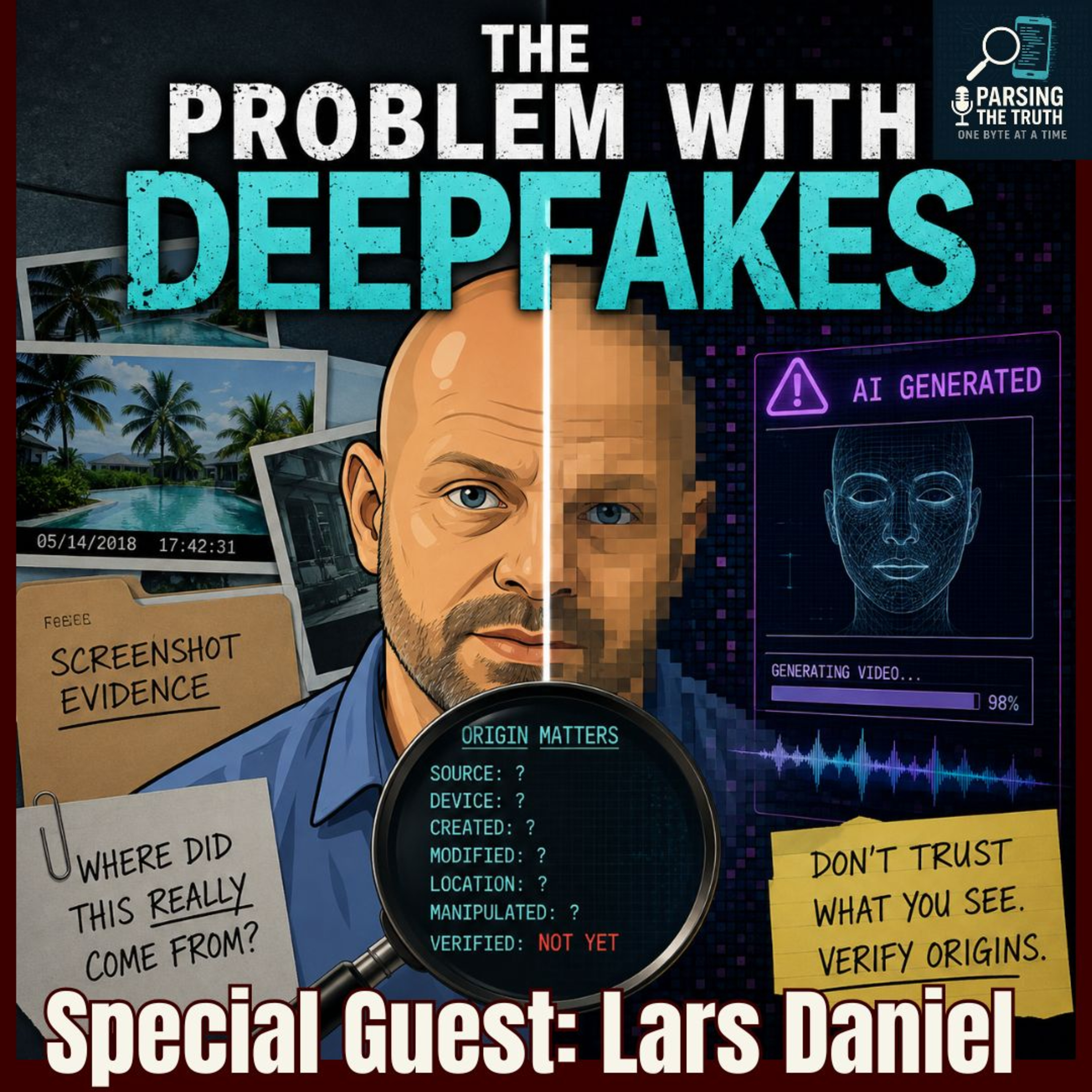
The Problem with Deepfakes
Podcast: Parsing the Truth: One Byte at a TimePublished On: Thu Aug 13 2026
Description: Deepfakes are everywhere, and determining the Provenance of digital evidence is more important and challenging than ever before. Lars Daniel joins us to discuss the steps digital forensic examiners can take in their next case.Special Guest: Lars DanielConnect with Lars:https://www.thelarsdaniel.com/https://www.linkedin.com/in/larsdaniel/Support the podcast https://patreon.com/parsingthetruthAbout this EpisodeStacy Eldridge and Becky Passmore talk with Lars about the growing risk of AI generated evidence, why screenshots and consumer device media are increasingly unreliable on their own, and why provenance now has to be treated as a core evidentiary issue.The conversation focuses on how examiners, attorneys, judges, insurers, and law enforcement can respond before fake media becomes routine in litigation and investigations.Key topicsIn this episode, Lars explains how his work in trucking and accident investigations led him into the deeper problem of AI manipulated media and digital evidence triage.He breaks down the practical categories he uses with counsel and claims professionals:He describes the business case for a layered review process: automated screening, human review, then a digital forensics expert when litigation is possible.The discussion emphasizes that the best way to prove authenticity is still to return to the original device and source evidence whenever possible.Lars warns that consumer device evidence often arrives with weak or no provenance, unlike enterprise systems that may have stronger built in controls.The hosts and Lars discuss how deep fake claims may become a litigation tactic, forcing the other side to spend time and money disproving authenticity even when the evidence is real.He explains the liar’s dividend and why it can be used not just as a defense, but as a strategy to raise costs and create uncertainty.A recent civil case example shows how a manipulated video, including added water to suggest a slip and fall, was initially treated as real until deeper analysis raised questions.Lars stresses that examiners need to stay in their lane, know when to refer specialized work, and avoid claiming expertise across every digital forensics niche.Listeners will learnHow deep fakes, shallow fakes, and enhancement differWhy screenshots are no longer enough to trust digital evidenceHow to build a layered authenticity review processWhy provenance matters in legal and investigative settingsWhen to return to the original device for verification
The note was deleted
The note was saved
Your message was sent