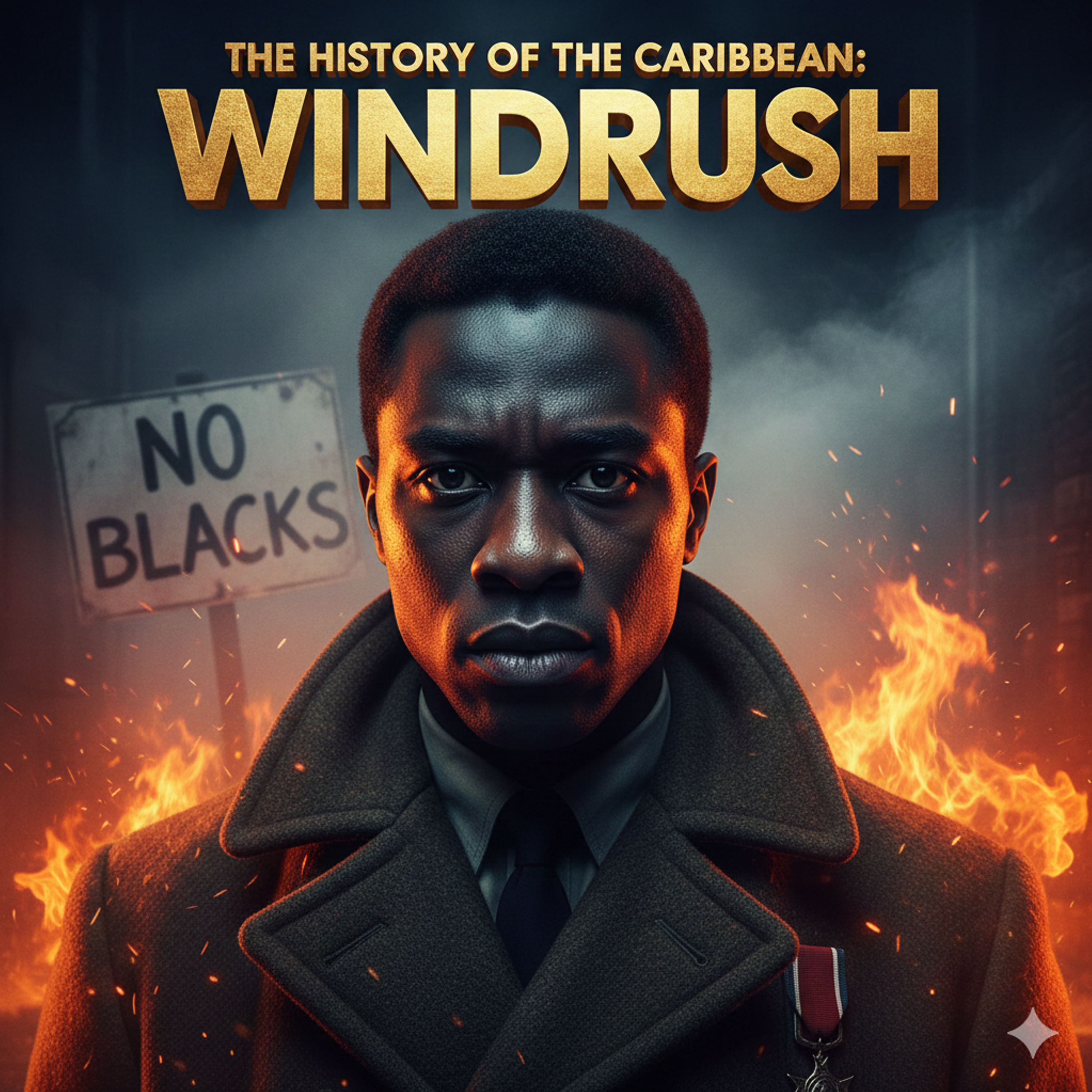
The Windrush Generation – Promise and Betrayal
Podcast: History of the Caribbeans | Exploring Resilience and CulturePublished On: Wed Feb 18 2026
Description: The Windrush Generation – Promise and Betrayal, explores the transition of Caribbean people from colonial subjects to the architects of modern British culture. It is a story told through the lens of displacement, grit, and the eventual reclamation of identity. Chapter One: The Call of the Mother Country (1948) The story begins with the Empire Windrush docking at Tilbury in June 1948. This chapter focuses on the legal invitation versus the political panic. While the British Nationality Act of 1948 granted full citizenship to those in the colonies, the arriving veterans and workers were met with cold skepticism from the state. Key Themes: The myth of the "Mother Country," the recruitment for the NHS and London Transport, and the initial housing of migrants in deep air-raid shelters (Clapham Common). The Vibe: Grey, industrial, and heavy with the weight of expectation. Chapter Two: The Concrete Cold (1950s) As the 1950s progress, the "invitation" reveals itself as a social trap. This chapter highlights the Color Bar—systemic discrimination in housing and labor. The Friction: The infamous "No Blacks, No Irish, No Dogs" signs and the "Pardner" system used by the community to buy their own homes when banks refused them. The Breaking Point: The 1958 Notting Hill Riots, where white "Teddy Boy" gangs hunted Caribbean residents, leading to a pivotal moment of self-defense and the formation of the West Indian Gazette by Claudia Jones. The Vibe: Tense, nocturnal, lit by the orange glow of petrol bombs against damp London brick. Chapter Three: The Roots in the Rubble (1960s–1970s) The final chapter deals with the institutional betrayal. As the community began to establish deep roots through the birth of Notting Hill Carnival, the British government moved to strip away their rights. The Legislative Trap: The 1962 Commonwealth Immigrants Act and the 1971 Immigration Act, which turned citizens into "immigrants" and set the stage for future legal disenfranchisement. The Political Rhetoric: The impact of Enoch Powell’s "Rivers of Blood" speech and the rise of the "sus" laws used to target the first generation of black British youth. The Legacy: A community that moved from the docks to the heart of British culture, creating a new, defiant identity that transformed the nation's music, food, and social consciousness. The Vibe: Resilient and vibrant, transitioning from the grey of the 1940s to the saturated, rhythmic energy of the early Caribbean-British soul.
The note was deleted
The note was saved
Your message was sent