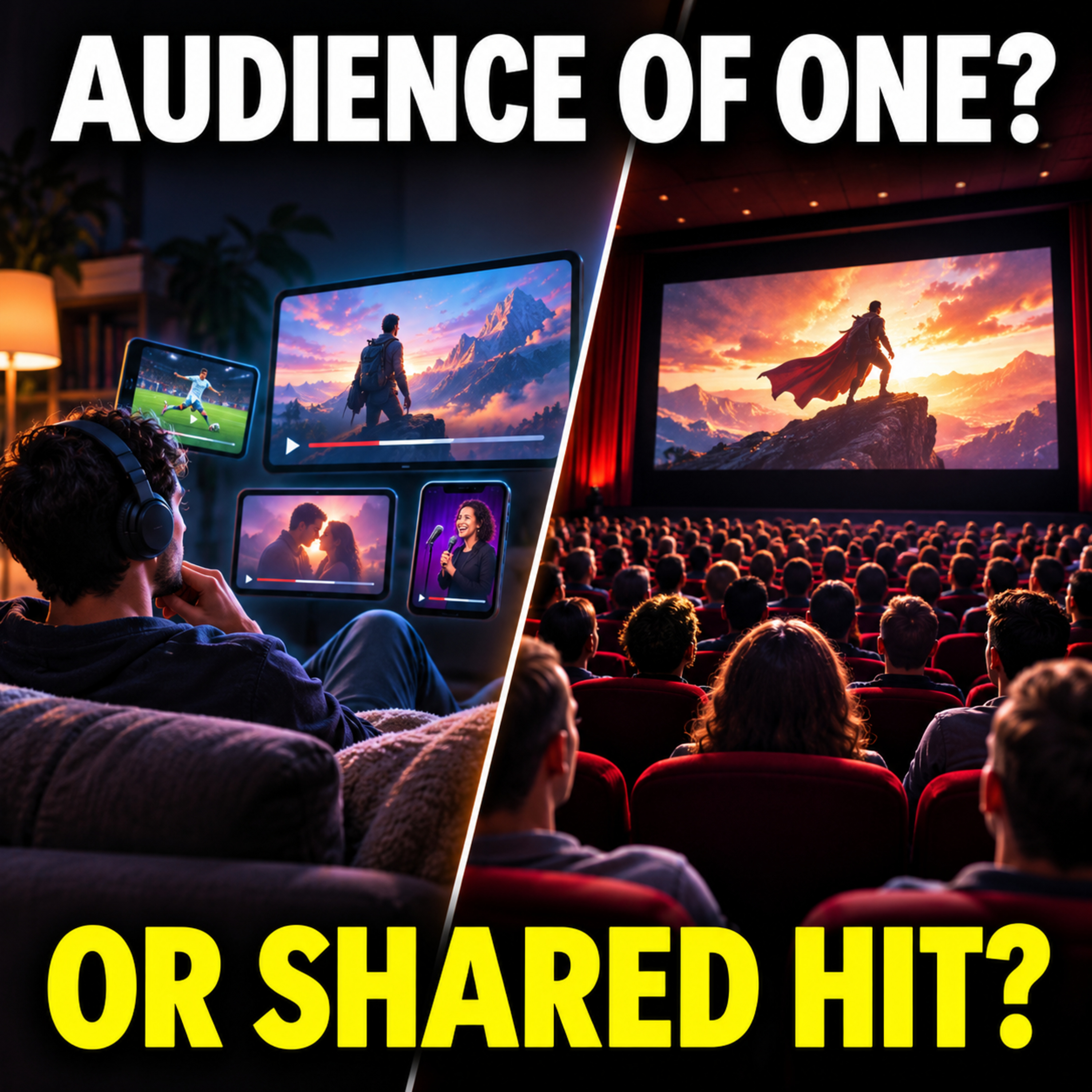
An Audience of One Conundrum
Podcast: The Daily AI ShowPublished On: Sat Nov 14 2026
Description: A television drama brings together people who wanted different things from their evening. One came for the lead actor, another for the historical setting, another because friends kept recommending it. Their combined attention pays for the writers, performers, sets, and the next season. That gathering also determines whose stories get told. A creator with a passionate but scattered audience can struggle to attract financing because enthusiasm alone will not cover the production bill.AI is changing that calculation. Tools already generate video, synthesize voices, and translate dialogue. As these tools improve, smaller teams can attempt productions that previously required substantial backing. Personalization could take that further: a creator might offer branching stories, different perspectives, or ongoing adventures shaped around individual subscribers. Someone fascinated by maritime archaeology or multigenerational rural families could become a paying audience rather than an overlooked sliver of somebody else’s market.The uncertainty concerns how those new audiences affect the business supporting everyone’s stories. Personalized entertainment might turn neglected interests into additional spending, sustaining creators who previously had no viable audience. It could also absorb the subscriptions and attention that helped larger productions recover their costs. Keeping both kinds of entertainment available does not determine whether enough people will gather around a common release to finance its successor. The crucial change is not what appears in the catalog, but what audiences collectively make commercially possible.The Conundrum:One perspective sees a broader foundation for creative ambition. A filmmaker should not need millions of viewers to sustain a demanding project. Cheaper production and close relationships with paying fans could support unusual subjects, experimental storytelling, and careers beyond the handful of companies commissioning major releases. Personalization gives viewers reasons to pay for work that free alternatives cannot supply. What looks like a fragmented audience becomes thousands of viable markets, each supporting creative risks that mass-market financing routinely passes over.The opposing perspective sees that fragmentation weakening the economics of ambitious production. A large cast, years of research, and sustained collaboration require concentrated spending. Shared releases assemble that spending from viewers with overlapping interests, then generate recommendations that attract others. When each subscriber receives an individually rewarding alternative, fewer have reason to join that gathering. Creators gain more ways to reach individuals while losing the audience scale that turns an expensive, unfamiliar project into a sustainable enterprise.Will personalized entertainment expand the commercial foundation for ambitious storytelling, or erode it by dispersing the audiences that finance it?
The note was deleted
The note was saved
Your message was sent