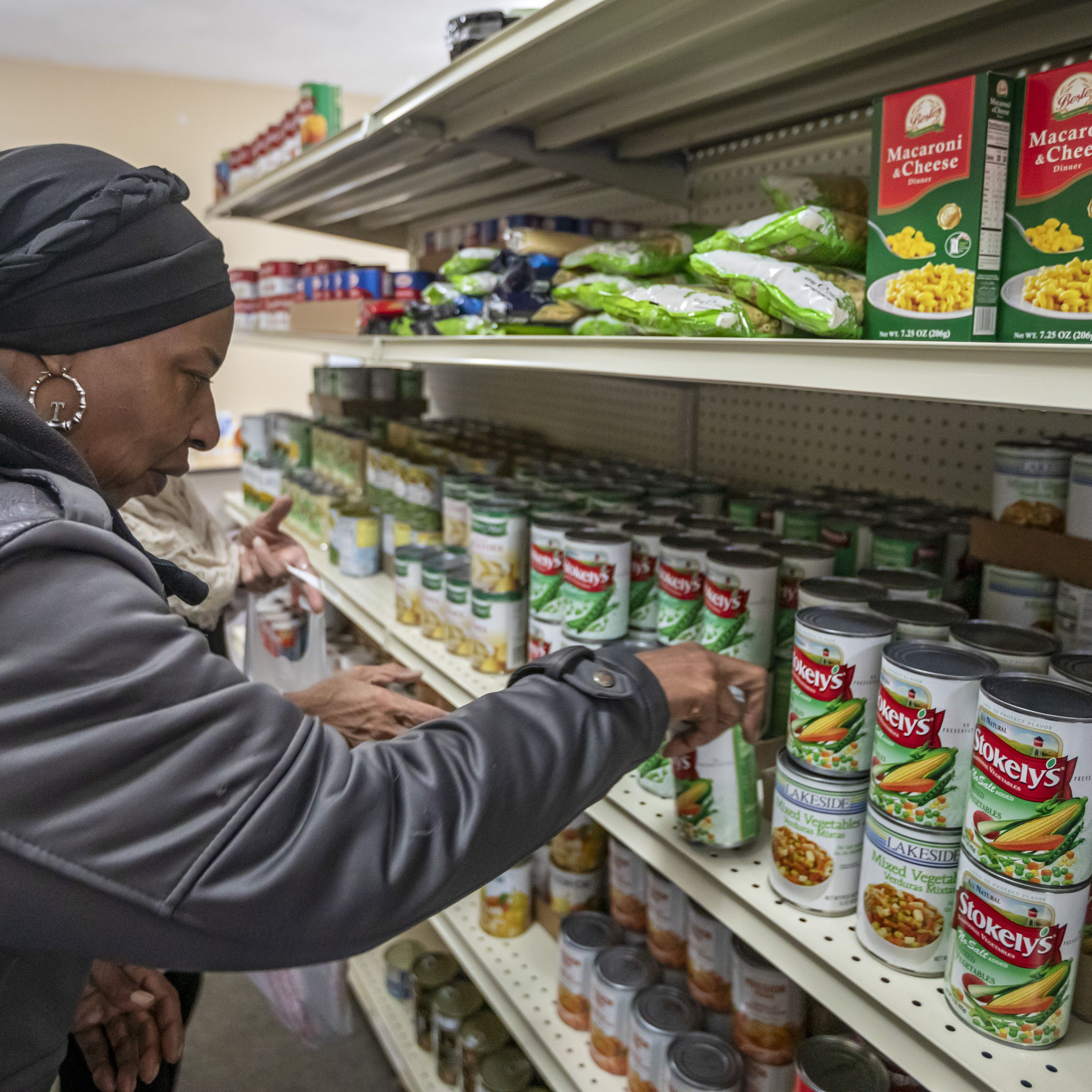
"SNAP Is The Perfect Target for MAHA."
Podcast: The Burnt Toast PodcastPublished On: Thu Dec 11 2025
Description: You’re listening to Burnt Toast! I’m Virginia Sole-Smith. Today, my conversation is with Rachel Cahill, a longtime anti-hunger policy advocate based in Ohio. Rachel and her team support national and state-level organizations fighting every day to end hunger and poverty in the United States. Most of her work focuses on making SNAP (the government's Supplemental Nutrition Assistance Program) the most effective, accessible and equitable program it can be in every community. JICYMI: When the federal government shut down this fall, it closed SNAP for the first time in the history of the program, pausing benefits for much of November. Benefits are up and running again in most places, but this has had major ripple effects on the state of hunger in our country right now. And it's led to a lot of long-term questions about what we do to prevent that ever happening again. Rachel knows more about the ins and outs of SNAP, and anti-hunger advocacy, than anyone I know, so I asked her to come on the podcast to explain what's happening, and what we can do to help fight hunger. We also talk quite a bit about how to give strategically because it is that time of year when a lot of us want to do charitable giving. Which is great! But there are good and less good ways to do that. Burnt Toast is a community of helpers, and I think this conversation will help us all be better at helping. If you enjoy this conversation, a paid subscription is the best way to support our work! Join Burnt Toast! 🧈🧈🧈🧈🧈🧈🧈🧈🧈🧈🧈🧈🧈🧈Episode 222 TranscriptRachelI am a SNAP advocate. That's how I think of myself. That's my identity. I live in Ohio, and I have been working on SNAP, and the food assistance programs that are connected to SNAP, for almost 20 years. I started working on it in Philly, and have now worked in a number of different states. My passion is to protect our food assistance programs that help families meet their basic needs. If we had something better than SNAP in this country, honestly, I would work on that. But because SNAP reaches 42 million Americans, and it's the best safety net we have, that's the program that I've committed to working on. I do policy, advocacy, administrative, legislative—wherever we can fight for the program, we are doing that.VirginiaIt's incredible. I should disclose that we have a personal connection. I first met you, I guess, 20 years ago? When you were in college, you were a student of my stepmother, Mary Summers, who has also been on the podcast.RachelActually, I was a fresh out of college working in the community at the Greater Philadelphia Coalition Against Hunger. And Mary had students who she placed with us in a service learning program. Mary was one of my first and still mentors, who has supported me in lots of different ways through this career. And I think you did some interviews with Witnesses to Hunger? I worked on that program many years ago. So yeah, we've evolved a lot, Virginia, since those days.VirginiaYes! When I was researching my first book, The Eating Instinct, you helped connect me with folks for interviews. Rachel and I go way back in a shared advocacy spirit, sort of way so I just wanted to give people that backstory. And so I emailed you a few weeks ago to say, Rachel, help! Please come on the podcast. This was when the government was shut down and it had triggered the freeze on November SNAP benefits. At that point, everybody was scrambling, and I knew you were doing the most scrambling. Of course, because of politics, the shutdown is now over. SNAP benefits are once again being distributed, for now anyway. But that is not to say that hunger has been solved in this country, or that the 42 million Americans who rely on that program are just totally okay now. You were like, "Do you still want to have this conversation?" And I was like, well, yes, because people are still going hungry! RachelYeah, thanks for the chance to talk about this! In the 20 years I've been working on food stamps, there has never been a moment I remember where SNAP dominated the headlines for two weeks straight. So on the one hand, I'm trying to see the silver lining in this massive drama to say it's a chance to educate everybody, including your listeners, about what the SNAP program is. It has been this quiet backbone program, running and feeding communities for almost 60, years. And during the shutdown, SNAP essentially got used as leverage for both parties to bludgeon each other with and blame each other for starving the citizens of the United States. It's unprecedented. I feel like that's an overused word these days, but this truly has never happened before. SNAP benefits stopped going out across the entire country. And the emergency food system—the food pantries, the soup kitchens, the food banks —was never meant, or equipped, to be able to overnight replace what SNAP is is doing in the community.Just in my home state of Ohio, we're talking about $263 million a month that goes out in SNAP benefits. No fundraiser for a food bank was ever going to come close to replacing that. It was a crisis. It was an absolute crisis that we were facing. So starting on November 1, people's benefits were frozen. They still had to complete renewal paperwork. They still had to comply with work requirements. But people weren't getting their benefits delivered. And then it turned into a Supreme Court battle. It went all the way up to the Supreme Court because the administration actually did have money available that they could have spent, and they were choosing not to spend it on the program that it was dedicated for. So finally, when the shutdown ended, the benefits slowly started flowing again. We're recording this on November 25 and in a few states, all the benefits still have not gone out. So there are still families who are supposed to get their benefits maybe the beginning of November, and are still waiting. The long-term harm of this is hard to overstate. The definition of food insecurity is not knowing where your next meal is going to come from. And we just traumatized 40 million people who did not know where their next meal was going to come from. 40 percent of SNAP recipients are children. Their bodies and brains are going to remember this trauma that they just went through, and it's going to be a long time before we can repair that harm. We need to make sure that this type of a crisis never happens again, and Congress is never in a position where they can hold SNAP benefits hostage, even in a future government shutdown. VirginiaI've been thinking about the juggling act that this triggered for so many families. If you relied on SNAP to cover groceries, that meant you could use other income to cover childcare or pay a utility bill. So we're also going to see folks having fallen behind on other bills. Maybe they're unable to make a car payment, which then impacts their ability to get to work, to get kids to school, so many different things.RachelThere's a saying that poverty charges interest. You might only have gotten $200 from that SNAP benefit, which supplements your work income. But if you're now having to put a bill on a short term loan or credit card and you're paying 20 or 30 percent interest on that because you waited three weeks...How long is it going to take families to dig out of that hole? We hear all the time about utility shut-offs, all the time about evictions that get connected to a small change in household income, including the loss of SNAP benefits. Now I will say, because we have made SNAP such a difficult system to navigate and renew benefits, even if the government never shuts down again, this uncertainty where your benefits disappear, you go to the grocery line to checkout and you find out that your benefits aren't there because of some paperwork mishap—that actually does happen a lot in families' lives. There's a lot we have to do longterm to make this a more stable program for everybody who's experiencing the instability of food insecurity. But this was certainly a crisis moment where it was hitting everybody at the same time.VirginiaSay a little more about that. Because for those of us who are mostly just seeing headlines, it's like, Okay, the government reopened. Okay, the SNAP benefits are back. But this is a system that was already not meeting the need. So what are some other ways SNAP struggles to support families?RachelFirst, let me just remind folks who don't know, if you've never been connected to the program: SNAP is a very modest food benefit. It is on an EBT card, like a little debit card, that is loaded every month with money for groceries. But it's the equivalent of, like, $6 a day on average. It is about as much as most people spend on a cup of coffee. It is not a generous benefit. There's a lot of misconceptions about what SNAP is. It's a very modest benefit you can only use for grocery items. The program—for as great as it is, and it's the best thing we have—has a history of exclusionary policy making. Certain groups have gotten excluded and carved out over time. And HR1, the big bill that passed July 4, really took a sledgehammer to SNAP, too. It cut almost $200 billion out of the program and did some additional exclusionary policy making, the impacts of which we're just starting to feel. So I put the barriers to SNAP in two buckets. There are eligibility barriers, meaning the people that policy makers intentionally exclude from the program. This includes groups like legally present immigrants. It includes people who are forced to prove that they are working over and over again, and if they can't provide the paperwork proving it, then they get kicked out of the program. So there is exclusionary policy making that has to be tackled at a legislative law making level. Then there's all this other stuff, which is most of what I've worked on for 20 years, and what I worked on with Mary twenty years ago. These are the kind of the administrative barriers that people face in tackling the program. Application forms that are 40 pages long, that ask extremely intrusive questions, asking for tons of verification. You have to do a full interview with a case worker, you have to renew your benefits at least every six months. All of these hoops are built up in the program to make people jump through, and that often keeps the folks most in need of benefits from accessing them. Not because they're not eligible, not because they don't need them, but because they just give up when the program is too hard to access. So we do a lot of work at the county and state level, state by state, red, blue, purple states to try to tackle some of those administrative barriers.VirginiaIt is wild that we think people need to work to have the right to buy food. And that we think people need to fill out 40 pages of paperwork just so you can buy groceries this week. RachelIn a number of states that have asset tests, you're asked for bank statements. You're asked for a copy of your rent receipt, your child care bills, how much do you spend on utilities every month? Applying for SNAP is harder than getting a house loan. It's harder than getting a business loan. It's harder than almost anything else, but that is the way the program was built. And there continues to be this persistent stigma or this narrative about unworthiness that has persisted in the program is so disconnected from reality. I'm hoping having this spotlight on SNAP, where we dominated the headlines for two weeks, does give a moment for people to take a second look at the program, really learn about what it is and start to fight for it. If you survey the American people, 90 percent of people, regardless of their political affiliation, will tell you that they think we should be doing more to help people meet their basic needs and pay for groceries, not less. But that doesn't match with what's happening legislatively in Congress. So we need people to know more about this program so that they feel like they have a stake in it. And I guess I just can't stop myself from saying one more thing: SNAP is so critical to our actual economy. One of the things that happened in the beginning of the shutdown is it wasn't just the folks losing that groceries on their table, it was the grocery stores they shop at, which, all of a sudden were saying, We have no customers, because 30 percent of our receipts come from SNAP and no one's shopping right now. I had a local store here in a rural part of Ohio which started laying people off immediately. Because they didn't know when those receipts were going to come in, and they don't have enough of a margin to be able to maintain their store without the program. So if we want our grocery stores to continue to exist and be in all parts of the country, we need SNAP. As that lifeline too.VirginiaWe agree we should be doing more to feed kids. We agree we should be doing more so that people don't go hungry. And yet, the program is built with so many barriers. And that's because there's this way we feel really good about fighting hunger—and it isn't the way that actually fights hunger.RachelI'll say two things to this. Because of the history of exclusionary policy making in SNAP, there is always going to be the need for charitable giving. And there's always going to be, I think, the need for a wraparound system that provides food in real time, today, for anybody who needs it. That's what the best food pantries and soup kitchens provide: No questions asked, walk in the door, get food today. But that doesn't solve the long-term problem. So while we are always going to need that, I think the reason there's this mismatch is this misconception about who benefits from SNAP. So, if you asked those same 90 percent of people who they think the most common person on SNAP is, they would say, "It's a 30 year old in their basement playing video games." It's the same stereotype and tropes about health care, about who benefits from the safety net. There's this misconception that there are people who aren't pulling their weight in society, and that's who's benefiting from these programs. But if you actually look at the programs, most people getting SNAP are elderly, retired, they're people with disabilities, they are children, and they're working parents. They are parents working sometimes two or three jobs, but in low wage work that requires the supplement of a SNAP program. This group of "non-working but capable people" that people imagine are benefiting from the program is a fantasy. And it's intentionally used by politicians who want to attack the program. That goes back to Reagan and before, right? It's a long political strategy that we have in this country. I've been really grateful in my career to see even the food banks and the rest of the charitable sector has come a long way in talking about SNAP as an integral part of feeding the community. Feeding America is a big association of food banks. And they will say: SNAP provides nine meals for every one meal that a food bank can provide. So I think the solution is not to say, "Is it charitable giving or SNAP that solves this problem?" It's actually the blend of the two that's going to make our community's food secure.VirginiaThere's a bit of moralizing, I think, that goes into this. People feel good about giving to a canned food drive, but not necessarily good about voting for policies that would protect SNAP. And with RFK and MAHA taking over the rhetoric around all of this, is that leading to even more policing about what people can spend SNAP benefits on, and what kinds of food we want people to have access to?RachelI'm going to first tackle the voting question. I think that very few people ever vote based on their beliefs or policy preferences around SNAP. I've yet to see a major political campaign where SNAP was a top issue that got talked about. That might change after the shutdown. We did see a lot of politicians on both sides of the aisle come out in defense of SNAP when the shutdown started, and that was, I hope, a jumping off point for people to actually vote. But I think there's this disconnect. I think there's a lot of bipartisan agreement here that we don't see. When you think about folks who are anti-SNAP, if you look at the comment section of an article in the newspaper that's about SNAP, you'll always see online comments that are disparaging SNAP. But if you look one layer under the maybe racism and misogyny that are layered on top--VirginiaHard to look past it, but sure, I'm with you. Comment sections are not my favorite.RachelAgreed. But if you do look past, most people's story is actually about they themselves not getting benefits from the program. So it's often a story of, "I don't like SNAP because when I needed it, I couldn't get it, or because I wasn't able to comply with the work requirement and that wasn't fair," or because I was disabled, or my family member was and couldn't get the help that they needed.So I think that, like so many social compacts in our society, if we actually built the program to help everyone who needed the help from the program, you would see more political support for it. That's why universal programs like Social Security generally benefit from really high public support, because we don't do the kicking people out there. There's not this sense of "if this group gets it, then my group doesn't get it."Some of the realest conversations I've had about SNAP are with families and parents who are just over the income limit and are really upset that they lost access to that benefit once they got a raise or once they got a slightly better job. And that just fundamentally isn't fair. So if we brought in the program and make it more accessible, we would have higher political support for it, I think.All right, on your MAHA question, which I know fits very well with your audience in terms of like you guys track the MAHA stuff.VirginiaWe do. Unfortunately, that has become a core part of our beat.RachelThe great irony of 2025 is that SNAP is one of the single best things we can do to make America healthy again. SNAP has every research study behind it that shows kids who get SNAP as children have higher economic output. They're healthier as adults, they work more. Older adults are less likely to go to the hospital, less likely to go to the nursing home, if they have access to SNAP. The research is abundant, right? VirginiaIt's wild we needed research to prove that feeding people made them healthier, but okay.RachelYes, but we have it. It's rock solid. I spent too many years trying to help those research studies to get published in peer-reviewed journals. We know that to be true. You also have a parallel movement that's been happening for several years, where food banks have been working with insurance companies and other healthcare providers to make sure that they're doing tailored meals, meal boxes for people who are going through cancer treatment, people who have diabetes diagnosis. So these sort of tailored meals continue to be a trend. SNAP is a payer. Medicaid is a payer for those programs, all of those things improve health. MAHA, of course, is not about improving health. You guys know that.It has become is about policing food, right? That is what MAHA is about. And so SNAP was an unfortunately perfect target for MAHA. As soon as we got into legislative sessions. This is at the state level. In January of 2025, we saw a flurry of MAHA-supported bills that would restrict what people could buy with SNAP benefits. In some states, it was soda. In some states, it was candy baked goods. In a state like Iowa, it's literally everything. If it didn't grow on a farm in Iowa. If it's not a vegetable or a legume, it's not in the program. So you've got these extreme proposals that came out of it was the same two or three lobbyists who came through. They were Casey Means, they were RFK-alliance folks who came through in the state houses. And the only opponents in those hearings were the SNAP advocates. It was the Morris Institute for Justice in Arizona and a couple of brave food banks in some of the red states who saw these bills, and they were there to explain to lawmakers calmly how they have been working, how SNAP supports health, how there are other alternatives. I will say there were some victories. During session in Kentucky, the advocates very effectively educated lawmakers that it would be better to incentivize healthier purchases — because all the research says incentivizing healthier purchases works better than restricting access programs.VirginiaYes. Letting people buy food works better than banning what people can eat. RachelAnd so they actually got a legislator to to come off of a bill that he had supported and to propose a new bill for an incentive-based program. So I think that education work in some political contexts was very successful.But then we saw the White House call governors and said, "Well, you couldn't get this through your legislature, so now you need to do it through an executive order." And that's where we really have seen the most harm done with these proposals that have come straight out of of governors offices under pressure from RFK. I think my long-term view of this is that we are going to have to see the harm done in a handful of states, and see how much of a mess it is for retailers. Still to be determined if retailers sue over these restrictions, which really put all the costs on them to police their grocery lines. I hope what happens is we have, at worst, a couple of states implement these rules, we see the harm done, and we walk it back. And we see that the MAHA thing was a fad that we recover from in SNAP. Because at the end of the day we're talking about a $6 a day benefit. People are not able to meet all of their grocery needs with SNAP, regardless. You may accomplish shifting the order in which people check out. Maybe we'll put all of our fresh, healthy foods at the front of the of the conveyor belt to use our SNAP benefits on, but we're still going to buy our kids the birthday treat that they deserve to have. So it's a big old waste of time, in my opinion. And I hope that it's a fad we are able to move on from in the long run.VirginiaI hope so. MAHA is the worst version of it, but we did have Michael Pollan and Marion Nestle arguing for no soda on SNAP back in the mid-2000s. So it does seem to be this thing that we keep circling back to. And I think it is part and parcel with "it feels good to do food drives, but not to make SNAP more robust." It's this idea that all poor people need is wealthy white people to tell them how to eat, and that will solve hunger.RachelYeah. You are right that that instinct has been there for a long time, and it it probably will outlive it. In a number of states the American Heart Association came out in support of these bills. We had some doctors groups come out in support of these bills. But where they would get stuck—and this is where these proposals quickly fall apart—is how do you define the ingredients of these processed foods. Even, let's say a soda. So you had, in some states, the proposal was, "anything with bubbles is a soda." And therefore you can't buy it with SNAP. But then you have the doctor being like, wait, I did tell my patient to buy the diet soda or the 30 calorie soda. VirginiaAnd what about seltzer!RachelIt's so arbitrary! And if you look at the way that grocery stores label their products, they're by category. They're not by healthy or unhealthy. There is no universal healthy or unhealthy label, as you well know. So it's all well and good when it's moralizing in the hypothetical. But I had to spend a solid four months sitting on a SNAP restrictions work group for the state of Ohio. It was appointed by our governor. And I was in there with industry folks, grocery folks, from health care talking about the nuts and bolts of how to put this into effect in Ohio, which we're going to have to do in the end of 2026. And once you get into the definitions, it falls apart very quickly. So I wish we could go back to focusing on the bigger important things, but I think we're going to have to keep re-educating people every time this wave of this fad, this intention comes around. People need to be reminded that SNAP is there as an economic support to supplement low wages. If we really wanted people to not need SNAP, we need to have a higher wage economy. And that would be a much more straightforward way to solve the problem. VirginiaIt feels very part and parcel with the whole ultra-processed food conversation, which, similarly, when people start defining it, they're like, well, wait, what is ultra processed? What do we mean? It's everything, which then quickly becomes nothing. RachelIt's a distraction. But here we are. We still work.VirginiaOkay, so it's December. This is the biggest month of the year for charitable giving. I think you did a great job of explaining there's a role for food pantries and food bank systems in all of this. But that's not the full solution. How should people think about charitable giving, especially this December, right now, given what we're up against?RachelI love that people are invested in charitable giving at the end of the year. I personally do the same thing, and I try to look at the organizations that are doing the most long-term policy advocacy, because I'm looking at the upstream solutions, and those are often the most under-resourced organizations. You can look at the 990s of organizations. You can look at their overall budgets online and see that your typical food bank, or really any direct service, often has a many millions of dollar budget. But an advocacy organization that's there to change a policy that would help a million people often has a budget of maybe a couple hundred thousand for the year. So when you donate to a policy advocacy organization or a legal aid organization, your donation goes a lot farther and is much higher impact. Because even if you can't give $10,000 and you can only give $200 or $50, you're going to make a really big impact on those smaller organizations' budgets. So that's one place I would think about. This year, I am doing a lot of donations around immigrant support, given the onslaught of what's happening in this country against our immigrant communities. There are a number of organizations, mostly small and sometimes kind of fitting into the mutual aid category, that are trying to provide direct support as well as legal support to immigrant communities right now as they're under attack. So that is what I think, in this moment, is a really good investment. At the same time, the charitable food system is very dependent on donations this time of year too, because lots of people in the community turn to them. They know that they might be able to get a turkey at Thanksgiving. They know they might be able to get a Christmas meal from them. So those are never bad investments. I do think they are very good stewards of the donations and the money that they get. But if you can look a little bit deeper in your community and see where a policy advocacy organization exists—every single one of your states has at least one or two core social justice organizations that would really benefit from donations this time of year.VirginiaAnd I'll just make the point that if you are giving to the local food pantry, think dollars over donations of goods, because they can do a lot more with your money. They can buy in bulk. They know more what their community needs, rather than you assuming that it's something you have in your pantry. That's that's probably like the least impactful way to donate.Rachel100 percent. And a very common mistake that well meaning people make all the time is donating products that are hard to readily consume. Donating a box of mac and cheese, but not the milk and the butter that goes with it. Or a can of beans that needs a can opener. If you're going to do canned goods, make it a pop top because so the people can open it. A lot of times homeless ministries really benefit from those canned soups or whatever, but they need to be accessible without a can opener. So if you are going to do a food drive—I know my kids' school does one, it's a great way for kids to get hands on experience with it being involved— just think through, could this be a meal on its own, rather than, is this going to be something that someone's unable to use without other fresh products?VirginiaLet's talk a little bit about mutual aid. This is something Burnt Toast as a community, we've been just starting to wrap our arms around. We did a very successful Mutual Aid drive at the start of November to help with the benefits shut down, and raised around $11,000 that we were able to distribute to, I think it was 62 folks in our community. So that was great. It's something we want to do more of, and I know a lot of listeners want to do it in their own communities. But there are some things that come up for folks. I've heard people say, "I don't feel comfortable donating to someone I don't know." And some of this, I think, is a little bit of that internalized moralizing stuff that we were talking about, where it's like, am I just giving money to a random person and I don't know what they're using it on? So talk us through your take on mutual aid and some of the concerns you hear coming up around it. RachelI think mutual aid is a beautiful thing that has existed for many, many generation. It hasn't just been in the modern online era.VirginiaRight now, it's a social media hashtag.RachelThat's right, that's right. But it's always been in communities, and you could talk to communities all over the country, and they would say they wrap their arms around folks and share what they have in times of crisis. And that's what the modern era of mutual aid is allowing us to do—but with people who don't live in our physical neighborhood, because we're so segregated as a society. My fundamental belief is that cash is the best way to provide someone with the dignity to make decisions for themselves on what their family needs in that moment. I have no idea whether you need a bus pass or a pack of cigarettes or money for rent or whatever you need to get through that day as a human being. You should have the autonomy to decide what that is. When I started this conversation saying I've worked on SNAP for 20 years, because it's the best thing we have—if we had a robust cash assistance program, I would work on that. There are really nice models in some communities of how to target mutual aid towards groups who are otherwise getting excluded from public benefits and other programs. Here in Ohio, we have a local, organic thing called AMIS, it stands for Americans Making Immigrants Safe. And it's a locally funded cash assistance program for families who are excluded from public benefits. They're seeking asylum, they're working with a lawyer to get their paperwork through. They're stuck waiting on their green card, whatever it may be. And so that is a way that cash can be distributed to folks who are getting excluded from SNAP and excluded from Medicaid. So I really like that program, because there are folks doing the work of the connecting. I don't speak the languages of everybody who needs connecting to that program, and I would never be able to find through Facebook those folks who need that the most. So I think that's a great model. But I also think another really cool model that evolved during the shutdown was an organization called Propel. They have an app that people use to manage their SNAP benefits. And we were talking as the shutdown was looming, and they were like, "What can we do? Should we encourage people to donate to food pantries or whatever?" And I was like, "No, just use your app to give people cash." And they did! They figured out a way to do it. I don't know how many millions of people that they helped, but they were giving a $50 cash payment to the same families who were losing out on their SNAP benefit. So I think that kind of creativity of just saying, "Trust people with $50 in cash and let them decide what they need in this moment." As the giver, you don't own the choice, right? If that person gets ends up buying something that you personally wouldn't spend your money on, that is not on you. And that is not a waste of a donation. That is you just putting goodness into the world and giving somebody else the dignity to decide with themselves what they need in that moment. So that's my take. Get over yourself. Just give people cash.VirginiaYes, yes. Thank you, Rachel. I love that so much. I think it's just a moment when you feel those thoughts coming up, and it's important to pause and say, oh, wait, this is me thinking I know how other people should live when of course we don't. Of course we are not navigating what they are navigating in a day. But we can all imagine how would it feel if whatever our source of comfort, or vice, or coping strategy is, was suddenly inaccessible because somebody was telling you it wasn't good for you. RachelAnd that's the beauty of what mutual aid can do. We do all the other moralizing in our public systems. Families in the child welfare system are heavily scrutinized and penalized. People who are experiencing homelessness are heavily scrutinized. People going through drug treatment, who have had a traffic violation. There are a million other ways we police people in society. We don't need to do that with mutual aid.🧈🧈🧈🧈🧈🧈🧈🧈🧈🧈🧈🧈🧈🧈ButterRachelWell, as a longtime listener, I will say I've gotten great ideas from other people's butter. So thank you for having this segment. Honestly, the thing that brings me the most joy right now is reading Anne of Green Gables to my daughters. We are just about to finish the third book, which is Anne of the Island. And it's, you know, from a million years ago, set in Prince Edward Island in Canada. I will say what is just cracking me up with each chapter is the way that parents are just as annoying in the early 1900s as they are today. Anne is a school teacher in one of the books, and the things that parents complain about, like my Johnny really deserved an A on that test, are all the same things that our poor teachers have to deal with right now. We have screens in our house. I am not some puritanical Little House on the Prairie mother, but it's the one thing we do before bed is we've been reading Anne of Green Gables. So now we're starting to binge all the different PBS series. There's Anne with an E, Anne of Green Gables. There are redos, there's a 1980s version that's amazing. So all things Anne of Green Gables right now are bringing me joy.VirginiaI'm so rooting for this in my own life. My kids don't take my book recommendations. So there is a copy of Anne of Green Gables sitting in my family room right now that I'm just, like, waiting patiently for someone to discover. If they know I want it too much, it won't happen. So I just leave things like that out. I'm really hoping to join you in this Anne of Green Gables magic soon.RachelYou can mention that Anne is a real troublemaker, that's what got my 10 year old into it. It was when I told her some of the snippets of the ways that Anne breaks rules. Then she was like, oh, all right, maybe I'll try it.VirginiaI love it. My Butter is a really good cookie recipe. It is a vegan chocolate chip cookie recipe, which I was extremely suspicious of—it uses banana instead of egg and peanut butter. But they are so good and chewy and it's so easy to make that I've actually been baking them more than just scooping the store-bought cookie dough, which I will always be a fan of, because the ease is unmatched. But this is a really easy recipe. They're super delicious. I don't think there's anything healthy or special about them, but if you have someone who can’t do eggs or whatever, it's a nice option to have. And this time of year we need a lot of treats.RachelMy daughter's art teacher just told me that she's having a fully vegan Thanksgiving, and I was super impressed with her, and trying to figure out how I could possibly gift her something at the end of year. So I'm going to try your cookie recipe. VirginiaYay! Rachel, this was so helpful and informative. Thank you for everything you're doing. Tell folks, how can we support your work? If we want to learn more, where should we follow you?RachelThank you for having me on. I have been listening to, and learning from you for many years, both on the parenting side, with little picky eaters with your first book, and—oh my gosh, I want to show you my fan girl real quick. I'm sorry. Cut this out of the podcast, if you want. But here is a copy of—I know this is like, not a live video thing where your listeners can see me, but I am holding up Fat Talk. I was a pre-order! Let me show you, and I got it signed by you at your local bookstore. But anyway, I love your books, and I have learned a lot from you over the years. So I just want to say thank you for that. In terms of where you can find me, I mostly hang out on LinkedIn. I lead a consulting team because I don't like real jobs. So we actually do consulting projects for lots of different organizations that are all in the SNAP advocacy space. You can also find us at our website, and learn a little bit more about the advocacy that we're doing and the organizations that we work with. But we are always trying to build more SNAP advocates, whether as a volunteer, as a person with lived experience who wants to go and testify before Congress and talk about why SNAP is important, or just someone who wants to write a check and support organizations. We can always point you in the right direction. So feel free to reach out if you're interested in learning more about SNAP.🧈🧈🧈🧈🧈🧈🧈🧈🧈🧈🧈🧈🧈🧈The Burnt Toast Podcast is produced and hosted by Virginia Sole-Smith (follow me on Instagram) and Corinne Fay, who runs @SellTradePlus, and Big Undies.The Burnt Toast logo is by Deanna Lowe.Our theme music is by Farideh.Tommy Harron is our audio engineer.Thanks for listening and for supporting anti-diet, body liberation journalism!If you've ever received food assistance, tell us what else people don't understand about SNAP in the comments. And if you'd like to help with ongoing Burnt Toast Mutual Aid efforts, fill out this form. We'll be figuring out our next round of support after the holidays!
The note was deleted
The note was saved
Your message was sent