You Don't Have to Be a Super Ager
Podcast: The Burnt Toast PodcastPublished On: Thu Nov 20 2025
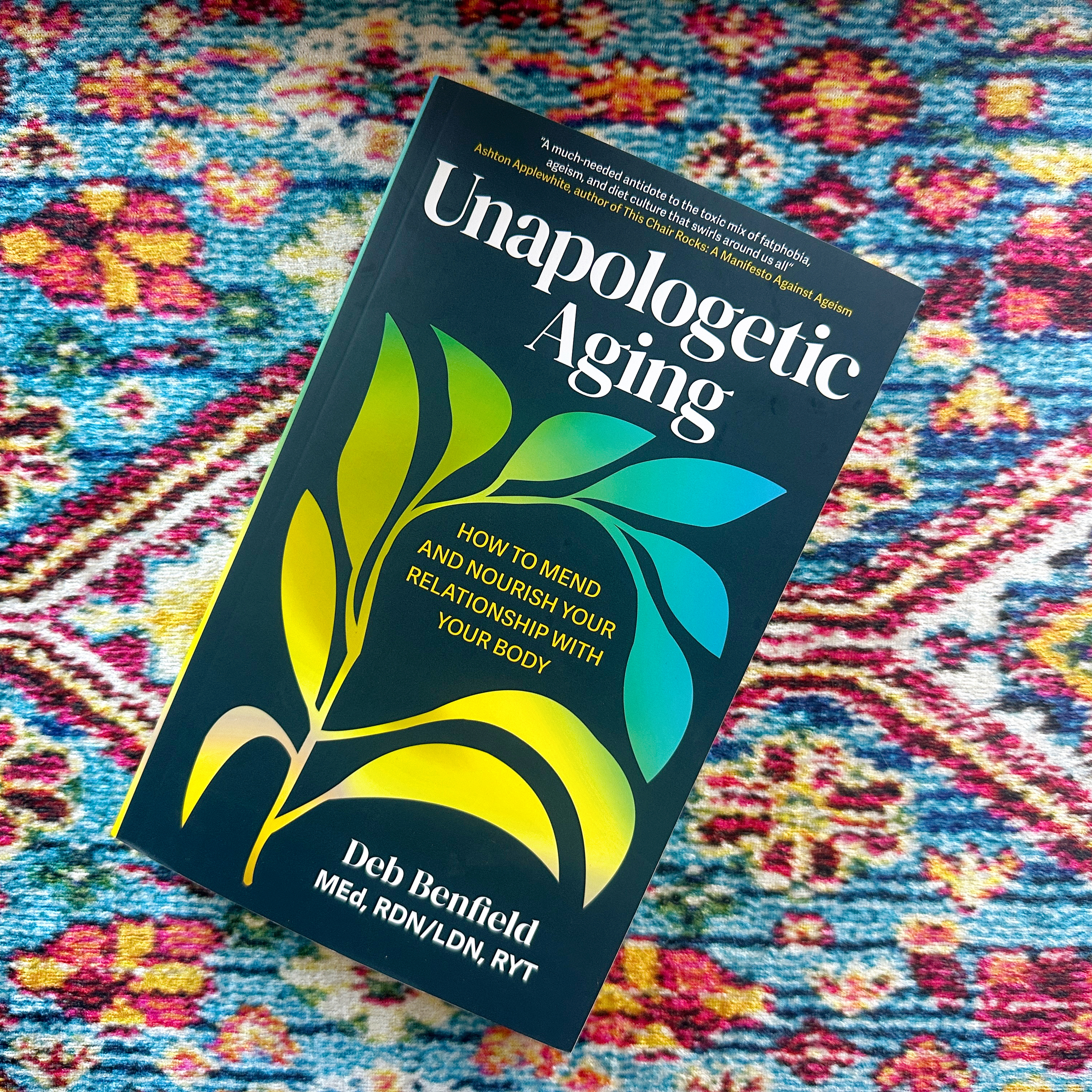
Description: You’re listening to Burnt Toast! I’m Virginia Sole-Smith. Today, my conversation is with Debra Benfield, RDN.Deb is a registered dietitian/nutritionist with 40 years of experience helping people heal their relationship with food, movement and their bodies. Her work sits at the intersection of anti-ageism, body liberation and trauma-informed care, offering a radically compassionate alternative to diet and wellness culture—especially for those in midlife and beyond. After turning 60, Deb began questioning the dominant narratives around aging, vitality and beauty, and quickly realized the majority of resources still centered weight loss and youthful appearance as the ultimate goals. In response, she created what she couldn't find: A framework for nourishing the body that honors body respect, prioritizes liberation and embraces the full spectrum of aging. Deb is the author of the beautiful new book Unapologetic Aging: How to Mend and Nourish Your Relationship with Your Body. Deb came on the podcast back in 2023 and we had what was really the first, or certainly one of the first, conversations we've had on Burnt Toast about the intersection of ageism and anti-fat bias. That discussion helped lay the foundation for how we're continuing to talk about those issues. Deb is someone I always turn to for resources and wisdom as we're navigating those conversations here. I am so thrilled to have Deb back on the podcast today, to talk about her new book, how diet culture has hijacked the menopause discourse, and why peanut butter and jelly sandwiches are actually giving you all the protein you need. Unapologetic Aging comes out on December 16, so now is the perfect time to pre-order it as a holiday gift for yourself, your mom, or anyone you know in midlife and beyond! And don't forget that if you've bought Fat Talk from Split Rock Books, you can take 10% off your purchase of Unapologetic Aging there too — just use the code FATTALK at checkout.And if you value this conversation, a paid subscription is the best way to support our work!Join Burnt Toast! 🧈🧈🧈🧈🧈🧈🧈🧈🧈🧈🧈🧈🧈🧈Episode 220 TranscriptVirginiaWe are here to talk about your new book, Unapologetic Aging, which comes out on December 16. I loved the book. I think it's such a valuable contribution to this whole conversation. It's really a guide to living well in midlife and beyond without, as you put it, "the whole diet and wellness mess." It's also a very powerful reckoning with how our ageism and fatphobia prevent us from doing the things we really want to do at this time. DebI'm trying to create some awareness of our internalized ageism, because I think it goes unnoticed. If anybody is listening to your podcast, my hope is that they've already done quite a bit of work looking at their anti-fat bias. So then it's about looking at where those two meet, as you notice changes in your body. So I created a book that helps you with your awareness and with how you could look at making choices to support yourself and mending some of the body stories you carry about your aging and about changes. That includes being in a larger body, and some pieces around body image and intimacy. Body liberation as you age is such an important legacy for the generations to come. VirginiaI want to start with something I underlined right in the introduction. You wrote that we so often hear “You haven't aged a bit!” And this is considered a grand compliment, right? But you're immediately questioning why. Unpack that for us.DebAgain, hoping that your audience is already aware of how “you look great,” if you lost weight is a problematic thing for someone to hear. It's very similar. It's a very parallel compliment in that you just calcify this belief that looking older is bad and looking younger is always better. That very definite binary that we impose upon ourselves. It is very much like looking thinner is always a victory, and looking larger must mean you're failing in life. VirginiaIt's so interesting when you step back from it. Why do we not want to look like we've been living? Why would I want to look like a younger, less accomplished, less mature person? Not to criticize my younger self—but why wouldn't we want to own the aging that we've done, and the living that we've done? DebWe've just internalized all of this fear. And I get it. I understand that to pass as younger gives you more social collateral, and theoretically you lose relevance in our very ageist culture. So I get it. It's disempowering to say the very least. And it's a perpetual fight. I'm not a fan of fighting my body overall. And I think that's what's at the center of my book: What happens when you stop fighting, and instead befriend, and care for, and lean into the connection and relationship you can have with your body? How beautiful it is, especially at this time in life. There's so much liberation there that I'm very attracted to that for myself and anybody that wants to talk to me about it.Join Burnt Toast! VirginiaI have a kind of funny story to confess. As I was reading your book, a moment came up where I had to recognize, oh, this is my own internalized ageism showing up. The backstory is my boyfriend, Jack is nine years younger than me. So we have an age difference. And he was talking about a friend, and he referred to her as "an older woman." And I realized the person he was talking about was the same age as me, and I immediately was like, "What do you mean older woman? Why are we using the phrase older woman?" And he just looks at me and he's like, "Babe, it's a good thing. That's a neutral description. It's a neutral term." And I was like, oh, I need to reclaim "older" or "old," just like I've reclaimed fat. So now our joke is, if you say older women, you say, "parentheses complimentary," to clarify that it's meant as a good thing. DebWe're just socialized to think “older” is negative.VirginiaObviously you shouldn't even need that parentheses!DebWell, we all do. I do it too. We all do. It was just so deeply, deeply ingrained, just like all the stuff around anti-fat bias.VirginiaI remember last time we talked about language when you were on the podcast. And we were talking about how we like “elder,” but there are other terms that do feel more negatively imbued. So it's not necessarily that you have to reclaim every term around aging, but it is worth looking at why is this term hitting you this way?DebAnd we may be different in the way things land with us, too. I mean, clearly with you and Jack. VirginiaYeah, totally. I was like, Okay, called out for my own ageism. So something you write about quite a few places in the book is this phenomenon of what you call “super agers," which we see constantly on social media. They're always showing up on Good Morning America. Super agers are folks who are over 70 or 80 and still windsurfing or doing yoga or rock climbing. It's pretty much always some incredible physical feat that someone's doing in their later years. And we have such a tendency to celebrate that, but you're very clear that that's not necessarily a straightforward celebration of aging.DebWhen I was thinking about this, I was also watching the New York City Marathon. And all the celebrations tended to be focused on people with disabilities, older ages. It was very interesting to me. And larger bodies! All of them are grouped together as celebrations because they pushed through some sort of social limitation to accomplish this thing. And again, as always, there is some truth in that. I do have respect for people that work hard to accomplish things. And aging is fascinating in that we become more unique and heterogeneous the older we become. The longer we live, the more experiences we have, the more possible disease diagnosis and treatments, medications. I mean, so many things happen with each passing year. We're very unique. There are just as many ways to age as there are to live your life. I just want to put forward the fact that you don't have to be in a super human category to be aging well or successfully. It's not unlike when you say “Good Fatty." You're a “Good Fatty," if you work out right, and if you work really hard on your body and being healthy. All the healthism that starts to rise up. So it's very similar with pushing yourself despite your age.VirginiaThere are two layers to it. There's this thing where it's actually quite patronizing to the person doing the activity. Like, oh, good for you. You're doing this despite all the odds. Which you wouldn't say to a thin, able-bodied 25-year-old running a marathon. Then it's, wow, you've worked hard and have skills and experience. And then also it's contributing to this artificially high standard of what we need to aspire to. So now it's not enough to just try to preserve my mobility as I get older. I also need to be able to do a headstand.DebThe hard part is that, yeah, I do want to celebrate these accomplishments. Of course. I think that's amazing. I saw something about this woman who beat the world record and how long she could hold a plank. And she was about 10 years younger than me, so I immediately got on the floor, of course, to see what I could do. And there are so many little things on social media about tests of your capacity as you age. If you can get up from the floor in a certain way. If you can put on your socks and shoes without sitting down. And what happens, of course, is we judge ourselves, we compare ourselves. And I don't know how helpful that is. I mean, if it motivates you to see if you can shift and change some of your habits, to see if maybe you could work on balance, maybe that's uesful. It's very important to have healthy feet, for example, but to what end? That's what happens for a lot of people. It's like, hell no, I can't do that. I can't do this so why try? A lot of the research on ageism shows that this narrative about decline and fear mongering does not do us any favors when we believe those negative story lines. Fear doesn't motivate us. It makes us feel like we're doomed. And there's actual data showing that we live longer with a much more positive mindset around what it's like to be in an older body. VirginiaIt's making me think of how much we narrow the definition of health when we do this. When we say, Can you get up off the floor without using your hands? That is a sign of how healthy you are. Well, I can't do that every day. That's not something that's available to my body every day now. On the other hand, I recently increased how much weight I'm lifting when I strength train. I can lift a much heavier weight than I could when I was younger and could get up off the floor more easily. And so it's kind of a wash to me, like, which is healthier? And that's setting aside the aging discourse around strength training —we'll get there. I just mean, there are so many different facets of health. And those two examples are just talking about physicality. That's before we get to mental health, or all of the other ways we can measure health. And I just think it's so interesting that we constantly narrow how we define health and how we're grading it.DebWe're so influenced by these “longevity bros.” We're just so, so inundated by those types of messages, especially on social media and podcasts, that it totally narrows our definition of beauty, our definition of what it is to be well and to live well. One of the things that we need to do at midlife—and I think midlife invites this when you're staying in touch with yourself— is to embrace a reflective period. It's like, okay, I clearly have less time in front of me. What are my values? How do I want to sail the ship? That is something that happens in midlife, and I think it's very important to clarify how you want to spend your time and energy now. And for some people, it is getting up off the floor without using their hands. For a lot of people, not so much. And that's okay.Support our workVirginiaThey are morally neutral activities.Another phrase I underlined in the book, because as soon as you wrote it, I said, Oh God, I'm hearing that everywhere, is people saying, "Well what I've always done isn't working anymore." They're usually referring to how they're eating or how they're moving their body. Like, I always used to do X, Y and Z, and now it's not working anymore. You have such a smart reframe for this. Because was it ever working? DebYes, what do you mean by "working?" Working to fit your body into a certain size and shape, or maybe functionality? Why are we holding onto that? I don't think that serves us very well, because our bodies are supposed to change. I talk a lot about this metaphor of the monkey bars, that in order to move down the monkey bars, you have to let go of one to move to actually move forward. If you cling and grasp, you will stay, and I'm not interested in that. I'm interested in continuing to move forward, whatever that looks like. To evolve and change and become is the beauty of midlife and beyond. That's the opportunity, that's the emergence that is available to us. So this focus on holding on to what's been working, as in, keeping ourselves in the same size dress, or whatever the story is, that's another one of those, like, I can still wear the dress I wore when I went to prom in high school.VirginiaThat's a big achievement. Staying your high school size forever.DebI don't think it's serving us.VirginiaIt's really not. It's really a way of staying stuck, as opposed to letting yourself change. When we fight change, we make it so much harder on ourselves.DebBut the social conversation is maintained. Maintaining that freeze frame--it doesn't make any sense to me. It just doesn't make sense. But I see it and hear it, and people spend a lot of money on it.VirginiaDo you think that wanting to freeze frame is also behind so much of the menopause discourse right now? DebAbsolutely. What I hear in the menopause space is fear mongering about change. And that's getting more and more extreme, in my mind. We are talking to each other right after you've probably seen the very viral conversation about how in menopause, your brain eats itself. Thankfully, there has a lot of pushback on that by people I respect, because there's absolutely no data. It was a rodent study, and the rodents died soon after menopause. So clearly their menopause is not the same as human menopause. But the fear mongering gets people. It just hooks you and makes you feel like you should do whatever this is being sold. But the research does show that our brains change in very interesting ways. As we get older, our brains have more capacity for being flexible and adapting. So that's a beautiful thing. I like celebrating the fact that we find ways to continue to live our lives as fully as we would like to, and age the way we want to age, without all this pressure and fear. Fear, in and of itself, is harmful for your brain, by the way. VirginiaWith the menopause discourse being so loud right now, especially on social media, it feels like all of diet culture is boiling down to two things that we are supposed to do as much as possible: Eat all the protein all the time, and strength train constantly in our weighted vests. The book, I want to be clear, is so much more than that. You have so many great tools, journaling prompts, strategies to help people do this really hard work of figuring out how they want to relate to their bodies and take care of themselves in this life stage. But I do want to get you to give us your hot takes and reframes on protein and strength training, because those are the two that we get the most questions about by far.DebAs most things in this arena, there is some truth. There's a kernel of truth. It's just gone too far. It's gotten too extreme. My preference is to really honor the unique person and their needs, and I also prioritize mental health. If you are a person who has had any history of disordered eating, chronic dieting, obsessive thoughts, anxiety, then the fear mongering is going to be very harmful for you. And triggering. There is research that shows there's an increase in relapse and development of new eating disorders [at this age]. Obsessing over numbers like protein grams is harmful. I don't do it. I don't recommend it for anybody. I think understanding where protein is in our food is smart. You probably already know that. And making choices where you include some protein most of the time is helpful. You don't have to do it every single time you eat. But that is kind of how things naturally happen anyway, without a lot of effort. Unless you're a person who doesn't like protein-containing foods at all—and that can be true—then it may require more effort on your part. My favorite example is peanut butter and jelly sandwiches. I just love peanut butter and jelly sandwiches or peanut butter in anything. I feel like my body goes “thank you” every single time I give myself that. It works. And I've heard that from many clients, too. Pleasure centers light up. You get carbohydrates, fat and protein. It's such a great combo. It's a beautiful food choice, and it lasts forever. You don't have to keep it in the fridge. Another example is a charcuterie board, where you have some cheese, you have some ham if you eat meat. There tends to be a little bit of protein along with the carbohydrate and fat, naturally. So you don't really have to get down in the numbers. I encourage you to pay attention and make choices that include protein. But I think it's completely unnecessary to count the grams of protein.VirginiaI love that the takeaway is eat a peanut butter and jelly sandwich. Yes, done, sold. DebAnybody listening to this and has ever worked with me is probably laughing really hard right now, like, there she goes again. Peanut butter and jelly is my solution to all the things. VirginiaIt's one of the most perfect foods! I had a phase where one of my kids basically lived on Uncrustables, and I was like, no notes. It made packing lunches so easy. We could always have them with us. It was delightful. Join Burnt Toast! DebOkay, strength training.VirginiaLet's do it. DebHere's the thing that I want people to hear me say: No matter what you do, you lose muscle mass. It's not like doing all the things it's going to stop that, because it doesn't. So that's a fact. That's an opportunity for acceptance that your body softens. There's something about that that I find very inviting. I love that my body is softening. I really, truly do. I'm attracted to the softness that's available to me that didn't used to be. I'm naturally kind of like-I don't know if anybody ever watched Popeye? Popeye's girlfriend's name was Olive Oyl, and that was my nickname when I was a kid, because I was just long and lean. So softening is exciting for me. I've never really had this softness, so I think it's sweet. And there's a softening that I'm attracted to around taking the edges off of all of our anxiety and our preoccupation with being perfect. I have a lot of positive associations with softening. There are also some health protective aspects of having more storage space. That's what body fat is. You will be safer when the next virus comes around. We're in that time of the year where we're all going to get this and that virus. So you have more storage and your bones are a little bit more protected. Weighted vests... well that's a huge conversation. VirginiaAs a fat person, I'm already wearing my weighted vest at all times.DebIt's just anti-fat bias that you would need to be as lean as possible and then strap on some extra weight. I'm sorry. It makes me laugh every time I think about it. I'm sorry if people see me laugh when I see them without walking and they are wearing their weighted vests. I'm just entertained. VirginiaAlso, caveat listeners: If any of you are like, no, I just love my weighted vest, we're not taking it away from you!DebI'm not judging you if you're doing it. I totally get that you're just trying to do the right thing for yourself all the time. We all are. It's just, I'm not falling for that one. Weighted vests are on my “I'm not falling for it” list. But yes, we do need to do things that include bearing your body's weight and extra, if that's possible, and of course, the data supporting heavier weight is there—if that's interesting to you, if that's accessible to you. So many women contact me and say, I just feel like I'm not doing it right, because I just can't make myself do heavy lifting. And that's okay, too. Making yourself spend time doing something you hate doesn't feel in my mind like the thing you want to do with this precious part of your life. Because it's more and more precious. I'm in that category. Maybe I'll get to a place that I want to. I'm sure it feels good to feel yourself be powerful and strong. Yes, I get that. I'm a yogi. I love doing yoga poses where I hold my body weight. And I'm also a single mom, so I do a lot of lifting naturally in life. I do all the things around the house.VirginiaI think it's so interesting, because I do enjoy strength training, and I wouldn't be doing it if I didn't genuinely enjoy it. Because for me, the form of exercise that I detest and get caught in this "I need to make myself do it" cycle is cardio. And if they were pushing cardio as hard as they push strength training, I would be a mess. So that's just to underscore—any way you're moving your body that makes sense for you is good. And if you can find joy in it, even better. DebAbsolutely. And feel playful!If you can find some playfulness, and if you can find some social connection, you're also doing things to help your brain and your aging process be with other people. Finding community and finding some playfulness is very, very healthy. VirginiaI love that. DebSo yes, of course I want people to keep moving. But not in this prescribed, "can you hold a plank for three minutes" way. And not in ways that disconnect you. That's probably the biggest thing for me is when you start counting grams, you get disconnected from your body. You get all in your head. When you start judging your body to make sure you're doing it right, you're disconnecting from your body again. Things that keep you connected and in your body are what I'm all about encouraging.VirginiaI love that.Are there any habits or lifestyle practices, or anything that you're like, "well, if people could add on something...?" And I realize I sound like I'm undermining our whole conversation here, because I'm like, "tell us one habit we need to have!" and that's not what you're about. But I'm just curious what you think people benefit from doing more of in midlife? DebMy number one go-to is adequacy. I am very afraid that people are starting with a diet culture mindset which is so inadequate for supporting our bodies. And I notice that the symptoms of being undernourished are exactly the same symptoms that women experience in menopause. Brain fog, fatigue, anxiety, problems with sleep, loss of libido. It’s the exact same list. So I worry that this "blast your belly fat" conversation is contributing to our menopausal experience, peri and post. You are not going to age well if you are living with scarcity and under-nourishing your brain and body. So that's my number one concern, because I hear it so often, and because diet culture has so skewed our perception of what is adequate. I feel like it's a very common experience. Trying to feed yourself throughout the day, trying not to skip, because there's a lot of that going on, a lot of skipping. Because morally, we feel like we are being good and superior thanks to diet culture when we ignore a request for fuel from our body, that little hunger that pops up. And you're going to have more food noise, by the way. I don't know if you want to get into GLP-1s today, probably not.VirginiaI mean, when are we not getting into it? Feel free to throw it in. DebI would not be getting into it if it wasn't so commonly recommended. The new thing now is microdosing for the menopausal changes in your body. I mean, I'm not going to make a bold statement against GLP-1s, because I have many clients that are benefiting, that are in recovery with type 2 diabetes, that are benefiting and doing well. So I'm not talking about that. I'm talking about this facelift plus GLP-1 phenomenon. I believe in bodily autonomy, so I also don't want to diss anybody from making that choice, but discerning what you want from what the social construct is imposing on you requires some time. And that's the other thing that I want people to do in midlife, is to do some checking in with themselves, to get some clarity about what they really want versus what they think they should do. And how can you tell the difference?VirginiaWell I love all of that, and it feels, in so many ways, more doable than counting your protein grams and wearing your weighted vest. I hope people are receiving it that way. And your book is just such a great guide. It's like being in conversation with you. You're just so warm and wise and grounded and gently moving people through what can be heavy work, but there's a lot of joy to it as well.DebYeah, thank you. I tried to create little body breaks, chances for people to just go drink some tea and look at the sky, take a few breaths, because it can be very hard to look at the stories you carry about your body, and do you want to still carry that.🧈🧈🧈🧈🧈🧈🧈🧈🧈🧈🧈🧈🧈🧈ButterDebI am in love with the Samin Nosrat book.VirginiaThe new one?DebYes, Good Things. Well, the old one too, but the new one.VirginiaAnything Samin does, really.DebAbsolutely. I mean, her work is such a beautiful antidote to diet culture. I send people to her Netflix series, Salt, Fat, Acid, Heat, because it's pure food joy, without a single tiny second of nutrition anxiety. It's so rare to find. It's so rare. But she has this--what does she call it? The roasted vegetable salad matrix? I've dog-eared that page. I just keep it on my counter, because there are so many cool ideas about mixing and matching, and that's kind of how I cook anyway. It's like, what do I have? What's on sale? Can I do some extra roasting on the weekend when I have time? And what can I throw together as I go through the week? Little bit of crunchy, a little bit of bright acid, little bit of sweet. You can make sure you throw your protein in there, too.VirginiaI haven't gotten all the way through the cookbook yet, but I love it, and I love the way she writes about food, and about giving herself permission to seek pleasure. There's a really lovely essay in there about that.DebAnd not perfection! I mean, she rages against that perfection piece, which I think is so helpful. And try to invite people to join each other. Because the other piece about aging is you want to stay in community as much as you can.VirginiaWell, that leads us perfectly into my Butter, which is last night I had the absolute joy of going into Brooklyn for Kate Baer's book launch event with Joanna Goddard at Books Are Magic. Kate Baer is a phenomenal feminist poet. I probably don't need to introduce her work to anybody. Her new book is called, How About Now? There are so many fantastic poems in it. And just the experience of sitting in—it was actually in a church because Kate draws such a big crowd, they have to have it off-site from the bookstore. So we were in a Unitarian Church, and there were probably at least 300 women, most of us in midlife or beyond, just sitting together to celebrate poems about our lives that make us feel seen. I have goosebumps just thinking about it again the next day. It was really such a gift to be in community with so many women. DebThat sounds amazing. VirginiaKate is such a sweetheart, and I’ve been rooting for her a long time. Yes, now let's talk more about your work. People need to preorder Unapologetic Aging: How to Mend and Nourish Your Relationship with Your Body. It's out December 16. That makes it a fantastic holiday gift for any midlife person and beyond midlife person in your life. What else? How can we find you and support your work? What else can we do? DebWell I have a Substack called Unapologetic Aging and you can find me by my name. I am most commonly found on social media on Instagram, but you can find me anywhere, just by my name, Deb Benfield.VirginiaThank you so much for being here. Deb, DebI just want to say one more thing about purchasing the book. The last time we were together, we talked a lot about grandmothers and mothers and the generations, and I think my book is the perfect gift for your mother, If you're trying to have this conversation. VirginiaI agree with that. All the Burnt Toasties who write to me and say, "What do I do about the thing my mom says?" This is what you do.DebAnd have a conversation. VirginiaAbsolutely. Thank you so much for being here. DebThis was really wonderful. Thanks for having me. 🧈🧈🧈🧈🧈🧈🧈🧈🧈🧈🧈🧈🧈🧈The Burnt Toast Podcast is produced and hosted by Virginia Sole-Smith (follow me on Instagram) and Corinne Fay, who runs @SellTradePlus, and Big Undies.The Burnt Toast logo is by Deanna Lowe.Our theme music is by Farideh.Tommy Harron is our audio engineer.Thanks for listening and for supporting anti-diet, body liberation journalism!Support Anti-Diet Journalism!
The note was deleted
The note was saved
Your message was sent