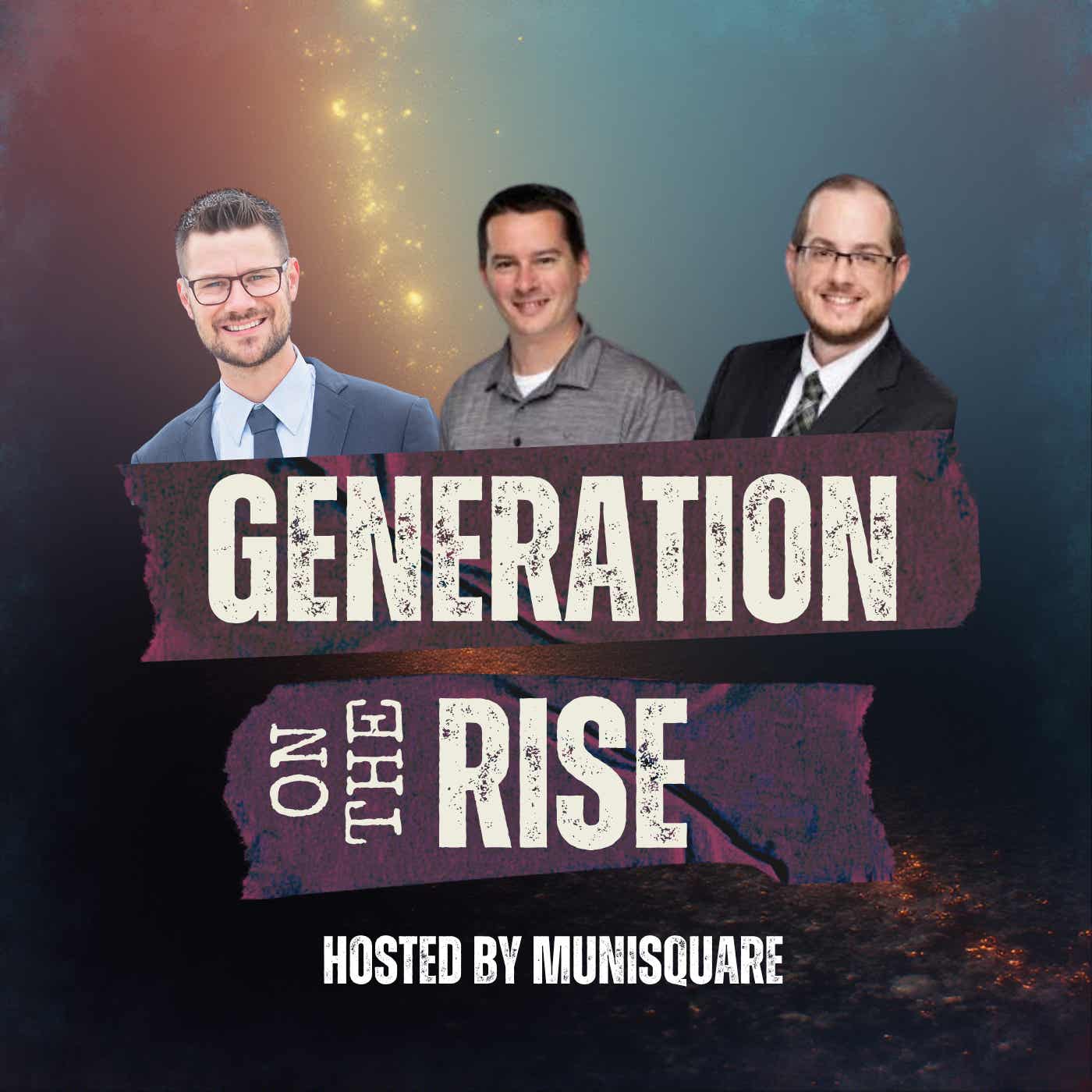
Generation on the Rise Podcast
Generation on the Rise is where local government’s next generation of municipal managers wrestle with what’s changing in the work, what’s hard, and why it’s still worth doing. Join hosts: Dave Pribulka, Brandon Ford, Eden Ratliff, and Executive Producer Nancy J. Hess as they find the new normal — not the one we’re used to, but the one we create. This is an audio stream of the podcast. In addition to our MuniSquare YouTube channel, we have recently started a new stream with video on Spotify. If you like this, please check out: https://open.spotify.com/show/4PyJy4Btzw1MrYI9FE3Z8Q?si=c226374f75e04b24 <br/><br/><a href="https://munisquare.substack.com/s/generation-on-the-rise-podcast?utm_medium=podcast">munisquare.substack.com</a>
The note was deleted
The note was saved
As producer and publisher here at Substack, today’s post is hard to write… we have decided to bring this show to a close, at least for now. Dave, Brandon and I start off with a little light bantor today before we make our way to the core message which concerns the absence of Eden. I am going to post the entirety of my message here because I think it warrants some reflection. I know I will be thinking about this moment for a long time to come. In his response, Brandon speaks to the enduring nature of the work we have done that radiates out to others, and offers that endings also lead to beginnings, while Dave offers a positive outlook and some of the most robust advice I have ever heard him speak.Do not miss the fullness of their words in this recording.I could not be more appreciative of the talents of this generation coming into their own. For that reason, I am hopeful. But I think this episode provides food for thought, wherever you are in your career.Here is my statement (recorded this morning):We have made the decision this week to bring this chapter of this show to a close. The reasons are public and I will speak to them directly.I am on with Dave and Brandon to talk about what comes after Generation on the Rise. We began roughly seven months ago with a vision of engaging young voices in the field of professional municipal management. We are saying goodbye to you, our dear listeners and want to share what is on our hearts and minds.I will begin with the difficult decision this week to ask Eden to step down. He has been an important force from the beginning of the show and has fulfilled my hopes that we can bring minds together, disagree, debate, and build relationships at the same time."We do not have all the facts and cannot speak in more detail. Neither does the public or Eden, by his own account, who was not given the findings of the investigation. That is not a small thing to say, and it is not an exoneration. It is simply the truth of what we know and do not know."However, as you may have learned, Eden was recently asked to leave his position as a municipal manager. Here is what is public. On April 13, the Middletown Township Board of Supervisors voted unanimously to terminate Eden, less than a year into his tenure. The Board declined to share the reasons, citing personnel policy.This, by itself, is the very stuff of this podcast. Municipal managers have difficult and challenging milieus to work in, and unexpected exits take a heavy toll on the profession. We have touched on the various factors that can lead to abrupt departures and the uncertainty that comes with leadership.“Employees do not come forward without great risk and cost. We understand it is the employees who create value in an organization and respect their efforts to be heard.”However, on Monday, May 11th, AT A public Board meeting, a senior municipal employee made a weighty decision to represent and speak for employees to better inform the community as to why the Board asked him to leave. He stated that employees were targeted, unfairly treated and harassed. Although the Board did not assign cause at the time of his departure, this public testimony required us, on this podcast, to take stock of what it meant for a show built on the central role of professional management in local government.We do not have all the facts and cannot speak in more detail. Neither does the public or Eden, by his own account, who was not given the findings of the investigation. That is not a small thing to say, and it is not an exoneration. It is simply the truth of what we know and do not know."The venue in which this account was delivered was a public meeting, after a Board had bound itself to silence, is itself worth pausing on. It is not the way personnel matters typically come to public view, and it is not the way many of us in this field would wish them to."However, that the venue in which this account was delivered was a public meeting, after a Board had bound itself to silence, is itself worth pausing on. It is not the way personnel matters typically come to public view, and it is not the way many of us in this field would wish them to. But it is what happened. And it requires us to respond.Employees do not come forward without great risk and cost. We understand it is the employees who create value in an organization and respect their efforts to be heard. While this is a difficult dilemma for us, the recovery of the organization is paramount and will be a much greater challenge.We will move on, each in our own way. We walk away from this podcast with greater depth of understanding of the nuances of building in public, which is what we have been doing, and the vulnerability that comes with it. I have been extremely impressed with the work and achievements of this podcast crew, from the beginning. We may have reached a closure, but go forward, we will. My hope is that we find a way to continue to lift and give support to the voices of the generation coming into their own in this profession. Although this podcast stream will be quiet for a while, we will return with something new. We don’t know what this is yet, but we hope you will return too. We have no greater gratitude than to you, the listener. You have made this show a community. Take care of each other.MuniSquare is a reader-supported publication. To receive new posts and support our work, consider becoming a free or paid subscriber. Get full access to MuniSquare at munisquare.substack.com/subscribe
Brandon Ford rejoins Dave Pribulka and Eden Ratliff and wastes no time stepping back into the role of host. He deftly guides the conversation from how have expectations changed for managers to something much deeper that touches on what it means to be apolitical in this new reality and how compartmentalization may or may not serve the profession going forward.This is a genuinely important episode for anyone wondering where the profession is headed. What are your thoughts? Leave us your comments and the crew will respond in a future episode.MuniSquare is a reader-supported publication. To receive new posts and support our work, consider becoming a free or paid subscriber.“We have to hold the line—apolitical, professional management. Period.” - Brandon “Politicization of local government … it’s your ink on that resolution condemning, promoting whatever social issue … and when the board change is over, they know you wrote that.” - Dave But with time, you know, each thing you compartmentalize … it’s like a marble, right? If you put one marble in your pocket, that’s not so bad. But if you put a marble in your pocket every day I mean, how is that that box you’re compartmentalizing going to feel in 15, 20, 25, 30, 35 years? - EdenChapters00:00 Sports and Local Engagement03:56 International City Management Association Insights09:30 Expectations of Local Government18:44 The Role of Technology in Local Governance23:13 Navigating Civic Engagement and Emotional Appeals25:13 The Complexity of Local Governance28:35 Engaging the Next Generation of Managers30:26 The Balance of Politics and Management32:34 Compartmentalizing Personal Beliefs in Governance36:34 The Future of Political Neutrality in Local Government40:18 Maintaining Professional Standards Amidst Political Pressures Get full access to MuniSquare at munisquare.substack.com/subscribe
Recorded on Opening Day for baseball! Today the Generation on the Rise crew (minus Brandon Ford who is galavanting around Ireland with an ICMA team) steps up to bat and the field is wide open on the topic of connectivity. Although the vision is alluring, it is also a technical rabbit hole. But well worth the effort if you are interested in taking on connectivity in your community.Host Eden Ratliff goes toe to toe with Dave Pribulka and Nancy J Hess on how and when we see connectivity happening in local government. Eden, Dave, and Nancy dig into the Strong Towns movement, multimodal transportation, and the tension between walkability ideals and the hard economics of development. From Nancy’s memory of walking to work in Baltimore’s Inner Harbor to Dave’s Vancouver revelation, from Greencastle sidewalks to Charlottesville’s radical parking-free experiment, this conversation travels far to make a local point: the decisions managers and elected officials make about streets, sidewalks, and parking minimums are fundamentally decisions about who gets the advantage and and how connectivity impacts the larger system.Part urban planning seminar, part management mentorship, all great conversation.MuniSquare is a reader-supported publication. To receive new posts and support my work, consider becoming a free or paid subscriber.QUOTES:"The essential tension is: how does local government policymaking actually shape the community and the culture?" - Nancy"This is a car-centric country, but that doesn't mean we need to be a car-centric community. That's a hot take. You can really start to unpack that." - Eden"The more we invest in this connectivity and infrastructure, the higher it drives housing prices and the more it's gonna push out the people that need it the most — 'cause they don't have cars or other means of transportation." — Dave"They did not (by the way) ruin the city because there's no parking requirements. People work it out." - Eden"It's a chicken-and-egg kind of thing. You've gotta really be partnered with a developer that's gonna be willing to take a little risk." — Dave"In the comprehensive plan it talks about trails and connectivity a lot, and it was very community led — the community was all for it. But when it comes time to build that trail in front of your house, all of a sudden your opinion changed. So he would say: sell the romance." - Eden"Always be thinking five, ten years down the road. Because if we are so laser-focused on the issues in front of our nose today, we're not going to be setting our communities up for success in the years ahead." - DaveI went back to OhioBut my pretty countrysideHad been paved down the middleBy a government that had no prideThe farms of OhioHad been replaced by shopping mallsAnd Muzak filled the airFrom Seneca to Cuyahoga FallsSaid, ay, oh, way to go, Ohio - Lyrics to OHIO by Chrissie Hynde of the Pretenders-Nancy’s experience of returning to her home in Ohio." ‘They paved paradise and put up a parking lot.’ That was our mantra. We saw it coming and we didn't do our part. I wish we would've done more to protest — but here we are." - Nancy, referring to Joni Mitchell’s 1970 folkson🚗 Hot Takes for Managers | Connectivity * “Car-centric country ≠ car-centric community.” You don’t have to accept the infrastructure you inherited. Even small towns with tiny budgets can move the needle — painted crosswalks, one sidewalk, one park trail. Start somewhere.* The parking minimum is a small business killer. Every space you require a developer to build is real estate that priced out the coffee shop that would have made your downtown worth visiting. Know your ordinance. Consider what you’re actually asking for.* Sell the romance, not the project. When your community loves trails in the abstract but hates the one going past their yard, stop arguing the specifics. Zoom out. Connect the project to the vision they already said they wanted in the comprehensive plan.* Onboard elected officials before they’re sworn in. Eden’s pre-election onboarding meetings include trying on fire gear, checking out police cars, a frank conversation about property rights law…. “You can’t just say no” is much easier to hear before the vote, not after.* If you think you’re the smartest person in the room, you’re in trouble. Build your team of consultants, solicit, and engineers. Enable them to speak up. Your job is to grease the wheels — not to be the wheel.* Vancouver is the benchmark. Build toward it anyway. You can’t retrofit your nineteenth-century borough into a complete streets city overnight. But you can make one block more walkable this year. And the next. That’s how Phoenixville happened. Get full access to MuniSquare at munisquare.substack.com/subscribe
The summary you are about to read is mostly from AI; however, I did take the time to create the prompt! And tell it that I wanted to emphasize that this is a serious, important but also, very funny podcast episode! I curated the moments that I thought stood out… and there so many, that my main recommendation, if you have a leadership team, is to have everyone listen to this episode and then come together and discuss what this all means for your work together.The mood shifts from utopian to dystopian to …. “wait, we are here in this moment as this whole thing is unfolding...how can we know?”MuniSquare is a reader-supported publication. To receive new posts and support our work, consider becoming a free or paid subscriber.Mike Baumwoll is the CEO and founder of Rep’d (short for Represented), the first AI communications platform built specifically for local government. Before launching Rep’d, Mike and his business partner spent a combined 15 years at Twitter, where they witnessed firsthand how misinformation, trolls, and social media dynamics corrode public trust in institutions. That experience led them to build something different — a tool designed to close the education gap between what residents think their government does and what it actually does, by humanizing the people who do the work.In this episode, Mike joins Dave Pribulka, Eden Ratliff, and Brandon Ford to bat around how AI is already inside your organization whether you invited it or not, what it means to have a “human lens” on AI-generated work, the data integrity problem and the staggering scale of global data creation, and the difference between open AI systems (temperature 10 — the whole internet) and closed-circuit environments (temperature zero — only what you feed it). The episode is candid, curious, and occasionally very funny — exactly the conversation local government professionals need to be having right now.“If you are a manager and you’re not using AI and you’re not having that AI conversation with your teams, folks on your teams are using it. They’re paying for their own subscriptions. It’s happening whether you’re ready or not.” — Eden Ratliff"There should always be a human lens. The moment that we stop telling stories, stop informing and creating a human environment to connect, is where we lose." — Mike Baumwoll"And by the way, Mike — why should we trust you?" — Dave Pribulka (cutting to the heart of the AI vendor credibility question)“"You should probably ask AI how to integrate AI.” — Brandon FordChapters 00:00 – Reunion & Reset (Season 2… maybe?)The group reconnects after a hiatus02:00 – Guest Introduction: Mike BaumwollAI, local government communication, and the “education gap” between residents and government.04:30 – What Is AI (Really)?From Turing to today—framing the moment and the pace of change.09:40 – The Reality: You Don’t Get to Opt OutAI is already embedded in operations whether leaders acknowledge it or not.12:00 – Authenticity vs. AutomationEmails, reports, and the subtle erosion (or evolution) of human voice.16:00 – What AI Communications Actually MeansMike explains practical applications: drafts, insights, and resident interaction tools.18:00 – The Runaway Train QuestionSpeed, unpredictability, and whether local government can realistically “control” AI.21:30 – The Human Element DebateCan AI enhance connection, or does it risk replacing it?26:30 – AI as a Draft, Not a Decision MakerA key framing emerges: AI as a first pass, not the final word.33:30 – Data, Trust, and the Scale ProblemMassive data growth and the challenge of filtering truth from noise.42:00 – Training Fatigue & Trust GapsToo much information, not enough clarity on who or what to believe.45:00 – Closed AI Systems & ControlWhat it means to limit AI to trusted data sources.53:00 – Practical Use Case: Right-to-Know RequestsAI’s potential to transform labor-intensive work.54:30 – The Future: Utopia or Skynet?Each host reflects on what the next 10 years could look like. Get full access to MuniSquare at munisquare.substack.com/subscribe
Maggie Dobbs is a trained city planner (Rutgers) who spent a decade writing comprehensive plans across Montgomery County before stepping into her current role as Borough Manager of Narberth, Pennsylvania, a half-square-mile community tucked inside Lower Merion Township just outside of Philadelphia. She arrived after a period of leadership turnover. What she found was not a small job. It was a dense one.Host Brandon Ford joins co-host Nancy Hess in a wide ranging conversation with Maggie that moves through the real experience of borough management: the math of running a full municipal government — police, public works, library, eleven miles of road — with fifteen people and a fraction of a township’s budget; the intimacy that makes boroughs special and the same intimacy that makes criticism land close to the heart; and the reality that wearing every hat in the building demands more knowledge, not less, than specializing in a larger organization.Maggie is candid about walking into a community that had cycled through five managers in four years, what it took to steady that ship, and why her focus is on building standard operating procedures so the day-to-day can run itself. Along the way, the crew explores Narberth’s housing story — how a historically working-class rail town became the highest median sales price in Montgomery County — and what that shift means for a community once referred to as “Mayberry,” still sorting out who it is.MuniSquare is a reader-supported publication. To receive new posts and support our work, consider becoming a free or paid subscriber.“My job gets in the way of me doing my job.”— Maggie Dobbs — on the borough manager’s capacity problem“Your hats are wearing hats. It’s a lot.”— Maggie Dobbs — on generalist demands in a small-staff borough"If I had a campaign slogan, it would be policy and procedure. My big push has been standard operating procedures. I want to think less about the day-to-day. I want the day-to-day to essentially run itself because we've already figured it out. I don't want to have to answer questions I've answered again." — Maggie Dobbs, on her first-year management strategy🔥 Hot Takes Five Realities Before You Take the Seat* Your job will crowd out your job. Protect space for strategic work.* SOPs are not paperwork. They are oxygen.* Fill your blind spots early. Pride is expensive.* Proactive information reduces political friction.* Borough leadership is not smaller. It’s closer.Timestamps0:00 – Introducing Maggie and Narberth1:18 – The “donut hole” geography inside Lower Merion2:09 – Maggie’s path: NJ Dept. of Agriculture → Rutgers → Planning3:30 – Montgomery County Planning Commission & contract planning model5:49 – Writing four comprehensive plans; interviewing hundreds8:12 – Planners as connectors in local government9:36 – Being tapped for the manager role10:01 – First-year lessons; “90% of the day is listening”12:36 – Compliance vs. innovation — the Venn diagram problem13:20 – Shared services with Lower Merion17:45 – Joint traffic study collaboration21:29 – Pennsylvania’s “nugget” borough system24:02 – Borough vs. township — professional fit27:08 – Narberth staffing reality (4 admin, 6 police, 5 public works)30:00 – Affordable housing question31:05 – Narberth’s housing transformation36:10 – Generalist vs. specialist municipal structures40:47 – SOPs, website overhaul, proactive communication42:00 – Five managers in four years — rebuilding trust44:34 – The lunch that changed her mind49:57 – Finance gaps & building a support network52:27 – Who thrives in borough leadership?54:31 – Closing reflections Get full access to MuniSquare at munisquare.substack.com/subscribe
There is a polite fiction in local government that serving “at the pleasure of the governing body” rests securely on mutual trust. Often it does. Increasingly, it can feel more fragile.In today’s political climate, the employment relationship between elected officials and their chief administrative officer deserves a closer examination. What protections actually exist? Who advocates for the manager when circumstances shift?In this episode of Generation on the Rise, Eden Ratliff and Dave Pribulka sit down with Brad Gotshall to explore what it means to become, in his words, a “free agent.” They examine contracts and severance, and they also confront questions of reputation, professional identity, and the personal weight of transitions that can be political, strategic, or simply inevitable.“We, I think we all see ourselves as good negotiators. That’s what we’re paid to do. But for ourselves, I think it’s a different animal…I don’t like to talk about myself. And I think that’s the case with most of us…We’re not really comfortable talking about ourselves or advocating for ourselves, but, you know, the past two places I’ve been..it’s really been an unfortunate wake-up call for me that the most important conversation, is how to protect ourselves.” - Brad“It does bring up an interesting question about the role of the recruiter in the process of interacting with candidates. And I’ve been a part of recruitments where I’ve been very impressed by the recruiter. They’ve been very honest with me about the community, about the issues that were going on, the dynamics. Even going so far in some cases is saying, you know, you really might want to give this some consideration. I guess the question is: to all the recruiters that are listening and would be recruiters, how do you think your role is represented with both the candidate as well as the organization?” - Dave“There’s a recruiter who’s now retired, regional to Pennsylvania that we all know. And he used to say the same thing. He was like, in the interview process, when we’re getting down to making a job offer, every elected body and every manager wants the same thing…and the whole thing is a lie, but it’s the same thing. The board wants the manager to say, I love you now and I will love you forever.And the manager wants the board to say, we love you now and we will love you forever. And together we will ride off into the sunset. But the reality is, it’s not true.” - Eden MuniSquare is a reader-supported publication. To receive new posts and support our work, consider becoming a free or paid subscriber.⏱️ Timestamps* 00:00 – Cold open, book banter, introductions* 04:30 – Brad’s background: elected official at 17 to professional manager* 09:30 – Transition to Warren County and “free agency”* 11:30 – Protecting yourself as a manager: personal and professional buckets* 13:30 – Contract negotiations: learning the hard way* 16:00 – Do managers need representation?* 19:00 – The loneliness of severance negotiations* 22:00 – Lower Paxton: no contract, negotiated exit* 26:00 – Recruiter’s role in negotiations* 31:00 – Severance pushback and board dynamics* 37:00 – Creative contract structures (Rehoboth example)* 39:30 – Should managers use agents?* 41:30 – Legal review vs. negotiation support* 43:00 – Preserving reputation under NDAs* 45:30 – Building a personal brand before crisis hits* 48:00 – No-fault divorce vs. political dismissal* 50:00 – Wrap-up and Part Two teaser Get full access to MuniSquare at munisquare.substack.com/subscribe
Eden and Dave are joined by guest Jeffrey Stonehill, Borough Manager of Chambersburg Pennsylvania. They begin with an examination of how crises today differ from those Jeffrey encountered when he began in the field. Although they traverse the doom and gloom of dealing with crisis in the profession, they return to the core reasons they remain in the field.Contrasting generational perspectives and recognition of the vulnerability that comes with commitment and transitions make this episode a memorable one. “If everything is a crisis, nothing is.” - EdenYou have to have a little bit of self-confidence. I will find the place, I will find the role, I will find the journey. It's like the actor—the Broadway play closes, what do they do the next day? You need to have confidence that it will work itself out. - Jeffrey"There is a lightness of being after you're gone that almost hits as you're walking out the door. That's when I realized how much pressure I'd been under. That feeling is quickly replaced by this feeling of not being a part of something bigger than yourself anymore. When that ends, especially if it ends abruptly, it's a hard realization to wake up one morning and your calendar is empty." - DaveHot Takes:🔥Crisis has always been part of the job. The pressure isn’t new — the speed is.🔥Not every issue deserves full emotional escalation.🔥Fire Suppression ≠ Fire Prevention. Be proactive.🔥 The communities you serve will continue without you—and that's okay.🔥Leaving a community requires a grieving process, even when it's your choice to leave.🔥The work is meaningful. Despite the pressure, leaders would not trade the experience. Timestamps00:00 - Cold open and greetings03:47 - Welcome and introduction to Generation on the Rise04:42 - Introducing first-time guest Jeffrey Stonehill06:32 - Jeffrey’s career journey: From SUNY grad to 40-year manager08:15 - The “crisis as normal” phenomenon in local government11:45 - Why municipalities attract constant crisis15:20 - The evolution of pressure: Then vs. now19:30 - Harrisburg bankruptcy and advisory board experience24:10 - The psychological toll of perpetual emergency management28:45 - Learning to disconnect (or trying to)33:20 - The loneliness of municipal management37:50 - Why managers struggle to share burdens42:15 - Transitioning between communities: The Disney tradition45:40 - The grieving process when you leave a community49:18 - Taking care of yourself and your family50:05 - Despite everything: Why we love this profession52:03 - Closing thoughts and next week’s preview MuniSquare is a reader-supported publication. To receive new posts and support our work, consider becoming a free or paid subscriber. Get full access to MuniSquare at munisquare.substack.com/subscribe
"We are all one elected official away from a hostile work environment.” - Dave“Yeah, but if it gets that bad, why would you stay?" - EdenToday on Generation on the Rise, what starts as tactical shop talk evolves into a revealing examination of professional isolation, with Dave pushing hard on systemic advocacy gaps while Eden counters with self-reliance pragmatism. By the end, they’re debating whether the profession’s recruitment crisis stems from lack of awareness or legitimate wariness about the job’s inherent instability.“Labor relations are high risk, high reward. When it goes bad, it goes bad fast.” - BrandonHot Takes: * Generational dynamics within unions have shifted bargaining leverage.* Don’t wait until negotiation year to build trust.* Personnel management is on-the-job training, no matter your preparation.* Managers lack advocacy structures..* Geographic mobility is a professional survival skill, not a character flaw.* The profession needs better advocacy and mentorship structures.MuniSquare is a reader-supported publication. To receive new posts and support ourwork, consider becoming a free or paid subscriber. Timestamps* 00:00 – Sustainability banter, ICMA programs* 03:00 – Topic launch: manager’s role in HR* 04:30 – Why personnel issues are hardest to prepare for* 06:00 – HR professionals vs textbook training* 08:30 – Generational workforce dynamics* 10:00 – Labor relations as high-risk / high-reward* 12:00 – Collective bargaining philosophy differences* 18:00 – “Sacrificing the unborn” and pension negotiations* 22:00 – Relationship building with unions outside negotiation years* 29:00 – Transparency and negotiating in public* 33:00 – The manager as an employee: who advocates for us?* 38:00 – Hostile work environment discussion* 44:00 – The limits of formal support structures* 50:00 – Informal networks and senior advisors* 53:00 – ICMA’s role: management vs manager debate* 55:00 – Closing reflections on the realities of the profession Get full access to MuniSquare at munisquare.substack.com/subscribe
“y’all didn’t think we were gonna talk about the sex appeal of water meters, did you?” -Dave“I just wanna put it out there. Sexy is a bonafide public policy term. It is absolutely in the vernacular.” - EdenIn this episode of Generation on the Rise, host Brandon Ford, along with co-hosts Eden Ratliff, and Dave Pribulka tackles a theme every local government professional eventually feels: what happens to idealism under the administrative weight of local government? They explore how bright-eyed employees and experienced managers alike dare to bring bold ideas into organizations that move at a cautious, political pace.From FEMA flood maps and unaffordable insurance mandates to curbside compost pilots, rural broadband, and “pitch day” idea sessions, the hosts debate the long game of innovation in public service. Is idealism crushed… or refined? Is innovation easier in small towns or large systems? And how do managers protect enthusiasm without promising what can’t be delivered? This episode is a candid look at risk, culture, pace of change, and how leaders keep the spark alive in a system that is built to resist."I have two post-it notes on my desk that have followed me to the many jobs that I've had. One says, 'don't be an obstacle.' And the other one says, 'shut up and listen.'" - Dave"Ideas don't usually die straight out—they die or fade away administratively. The bureaucracy often wears everything down." - Brandon“Local government is a long game. Innovation especially is a long game.” - Eden⏱️ Timestamps * 00:00 – Cold open, MLK weekend, intro* 01:30 – Topic launch: idealism vs reality in local government* 03:30 – Recruiting innovators vs navigating systems* 06:00 – Culture, risk, and managers driving pace of change* 08:30 – When ideas get shelved: personal experiences* 11:30 – Eden’s floodplain / stormwater infrastructure story* 15:30 – Cynicism vs experience vs risk aversion debate* 18:30 – Timing, turnover, and “the long game”* 20:30 – Small vs large municipality innovation debate* 24:30 – Defining innovation vs change* 29:00 – Dave’s rural broadband case study* 33:00 – Is this generation more innovation-oriented?* 36:00 – Social media, scrutiny, and risk today* 43:30 – How managers build a culture of innovation* 48:30 – “Pitch Day” concept discussion* 52:30 – Advice to young professionals* 55:00 – Closing reflectionsMuniSquare is a reader-supported publication. To receive new posts and support our work, consider becoming a free or paid subscriber. Get full access to MuniSquare at munisquare.substack.com/subscribe
In this kickoff-to-2026 episode of Generation on the Rise, hosts Dave Pribulka, Brandon Ford, and Eden Ratliff tackle the question: what is the real role of a municipal manager in forming local government policy? They trade stories about leaf-blower bans, stormwater fees, single use plastic bags, and the emotional discipline it takes to “inform the process, respect the outcome, and then deliver with enthusiasm.”Along the way they talk about translating up (staff to board) and down (board to staff), how much emotion managers should bring to policy disagreements, and why this generation of leaders may be more willing to push the system.This is a great listen for anyone interested in the work of local government or just wants to understand how it really works. Be sure to leave your comments and questions for the crew to tackle in a future episode.MuniSquare is a reader-supported publication. To receive new posts and support our work, consider becoming a free or paid subscriber.“Our job is to inform the process, respect the outcome, and then deliver with enthusiasm.” - Eden“We took ‘leaf blower ban’ as a goal and did what staff does—we turned it into options, wrote the ordinance, and recommended a seasonal ban. The board said, ‘Thanks, but we want a full ban.’ And that’s democracy.” - Brandon“Sometimes the textbook says, ‘The board sets policy, the manager administers.’ The real work is everything in between—the translation, the conflict, the opportunity costs.” - Dave* 00:00 – New Year banter & Y2K* 03:30 – First-week-back routines & “Purge Day”* 06:30 – Reorganization meetings as the “real” New Year* 09:00 – Setting up the topic: managers and policy formation* 10:00 – Textbook council–manager model vs reality* 12:00 – How Eden reads and frames board policy priorities* 13:30 – Who really sets the agenda? Chair vs manager* 14:30 – Is capital equipment a policy question?* 16:00 – Municipal vs nonprofit vs corporate boards* 17:30 – Disagreeing with the board and processing it at home* 21:00 – Culture, roles, and “no big emotions” about policy* 24:00 – Translating decisions up and down the organization* 28:00 – “Negotiation” vs expectations and culture* 29:30 – When managers do and don’t make recommendations* 33:00 – Budgets, tax policy, and whether a balanced budget is a recommendation* 36:00 – Assistant manager perspective: one functional unit* 38:00 – Preemption, home rule, and plastic-bag bans* 44:00 – Inertia, backlash, and revisiting policy after it “marinates”* 47:00 – What’s distinctive about the Generation on the Rise cohort?* 48:00 – When operations are failing and the manager must force the policy conversation* 49:00 – Closing reflections & takeaways Get full access to MuniSquare at munisquare.substack.com/subscribe
Summary: In this thought-provoking episode, Brandon, Dave, and Eden tackle the complex topic of workplace loyalty in local government. The hosts debate what loyalty means in practice, whether it’s connected to tenure, and how it differs from professionalism. The conversation takes an unexpected turn into residency requirements, sparking passionate disagreement about whether living in the community you serve impacts your work. As they wrap up 2024, the hosts announce exciting changes coming in 2025, including guest appearances.MuniSquare is a reader-supported publication. To receive new posts and support our work, consider becoming a free or paid subscriber."Younger professionals are more mobile. The era where you grew up in the town you work for and you spend your entire life there is not necessarily the case." - Brandon"A number of years ago I worked for a small borough where the governing body said, 'Actually, we'd rather you not [live here]. We think there's gonna be a lot of pressure in this community with the things that we wanna accomplish... We don't really want you to be influenced by your neighbors, the friends you'll make, the social environment.'“ - Eden"I think if you can live in that jurisdiction, it helps you to cultivate that loyalty, that commitment... It gives you a little more skin in the game…To say that it's not different is just not the way the world works. If you live in that jurisdiction, it's going to have an influence on how you navigate the challenges that you're faced with." - DaveShow Notes:* What does workplace loyalty mean in local government?* The connection (or disconnection) between loyalty and tenure* ICMA’s two-year standard and generational shifts in career mobility* Professionalism vs. loyalty: which matters more?* The heated residency debate: does living in your community change your recommendations?* Small town dynamics vs. larger municipalities* Looking ahead: Generation on the Rise adds guests in 2025!Timestamps:* 00:00 - Cold open: ICMA’s two-year standard discussion* 01:00 - Holiday gift assembly war stories* 05:00 - Defining workplace loyalty in local government* 08:00 - The role of personal affinity in job selection* 11:00 - Measuring loyalty: what does it look like?* 15:00 - The two-year standard and its implications* 18:00 - Why managers move more frequently now* 22:00 - ICMA’s two-year standard revisited* 27:00 - Loyalty vs. professionalism in difficult decisions* 31:00 - The residency debate begins* 40:00 - Does living in your community affect recommendations?* 46:00 - Generational differences in mobility and commitment* 50:00 - Episode wrap-up and 2025 announcement Get full access to MuniSquare at munisquare.substack.com/subscribe
As the calendar year closes out, Eden Ratliff sits down with Brandon Ford and Dave Pribulka to talk about strategic planning in the real world: not as a glossy document, but as a working “rudder” for budget decisions, priorities, and day-to-day execution.They dig into the tension between aspirational goals (the “why”) and cross-offable action steps (the “how”)—including how to avoid plans that sound inspiring but don’t translate into steps, owners, timelines, or resources.Along the way, they compare planning approaches in large and small communities, debate when to use consultants vs. doing the work in-house, and talk honestly about what happens when boards turn over and want to toss the plan on the shelf.MuniSquare is a reader-supported publication. To receive new posts and support our work, consider becoming a free or paid subscriber.Highlights:I have a love/hate relationship with strategic planning. - BrandonWhat comes first, the chicken or the egg? If you don’t make aspirational statements, how do you allocate resources? - EdenWhat do you do when you have turnover on your boards and they say throw out the strategic plan or I don’t intend to follow it? - EdenSometimes things are just gonna change, and we need to give our boards the latitude to say, ‘Look, we’re just gonna blow this up and start over. - Dave Action without vision is, is just passing time. Vision without action is just a dream. Action and vision can change the world. - Nelson Mandela, quoted by Dave)What’s one priority your community needs to make “cross-offable” in 2026?Generation on the Rise is produced by Nancy Hess and features Eden Ratliff (Middletown Township Manager, Bucks County PA), Brandon Ford (Lower Merion Assistant Township Manager, Montgomery County PA, and Dave Pribulka (Bellefonte Borough Manager, Centre County PA) Get full access to MuniSquare at munisquare.substack.com/subscribe
In this episode of ‘Generation on the Rise’, the hosts Dave Pribulka, Eden Ratliff, and Brandon Ford “go there” to unpack the inherent biases present in local government, and how it can impact decision-making processes. They explore how biases affect hiring practices and public policy formation, emphasizing the need for a culture of challenge and building perspective in leadership. The conversation also touches on the impact of confirmation bias and the necessity of engaging with voices from outside familiar turf to challenge the status quo.“We all… are looking at the world through our own lens… and everyone’s lens is different… At my first city council meeting… they didn’t say the Pledge of Allegiance.”” - EdenTakeaways* The meaning behind the podcast name differs among the hosts.* Bias is inherent in everyone and affects decision-making processes.* Do hiring panels mitigate bias?* Do job descriptions qualifications unnecessarily exclude candidates?* Community engagement is crucial for effective public policy.* Confirmation bias can lead to a narrow perspective in decision-making.* A culture of challenge is essential for innovative ideas.* Residency requirements can limit the diversity of applicants.* Engaging with a variety of community voices is necessary for equitable governance.* The importance of networking with managers across different municipalities. Chapters02:51 The Meaning Behind ‘Generation on the Rise’12:06 Understanding Bias in Local Government23:47 Bias in Hiring Processes and Practices28:27 Navigating Education Choices in Suburban Life29:41 Blind Reviews and Bias in Hiring31:35 The Importance of Diverse Perspectives33:17 Creating a Culture of Disagreement35:01 Affinity Bias in Team Dynamics37:47 The CAO and Assistant Relationship42:54 Confirmation Bias in Municipal Management54:58 The Impact of Experience on Management Bias59:22 Bias in Public Policy Formation Get full access to MuniSquare at munisquare.substack.com/subscribe
In this episode, the hosts discuss the challenges of work-life balance in local government, touching on public comment dynamics, the pioneering leaf blower ban initiative, and the importance of personal life beyond work. They explore generational differences in work expectations, the impact of remote work policies, and the recent implementation of a paid parental leave policy. The conversation emphasizes the need for boundaries and support in achieving a healthy work-life balance.Highlights include: why culture starts at the top (and why “first in, last out” can quietly poison a workplace), why “email jail” keeps people from fully unplugging, what it looks like to structure remote work without creating resentment, and a concrete example of a benefits move that actually supports families: a 12-week paid parental leave policy that includes birth, non-birth parents, adoption, and foster adoption. “Work-life balance is not about time management. It’s about boundary management. You could always make the time work, but it’s those boundaries—setting those boundaries up.” - Brandon Get full access to MuniSquare at munisquare.substack.com/subscribe
Join hosts Dave Pribulka, Eden Ratliff, and Brandon Ford for a candid talk about shaping your team in your municipal organizations.They explore the essential roles needed in local government, the importance of dedicated HR departments, and the challenges of managing diverse personalities within teams. The conversation delves into the hiring process, community engagement in recruitment, and the dynamics of leadership, emphasizing the need for a balance between doers and thinkers. Get full access to MuniSquare at munisquare.substack.com/subscribe
Hosts Dave Pribulka, Eden Ratliff and Brandon Ford are joined by Nancy Hess (Publisher, MuniSquare) for a candid talk about what real change management looks like in local government. They explore how trust, timing, and human connection shape change - from labor negotiations to leadership teams to community-driven expectations. Get full access to MuniSquare at munisquare.substack.com/subscribe
Fresh from the ICMA Conference in Tampa, the Generation on the Rise crew dives into how to draw the line between leadership and politics. Eden reflects on his ICMA session about rebuilding trust after a $3.2 million fraud case, while Dave and Brandon unpack what it means to stay apolitical and human in a world where expectations sometimes conflict with professional ethics. From the emotional side of management to candid talk about boards, boundaries, and values, this episode captures the nuance and humor of a profession in flux. Join hosts: Dave Pribulka, Brandon Ford, Eden Ratliff. Get full access to MuniSquare at munisquare.substack.com/subscribe
Hosts: Eden Ratliff (host), Dave Pribulka, Brandon Ford, and Nancy J. Hess (Publisher of MuniSquare)In this second episode of Generation on the Rise, host Eden Ratliff leads the team into one of the most defining themes of their careers — networking and mentorship, both the good and the bad.Topics: Bad mentoring advice, the golf myth, the shadow side of mentoring, bulls in the china shop dynamic, when to leave the nest, how to actually network and the unwritten map to local governments that only peers understand….“We don’t need another place to tell war stories or complain about councils. We need a space that actually sounds like us — managers who still believe in the work, even when it’s messy.” - Dave“This is where we go there. We’re willing to go deep, and we’re not afraid to talk about the things everyone thinks but few people say out loud.” - Eden“These are the conversations we’ve been having for years at conferences and in hallways. We just decided to hit record.” - Brandon“There’s a dark side to mentoring. Sometimes the same person who opens the door can also be the one who closes it behind you.” — Nancy“Friendships can and should survive competition. It’s not about who wins — it’s about who keeps growing.” — EdenMuniSquare is a reader-supported publication. To receive new posts and support our work, consider becoming a free or paid subscriber. Get full access to MuniSquare at munisquare.substack.com/subscribe
Welcome to Generation on the Rise where local government's next generation sits down to talk about what's changing, what's hard, and why we believe it's worth doing. Join hosts: Dave Pribulka, Brandon Ford, Eden Ratliff, and Executive Producer Nancy J. Hess as they find the new normal — not the one we’re used to, but the one we create. Get full access to MuniSquare at munisquare.substack.com/subscribe
Your message was sent