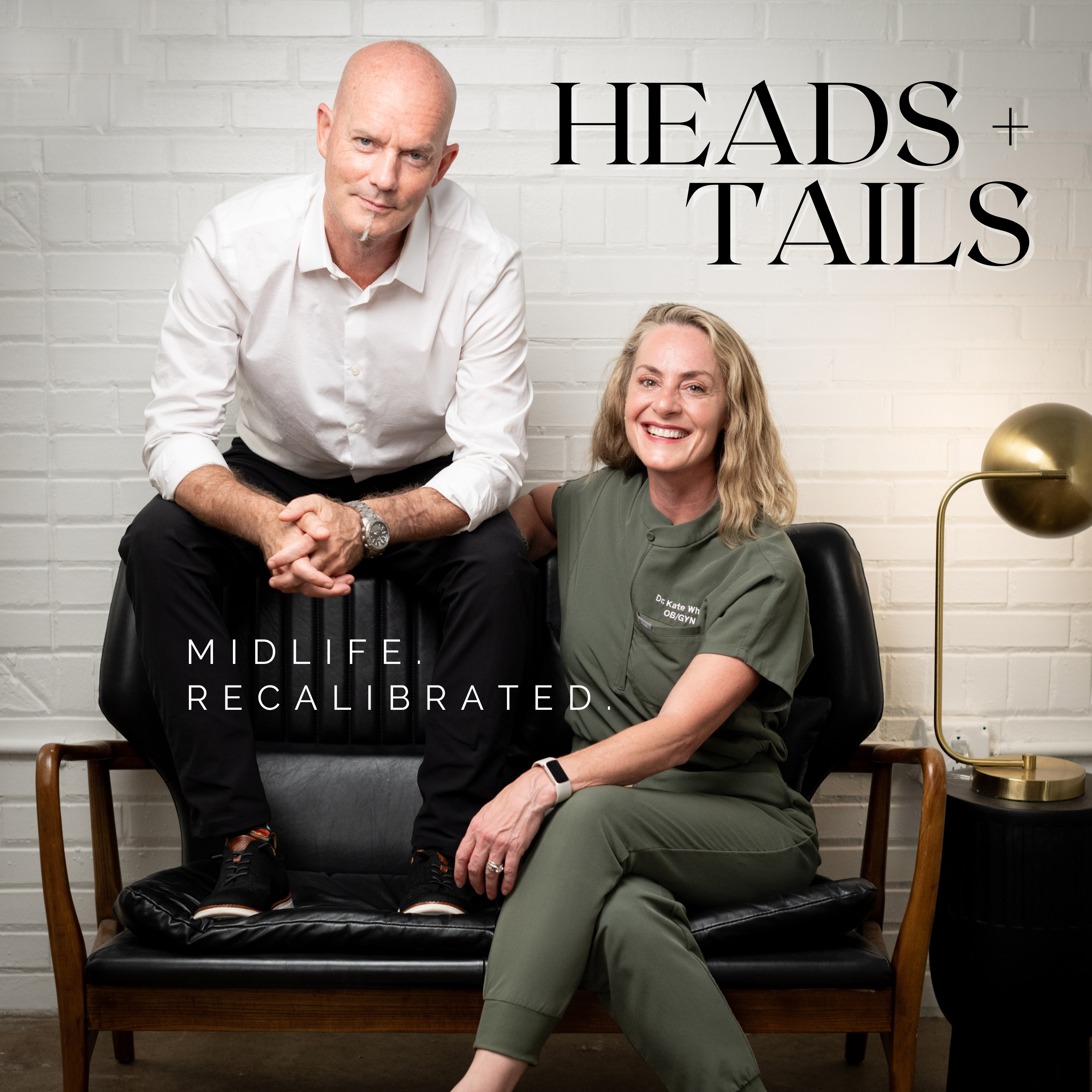
Episode 14: Shedding 5 types of Toxic Relationships: A Guide to a Drama Free New Year
Podcast: Heads and TailsPublished On: Fri Jan 02 2026
Description: New year, fresh standards. In this episode of Heads & Tails, we tackle one of the most powerful (and challenging) forms of midlife recalibration: shedding toxic relationships. Not every hard relationship is toxic—and not every toxic relationship is obvious. We walk through five common toxic relationship types, the red flags that signal you're in one, and how to decide whether it's time for repair, distance, or a clean break. You'll learn how to assess the real cost of staying—emotionally, physically, and relationally—and how to get out without getting pulled back in. Whether it's a partner, friend, family member, colleague, or long-time "frenemy," this episode gives you a clear, practical framework to protect your peace and move forward with integrity. In this episode, we cover 1) How to identify the "Toxic Five" Controlling: monitoring, isolating, "permission" dynamics, punishment for independence Codependent: rescuing, over-functioning, guilt-driven caretaking, identity fused to fixing Manipulative / Gaslighting: rewriting reality, "you're too sensitive," moving goalposts, plausible deniability High-Conflict / Volatile: chaos cycles, explosions, blame, emotional whiplash, constant crisis Emotionally Neglectful / Dismissive: chronic minimization, stonewalling, lack of empathy, "your needs are too much" 2) Red flags you're in a toxic dynamic (not just a rough season) You routinely feel anxious before interactions or need recovery time afterward You edit yourself to avoid backlash, sulking, or "punishment" You're always the one apologizing, explaining, or chasing resolution Your boundaries are treated as betrayal The relationship costs you peace, confidence, or connection with others 3) Outgrown vs. damaging: how to tell the difference "Outgrown" often feels sad but stable; "damaging" feels unsafe, depleting, or destabilizing We share a simple self-check to measure: impact on mood, sleep, self-worth, stress level, and other relationships 4) What "getting out" can look like Make it healthier: clear boundaries, structured communication, accountability, and behavior change (not promises) Create distance: limited contact, topic boundaries, reduced access, emotional detachment Remove yourself: ending the relationship, exiting shared systems, safety planning when needed 5) Practical tools you can use immediately Boundary scripts you can actually say out loud How to stop negotiating with someone who benefits from your confusion What to do when guilt, history, or family pressure tries to pull you back in How couples stay aligned when the toxic person is a relative or friend Try this after you listen Identify which of the "Toxic Five" best fits the relationship you're thinking about. Write down three non-negotiables (how you will be spoken to, treated, and included). Decide your next step: repair, distance, or exit—and choose one concrete action you'll take this week. Listener takeaway Midlife is not the time to keep paying emotional rent to relationships that drain your health, your home, or your sense of self. You're not "too much." You're just done accepting too little. Important note This episode is educational and does not replace medical or mental health care. If you feel unsafe or fear retaliation, prioritize safety and consider confidential support from a qualified professional or local resources. Call to action If this episode hit home, share it with a friend who's doing a quiet reset this year. And if you want more episodes like this, send us your "Heads or Tails?" relationship scenarios—anonymous questions welcome. To my fellow clinicians: listen to the You Are Not Broken podcast on Pinnacle's network to earn FREE CME credit. https://learnatpinnacle.com/education
The note was deleted
The note was saved
Your message was sent