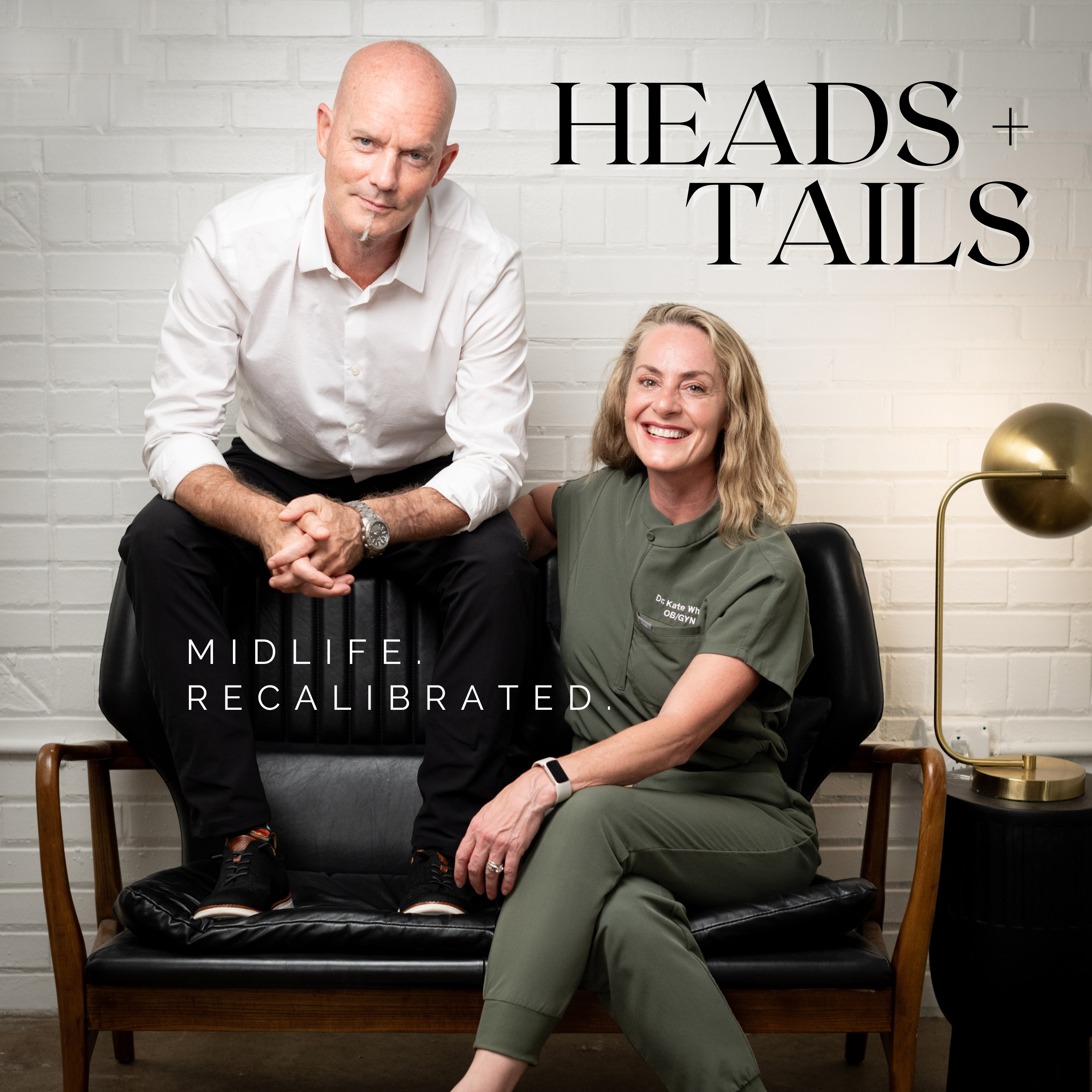
Episode 33: Hormones, Herbs & Hot Flashes: What Integrative Menopause Care Really Looks Like with Dr Suzanne Gilberg
Podcast: Heads and TailsPublished On: Fri Sep 25 2026
Description: What if menopause care didn't have to be a choice between conventional medicine and "natural" medicine? In this episode of Heads & Tails, Dr. Kate White and Jay White sit down with Dr. Suzanne Gilberg-Lenz, board-certified OB/GYN, integrative medicine physician, clinical Ayurvedic specialist, herbalist, breast cancer survivor, and author of Menopause Boot Camp. Together, they explore what menopause care can look like when we stop treating it as a one-size-fits-all problem. Dr. Suzanne reframes menopause as a developmental and physiologic transition—not simply a collection of symptoms to eliminate. She shares how she integrates conventional medicine with lifestyle interventions, botanicals, Ayurveda, mindfulness, and individualized hormone and nonhormonal options. They discuss: • Why perimenopause can leave women saying, "I just don't feel like myself." • Menopause as transformation rather than simply loss • What Ayurveda can teach us about individualized health and lifestyle • The difference between "natural" and automatically "safe" • Botanicals commonly discussed in menopause care, including chasteberry/Vitex, Siberian rhubarb, black cohosh, ashwagandha, and berberine • Why supplement quality, dosing, interactions, and sourcing matter • Hormone therapy—and why it should not be framed as the only tool available • Options for women who cannot or do not want to use systemic hormone therapy • Why sleep, exercise, resistance training, mental health, and stress regulation still matter even when using hormones • The changing gut microbiome in midlife • Why treatment sometimes requires experimentation, adjustment, and patience • How to find a clinician willing to listen, learn, and partner with you • Why trusting your own body can sometimes be lifesaving One of the biggest messages from this conversation: you do not have to choose a camp. Good menopause care can include evidence-based medicine, lifestyle, appropriate complementary therapies, curiosity, and shared decision-making. And perhaps most importantly: if something feels different in your body, keep asking questions. Heads & Tails — where midlife gets a reframe. Share this episode with a friend who is trying to figure out her own menopause toolkit, and send your questions to the Heads & Tails team. This podcast is for education and entertainment and does not substitute for individualized medical or mental health care.
The note was deleted
The note was saved
Your message was sent