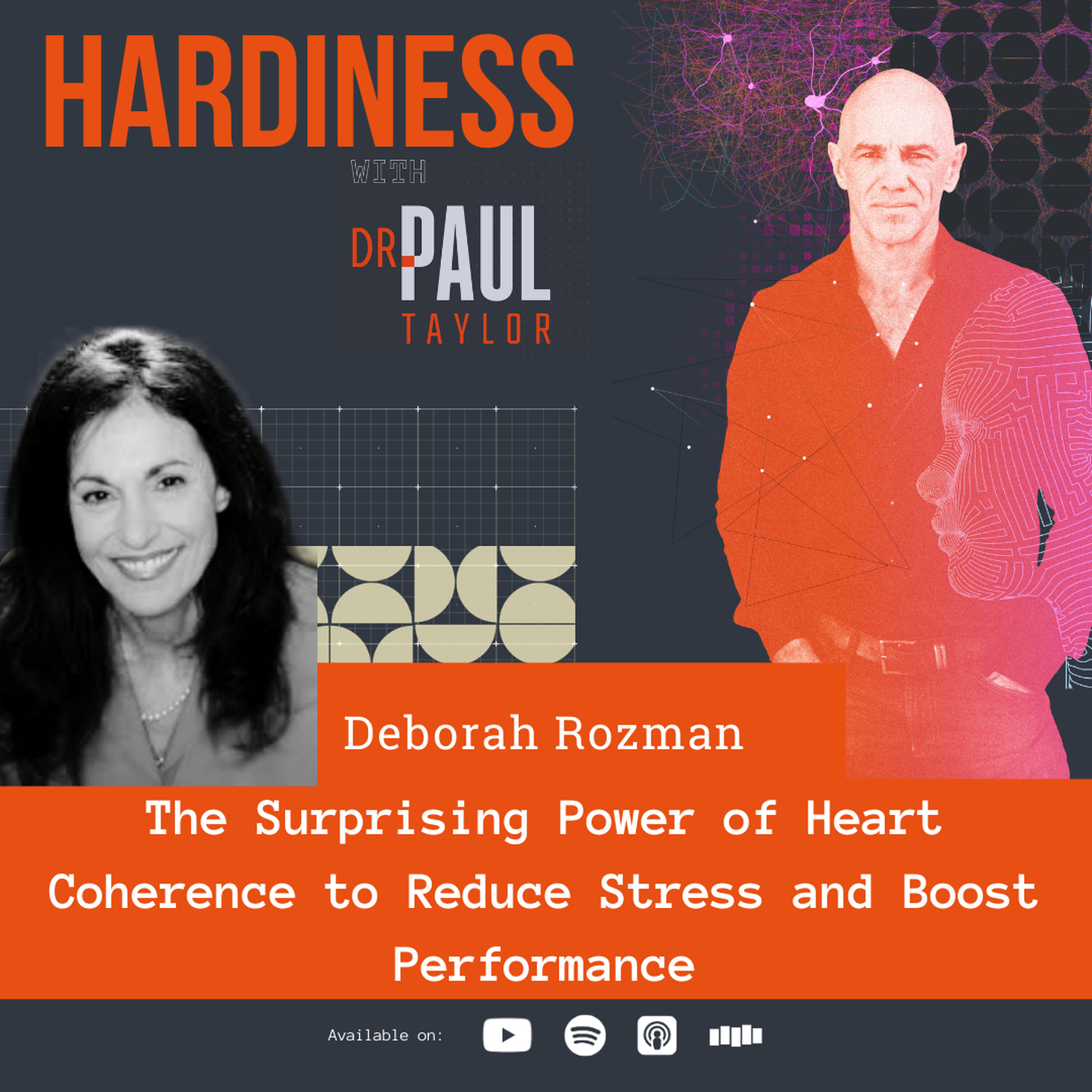
The science of Heart-Rate Variability and how to manipulate it naturally to reduce stress and boost performance, with Dr Deborah Rozman
Podcast: Hardiness with Dr Paul TaylorPublished On: Fri Mar 20 2026
Description: In this episode, I chat with Deborah Rozman and we discuss the fascinating topic of heart rate variability (HRV) and heart coherence. Deborah shares her journey from a young age, driven by a desire to serve and understand human attitudes, leading her to become a behavioural psychologist. She explains how her work with HeartMath Institute focuses on the connection between the heart and brain, emphasising the importance of HRV as a reflection of emotional states and overall health. We delve into the science behind HRV, explaining how it reflects the interaction between the sympathetic and parasympathetic nervous systems. We discuss the concept of heart coherence, where the heart's rhythm becomes synchronized, promoting optimal performance, emotional balance, and resilience. Deborah highlights the role of positive emotions like gratitude and love in achieving coherence, which can be measured using biofeedback devices. Key Takeaways The role of heart rate variability (HRV) in health and emotional flexibility How heart coherence influences stress, decision-making, and resilience The two-way communication between the heart and the brain Techniques to improve heart coherence without equipment The future of wearable technology and biofeedback for emotional regulation How positive emotions like gratitude and love recalibrate autonomic nervous system balance 00:30 - Deborah's background in child psychology and heart science origin story02:22 - The development of biofeedback tools and understanding emotional states through HRV04:56 - Deep dive into what heart rate variability is and its importance for health06:26 - The influence of the autonomic nervous system on HRV and health07:48 - Patterns of HRV and what they reveal about emotional and physical resilience09:23 - The impact of emotions on HRV and the 1995 cardiology study findings10:56 - Heart's intrinsic nervous system and its role in emotion regulation12:34 - The significance of positive emotions in heart coherence and health13:14 - Using biofeedback devices to manage stress and induce coherence15:03 - The bidirectional interaction between brain and heart during coherence states16:41 - The heart's "little brain" and its independent functioning17:52 - How stress and trauma cause autonomic dysregulation and ways to restore balance22:09 - The concept of flow, coherence, and optimal performance states24:28 - Brainwave patterns associated with heart coherence, especially alpha waves27:31 - How coherence enhances intuitive, creative, and decision-making abilities30:32 - Practical techniques for improving coherence without devices, focusing on positive emotions and breathing33:01 - Resilience versus stress management, building energy capacity for life's challenges34:22 - Simple coherence exercises anyone can do, even without biofeedback tools38:01 - The promising future of research, wearable tech, and global heart coherence initiatives Resources & Links: HeartMath Institute HeartMath Techniques HeartMath App Peer-reviewed research on HRV and emotional health How to Practice Heart Coherence (Free Techniques) Connect with Deborah Rozman: LinkedIn Twitter Support the Podcast If you found this conversation valuable, consider subscribing and leaving a review on your preferred podcast platform. Your feedback helps us continue to bring you insightful discussions on important health topics. See omnystudio.com/listener for privacy information.
The note was deleted
The note was saved
Your message was sent