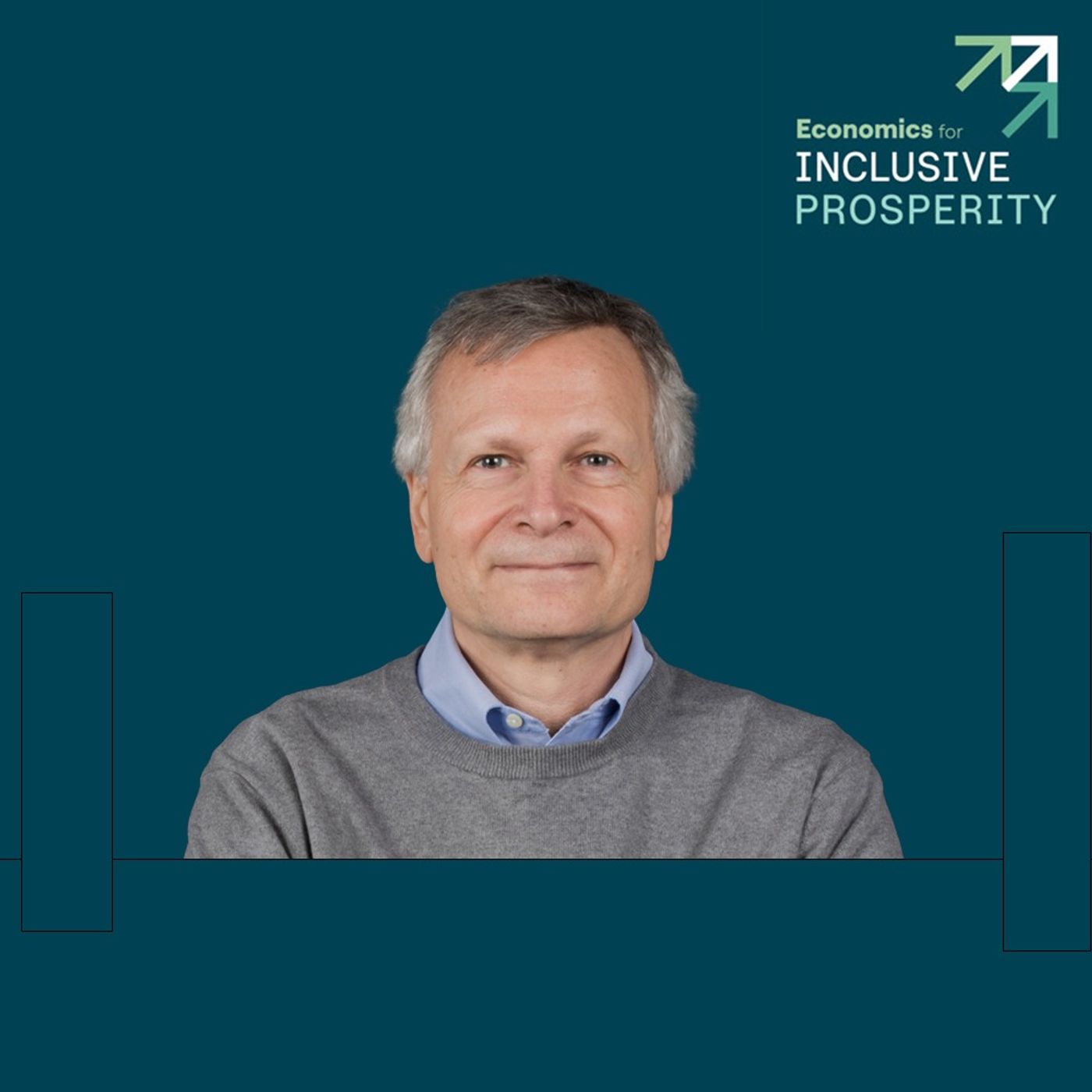
Dani Rodrik: Manufacturing won't save us—but the service sector might
Podcast: Economics for Inclusive ProsperityPublished On: Wed Apr 08 2026
Description: Creating "good jobs" is the holy grail of both politics and economics these days. The problem is that surveys show that most people don’t think they have one. In fact as many as 60 percent of Americans who are currently working say that. So where do we look for good jobs? For three successive presidencies, the answer has been the manufacturing sector, but Harvard economist Dani Rodrick says the evidence now shows that’s wrong. It’s a rethinking for Rodrik, the Ford Foundation Professor of International Political Economy and co-founder of the Reimagining the Economy Program at Harvard Kennedy School, who in the past seen manufacturing as a route to more equitable prosperity. But Rodrik says the evidence has changed his thinking—despite investments and tariffs, factory work is just 8 percent of U.S. employment and falling and even manufacturing powerhouses like China are bleeding millions of jobs in the sector. Now he sees the service industries as the most promising source of good jobs for the future, a position that puts him in the familiar position of outlier, since he was one of the earliest voices predicting the inevitable crash and burn of hyper globalization. Rodrik admits it will be challenging to solve the big problem with service jobs, how to make them productive enough to support good wages and benefits, but he says we urgently need to start asking the right questions and start experimenting with ways to make it happen. He joins Economics for Inclusive Prosperity podcast host Ralph Ranalli to explore those questions and how things like AI and public investment could factor into the answers. Dani Rodrik is an economist whose research revolves around globalization, economic growth and development, and political economy. His current work focuses on how to create more inclusive economies, in developed and developing societies.Rodrik is the Ford Foundation Professor of International Political Economy at Harvard's John F. Kennedy School of Government. He is co-director of the Reimagining the Economy Program at the Kennedy School and of the Economics for Inclusive Prosperity network. He was President of the Inernational Economic Associationduring 2021-23 and helped found the IEA's Women in Leadership in Economics. His most recent book is "Shared Prosperity in a Fractured World: A New Economics for the Middle Class, the Global Poor, and Our Climate" (2025). His previous books include "Straight Talk on Trade: Ideas for a Sane World Economy," and "The Globalization Paradox: Democracy and the Future of the World Economy." Economics for Inclusive Prosperity (EFIP) is a network of academic economists from Harvard, Princeton, Columbia, and other leading universities who are committed to an inclusive economy and society. EfIP members are working to transform their field around a new vision of prosperity—a vision that includes traditional economic metrics, but also expanded measures of wellbeing including access to health, to democratic participation and to a livable planet. They’re also highlighting the important changes in economics that are already underway. EFIP is supported by a grant from the William and Flora Hewlett Foundation. Host Ralph Ranalli is a podcaster, writer, and former journalist who specializes in conversations about public policy. Ralph formerly hosted “HKS PolicyCast,” the award-winning flagship podcast of the Harvard Kennedy School. He holds a degree in political science from UCLA and a master’s in journalism from Columbia University. The Economics for Inclusive Prosperity Podcast is recorded at the Malcolm Wiener Center for Social Policy at the John F. Kennedy School of Government at Harvard University. The EFIP co-directors are Dani Rodrik and Stefanie Stantcheva of Harvard University, Atif Mian and Ilyana Kuziemko of Princeton University, and Suresh Naidu of Columbia University.
The note was deleted
The note was saved
Your message was sent